
George Town Kanamaluka Trail repeat photo
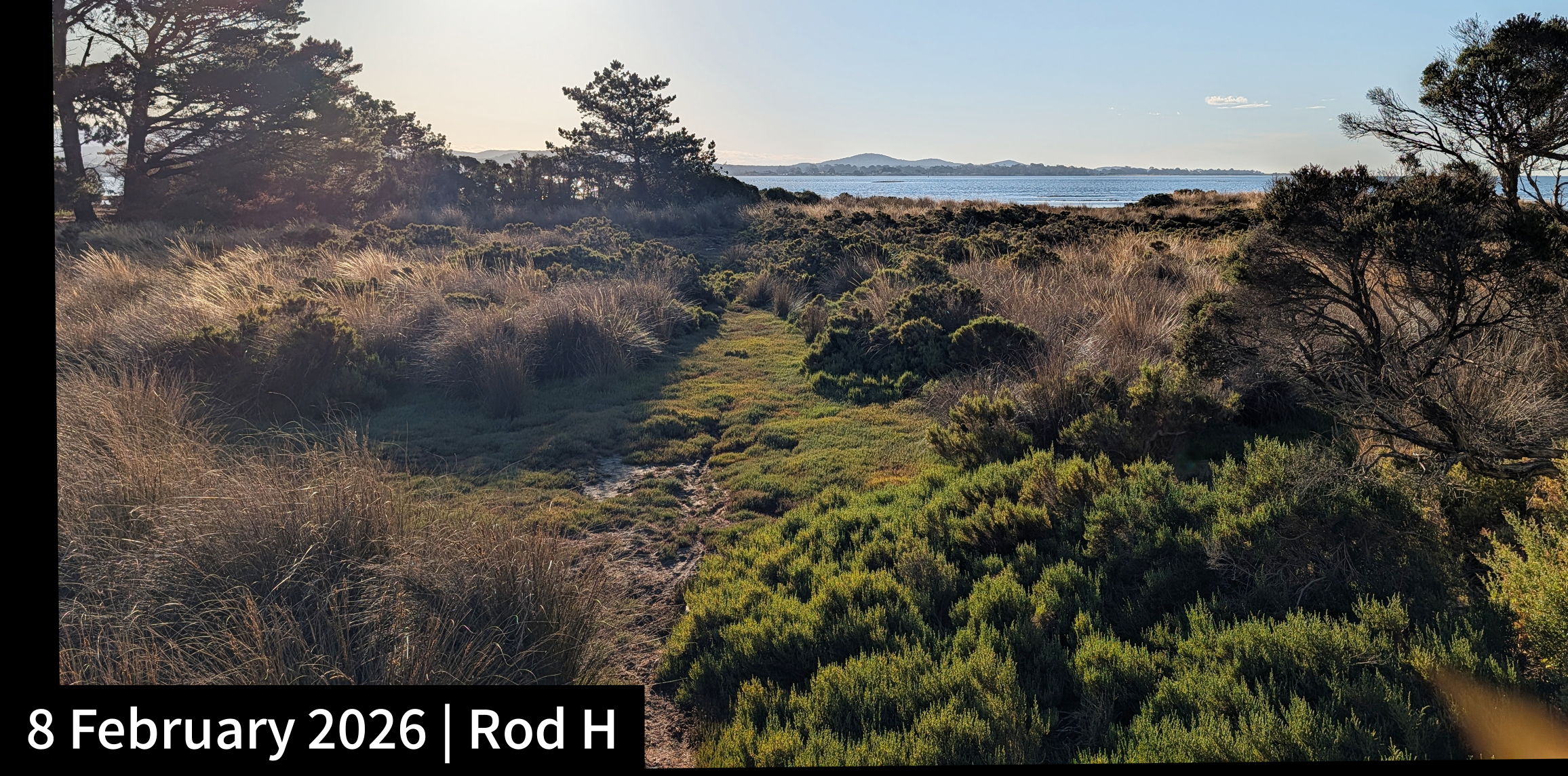
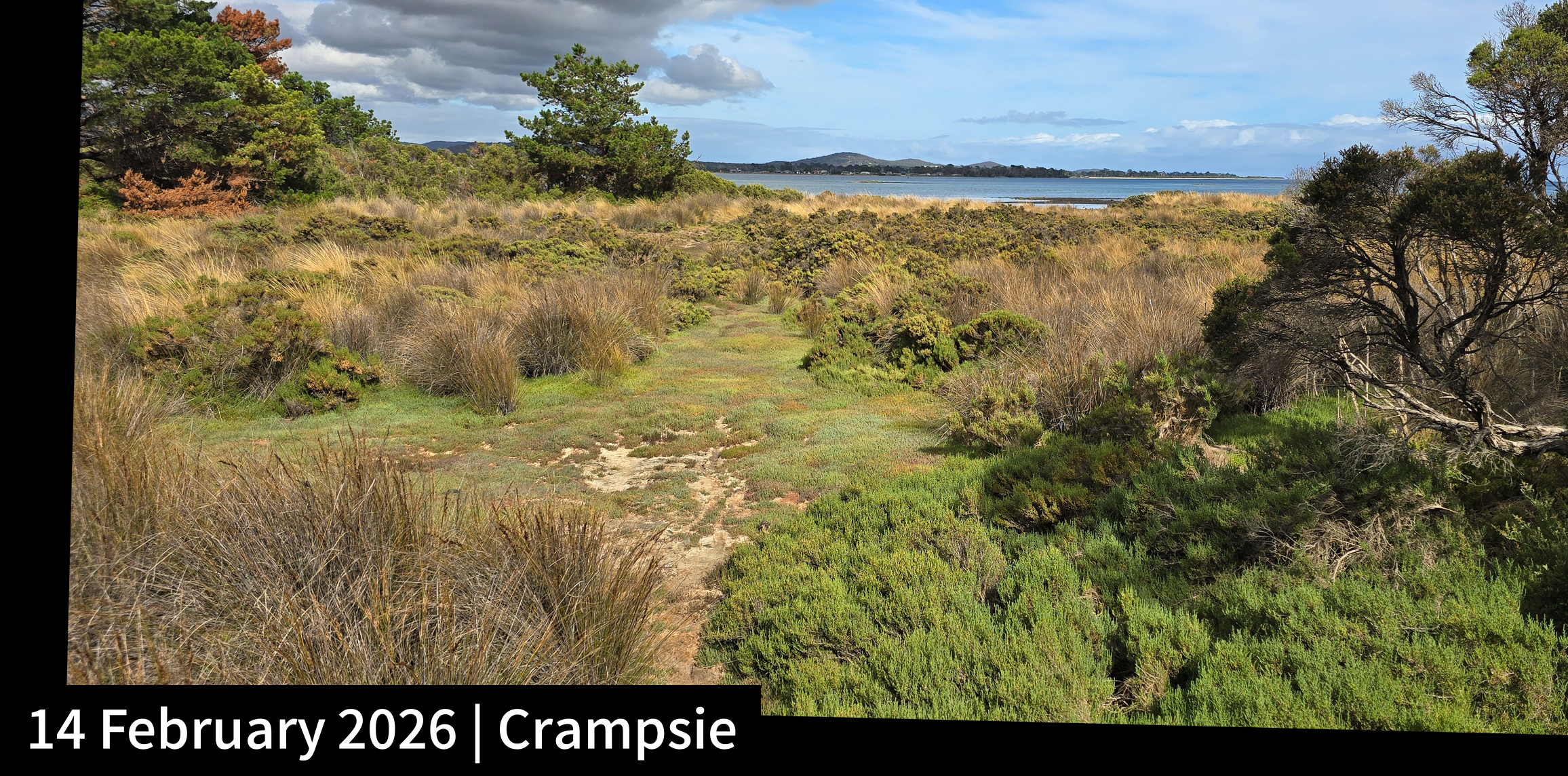
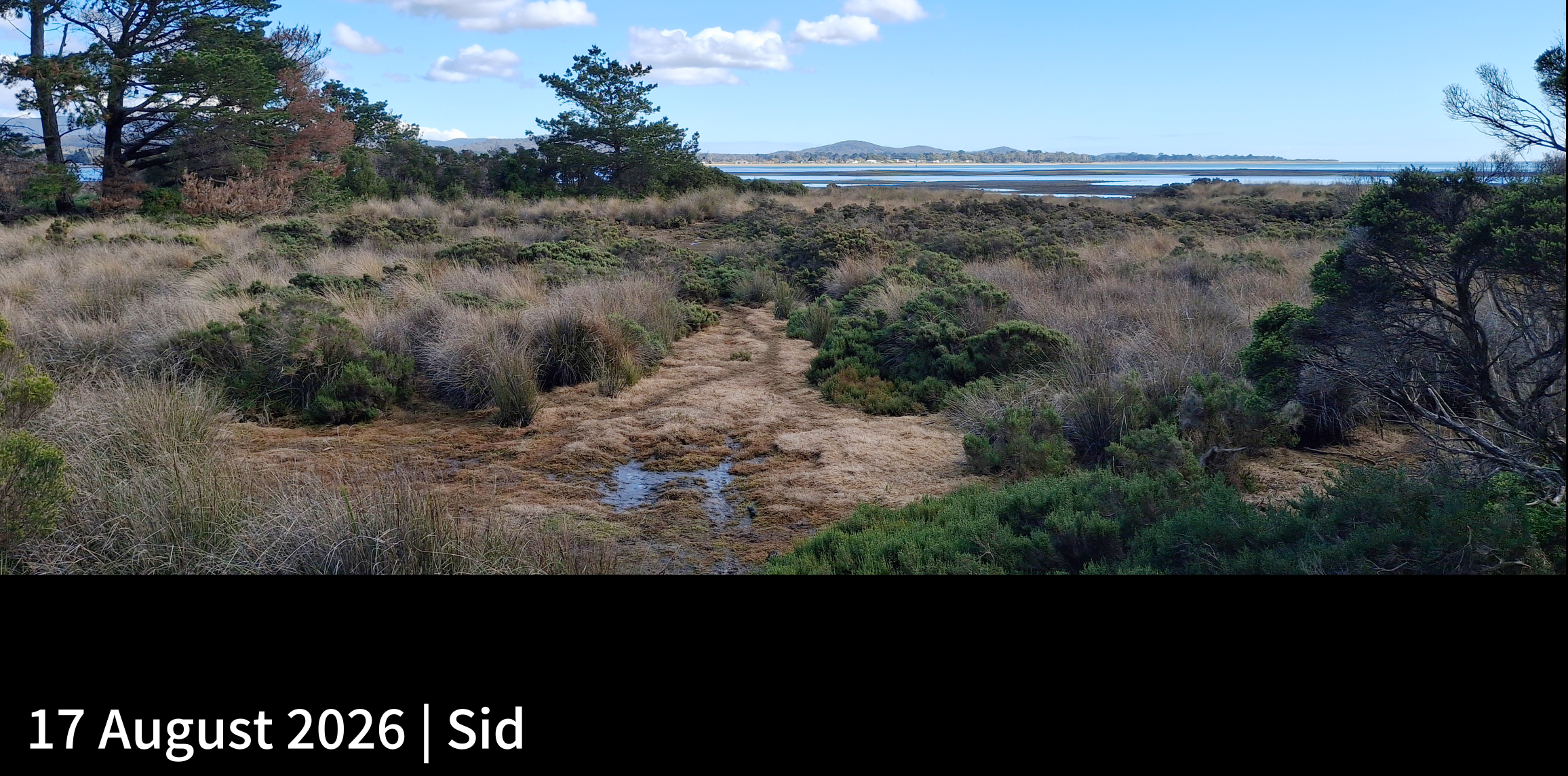
This photo-post tracks the health of an endangered temperate saltmarsh vegetation community along the Kanamaluka Trail and within the George Town Reserve. The photo field of view is focussed on a bare area previously damaged through trampling and quad bikes accessing the saltmarsh.
Subtropical and Temperate Coastal Saltmarshes are federally protected because they are listed as a vulnerable Threatened Ecological Community (TEC) under the Environment Protection and Biodiversity Conservation Act (EPBC Act) due to their critical ecological value.
This patch of saltmarsh is dominated by typical salt-tolerant species such as beaded glasswort (Sarcocornia quinqueflora), chaffy sawsedge (Gahnia filum) and shrubby glasswort (Tecticornia arbuscula).
Check out the selection of photos that have been submitted for this site below.
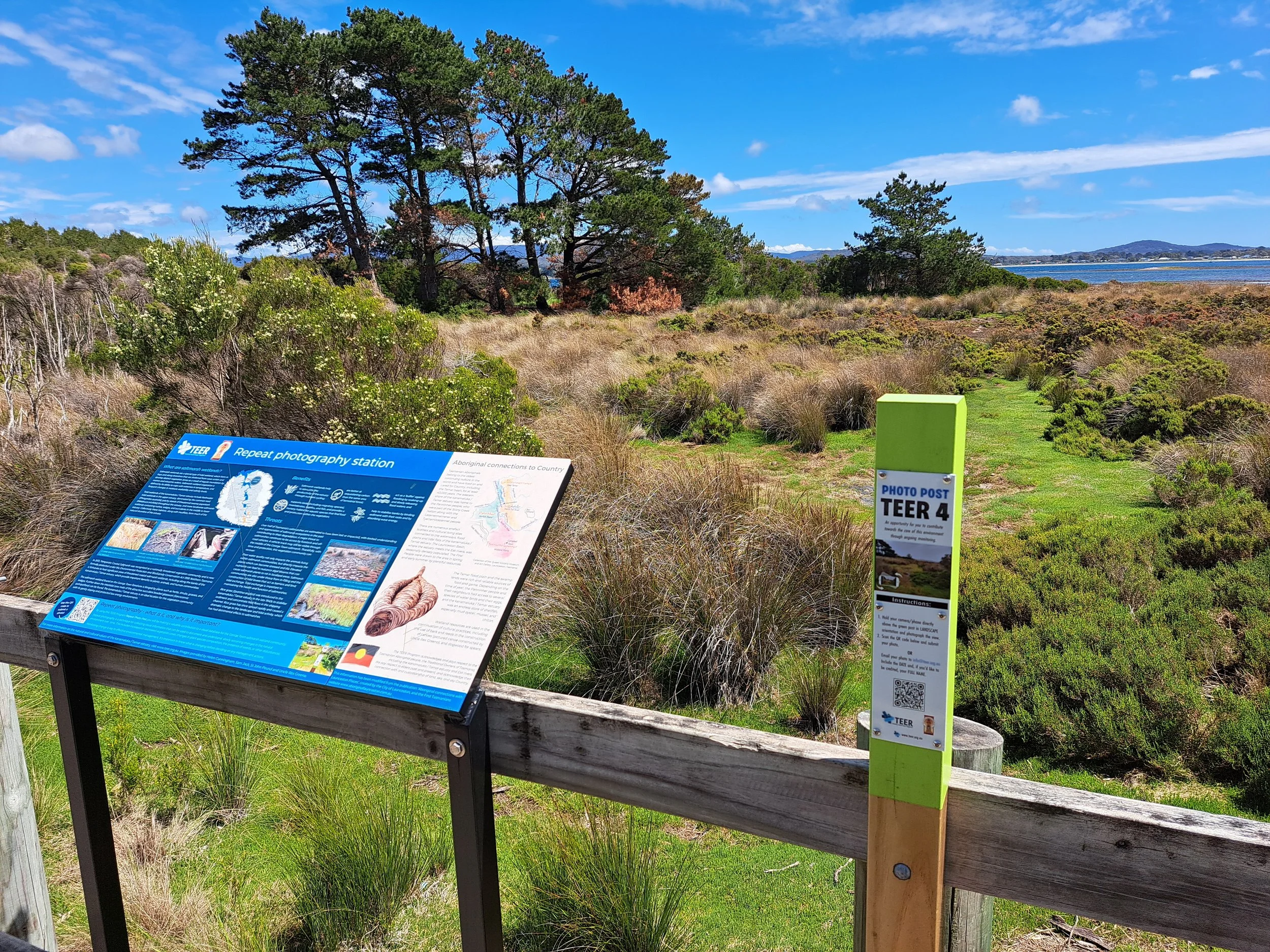
The George Town repeat photo post and accompanying education sign, which can be accessed along the Kanamaluka Trail.
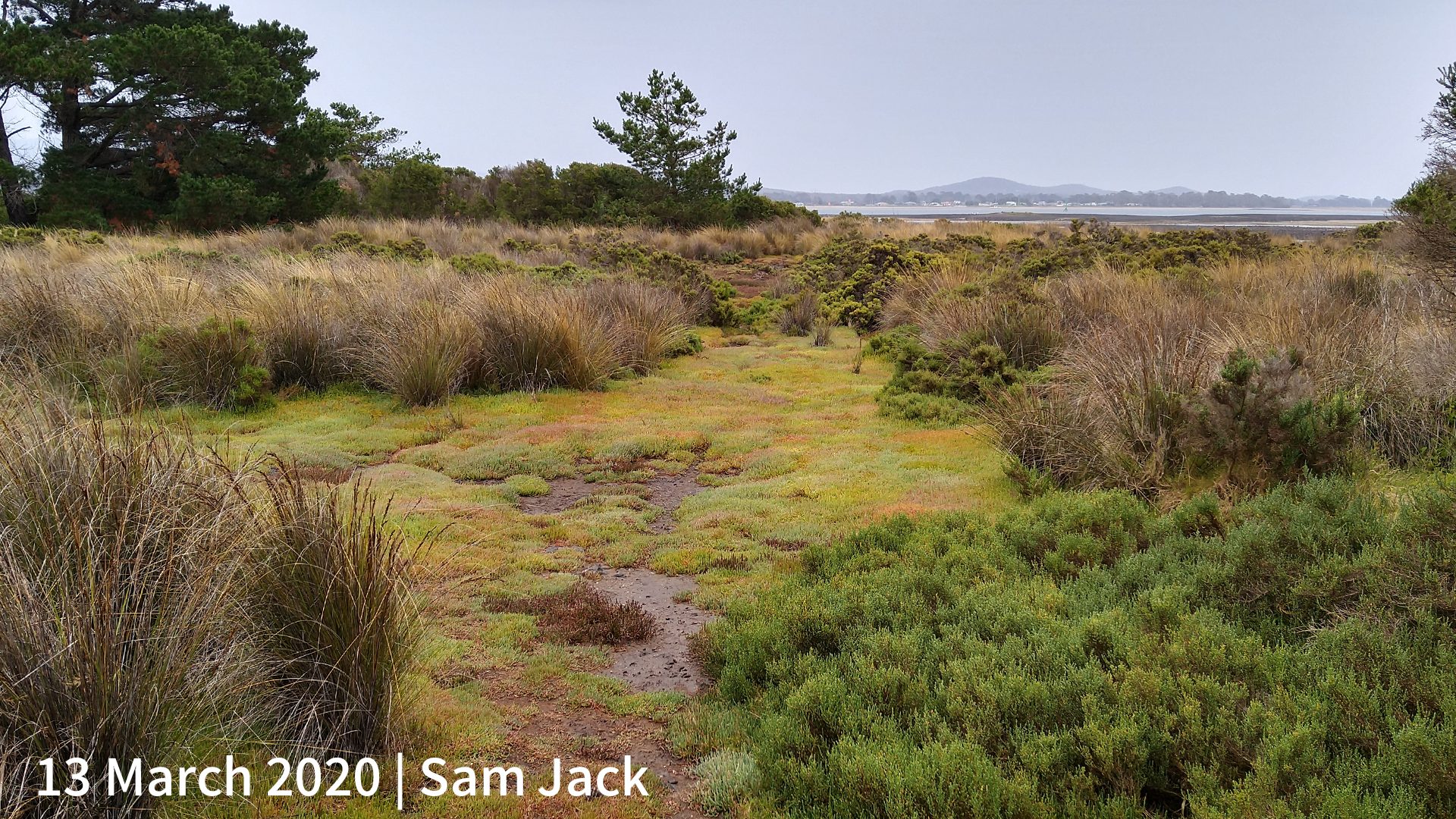
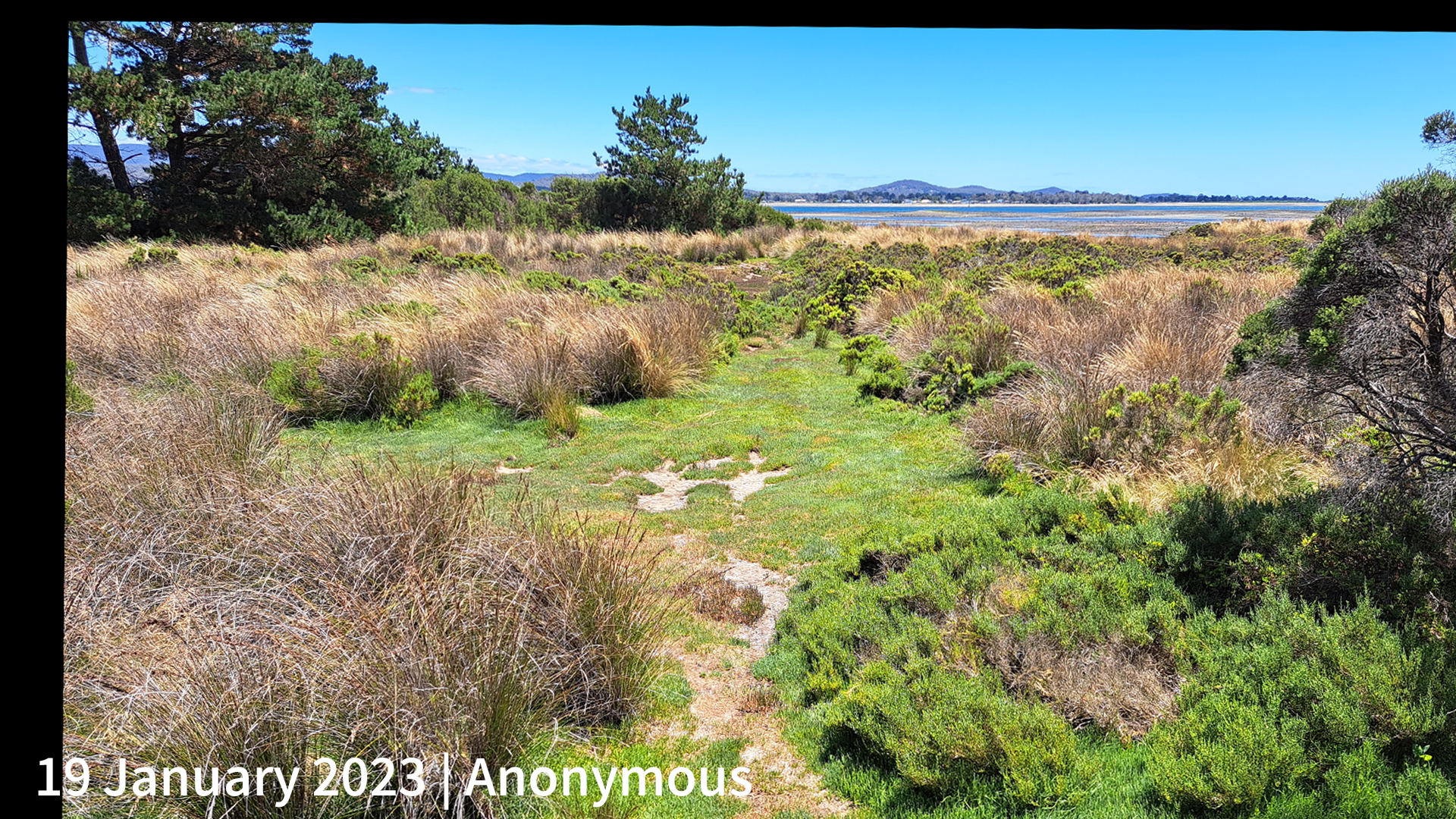
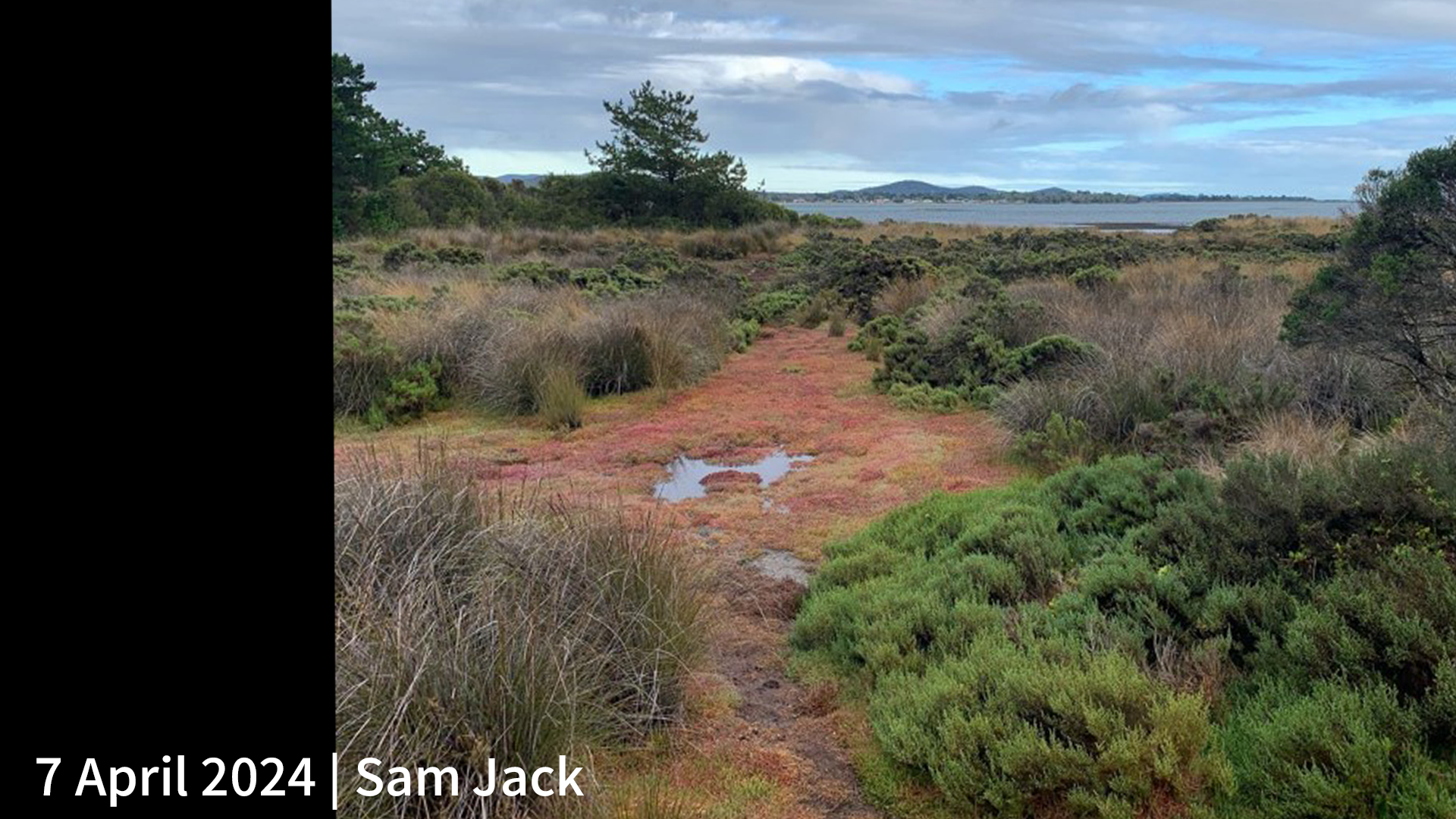
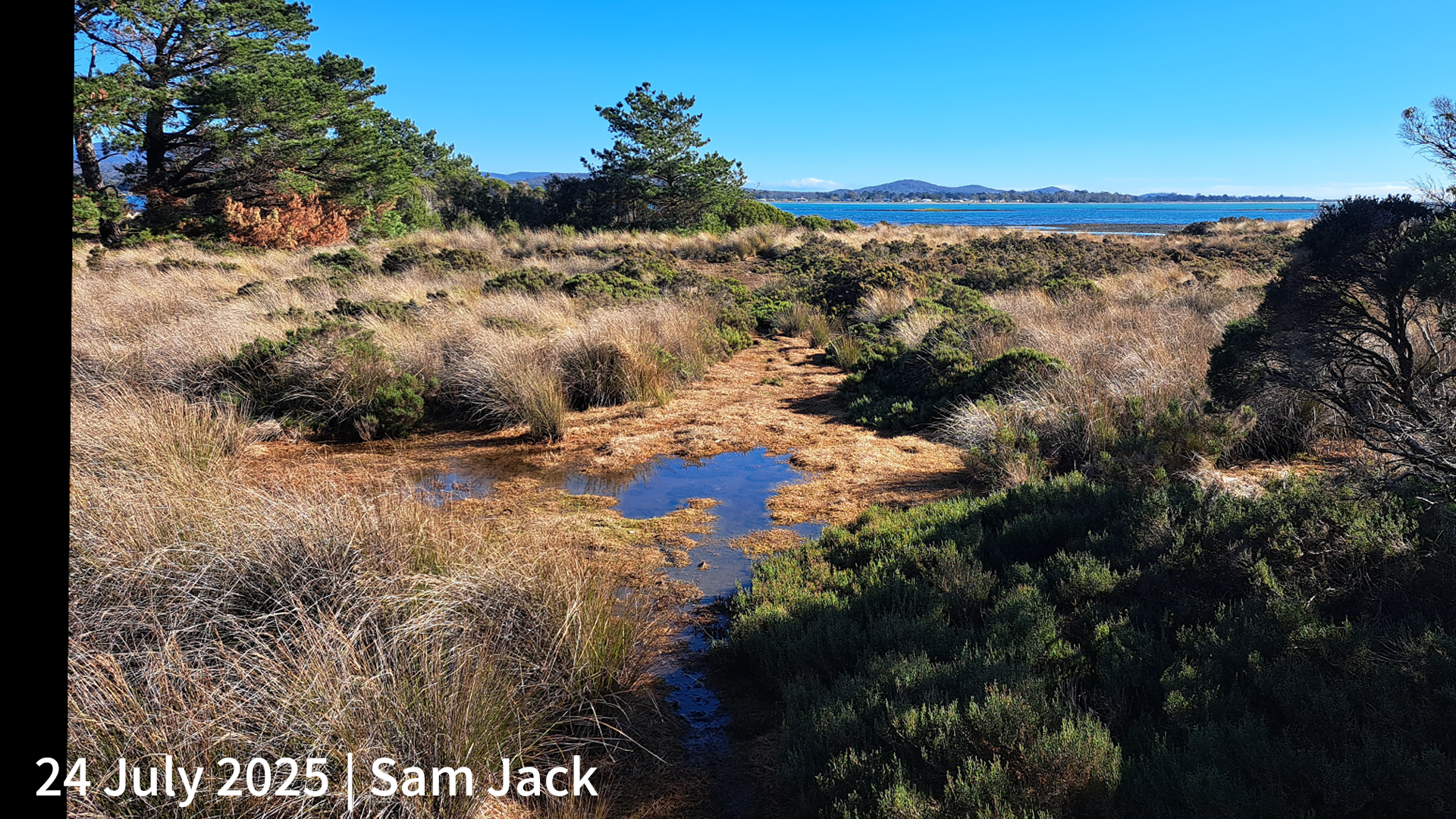
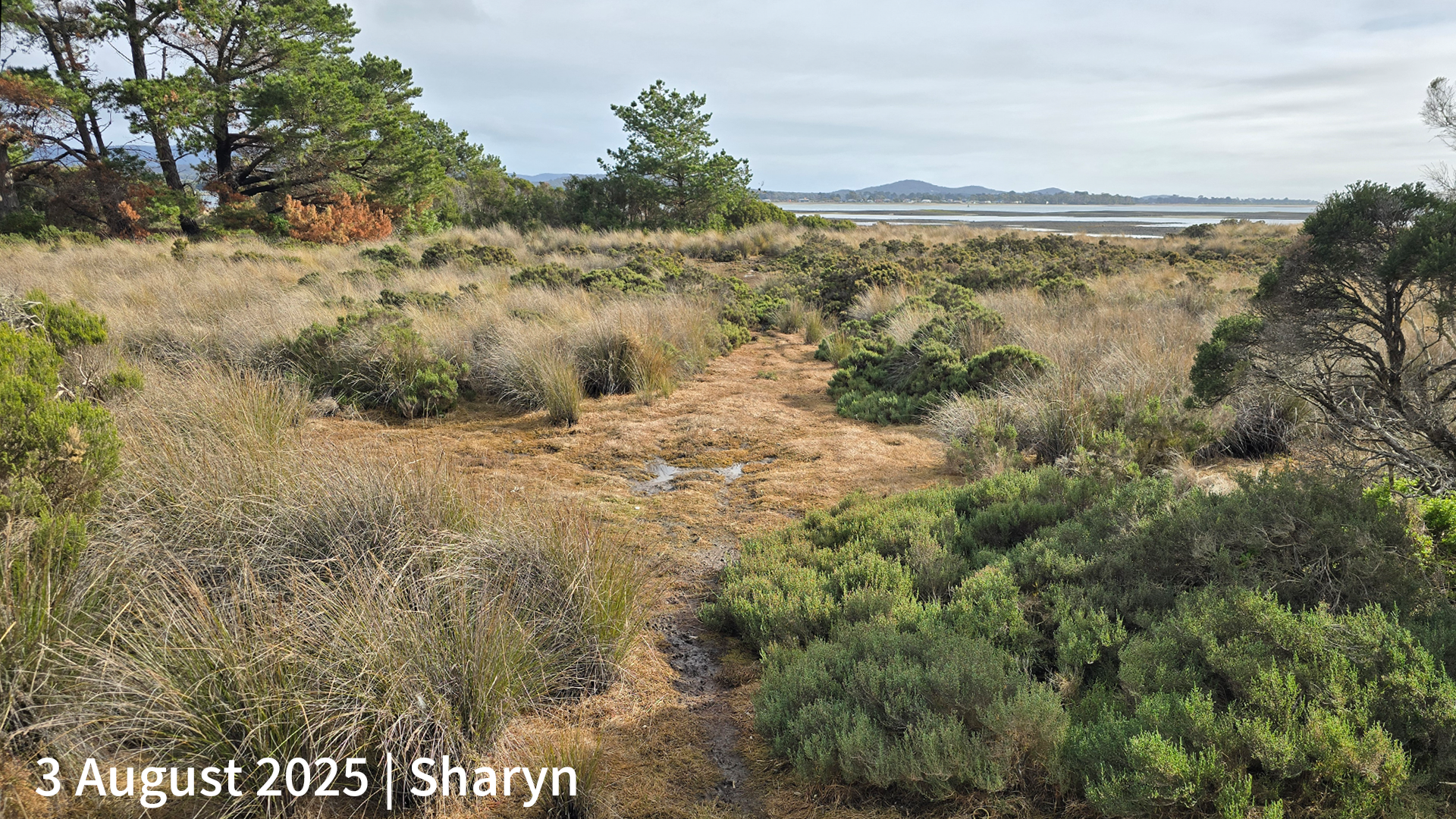
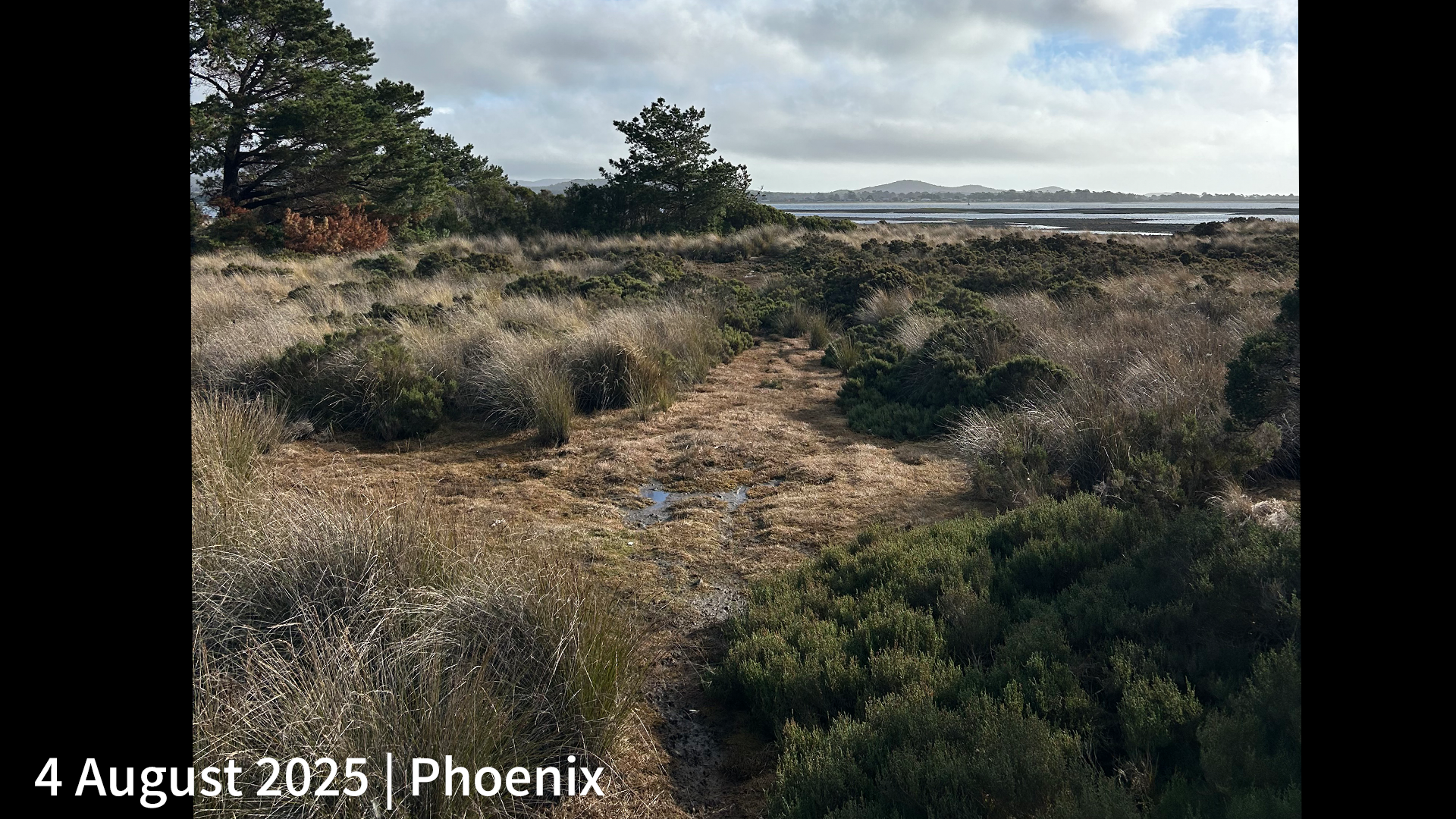
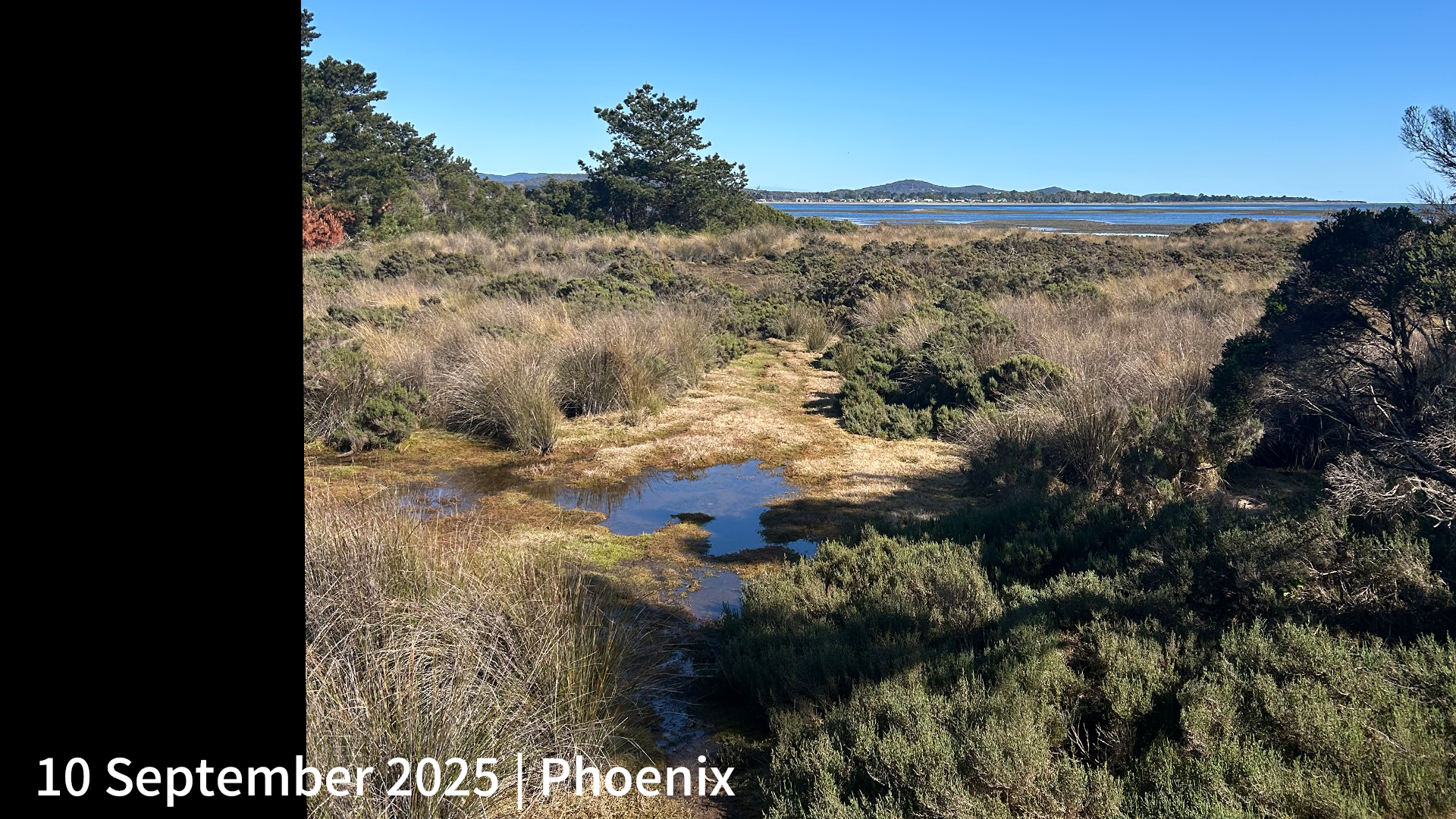
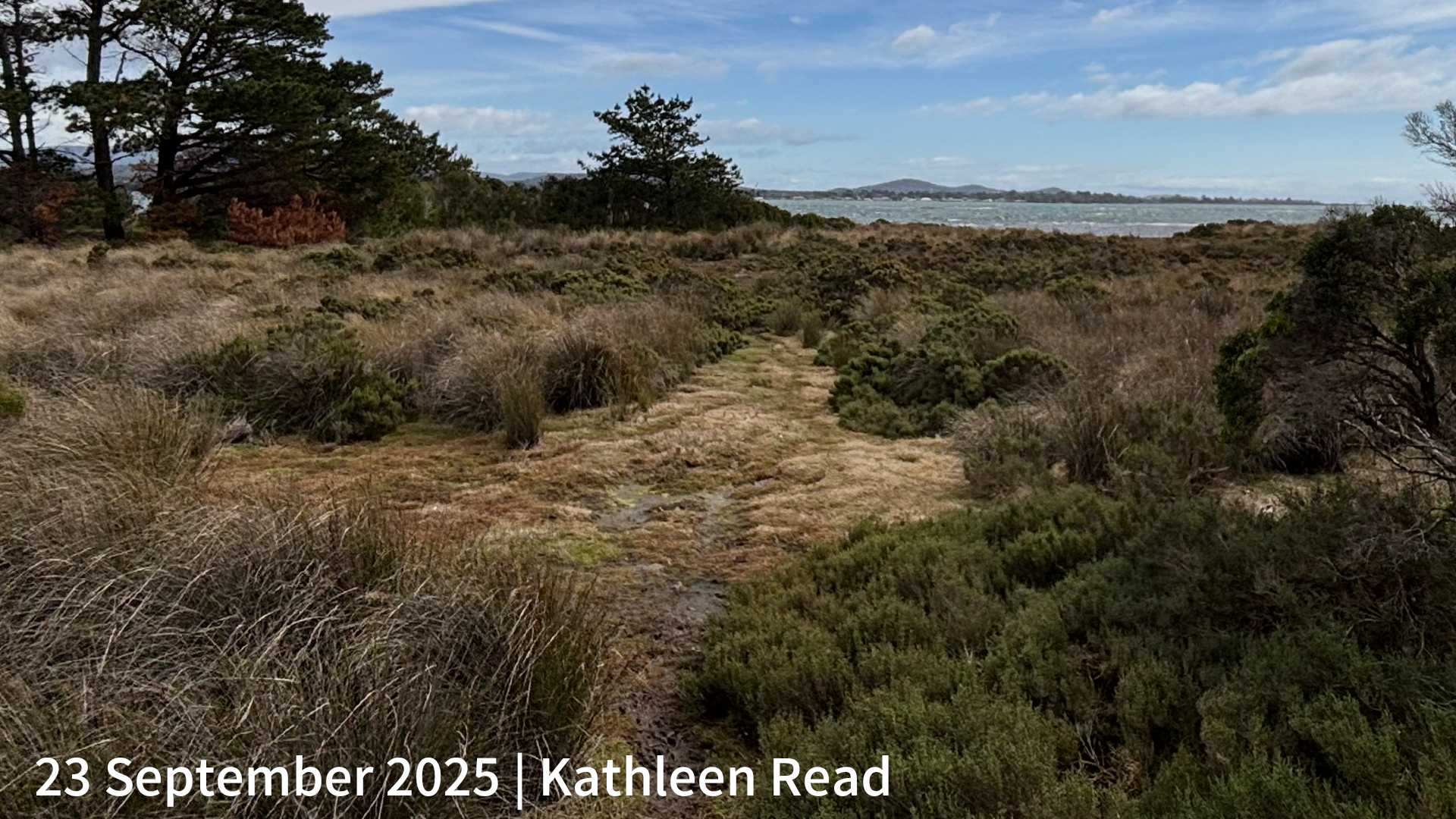
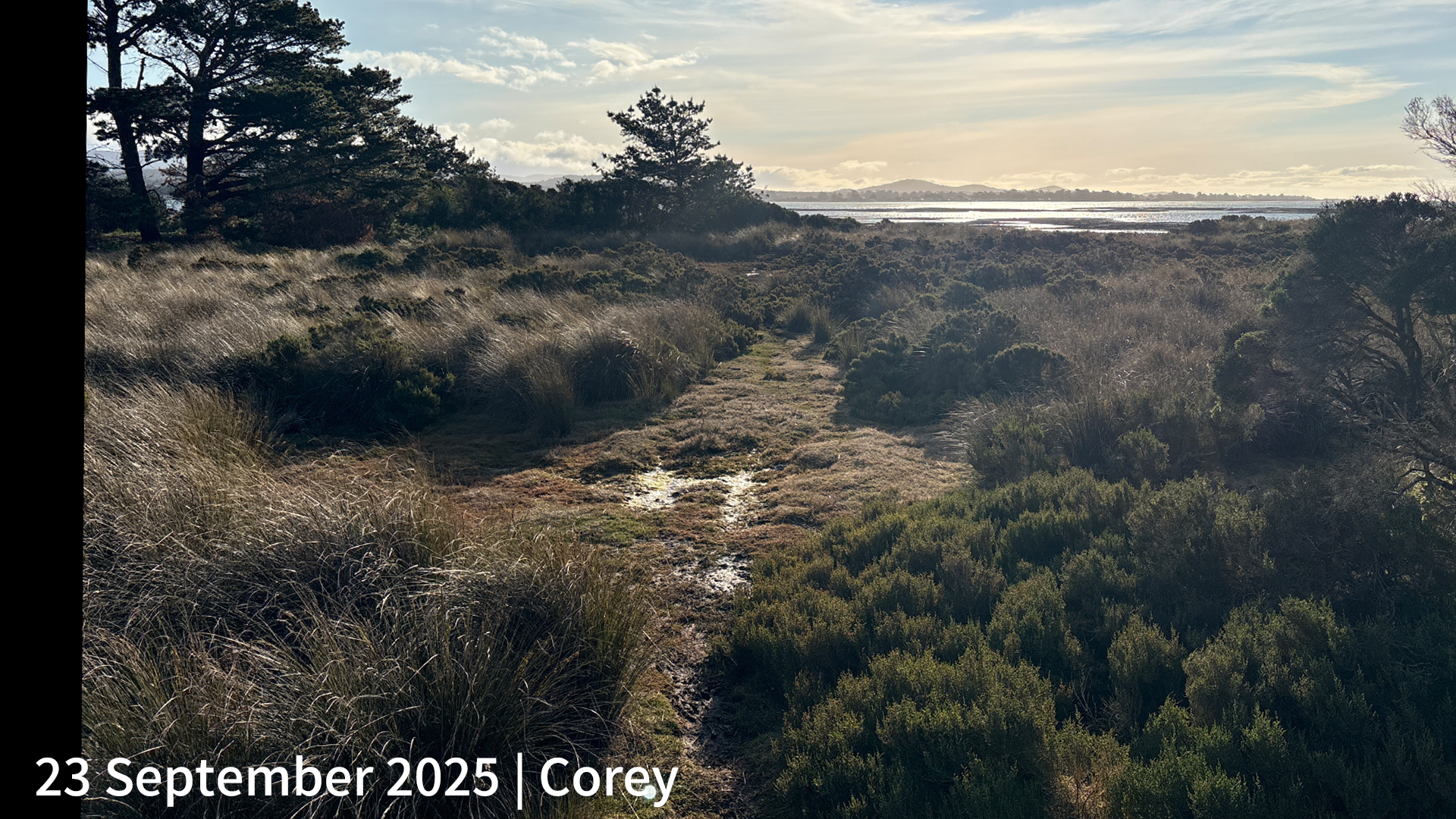
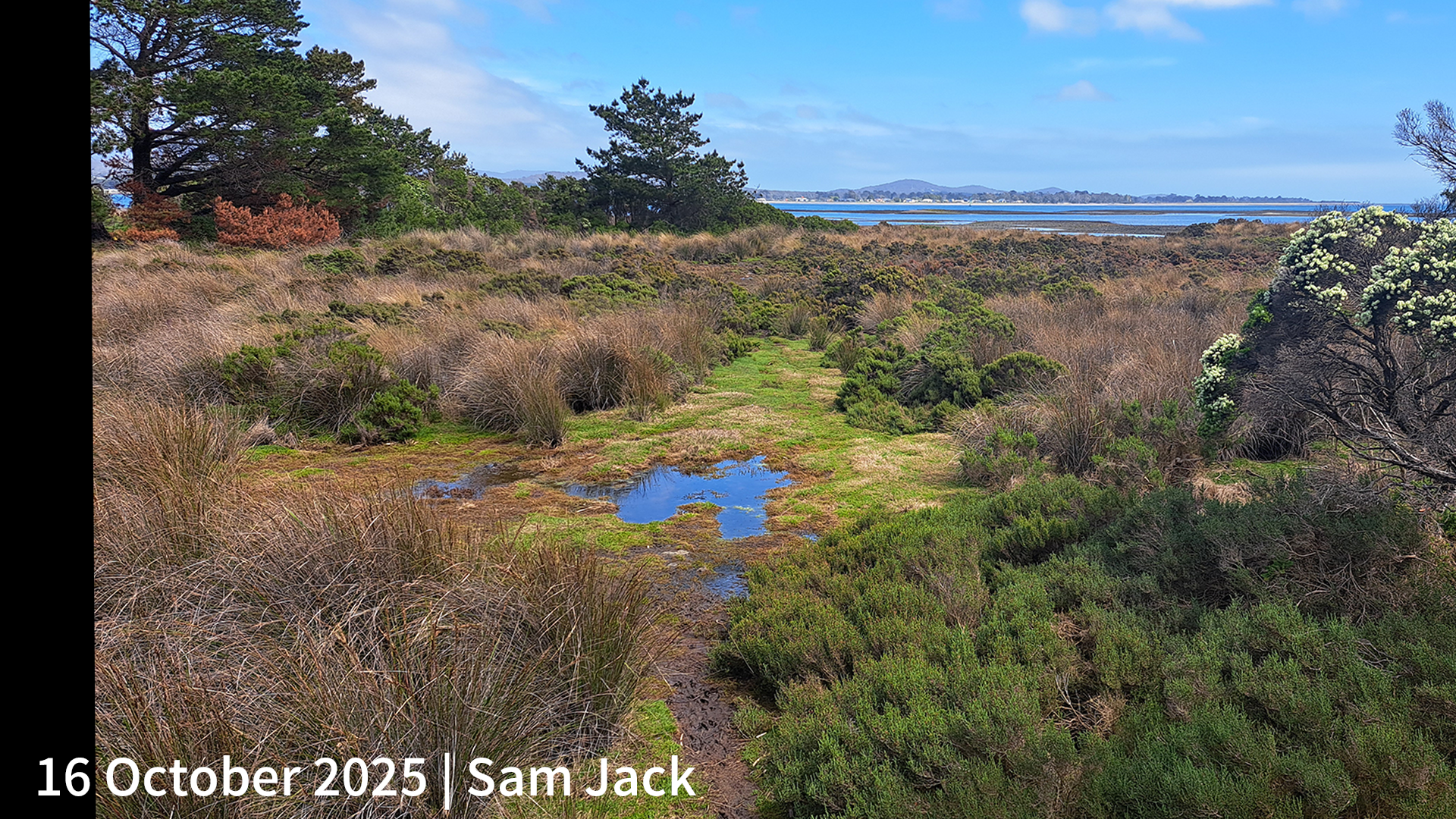
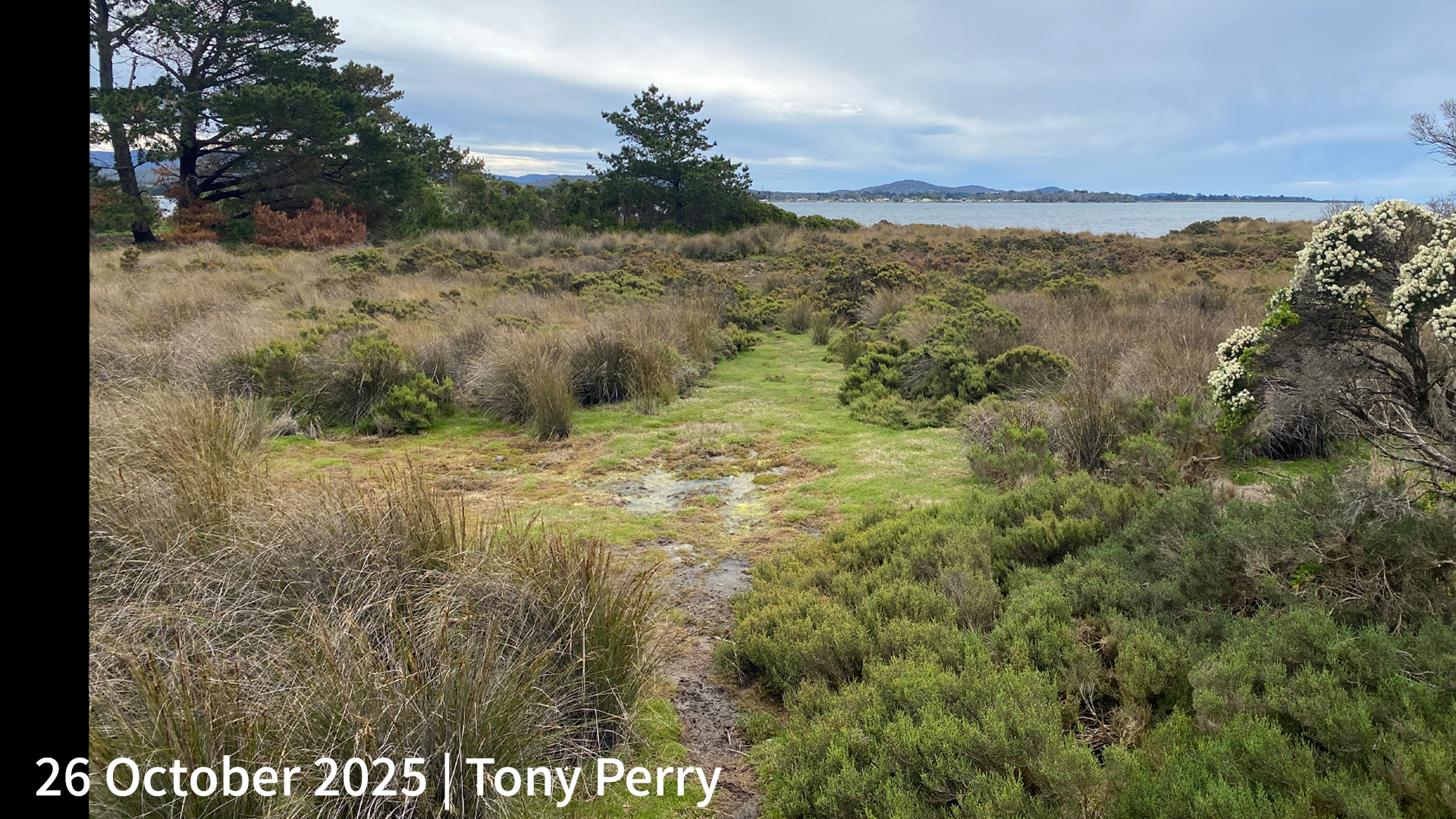
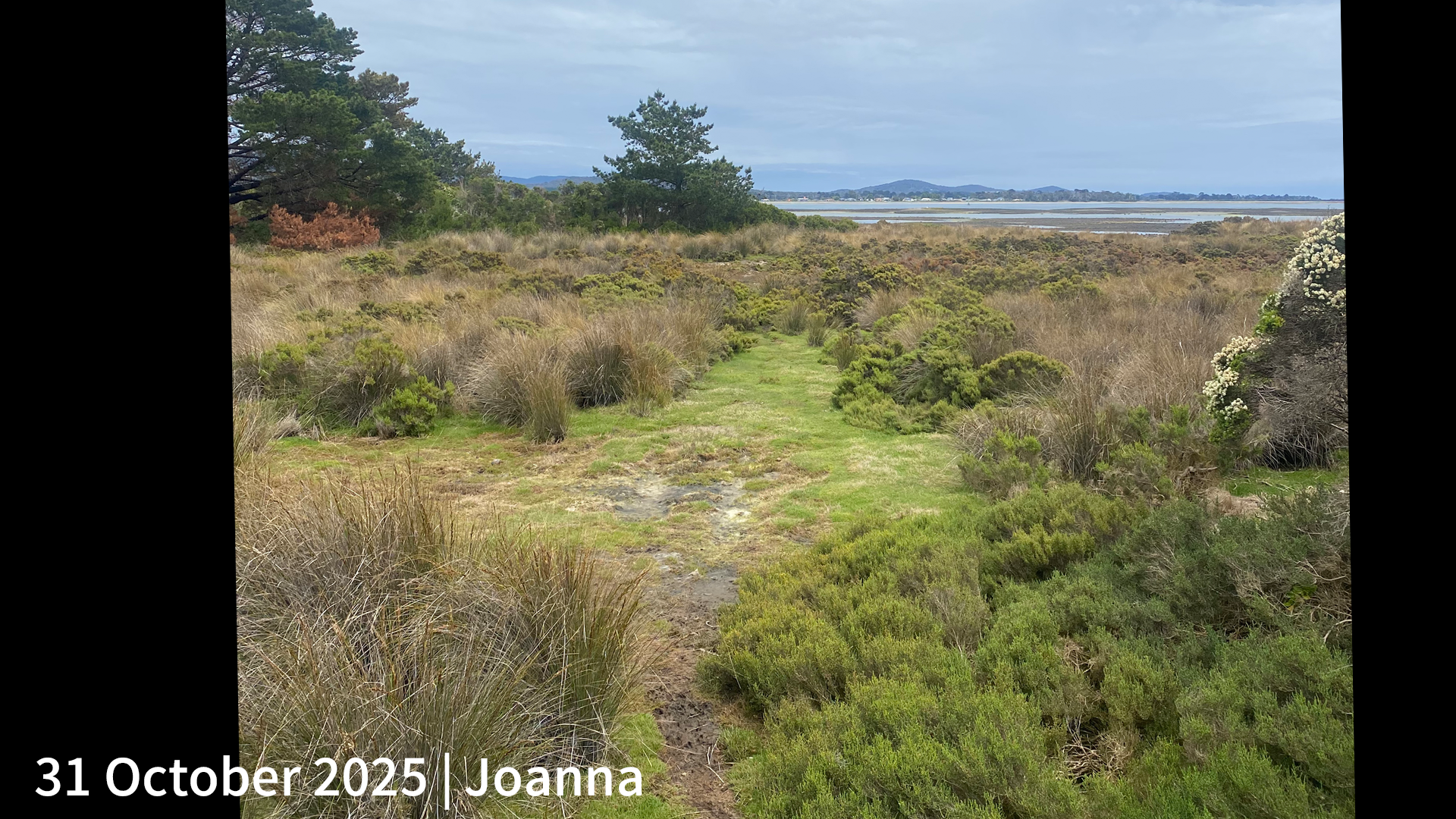
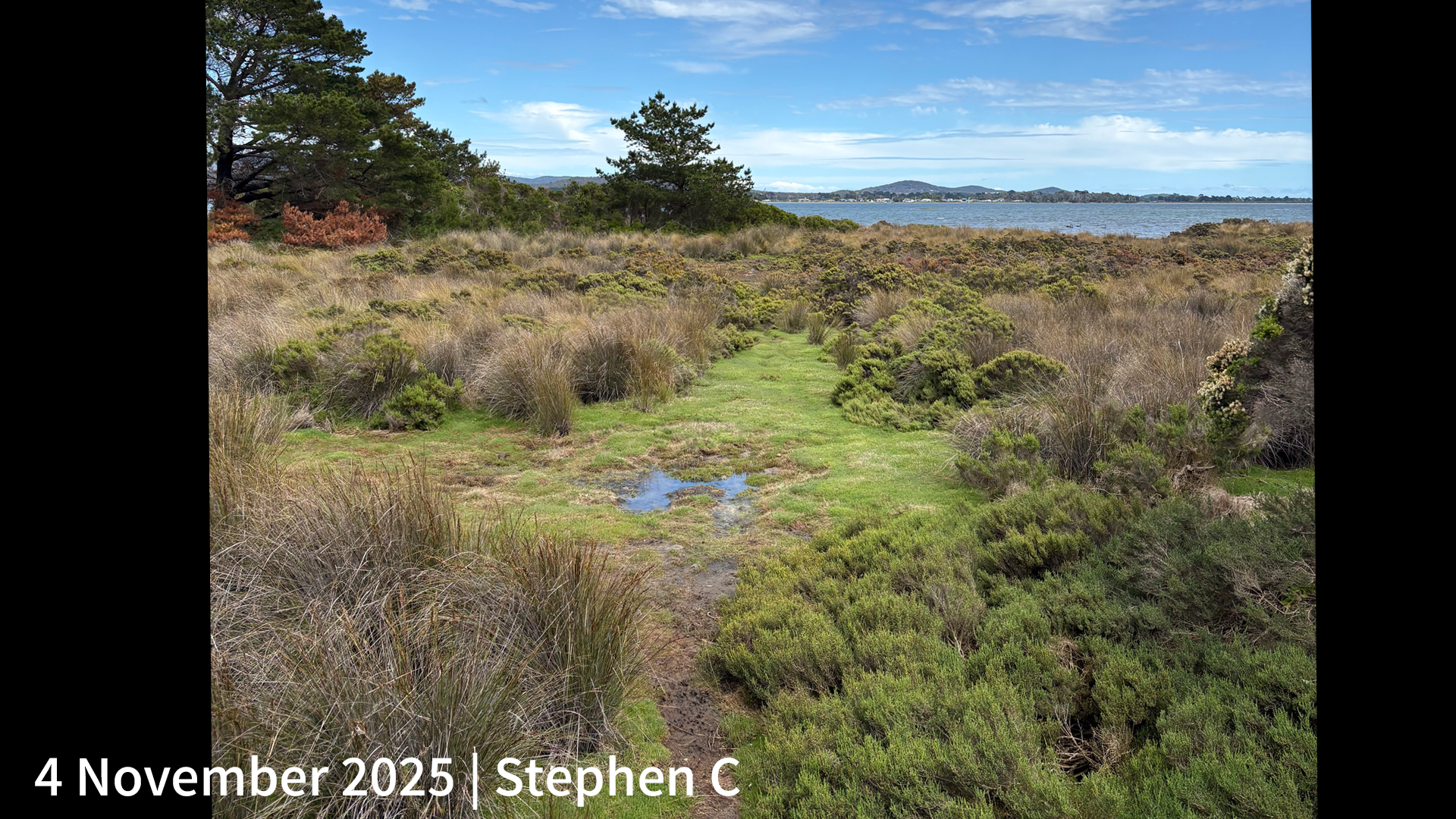
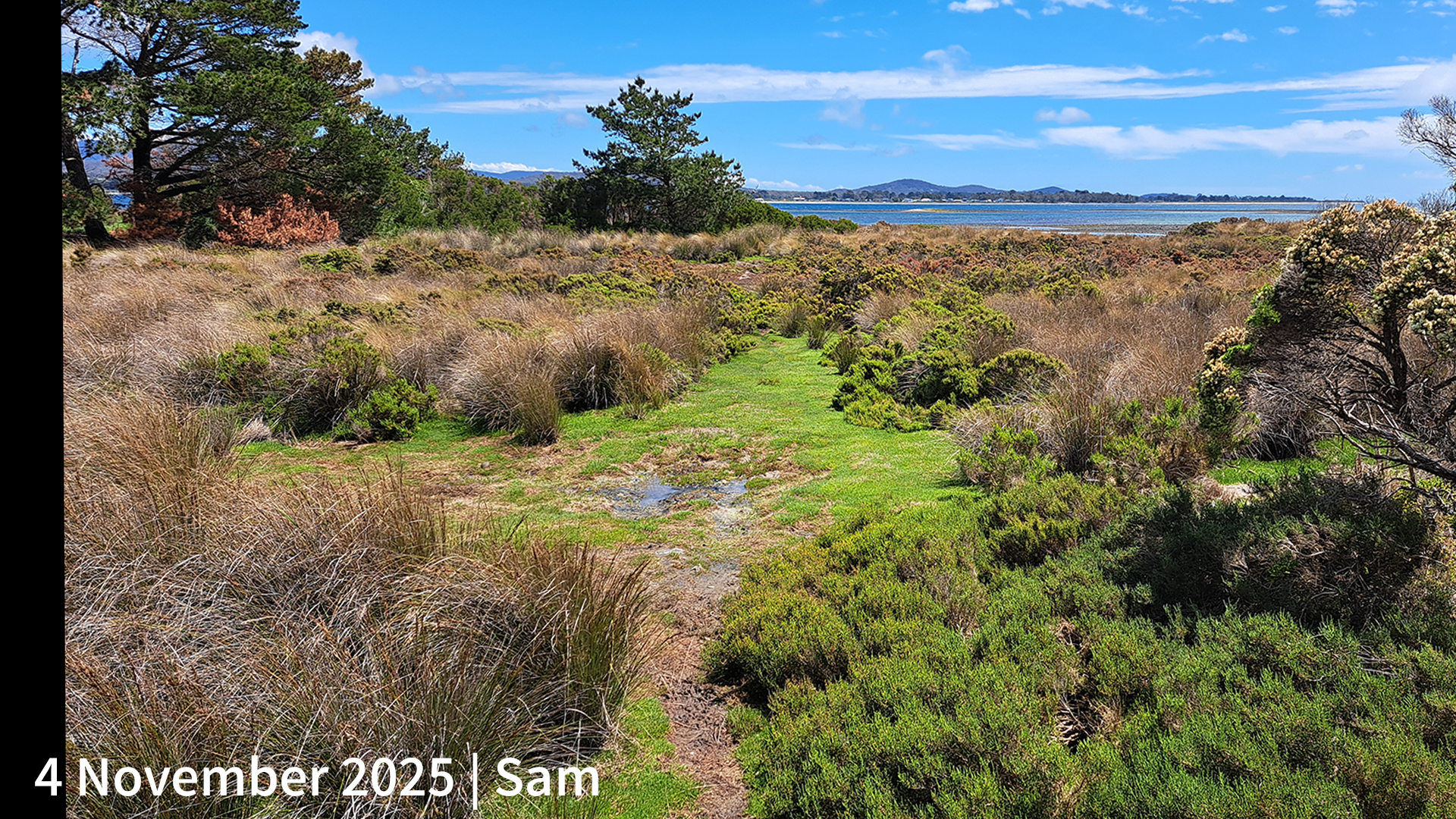
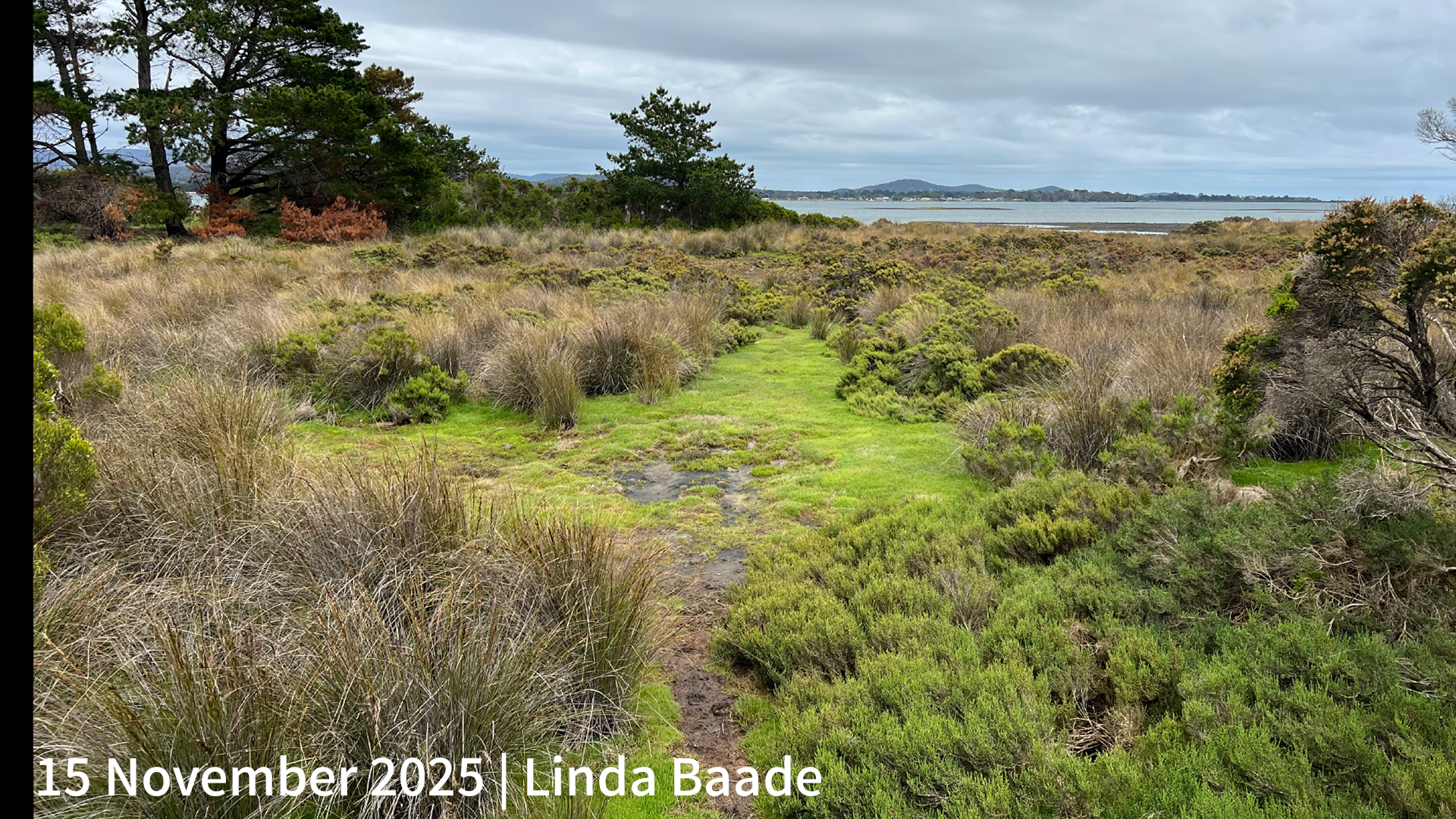
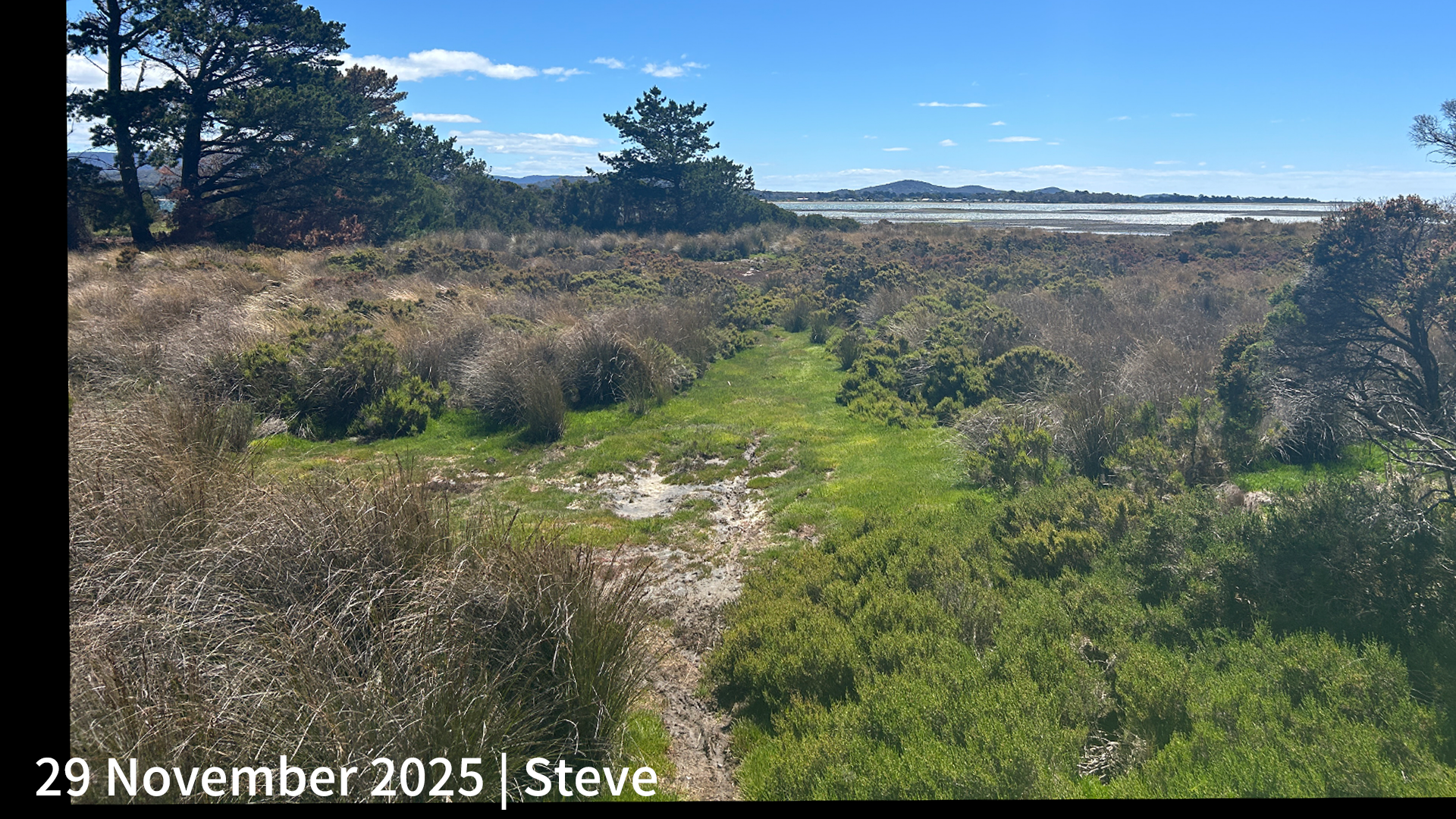
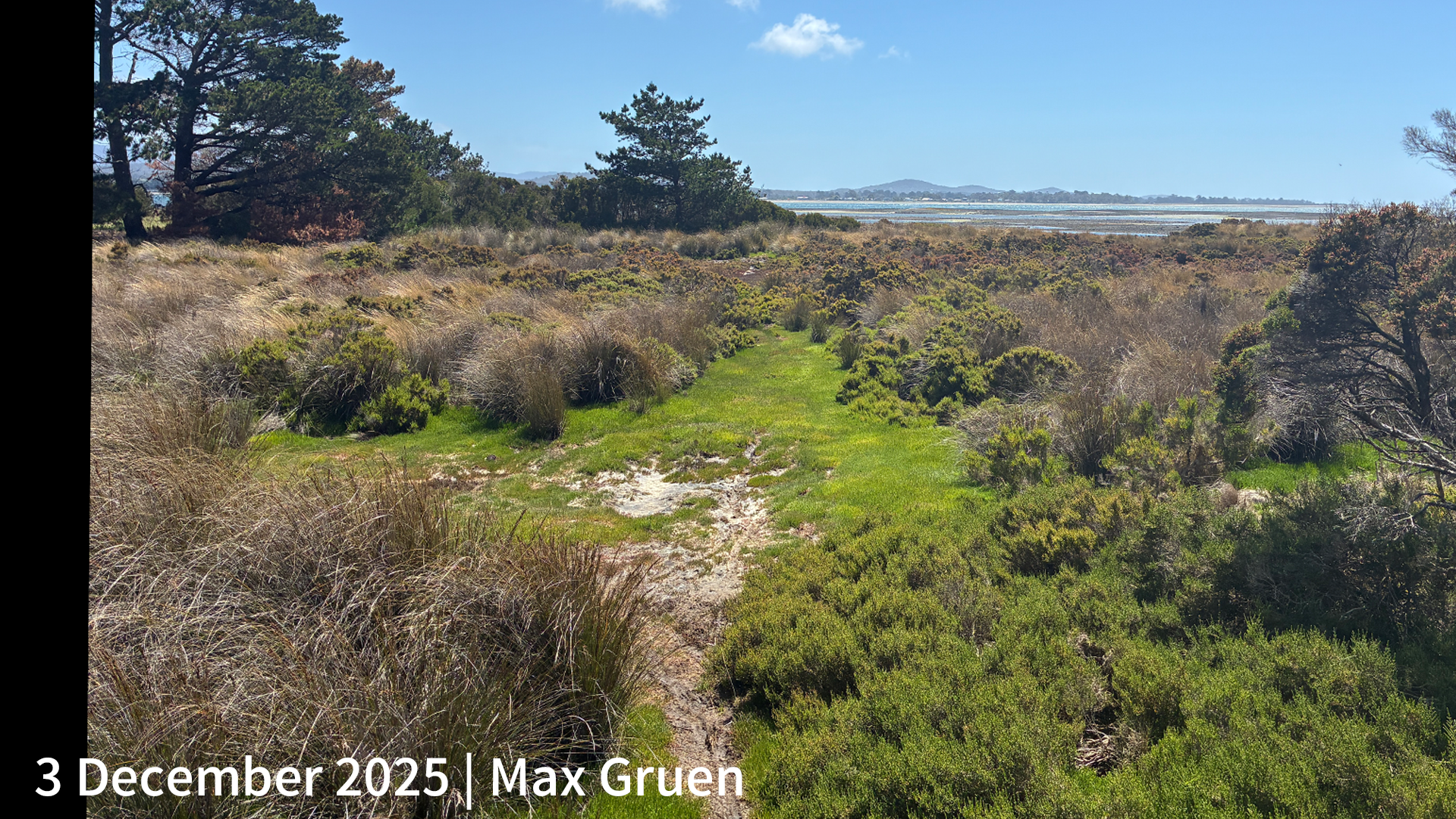
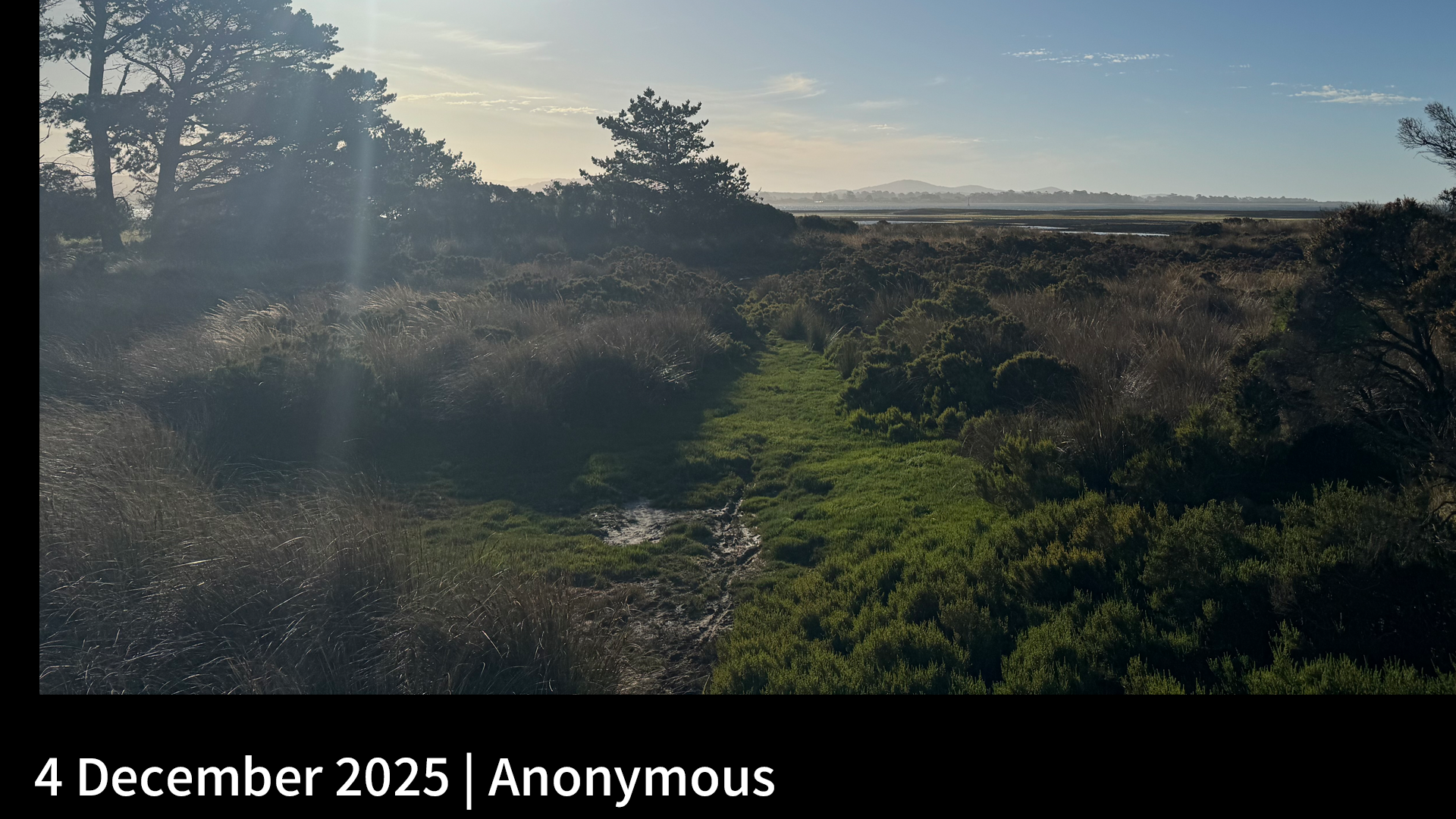
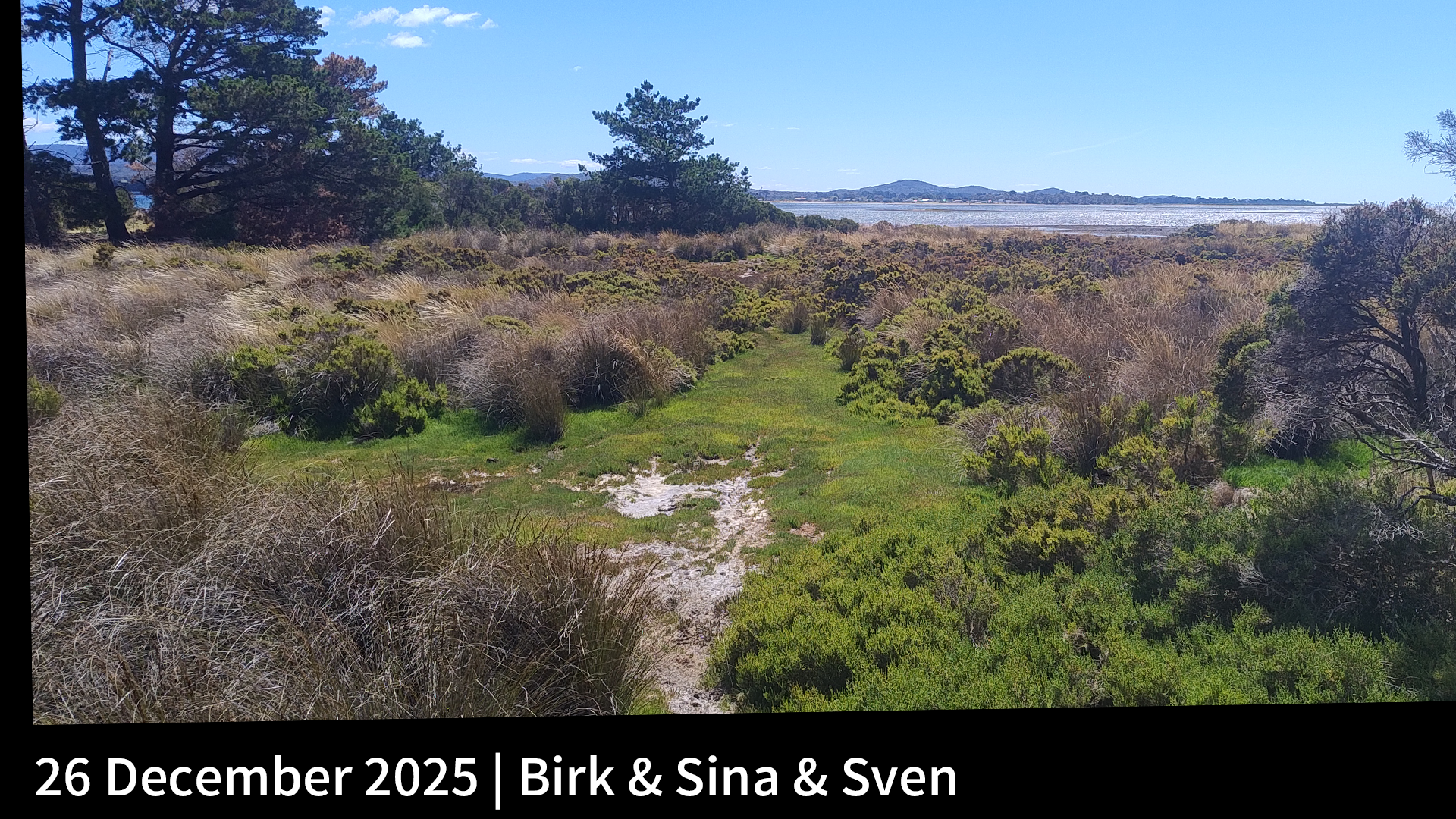
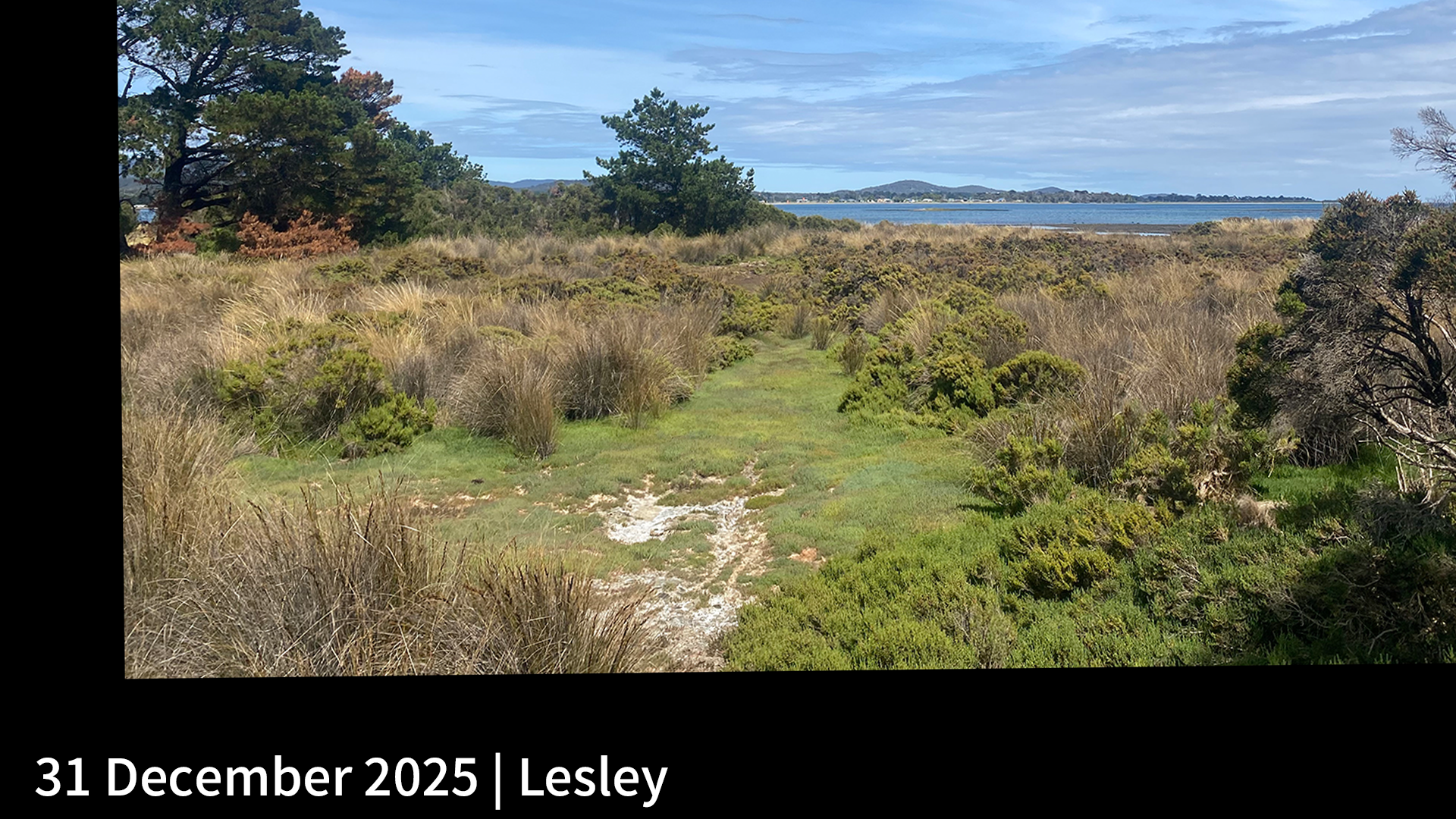
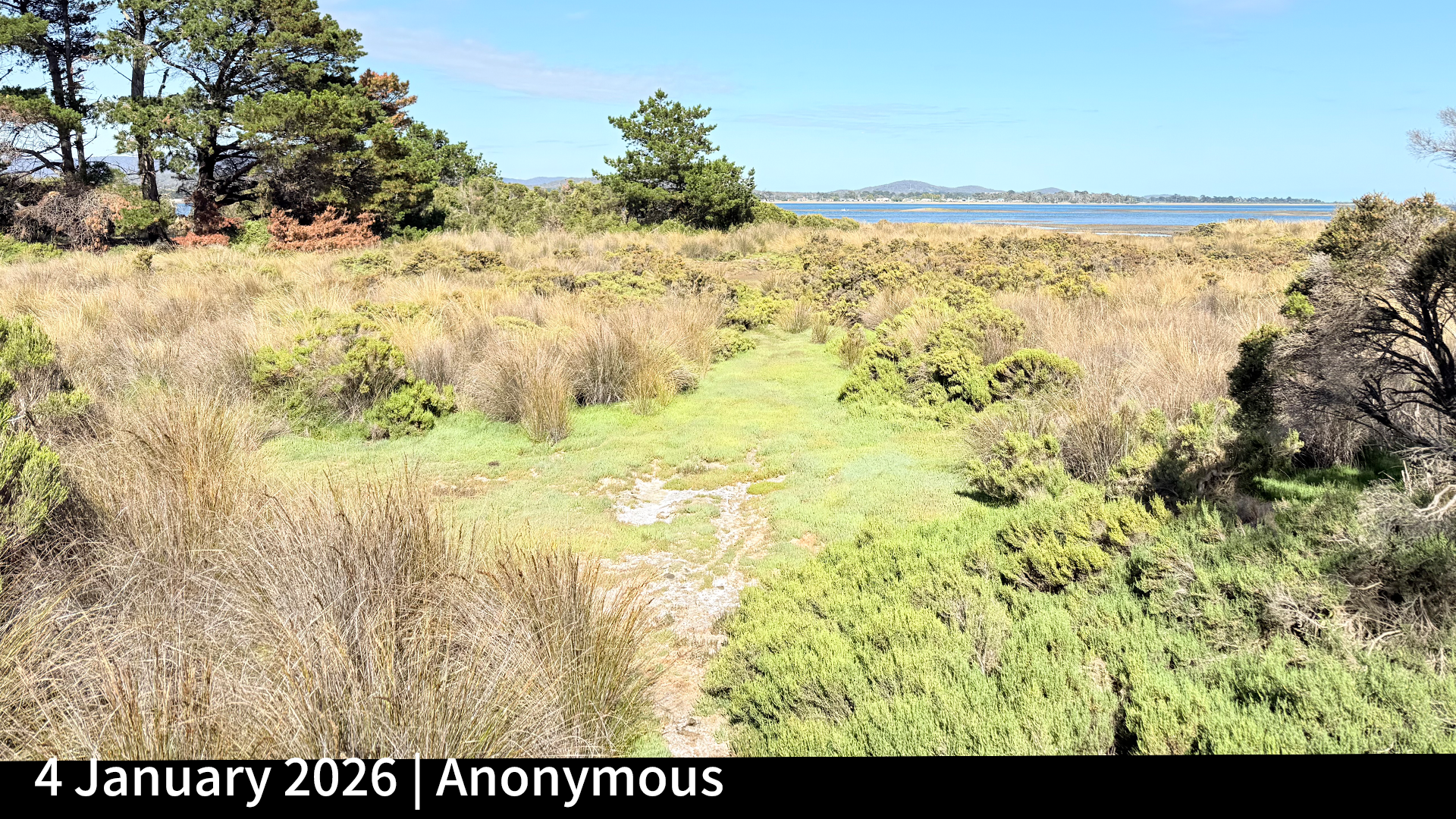
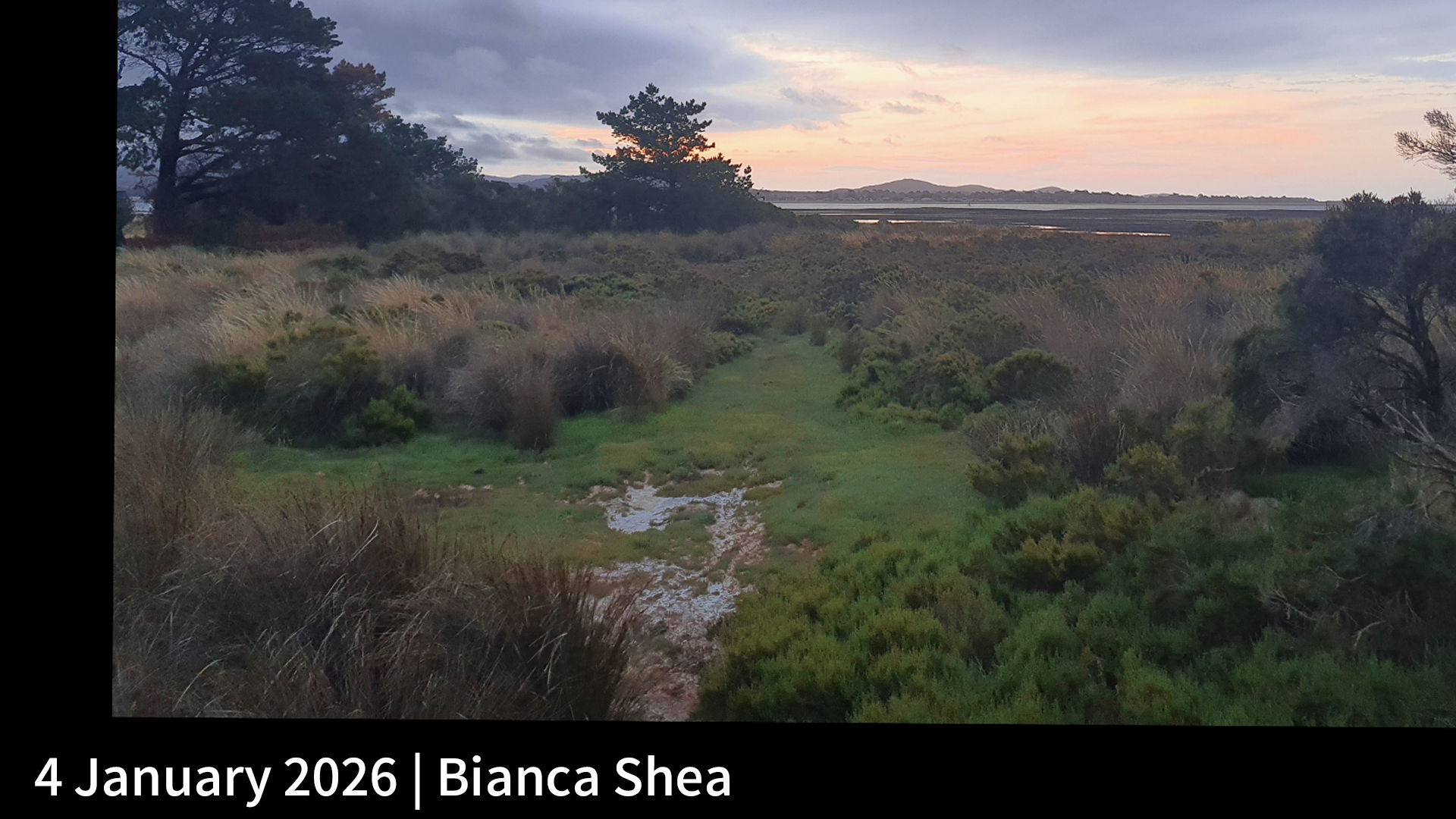
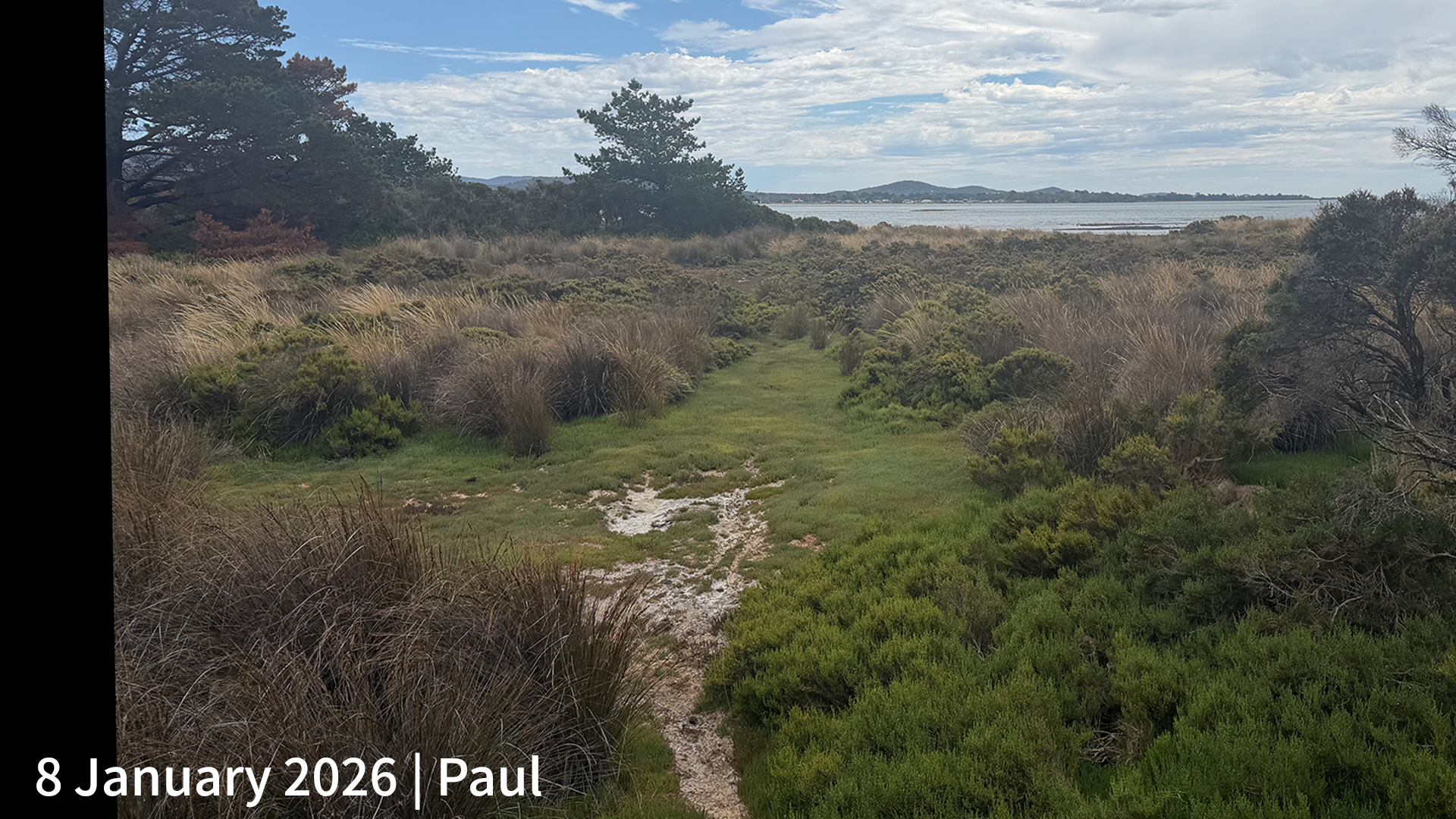
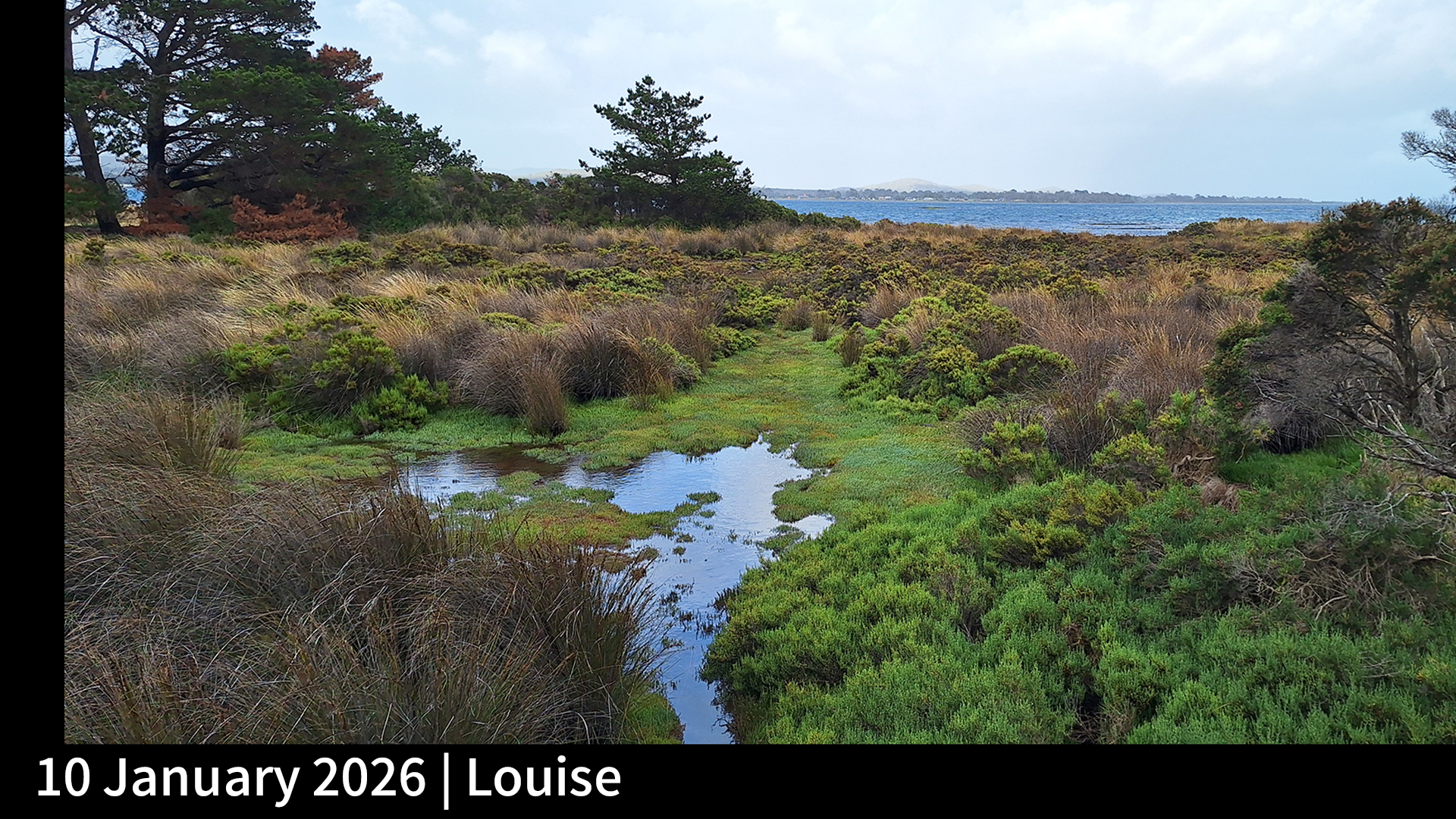
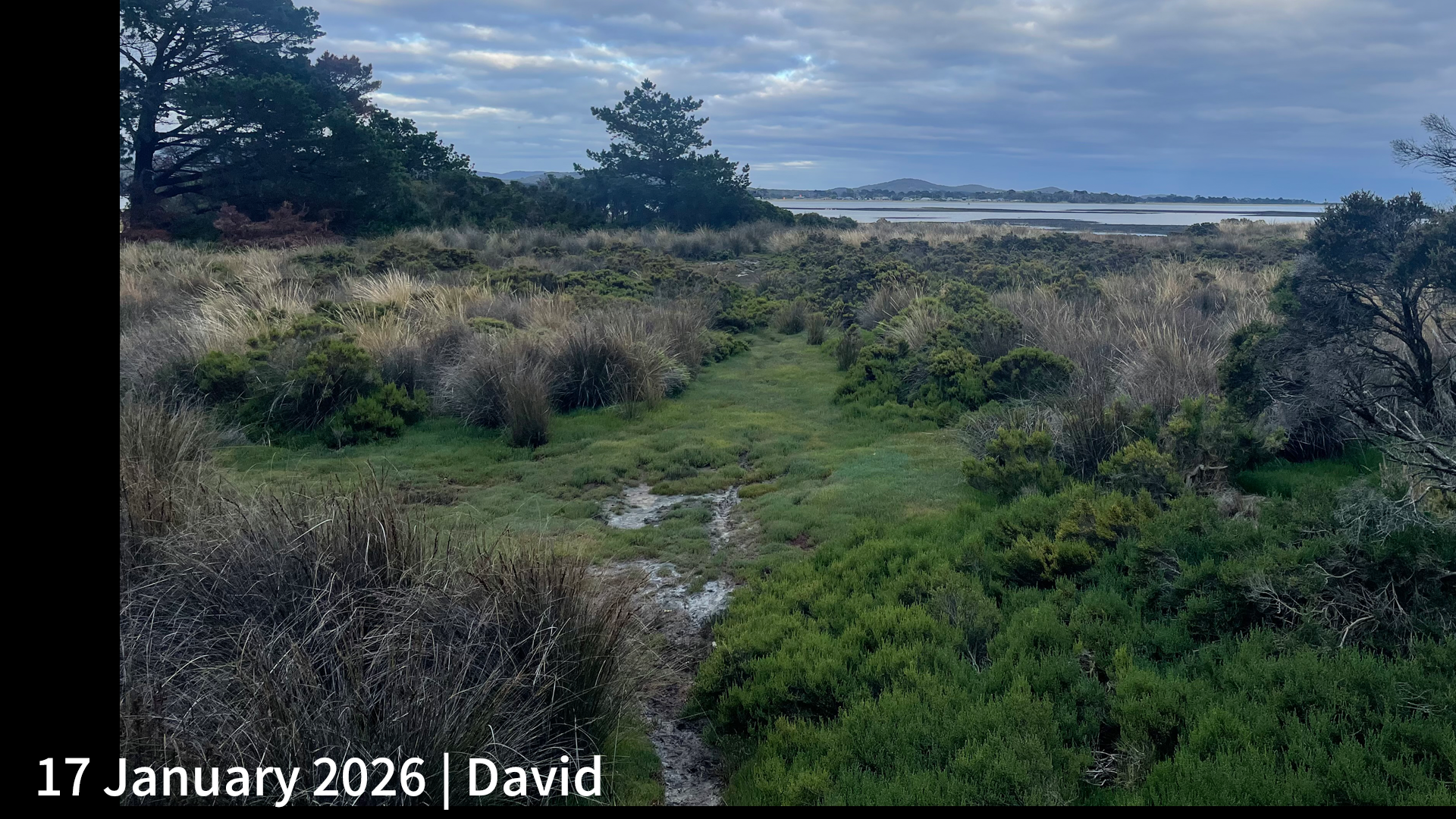
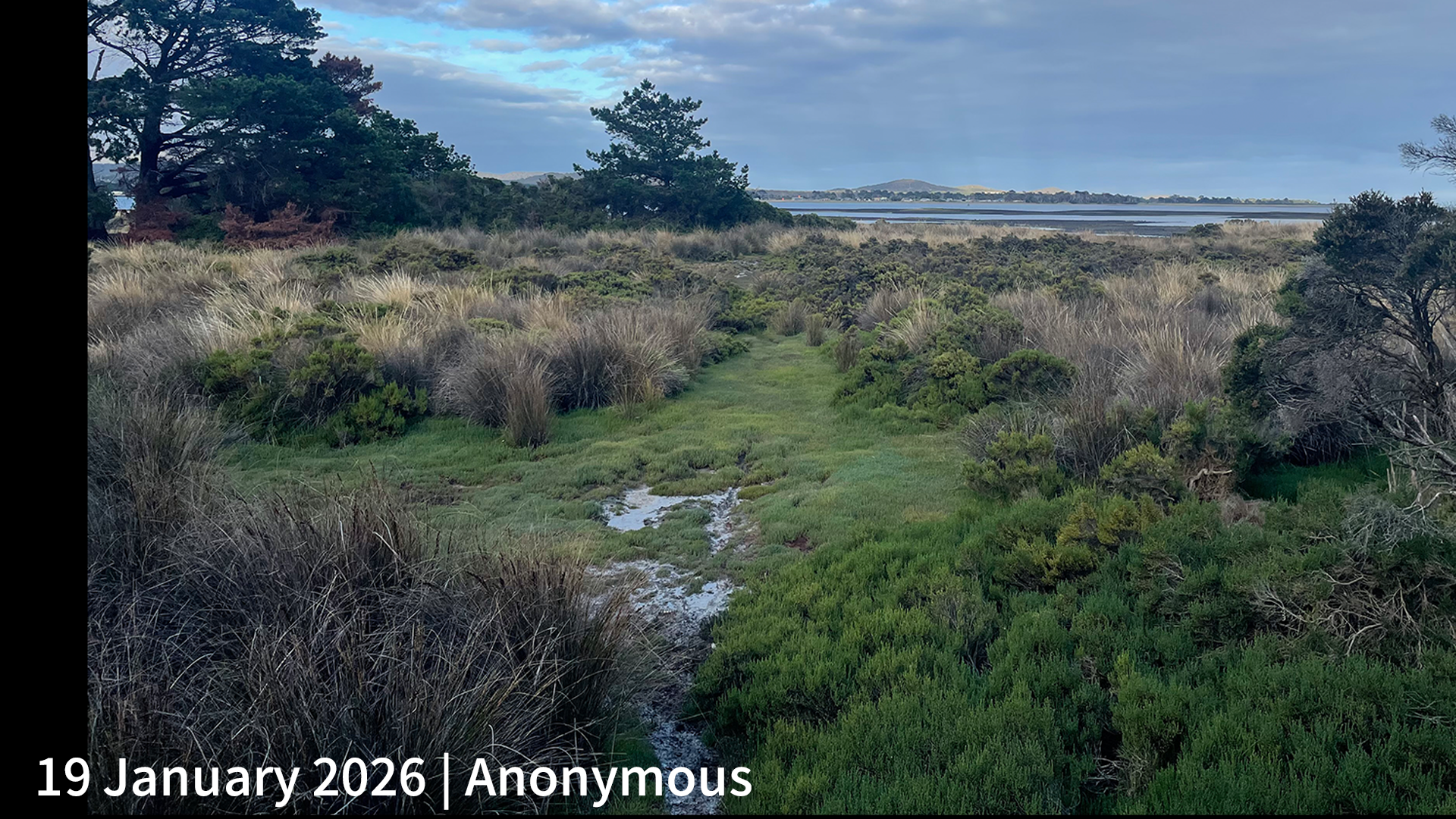
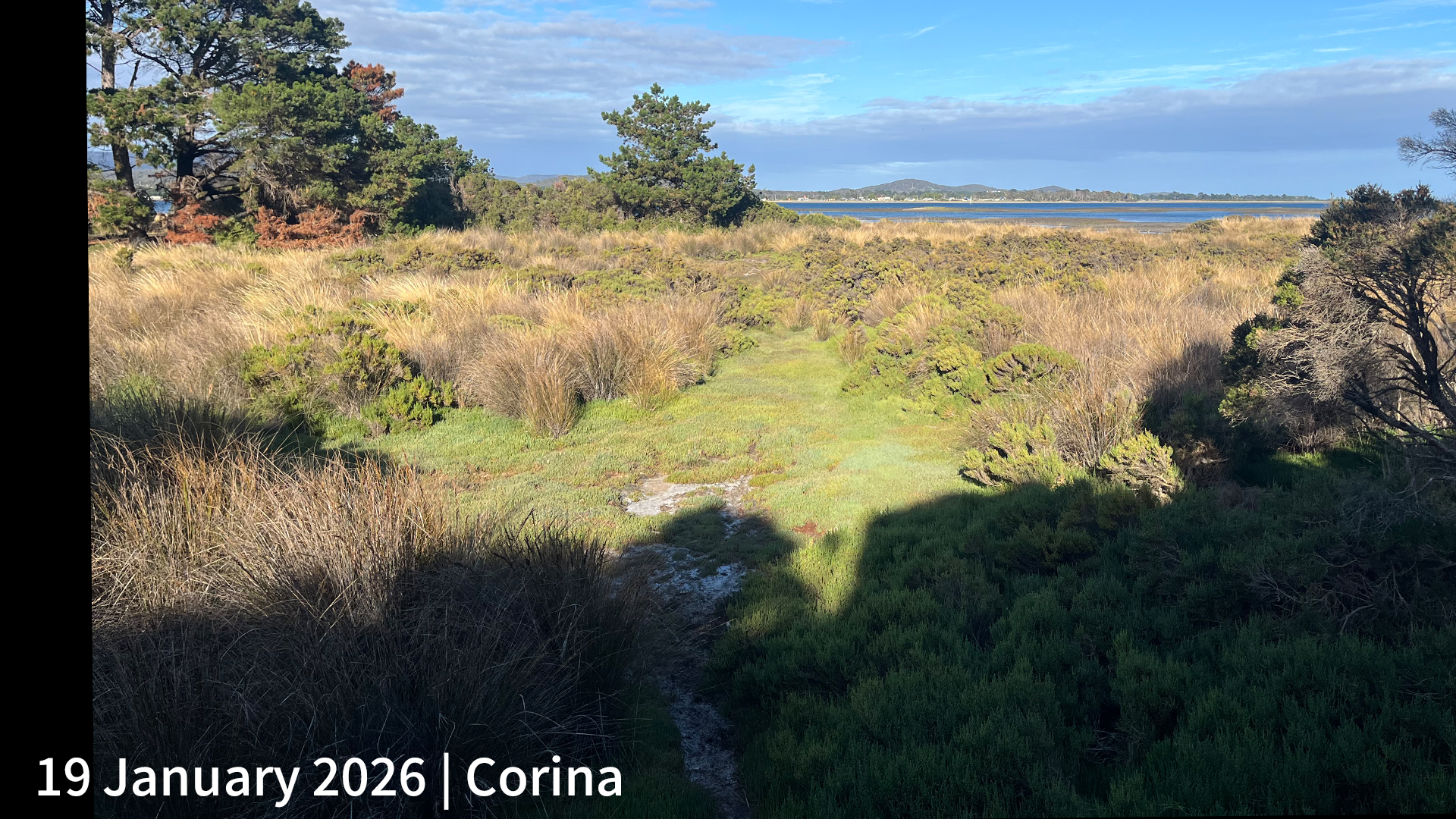
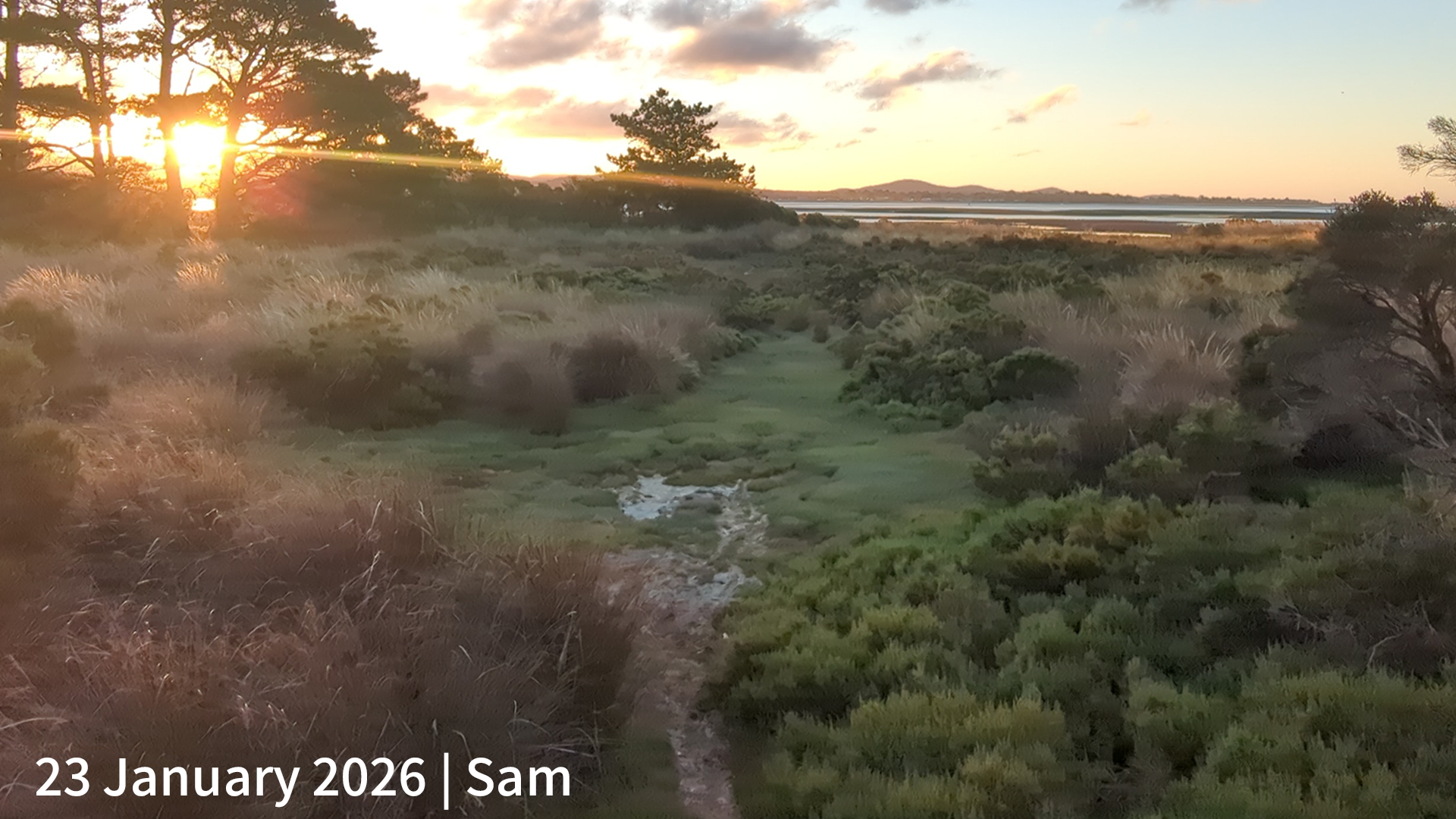
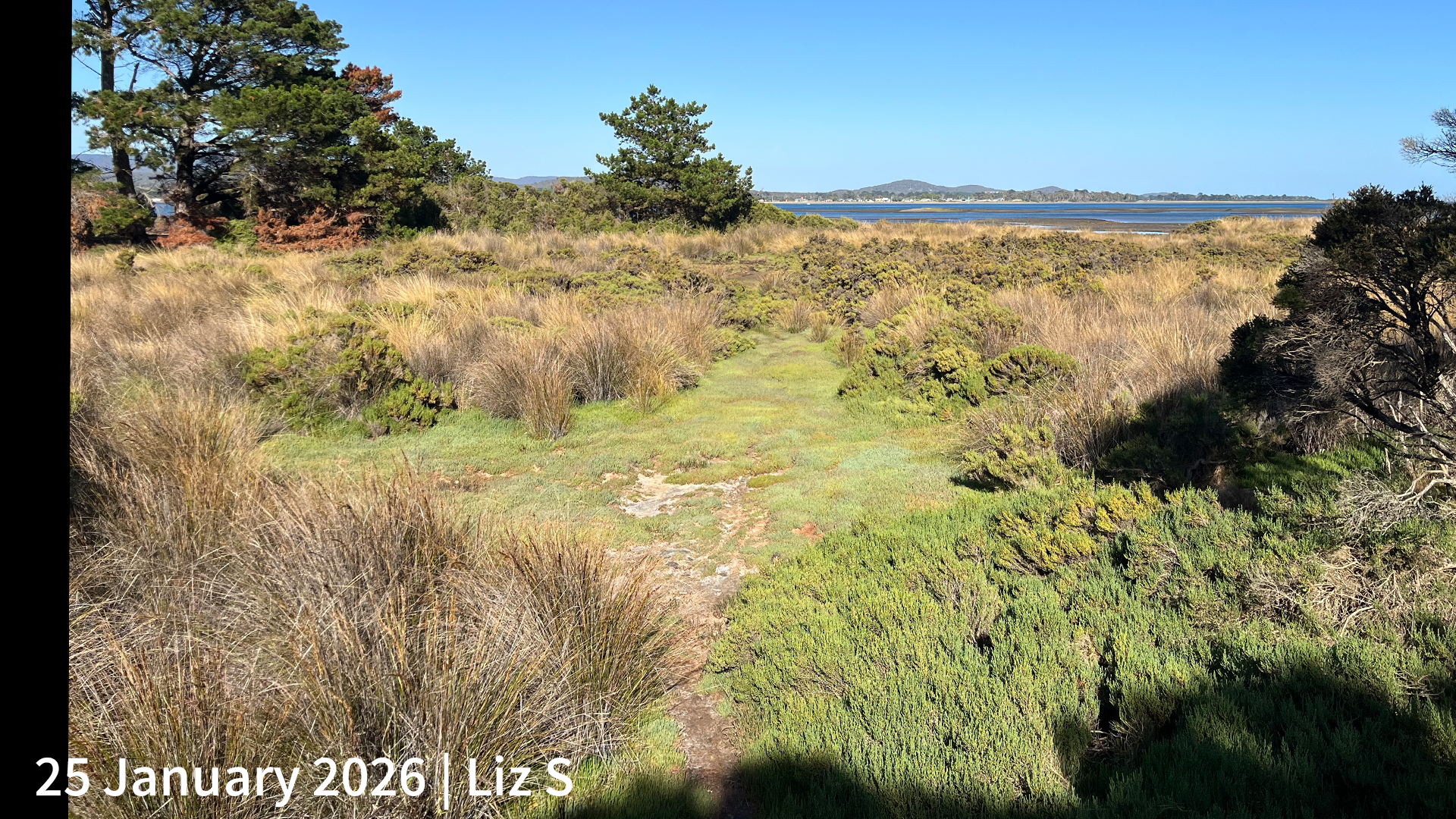
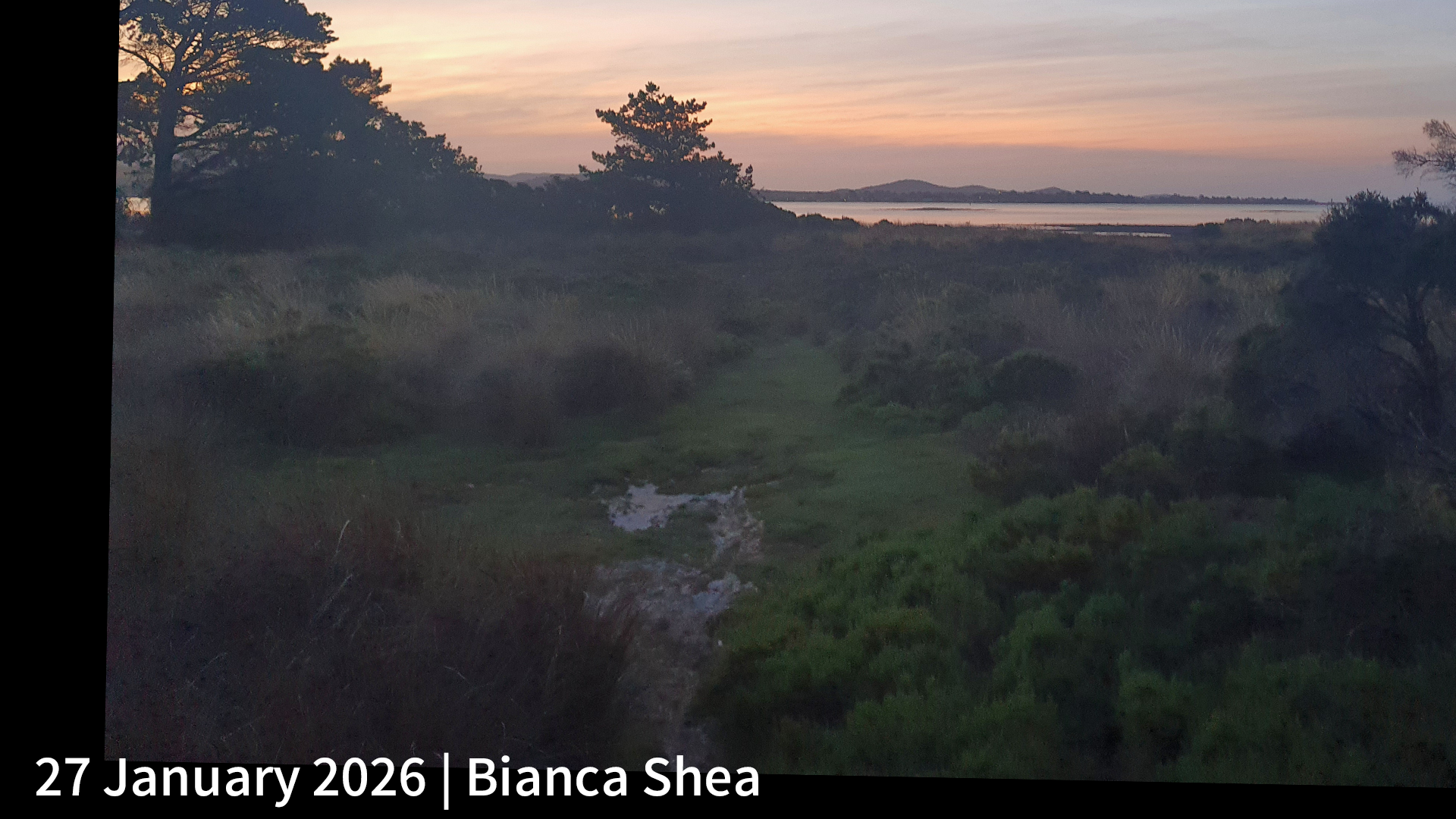
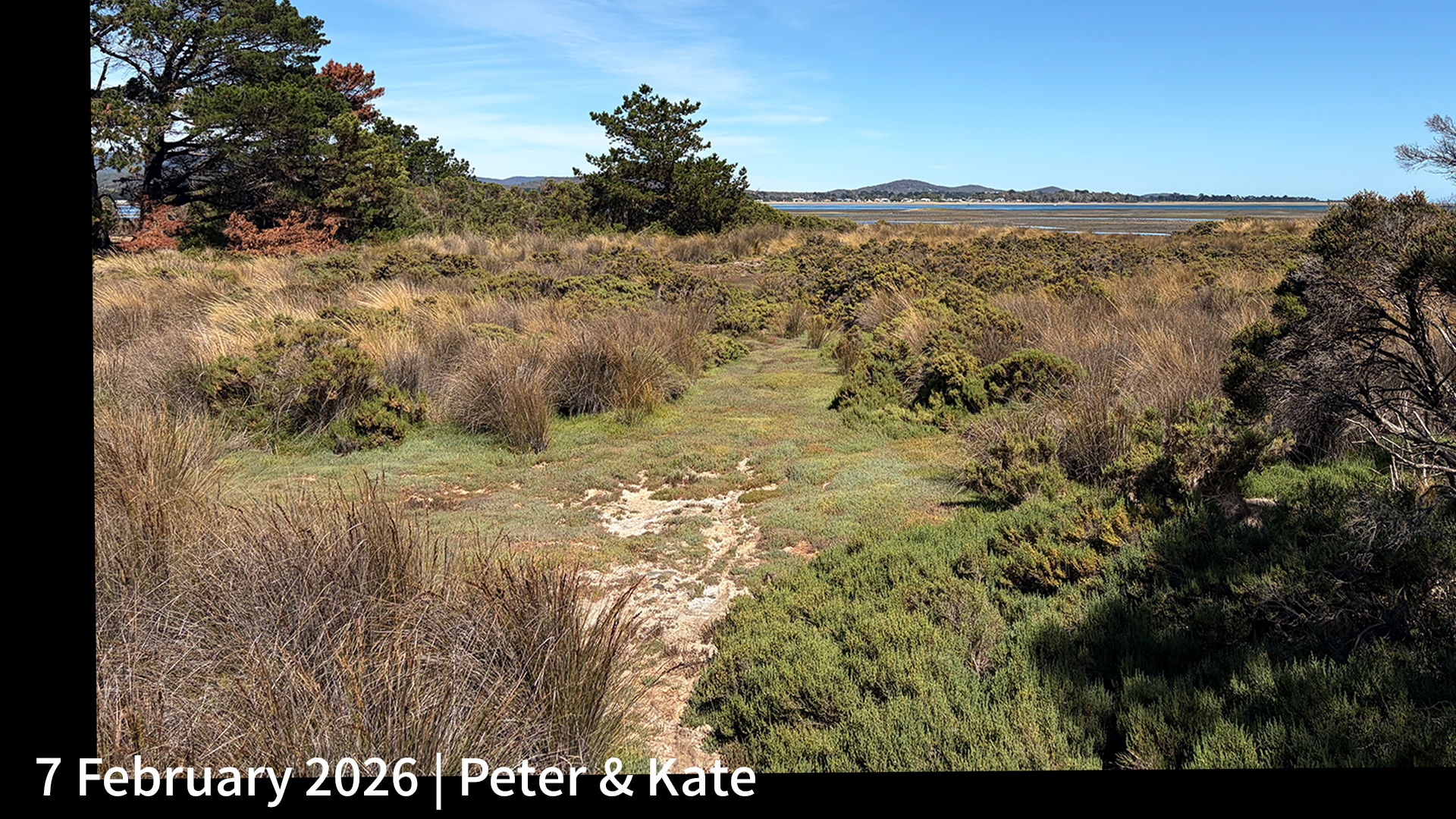
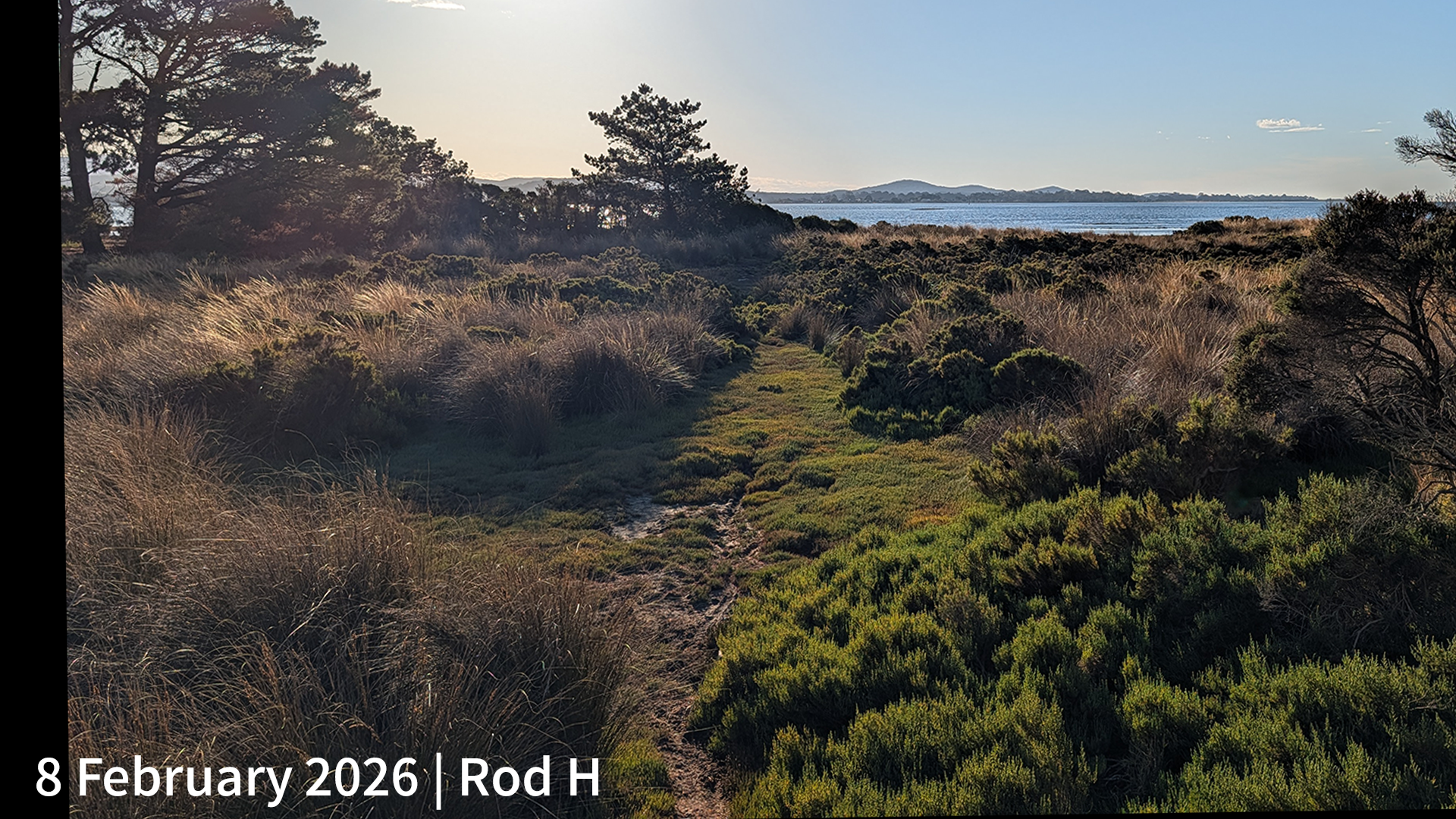
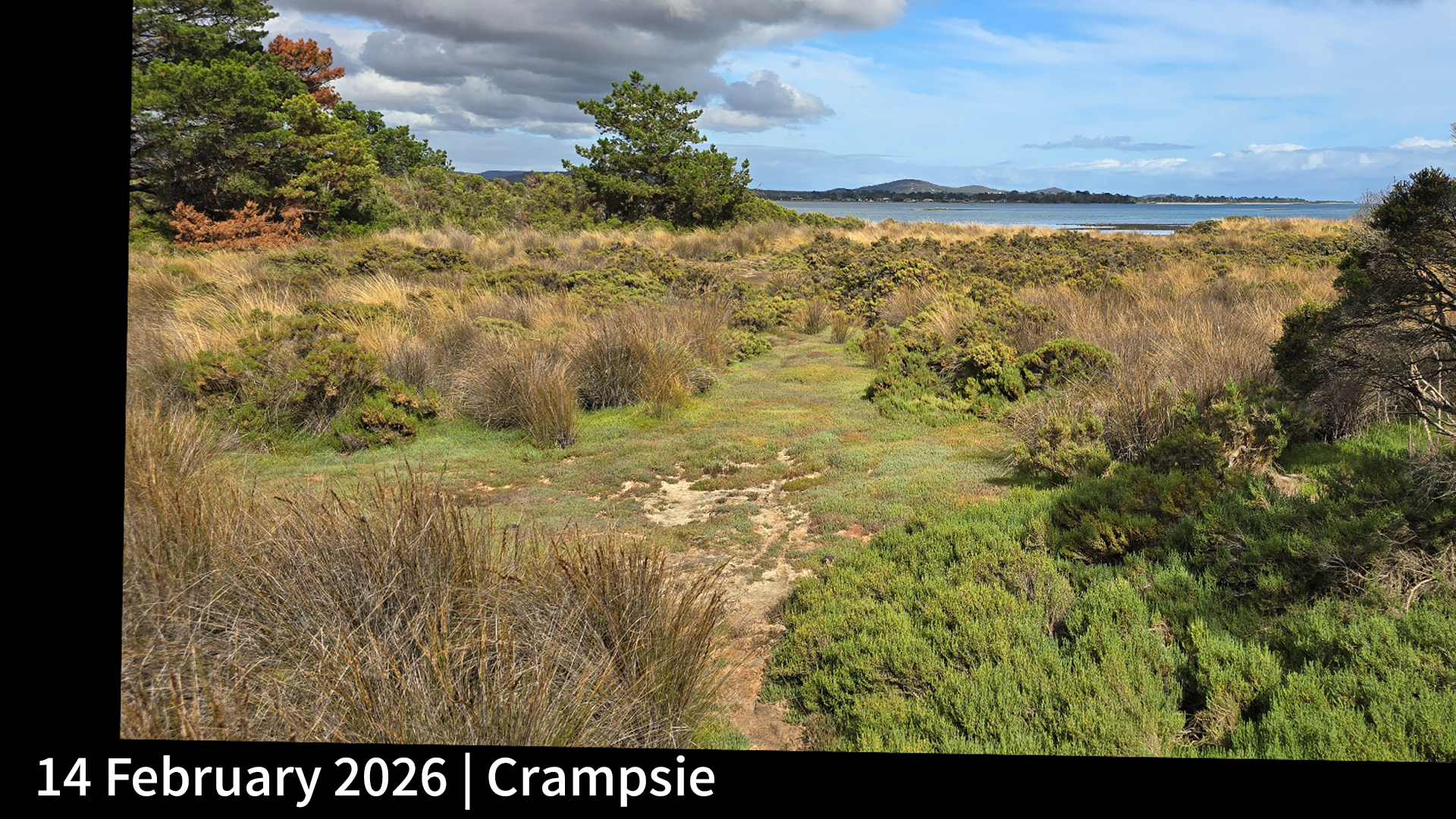
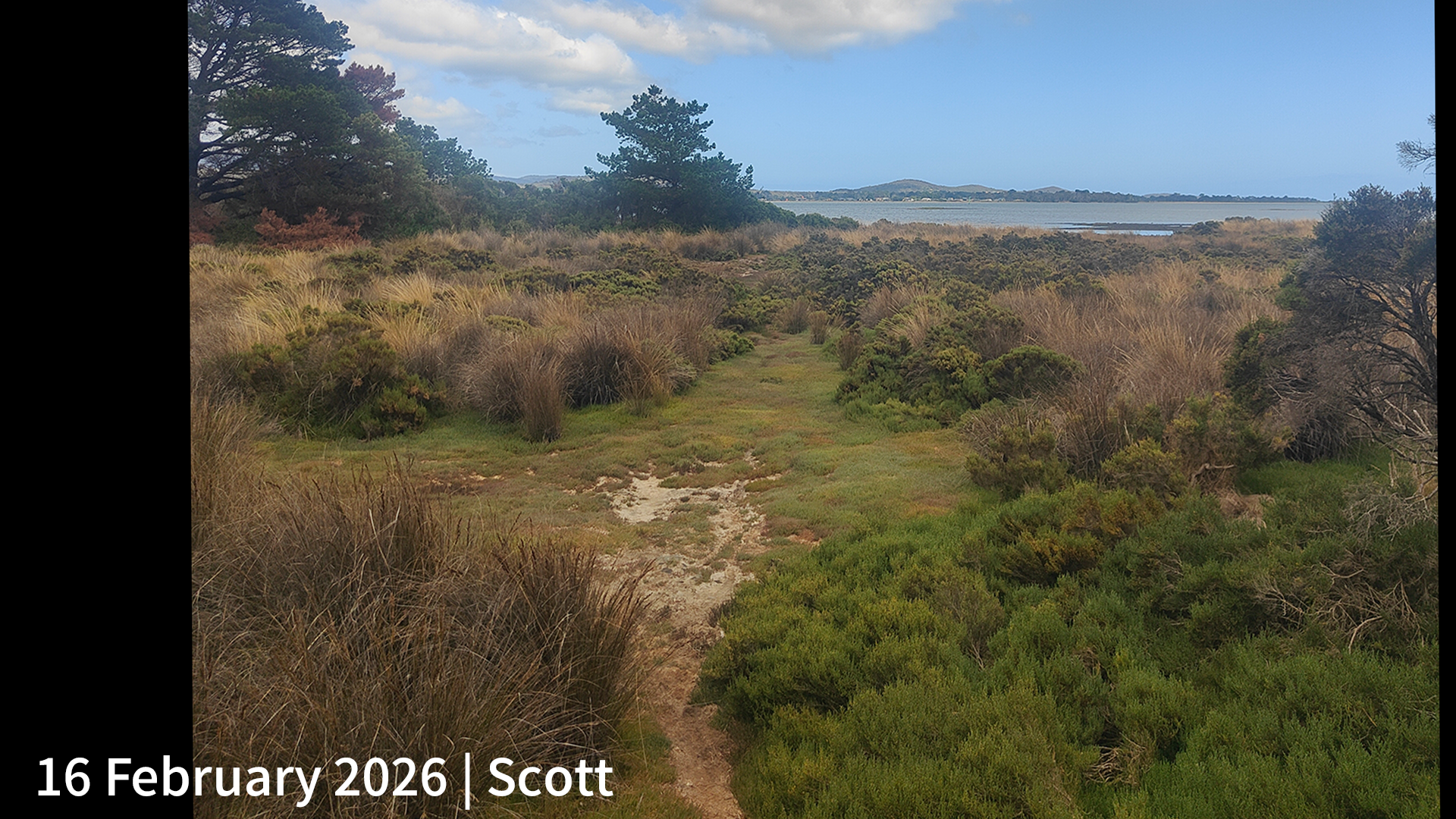
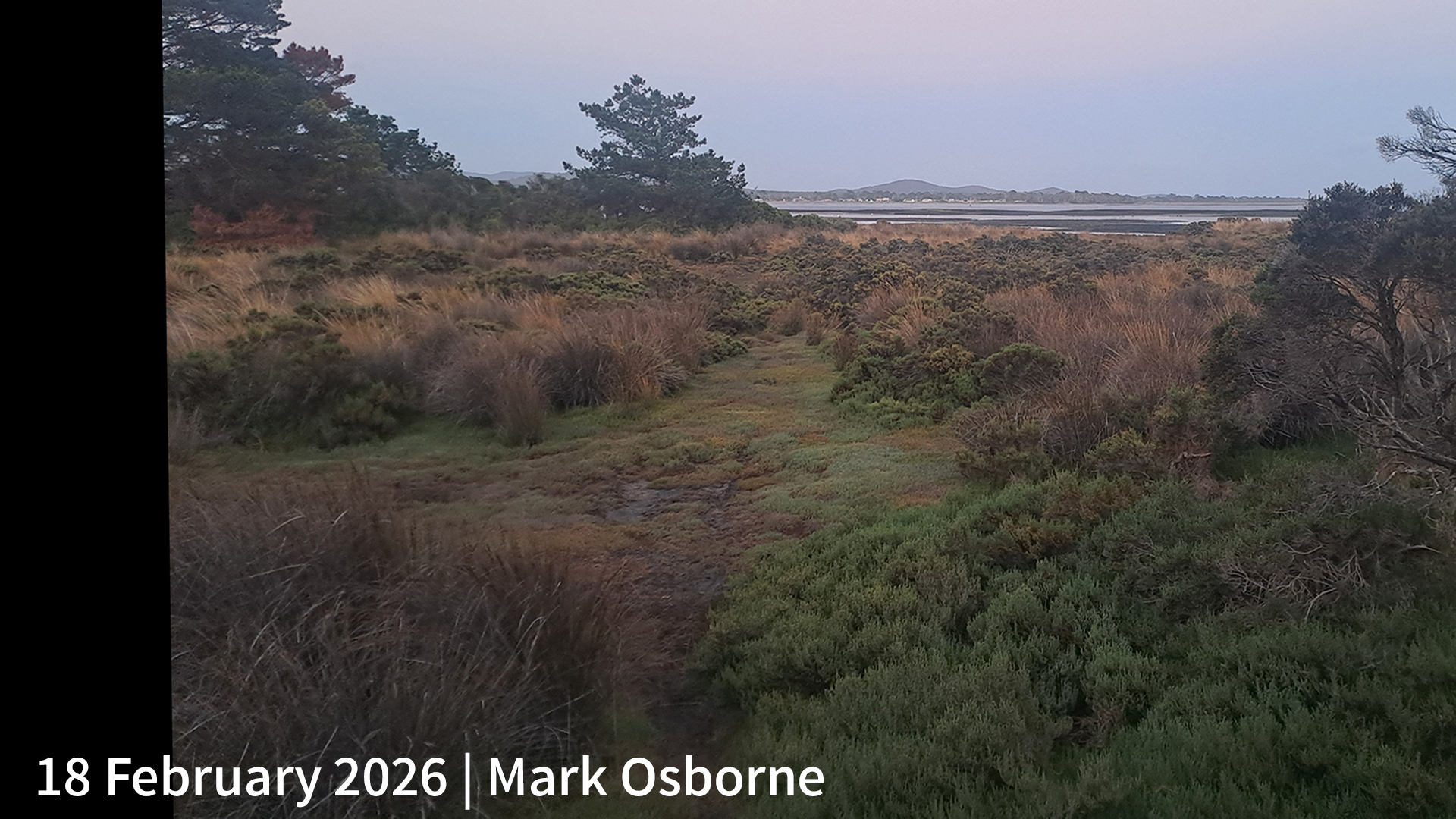
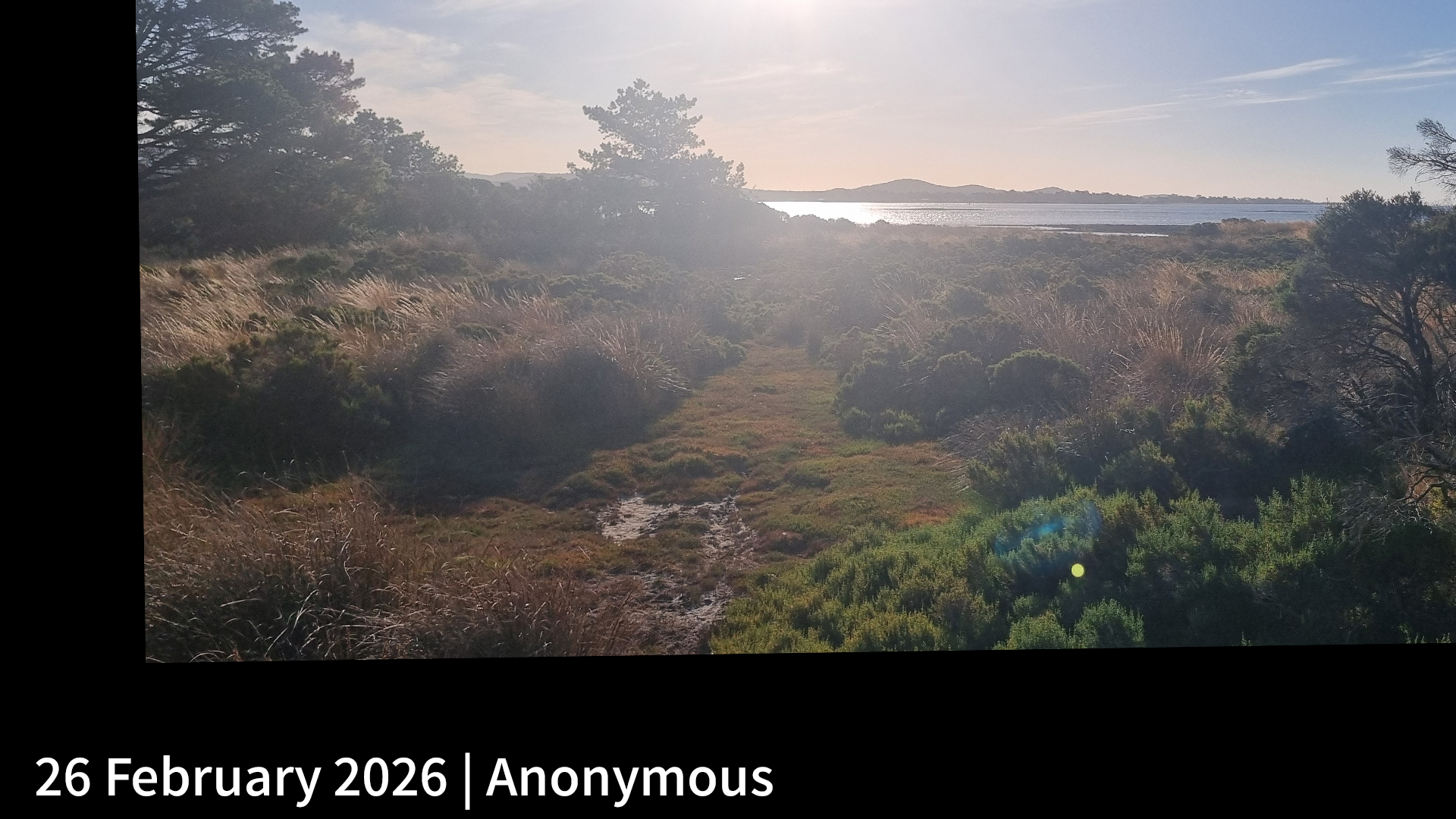
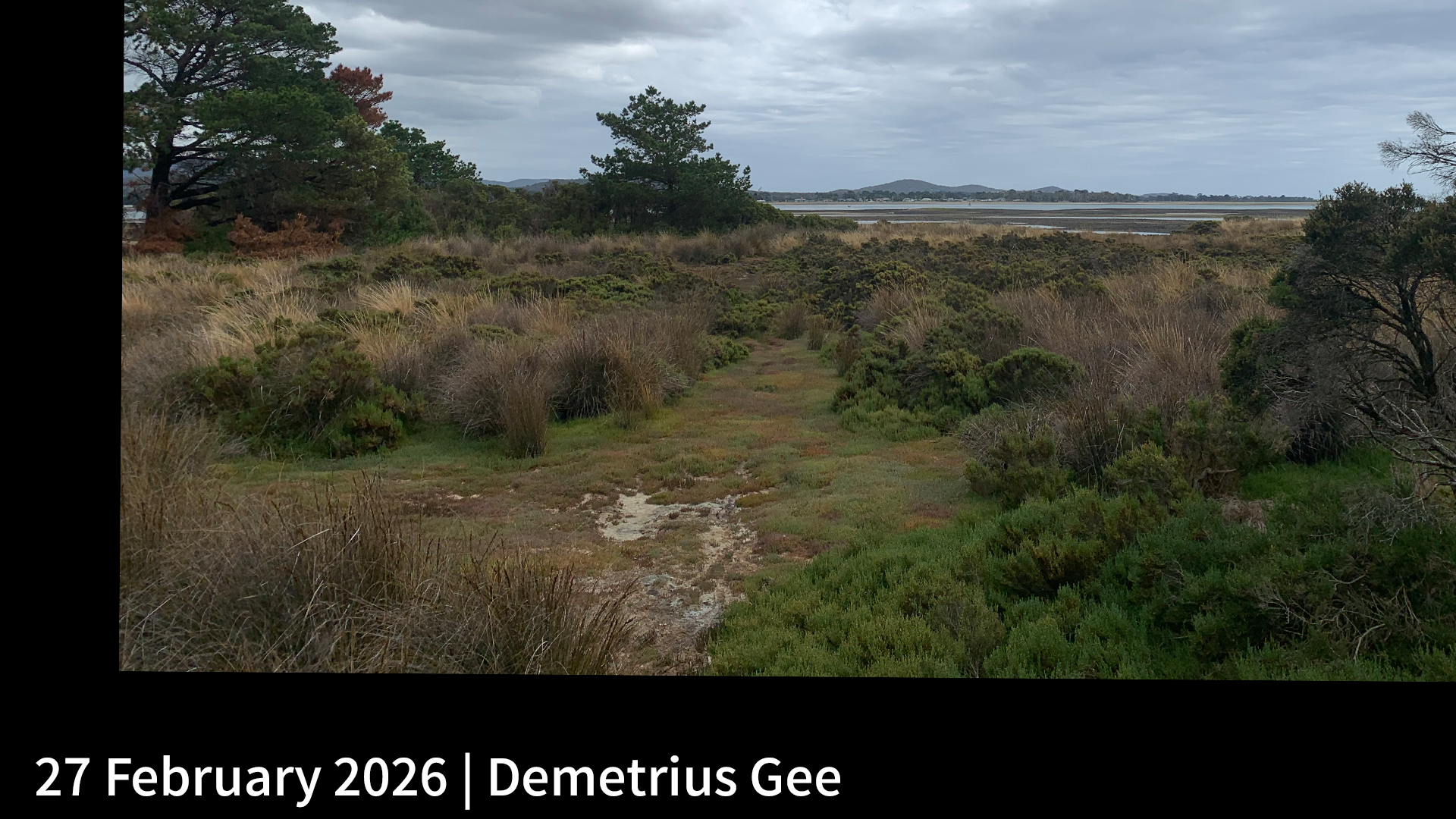
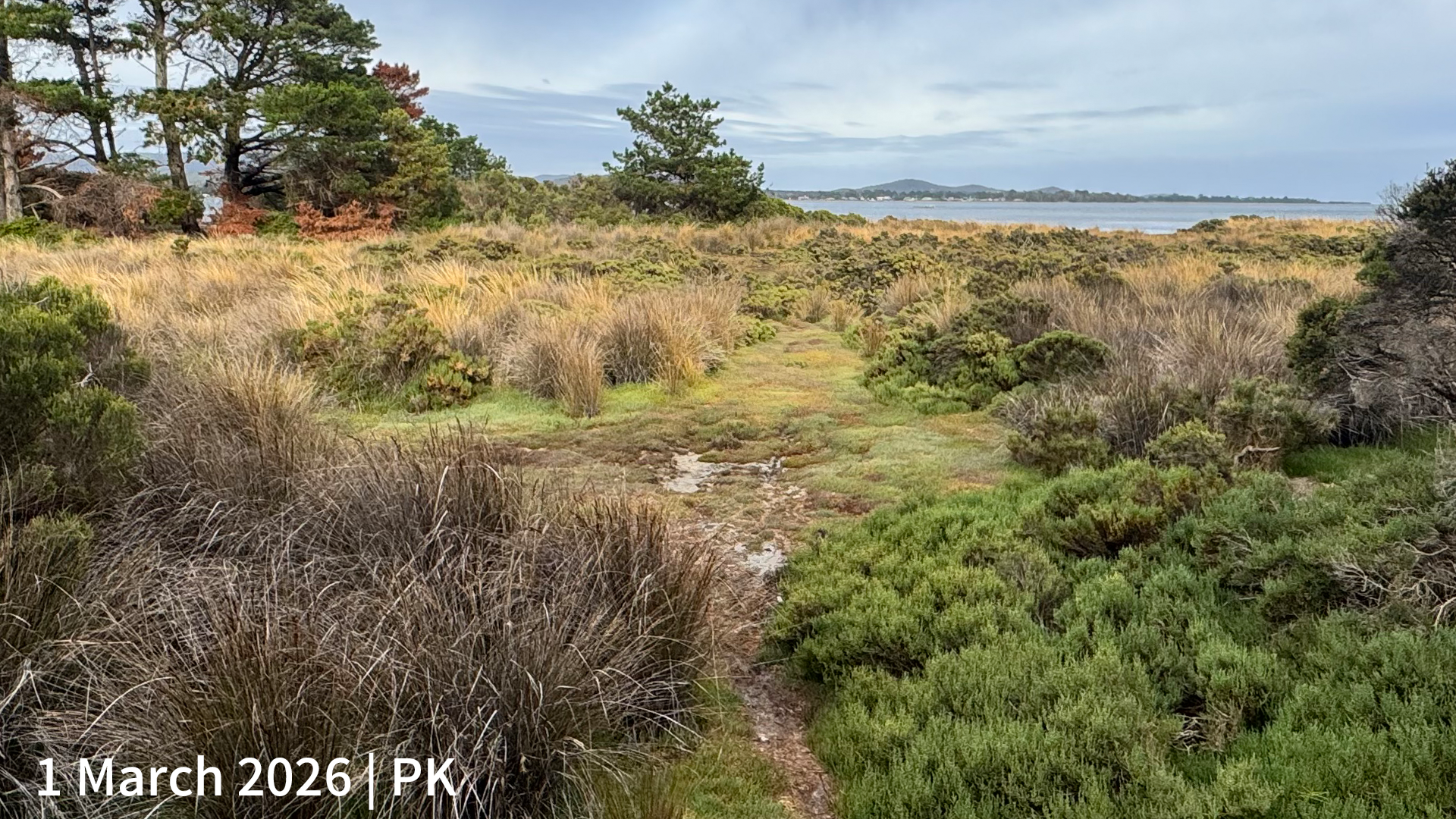
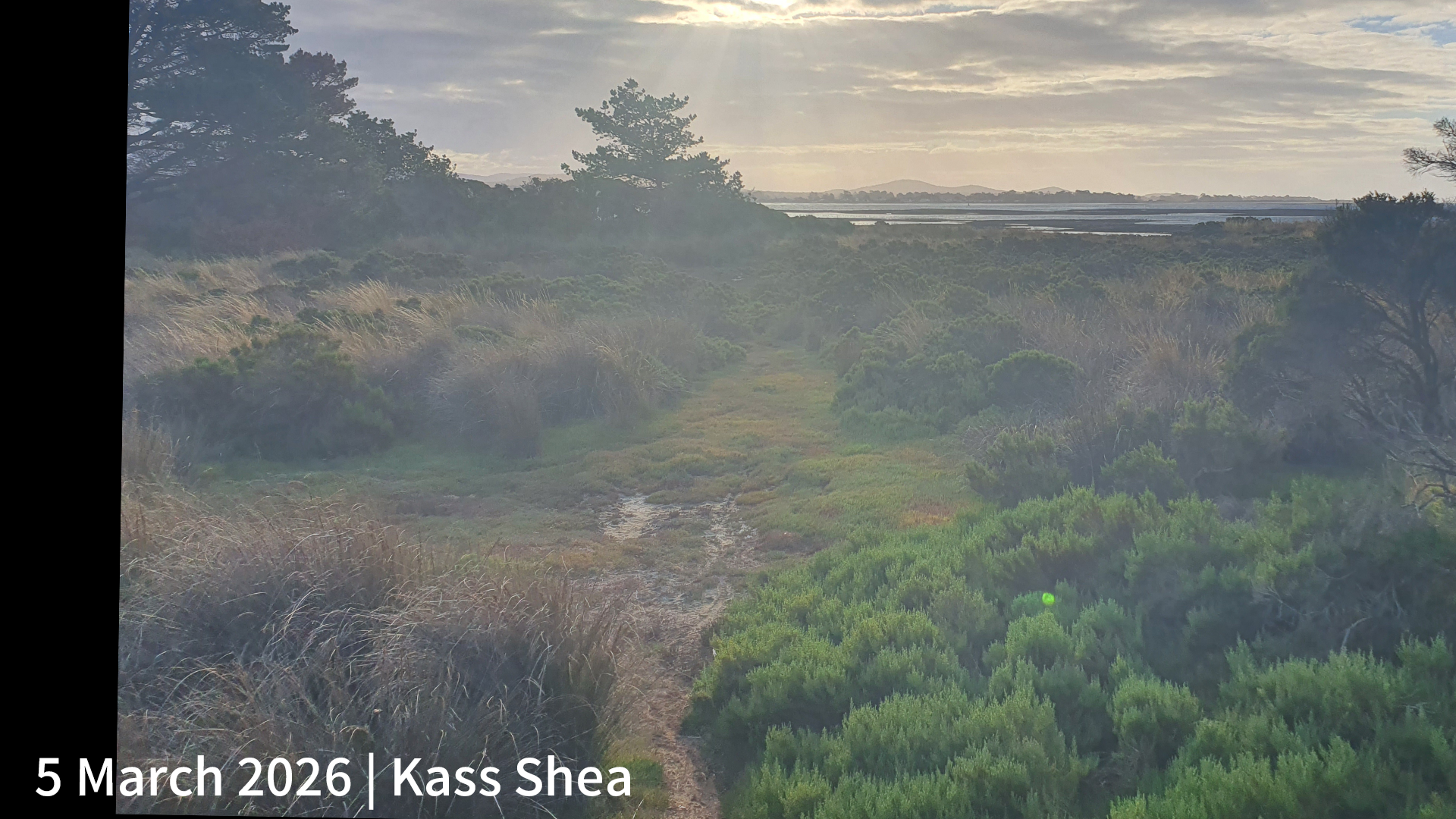
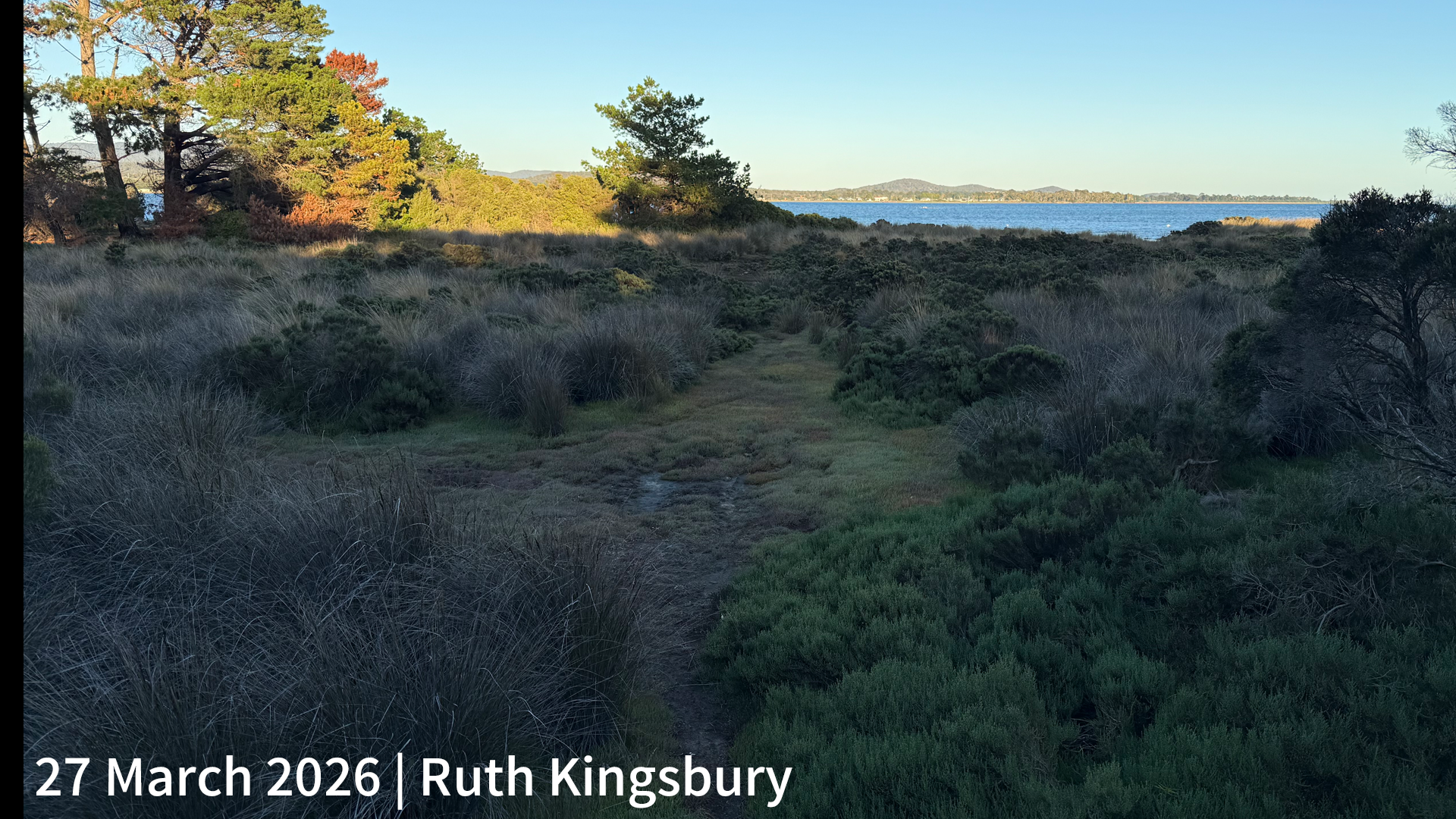
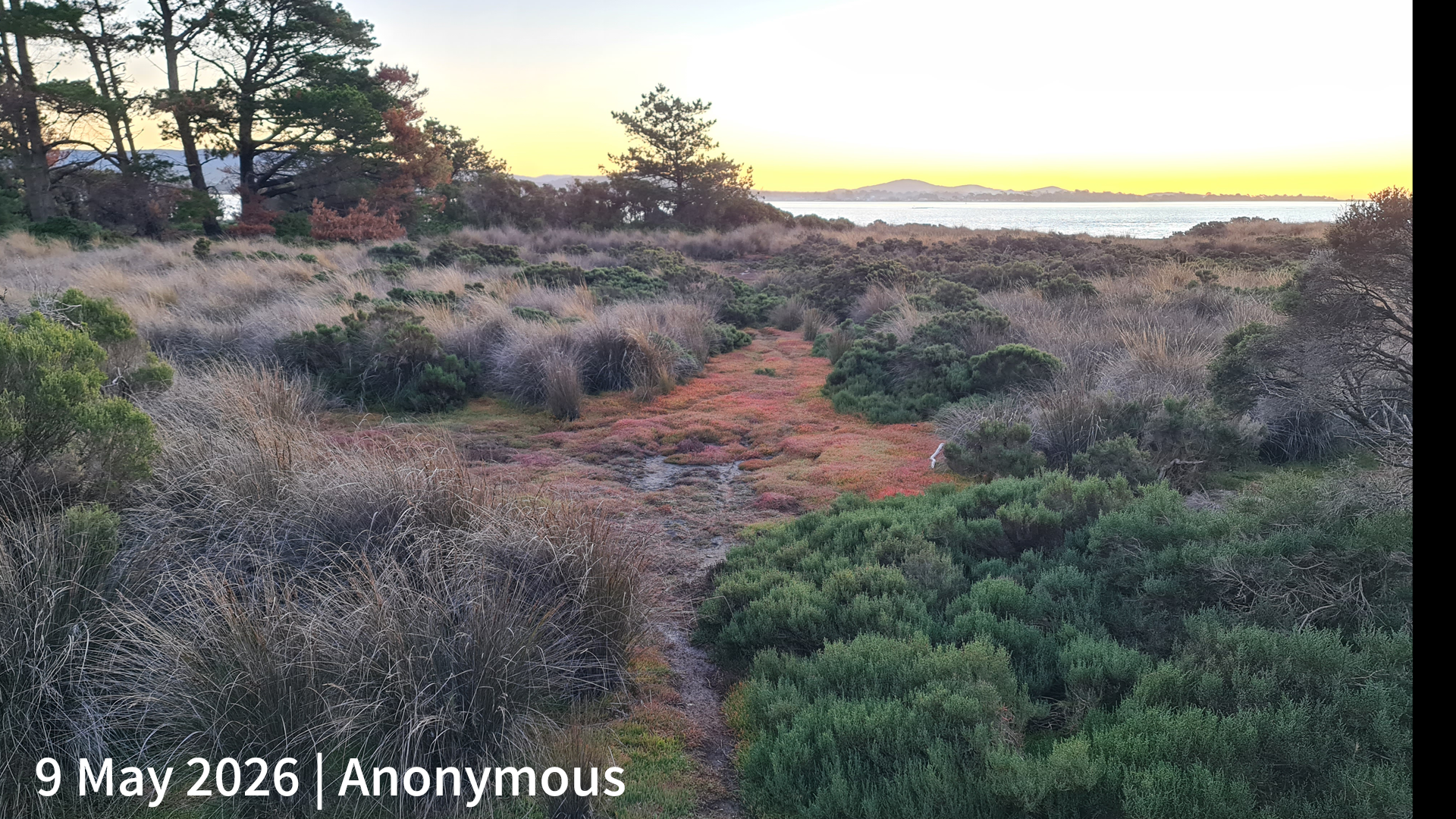
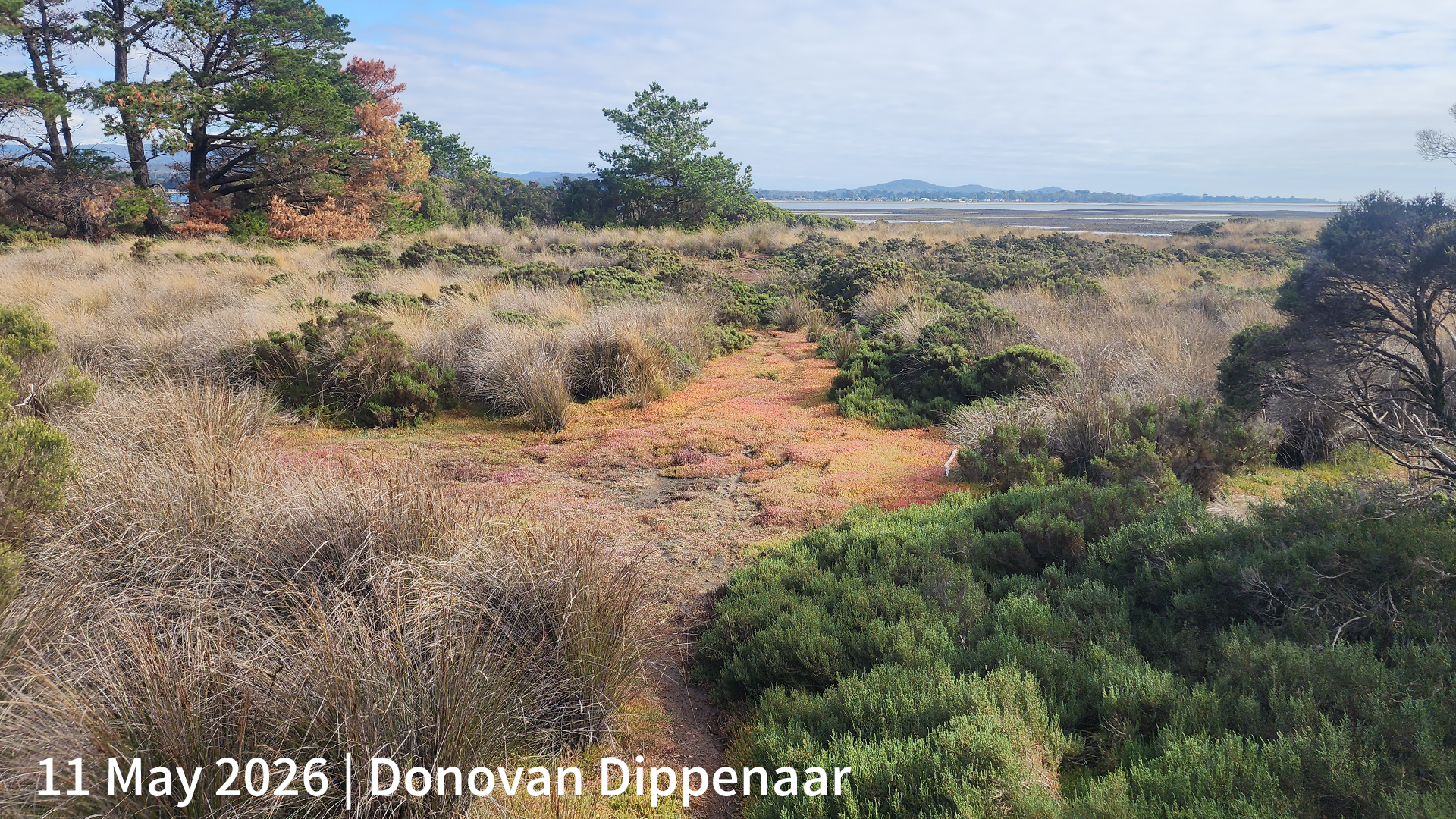
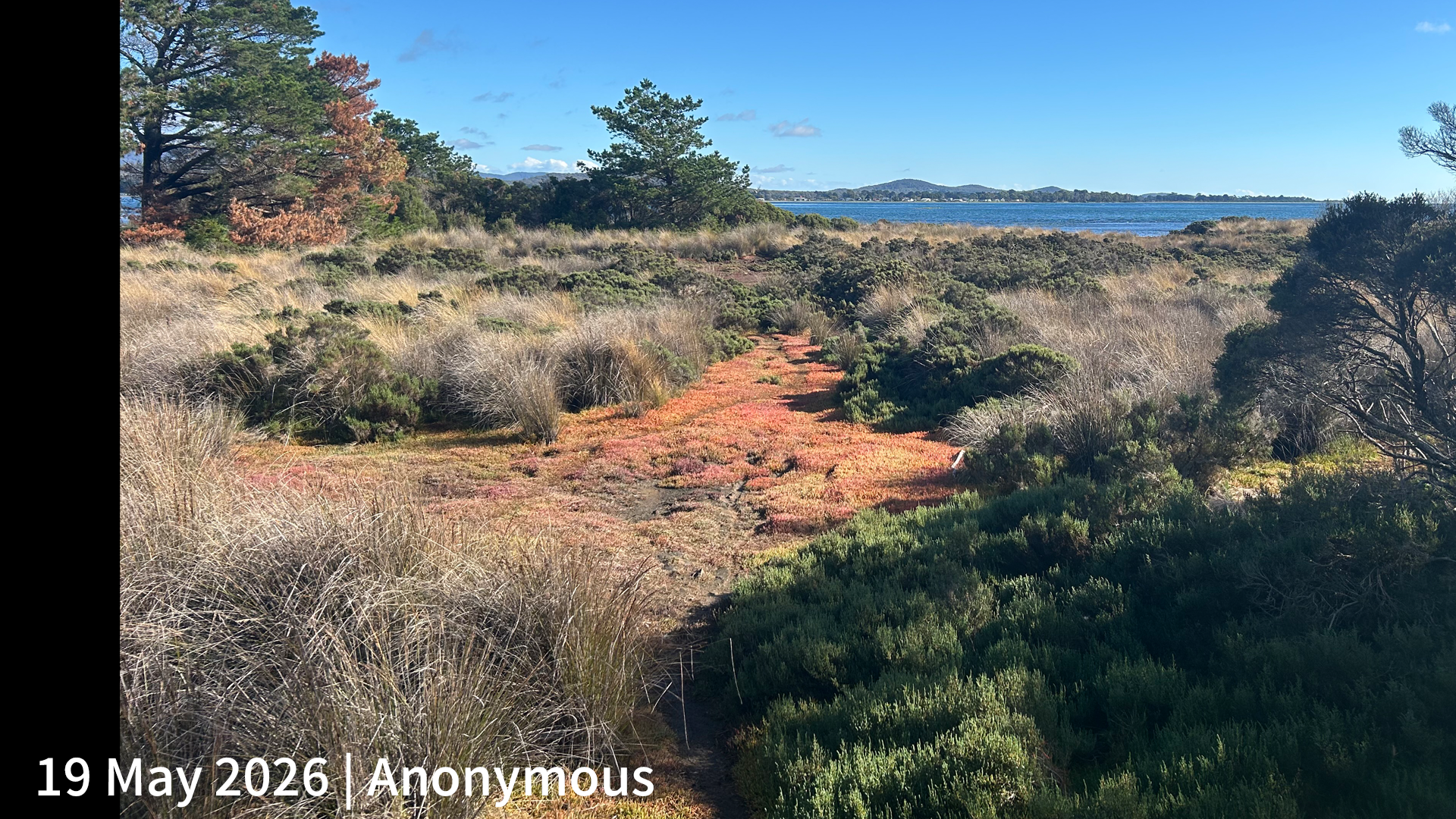
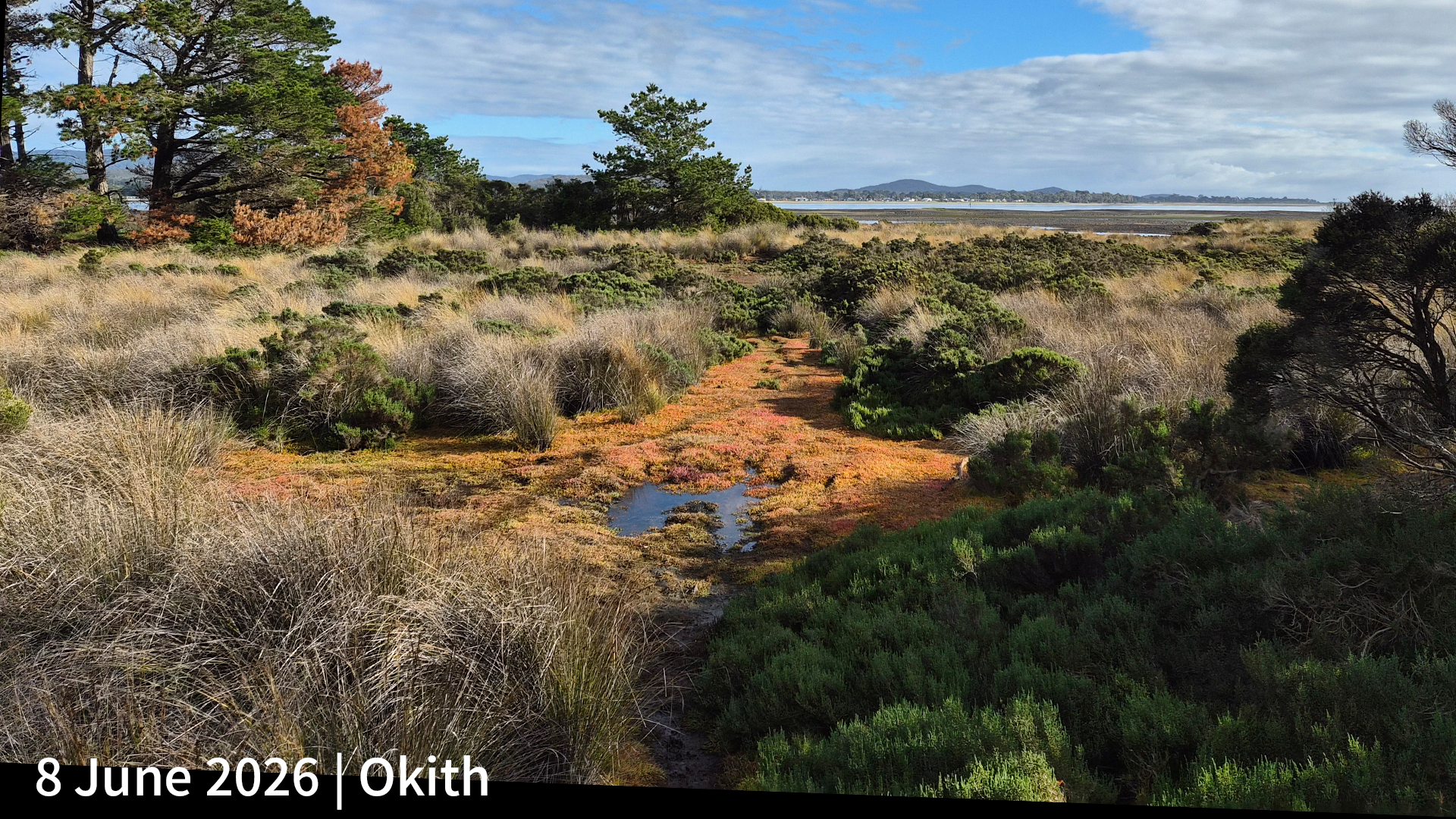
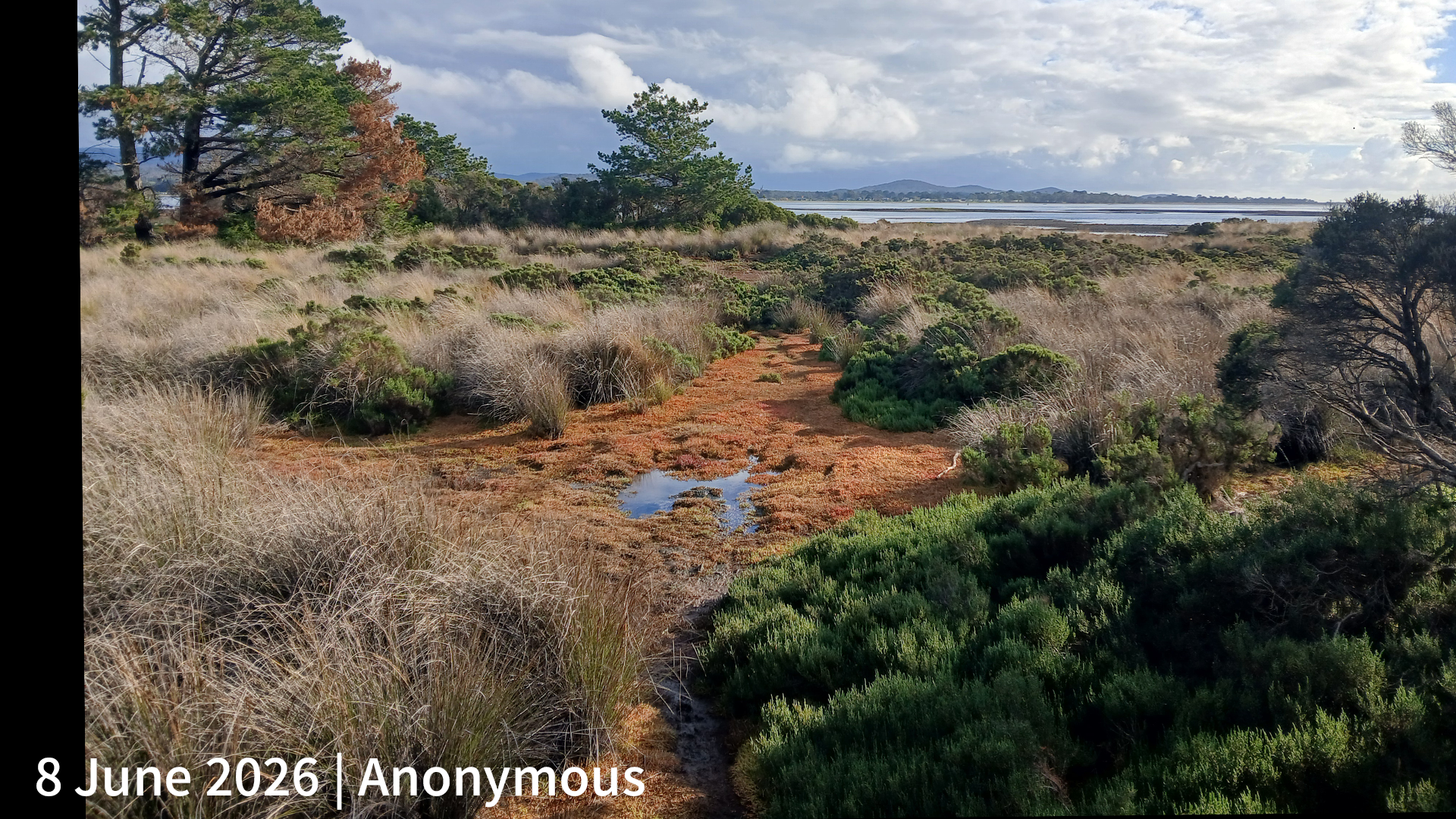
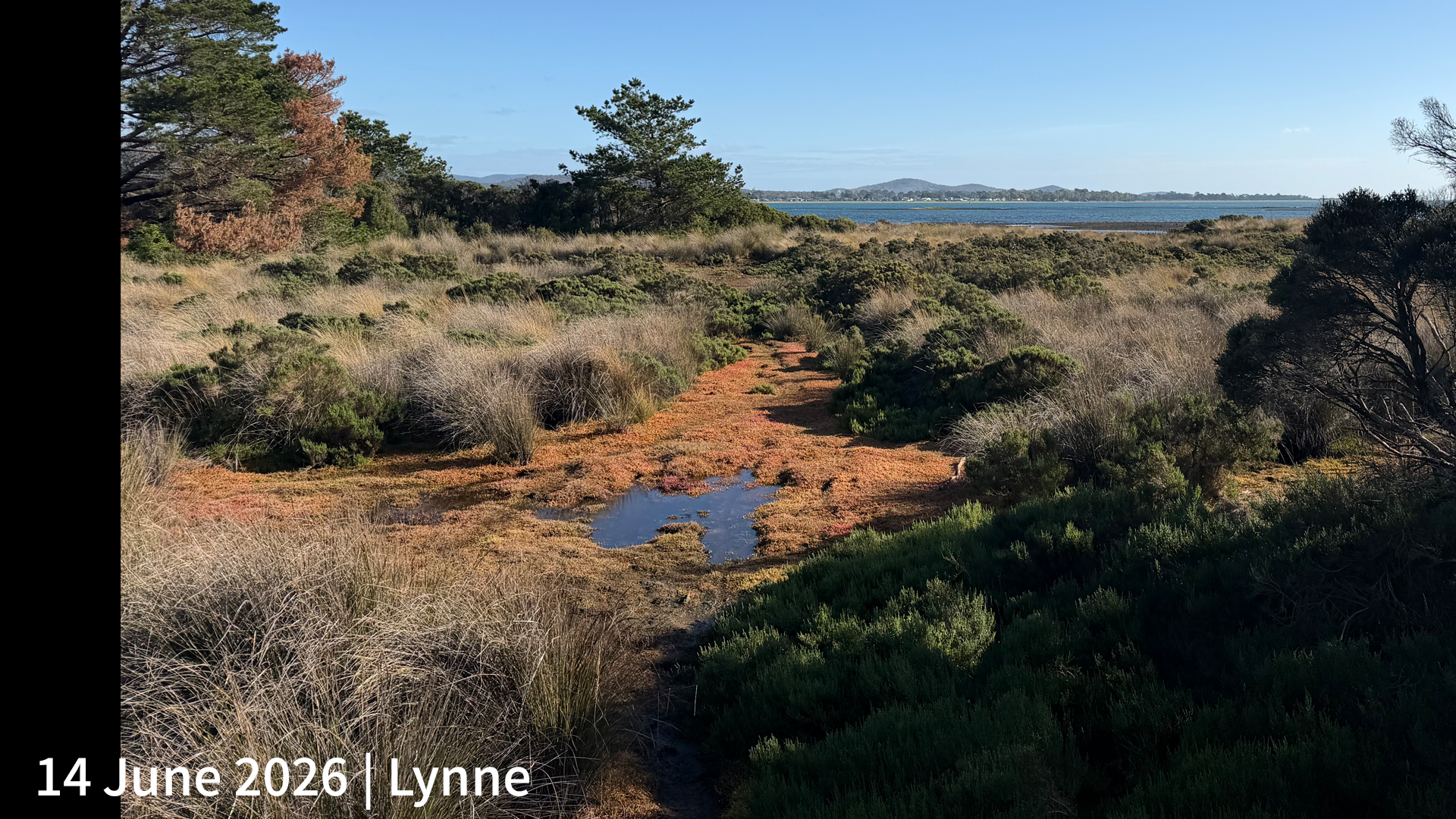
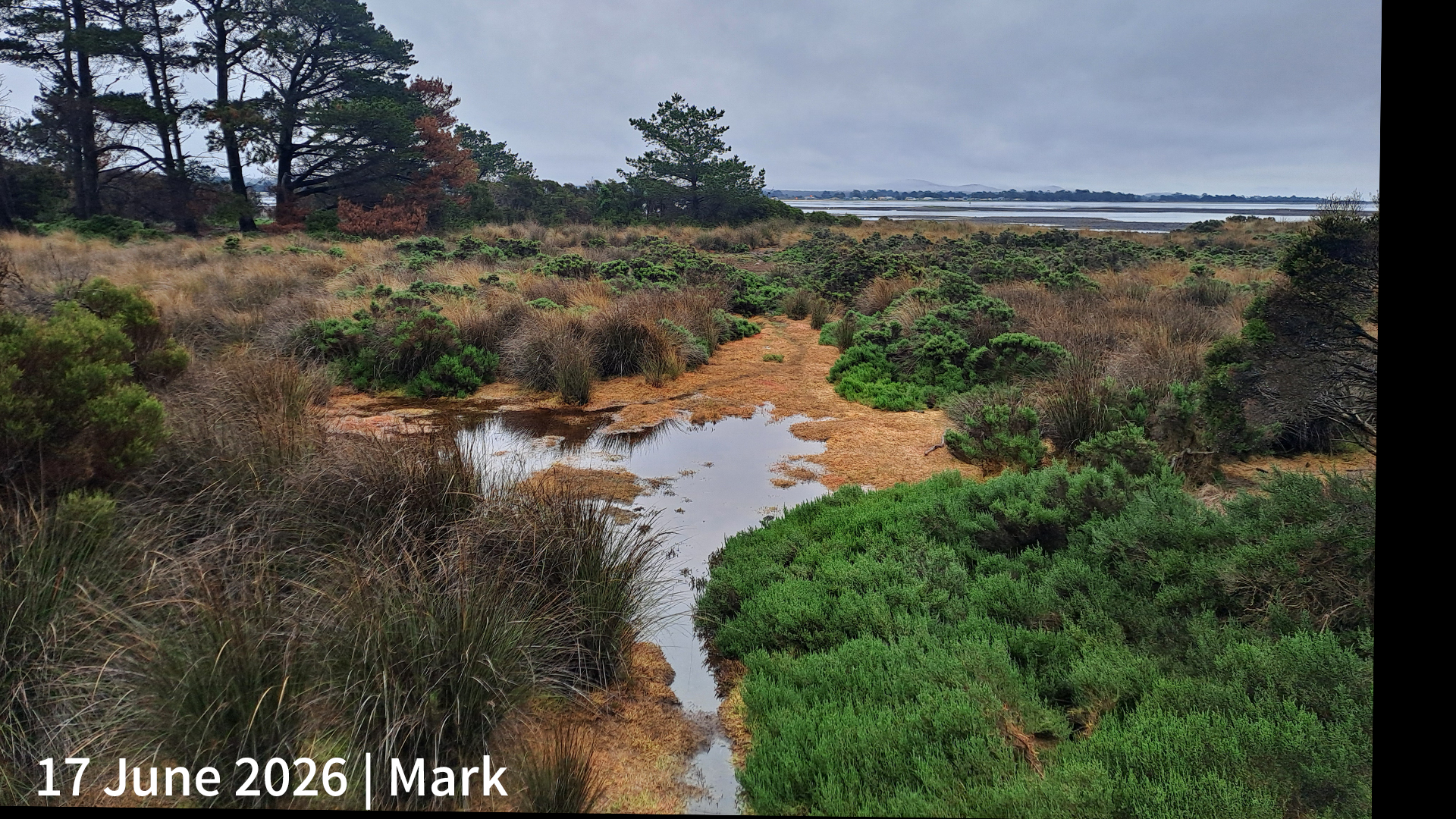
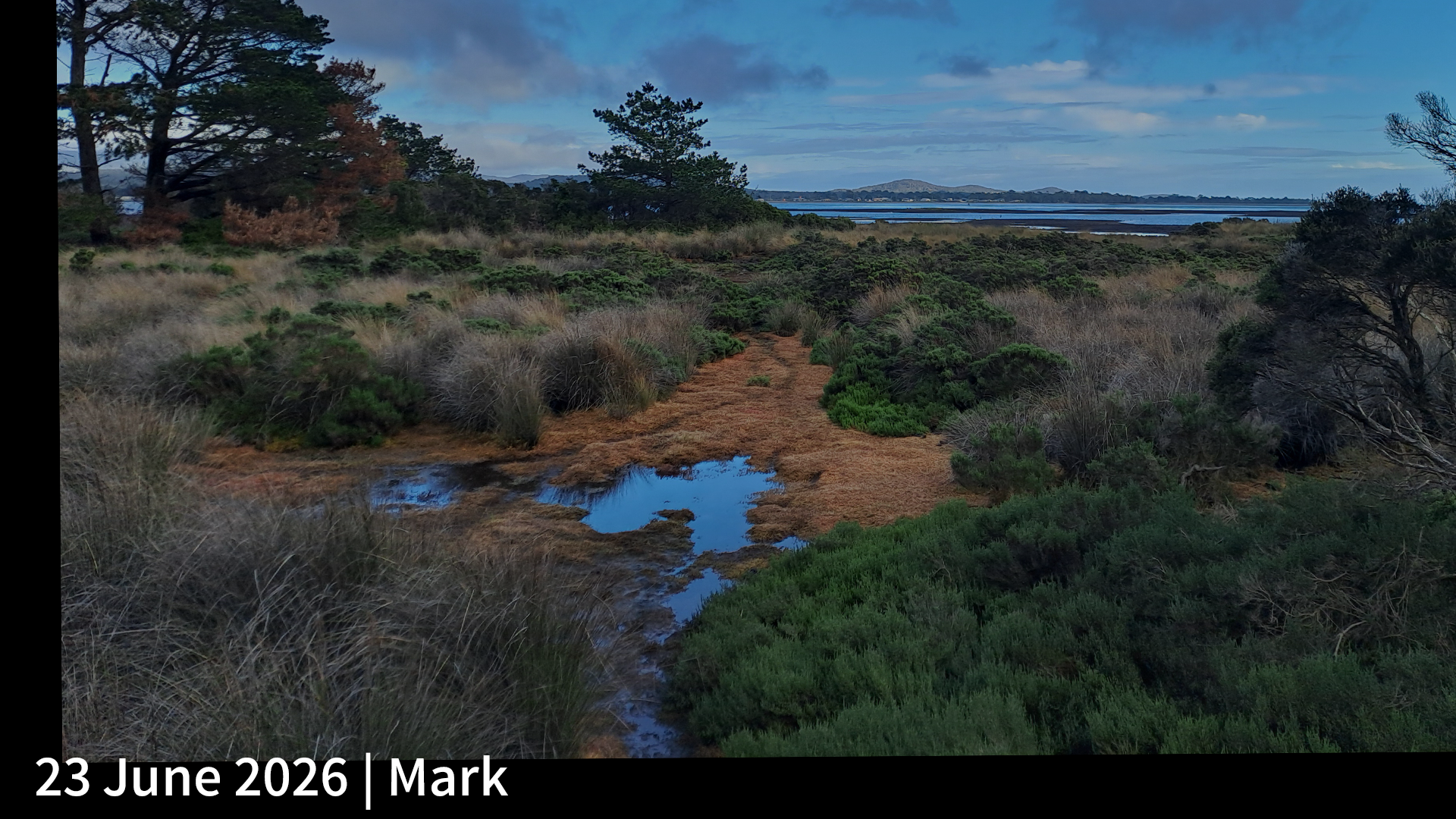
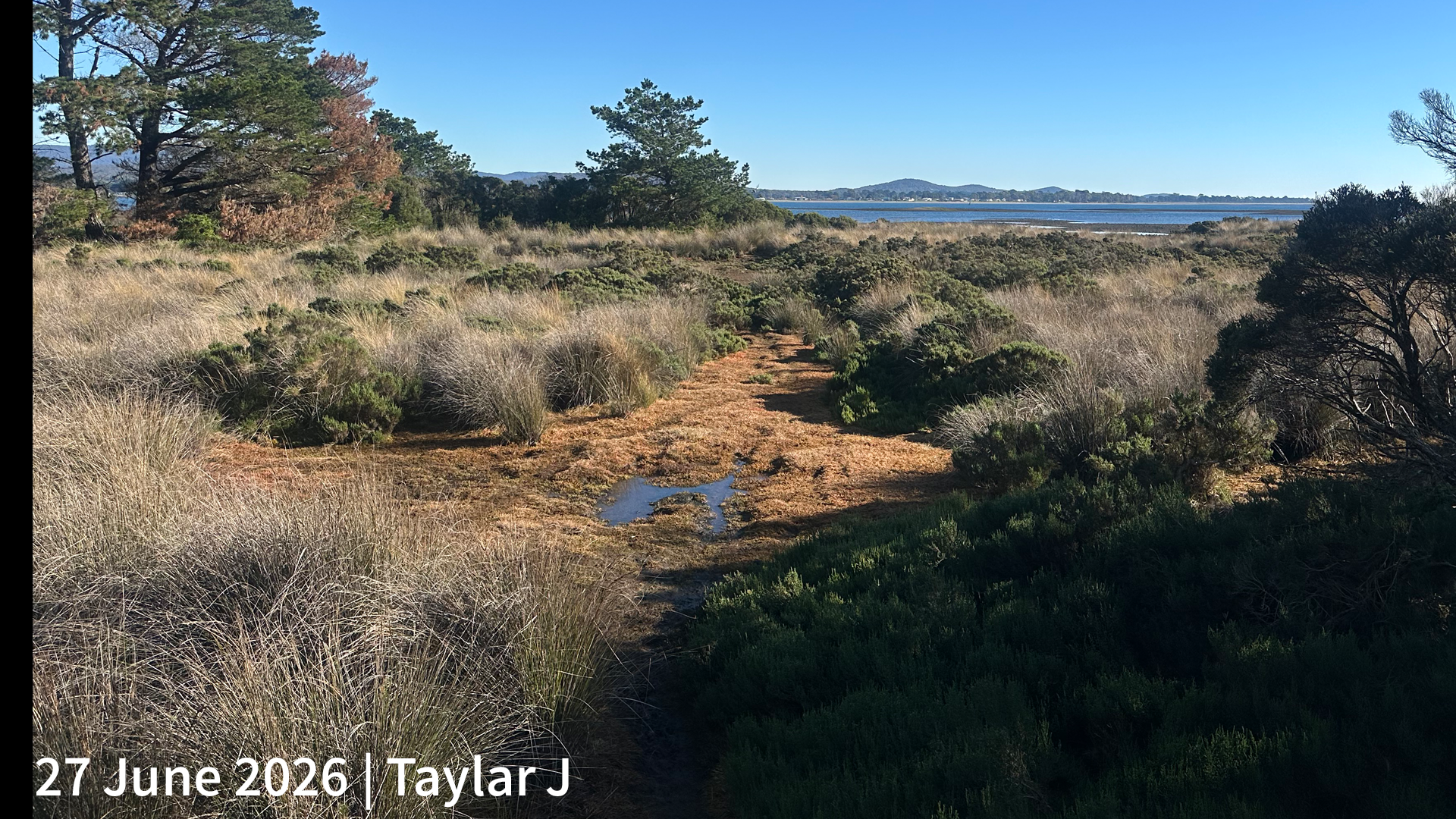
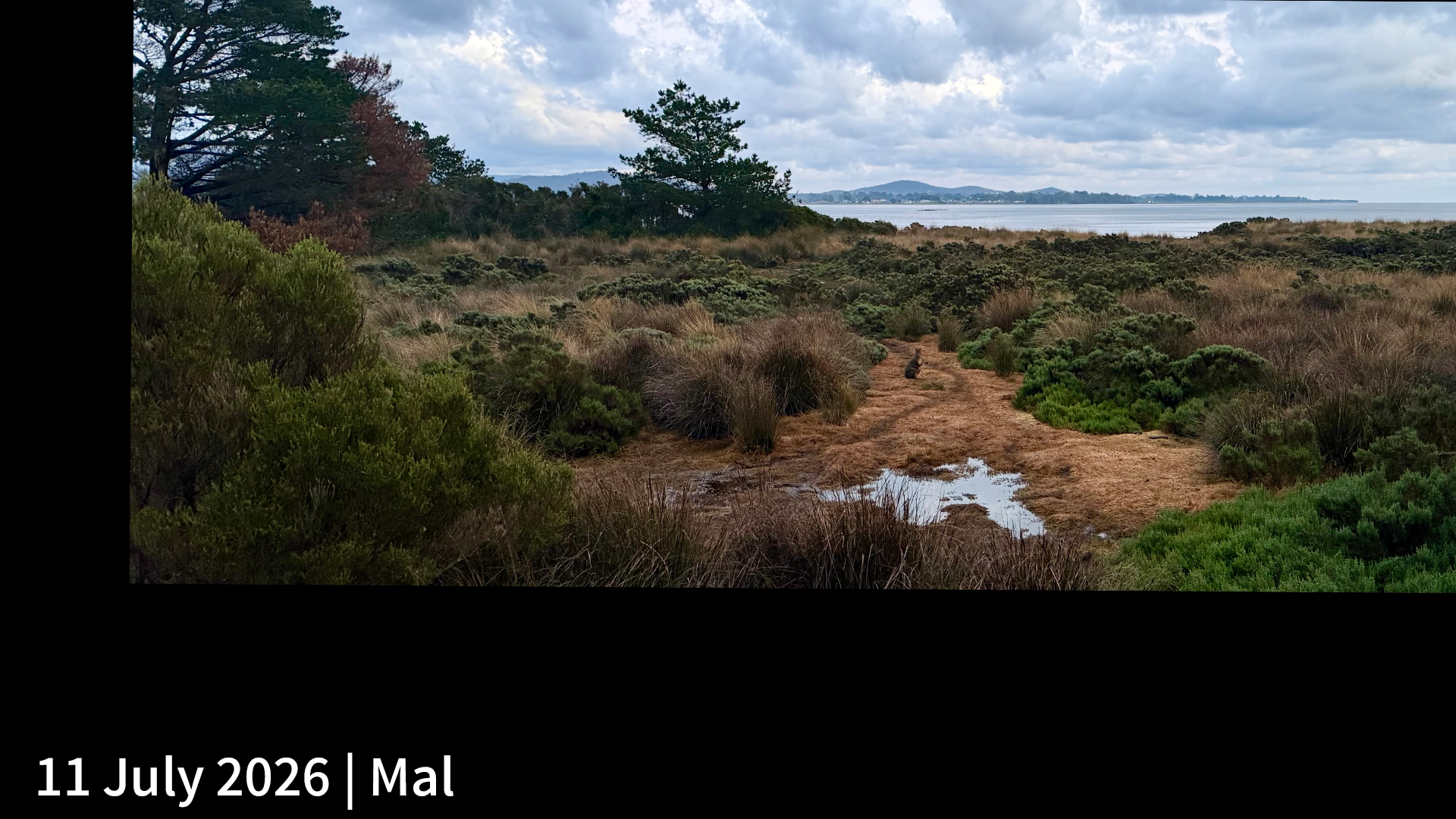
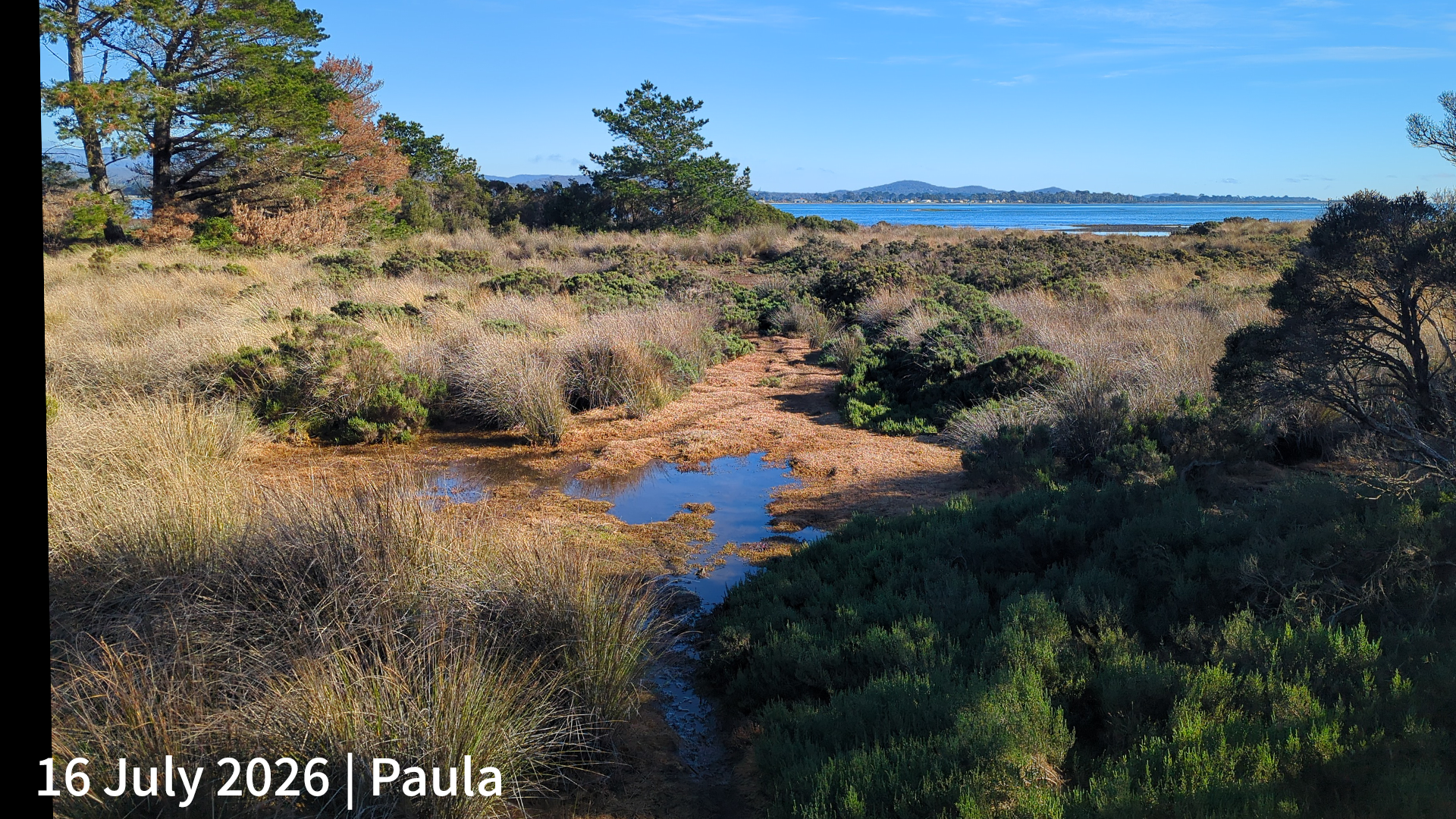
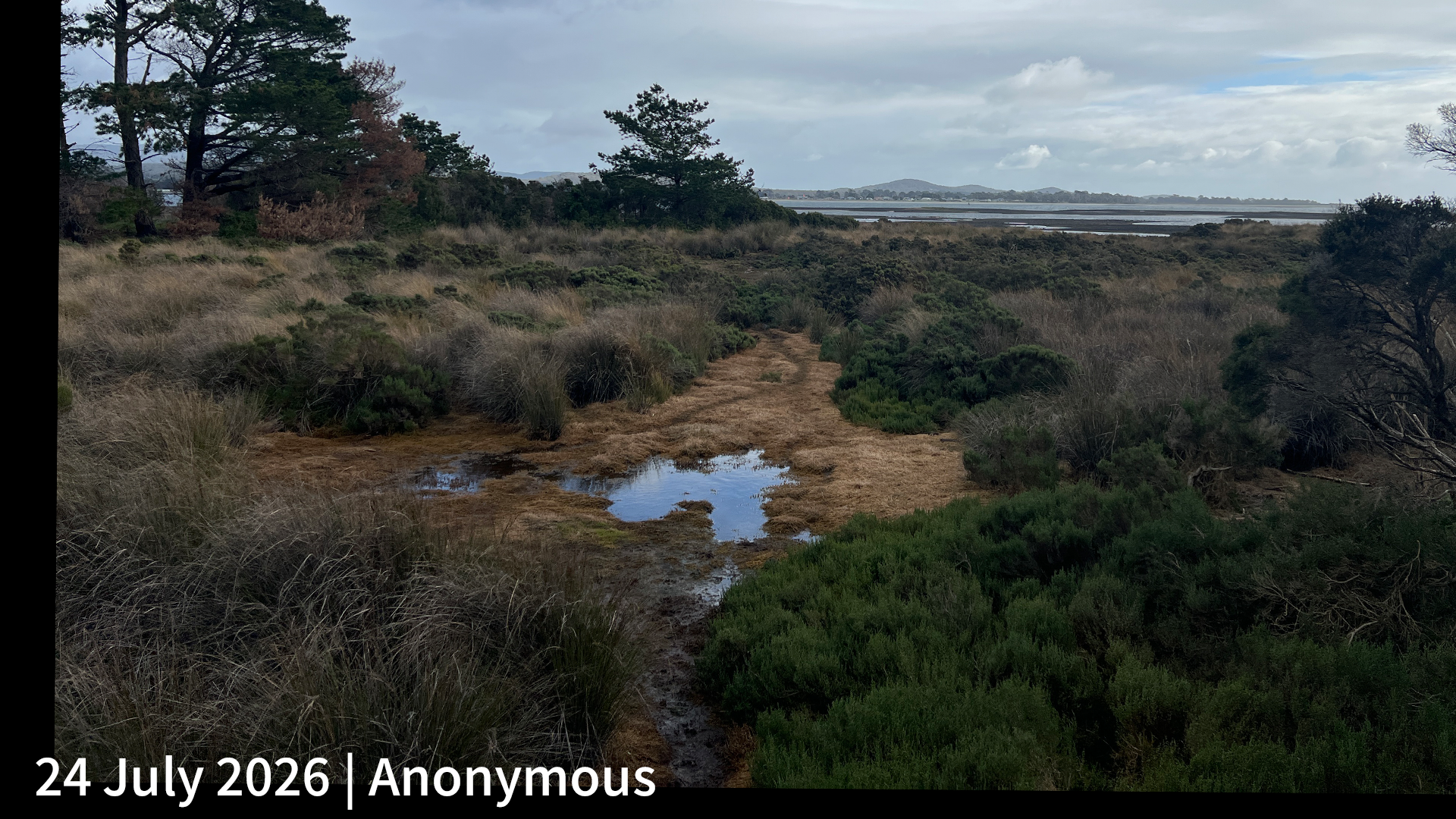
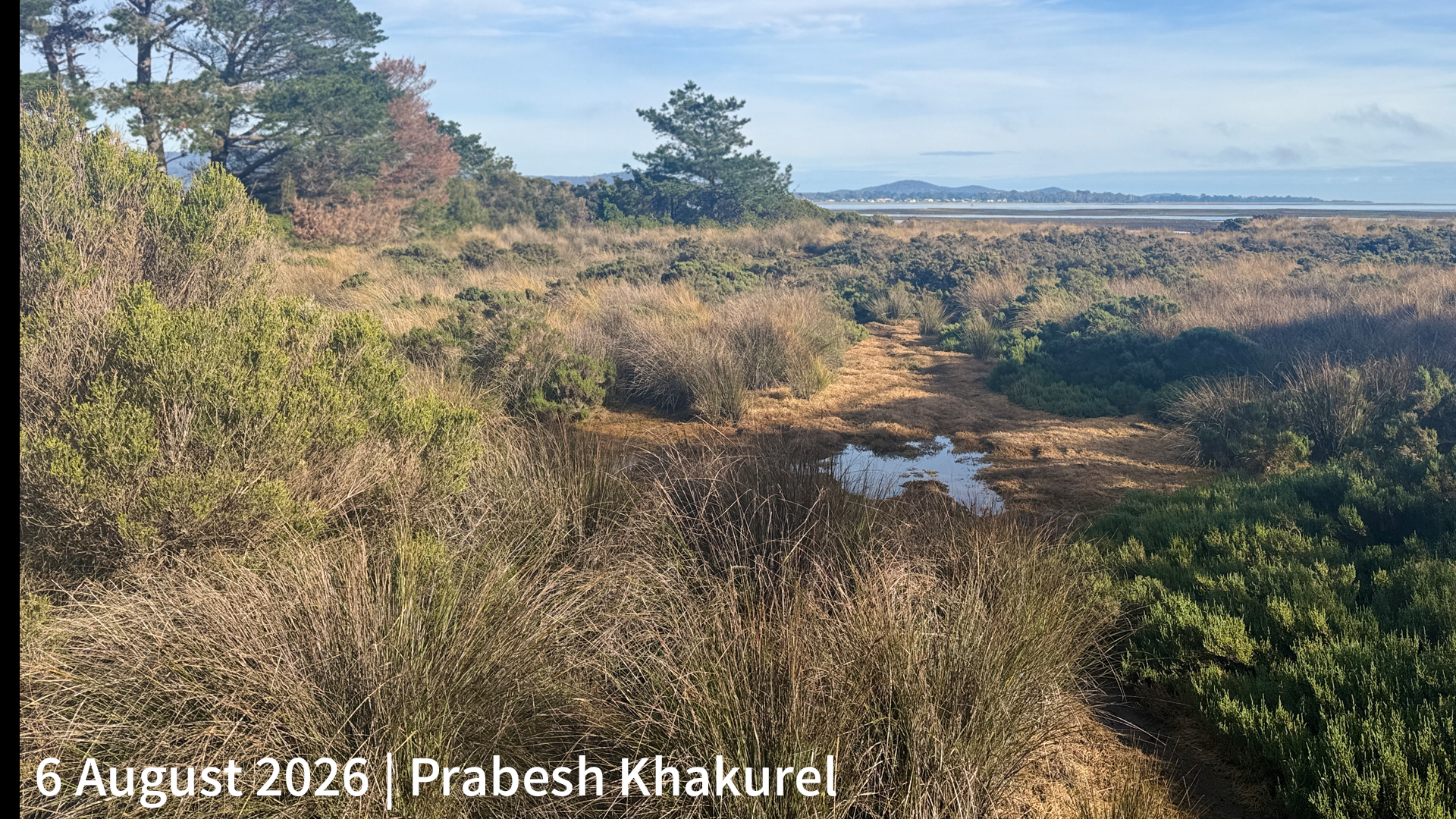
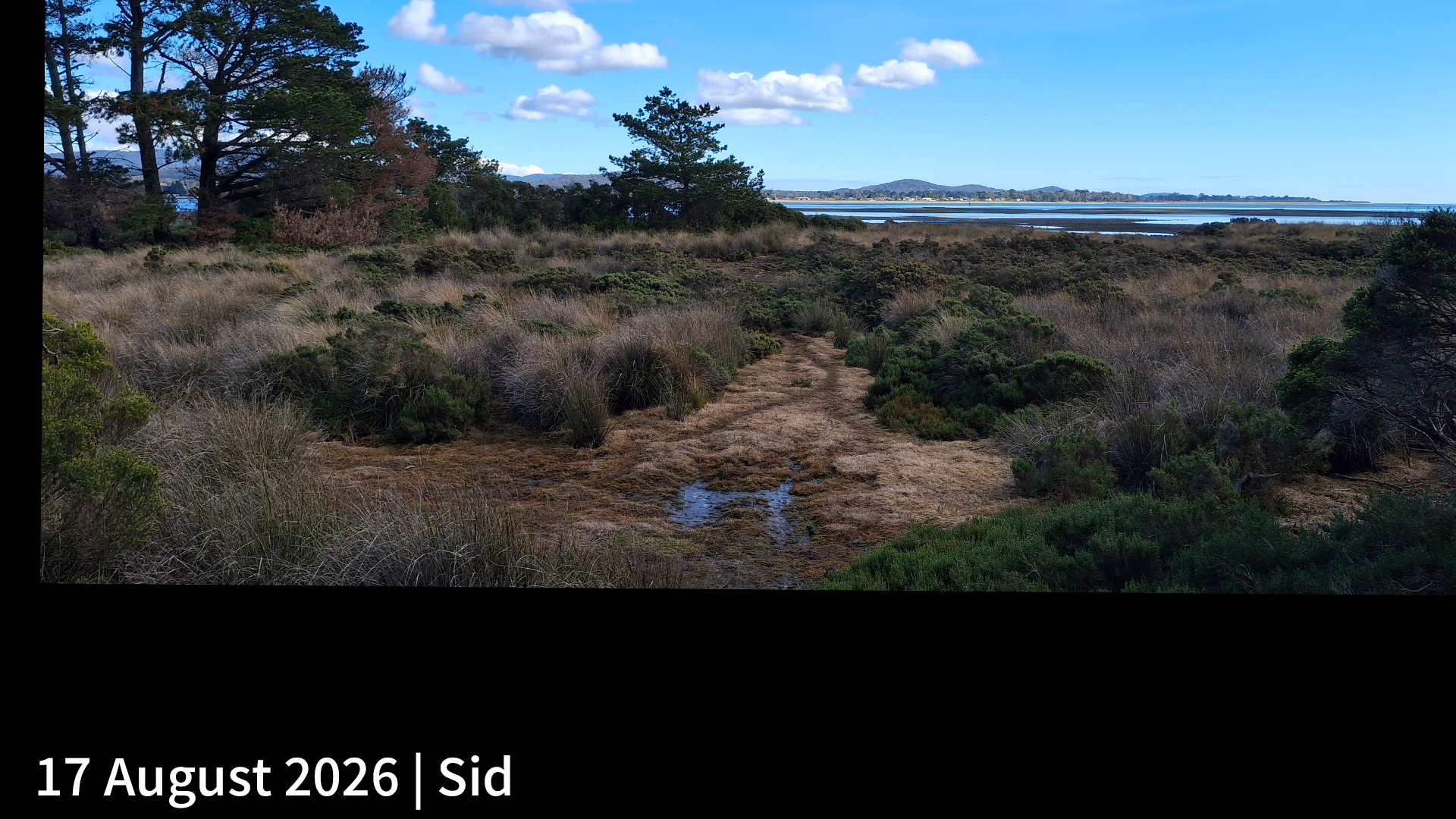
Photo analysis
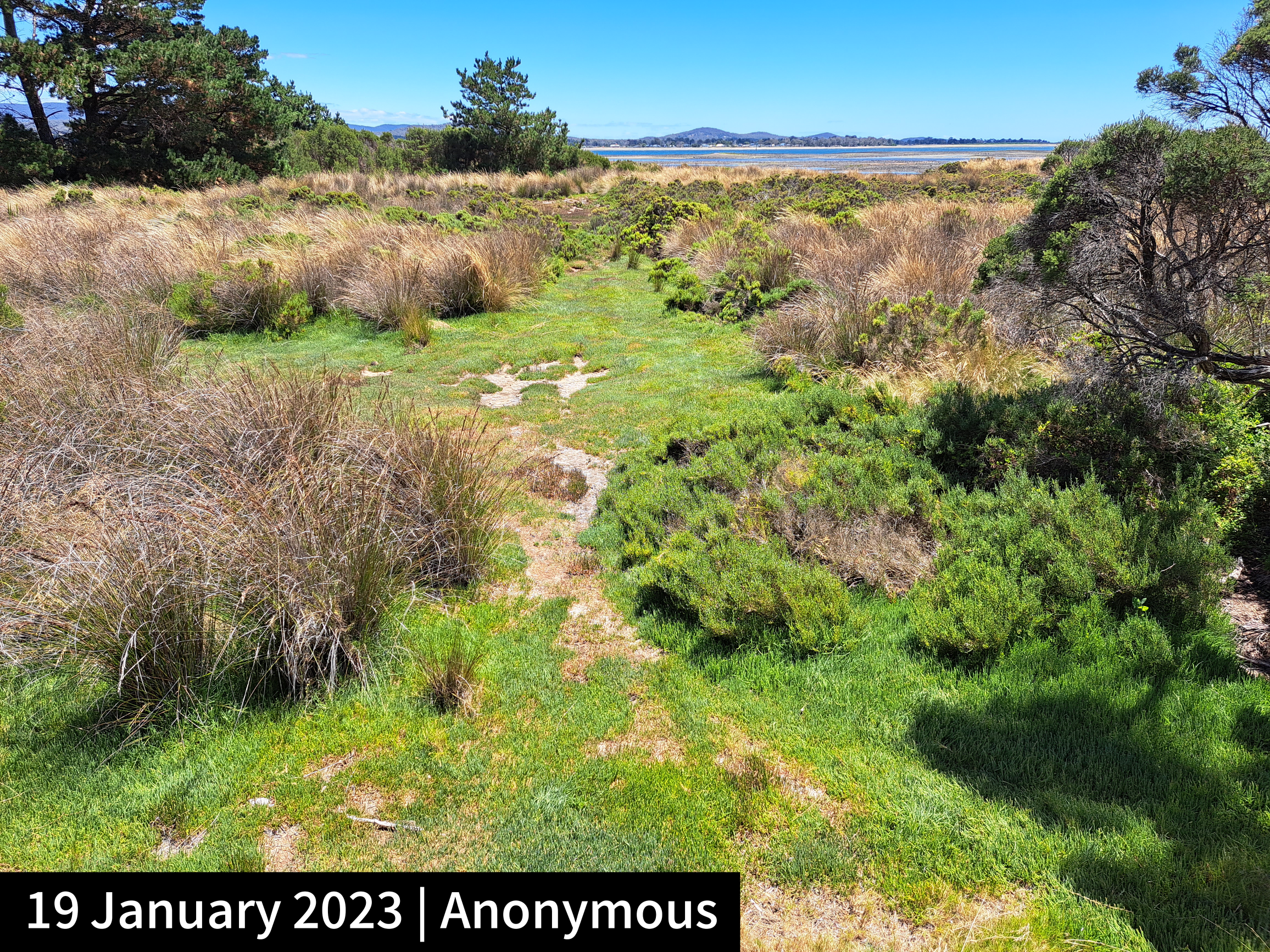
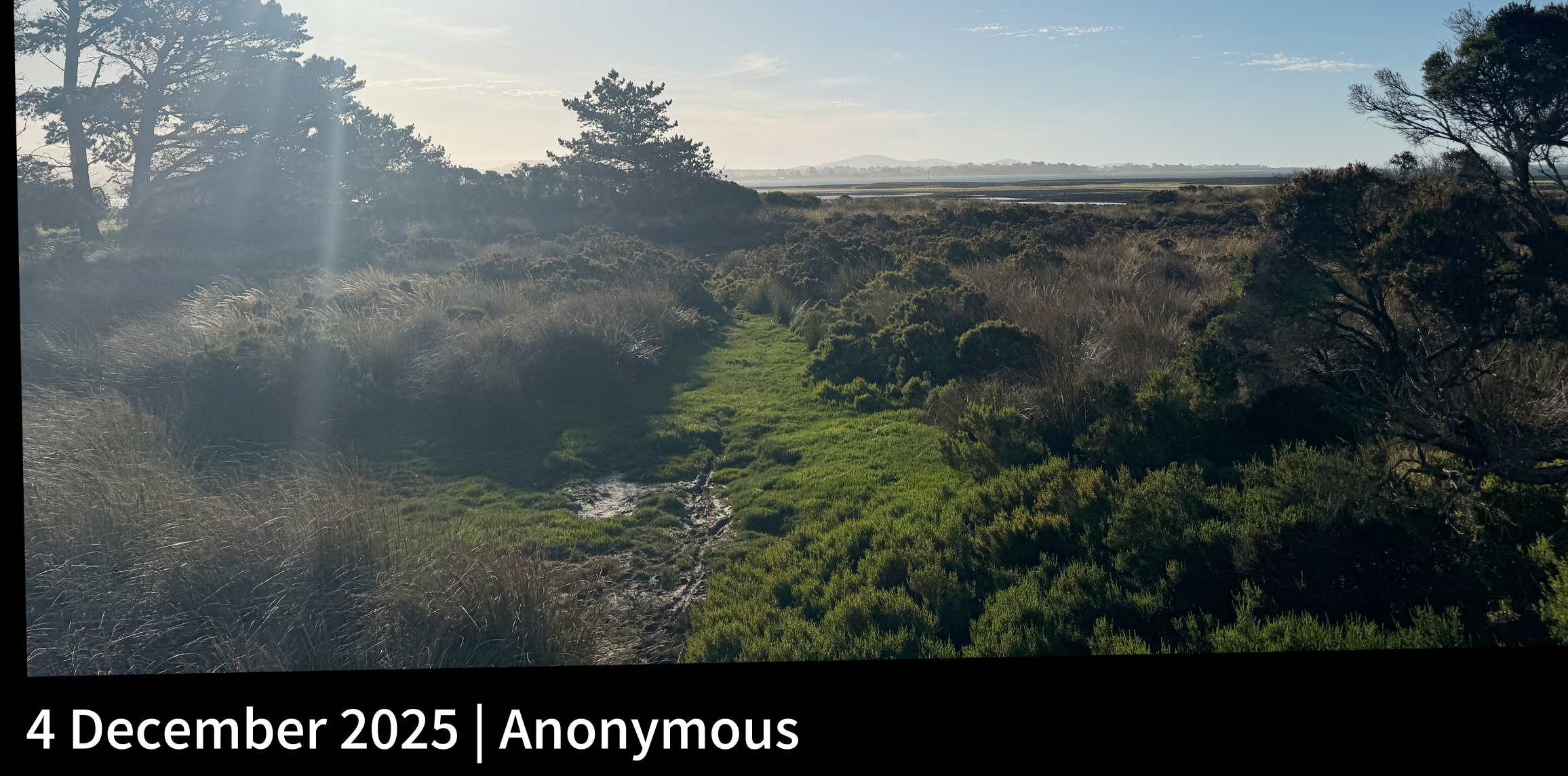
Saltmarshes can undergo dramatic colour changes as the seasons change.
Sarcocornia quinqueflora changes colour through the seasons as the balance of pigments in its fleshy stems changes. When conditions favour active growth, green chlorophyll is abundant and the plants appear bright green. As temperatures cool and growth slows, chlorophyll levels can decline and red and purple pigments called anthocyanins become more visible or are produced in greater amounts, giving plants their characteristic reddish tones. As older stems age and die back, chlorophyll and other pigments break down further and the vegetation becomes brown or grey-brown. These seasonal colour changes are therefore a normal part of the plant's growth and ageing cycle, although stresses such as cold, high salinity and dry conditions can also influence how strongly the colours develop.
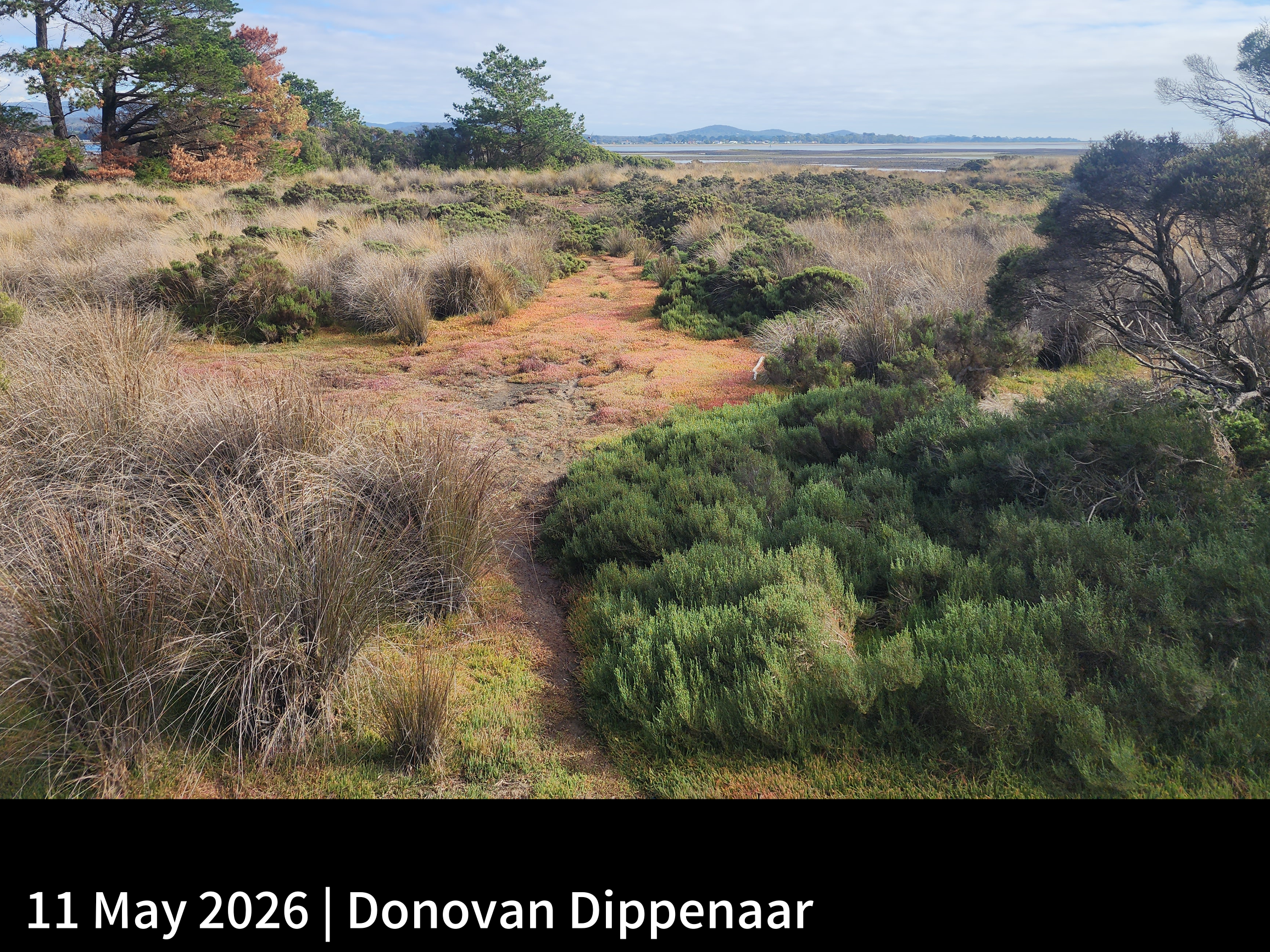
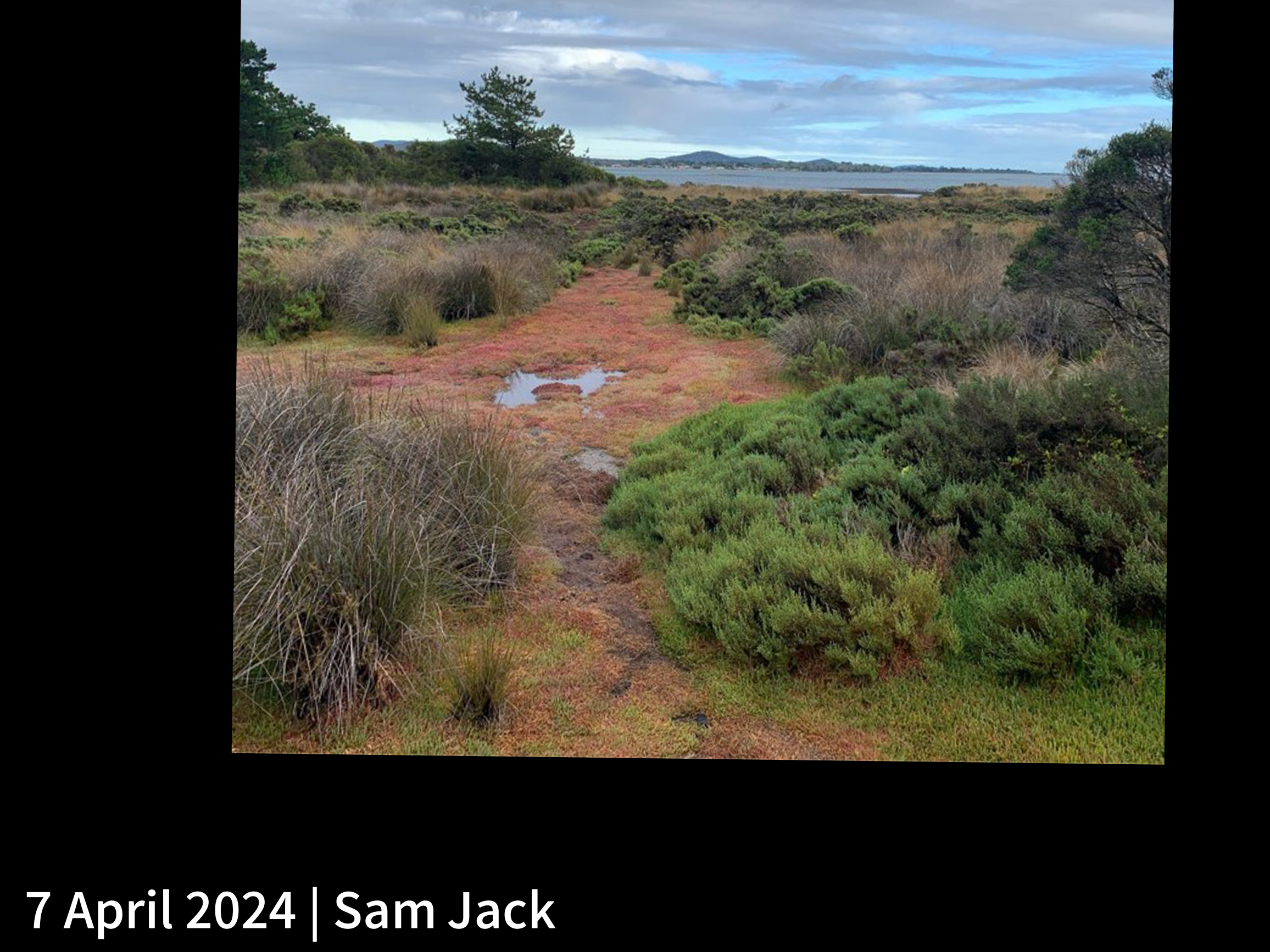
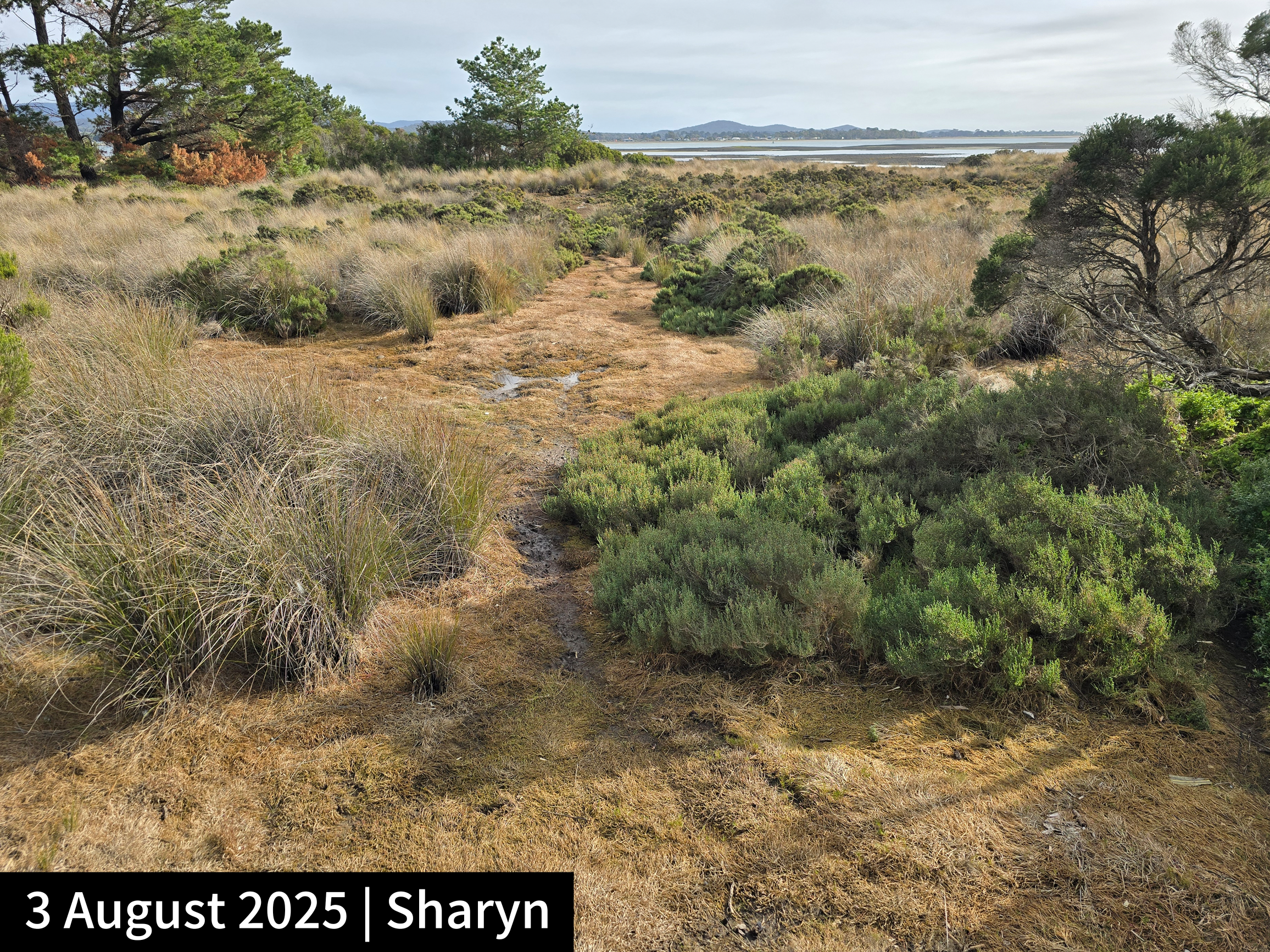
Trampling and compaction - humans
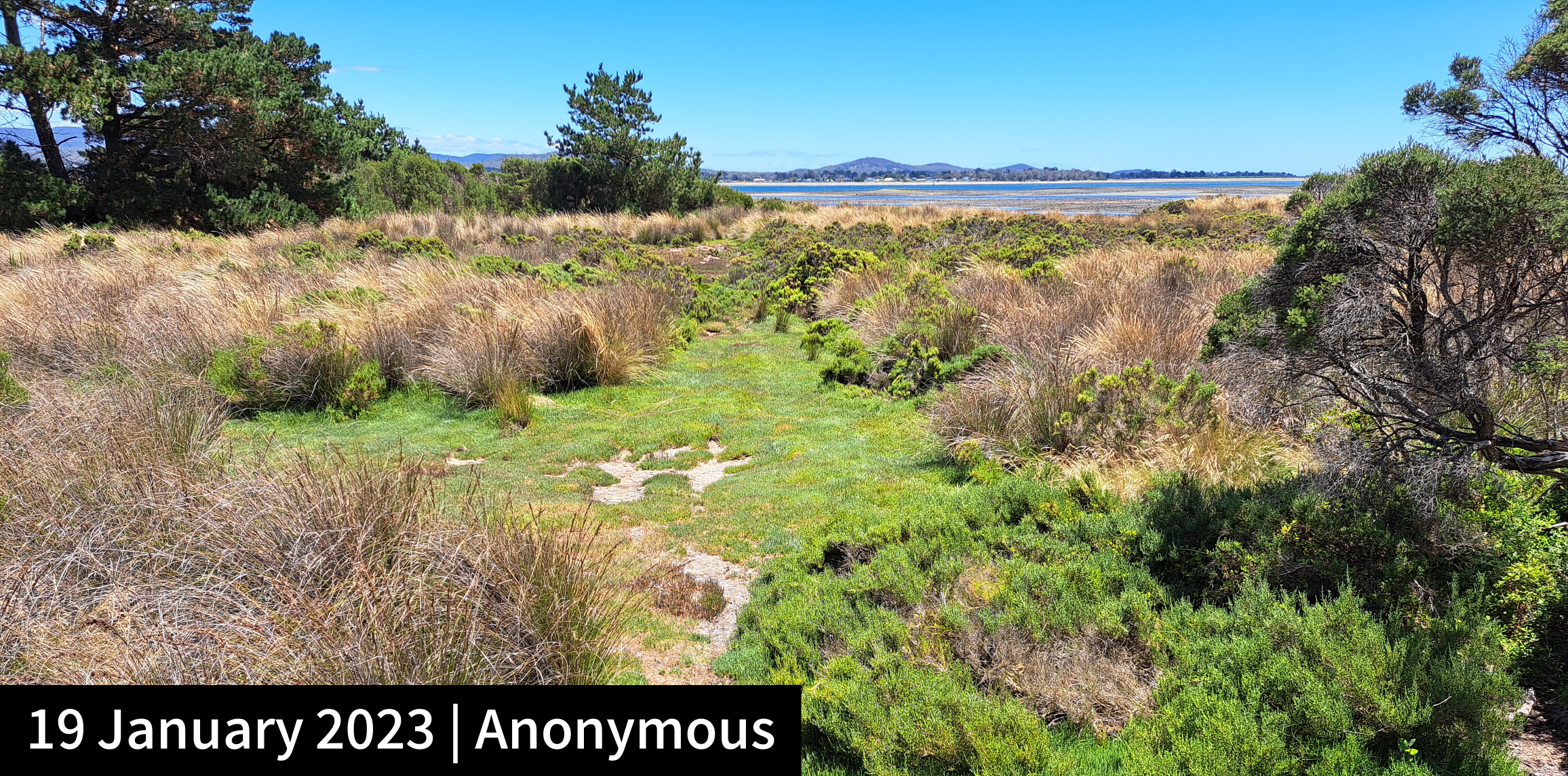
Trampling and compaction - wildlife
Saltmarshes can experience trampling and compaction damage from humans as well as wildlife. However, human trampling and compaction tends to have a greater and more lasting impact.
Humans
Beaded glasswort (Sarcocornia quinqueflora) and other soft, fleshy saltmarsh plants are easily damaged by trampling and compaction, particularly from vehicles such as quad bikes and mountain bikes. Tracks caused by quad bikes before the Repeat Photo Project began in 2020 remain clearly visible six years later, showing just how slow saltmarsh recovery is after damage. More recent damage was captured by repeat photography in December 2025, when a mountain bike track cut through the soft saltmarsh surface. The track remained clearly visible three months later in February 2026.
Wildlife
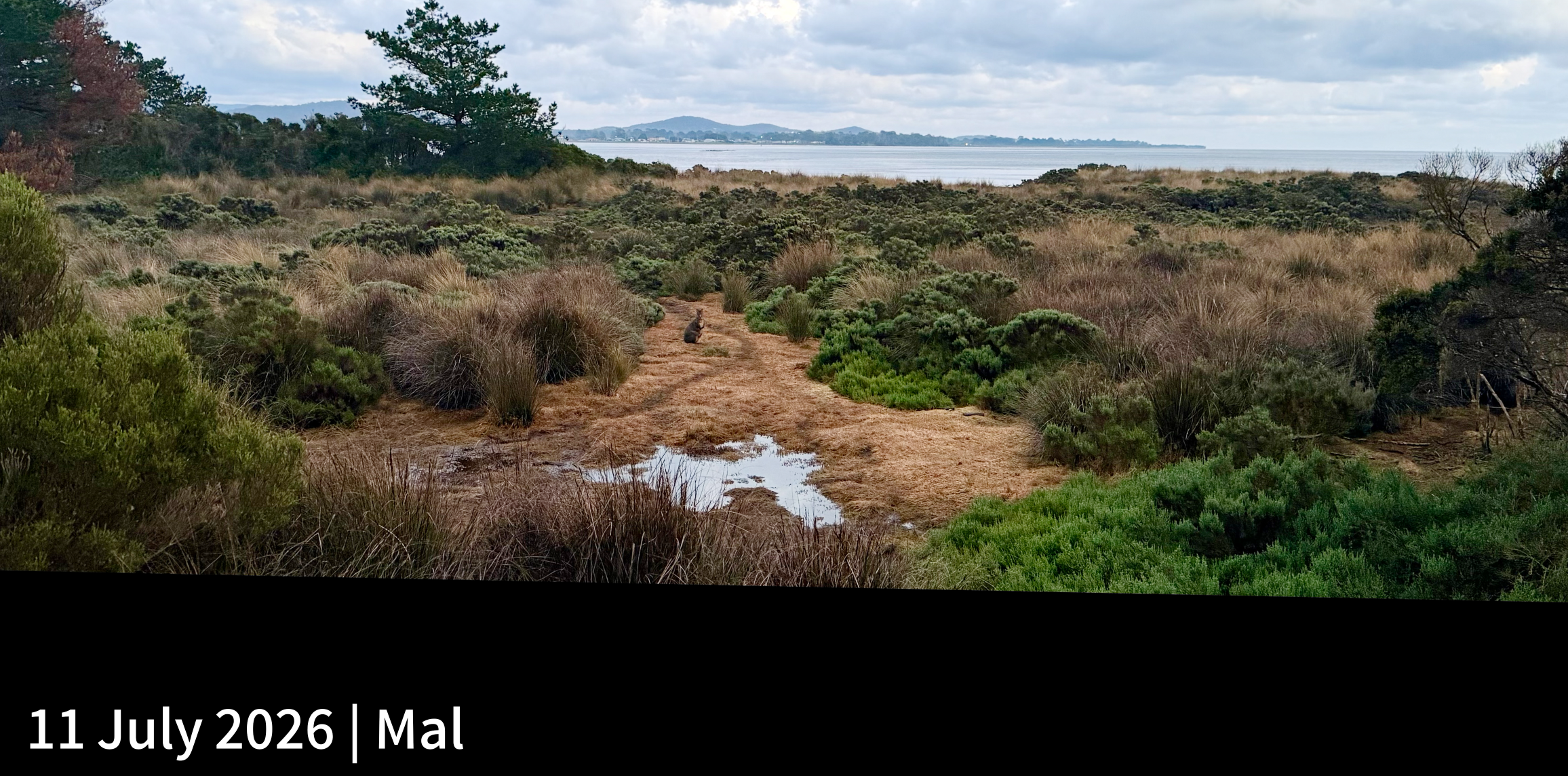
Humans aren’t the only animals that create tracks through saltmarsh. Repeat photographs show that native animals such as Bennett’s wallabies (Notamacropus rufogriseus) and Tasmanian pademelons (Thylogale billardierii) can form well-defined trails by repeatedly following the same routes through the vegetation. Unlike bikes and other vehicles, however, these relatively lightweight animals exert much less pressure on the soft saltmarsh surface. Their trails tend to disturb vegetation without causing the deep compaction and rutting associated with vehicle traffic, allowing plants to recover more easily.