Tailrace Park repeat photo
This photo-post tracks changes in estuary-bank erosion and the health of the swamp paperbark (Melaleuca ericifolia) community bordering the estuary.
The Tailrace Park repeat photo site looks onto one of the southernmost stands of swamp paperbark in the Kanamaluka / Tamar estuary. In Tasmania Melaleuca ericifolia swamp forest is protected as a Threatened Native Vegetation Community under the Tasmanian Nature Conservation Act 2002. It is called ‘swamp’ paperbark because it naturally thrives in wet, swampy inland areas as well as coastal environments, estuaries, and saltmarshes, many of which have been cleared for development.
This site is subject to bank erosion from vessel-wake at low tide, incremental sea level rise, variable water quality, and pressure from exotic weeds.
Check out the selection of photos that have been submitted for this site below and contribute your own!
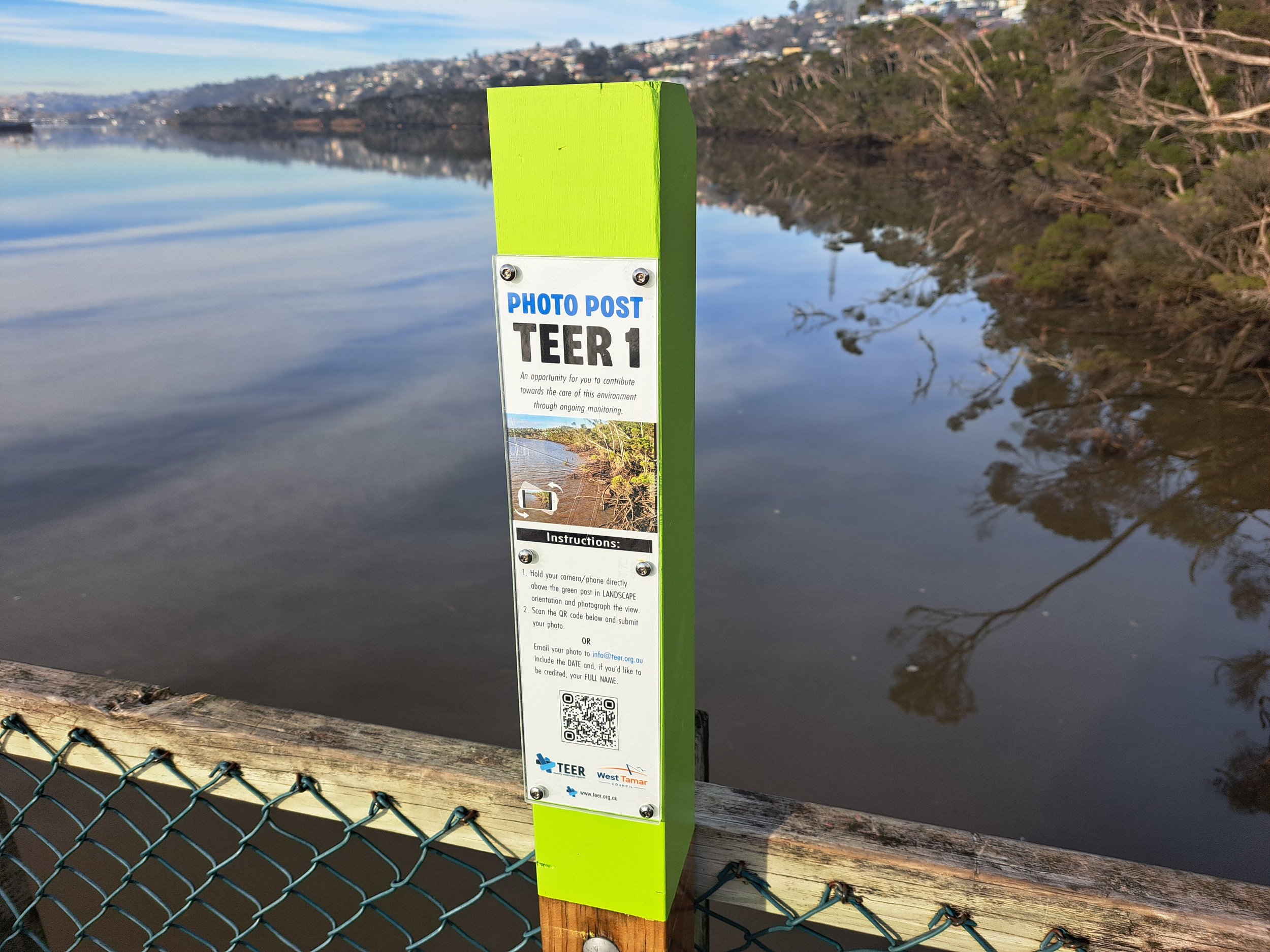
The Tailrace Park repeat photo post.
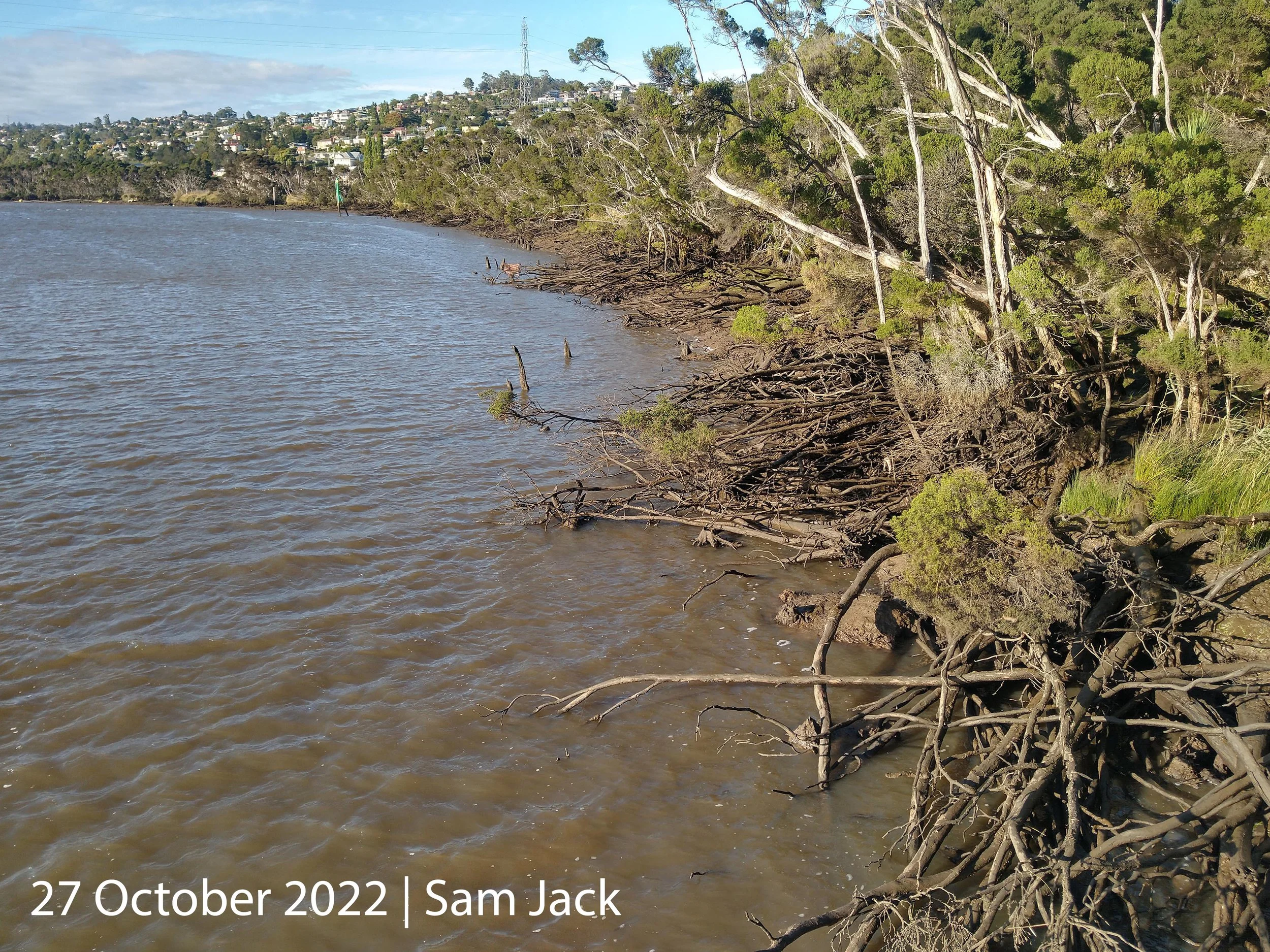
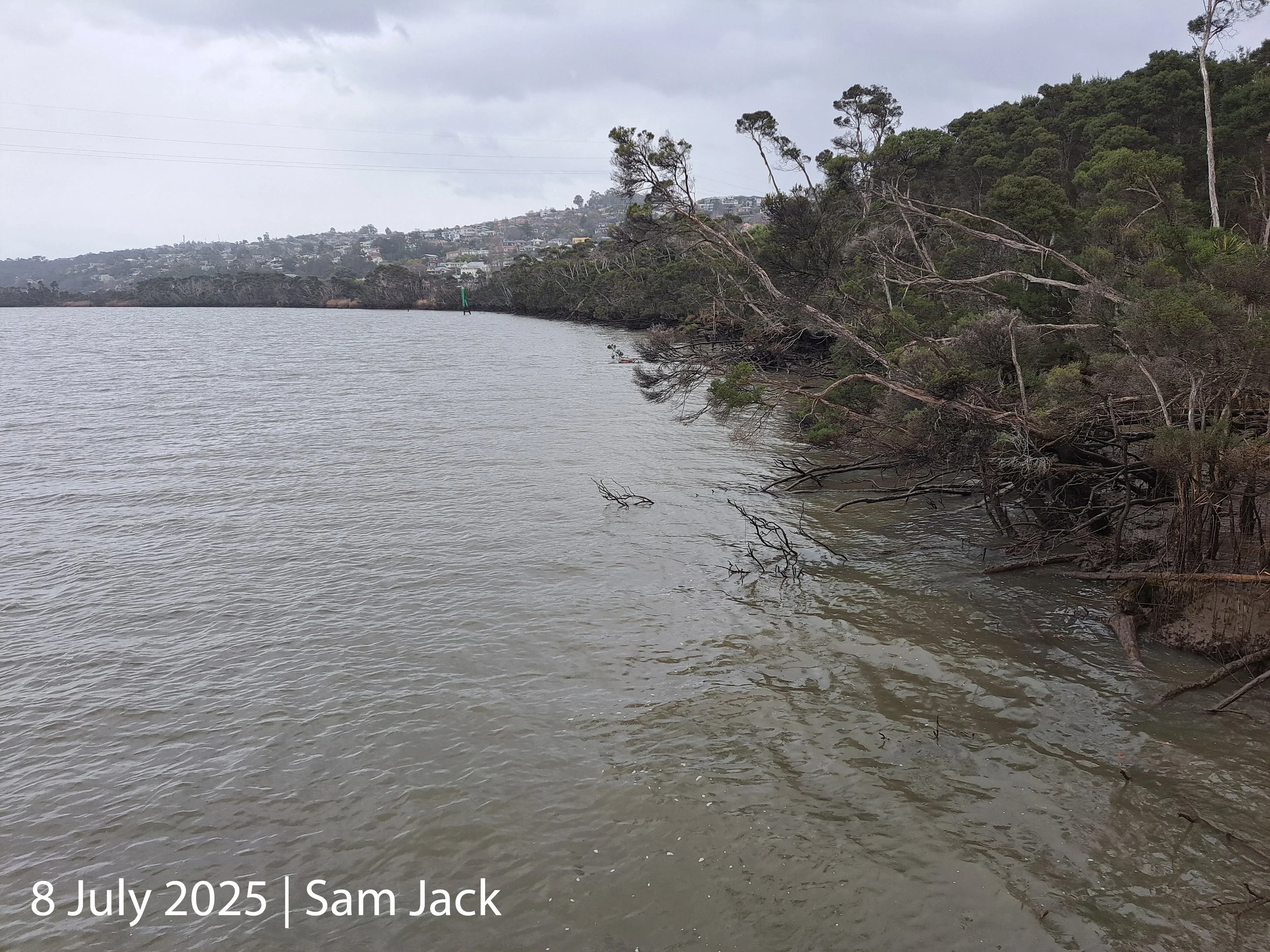
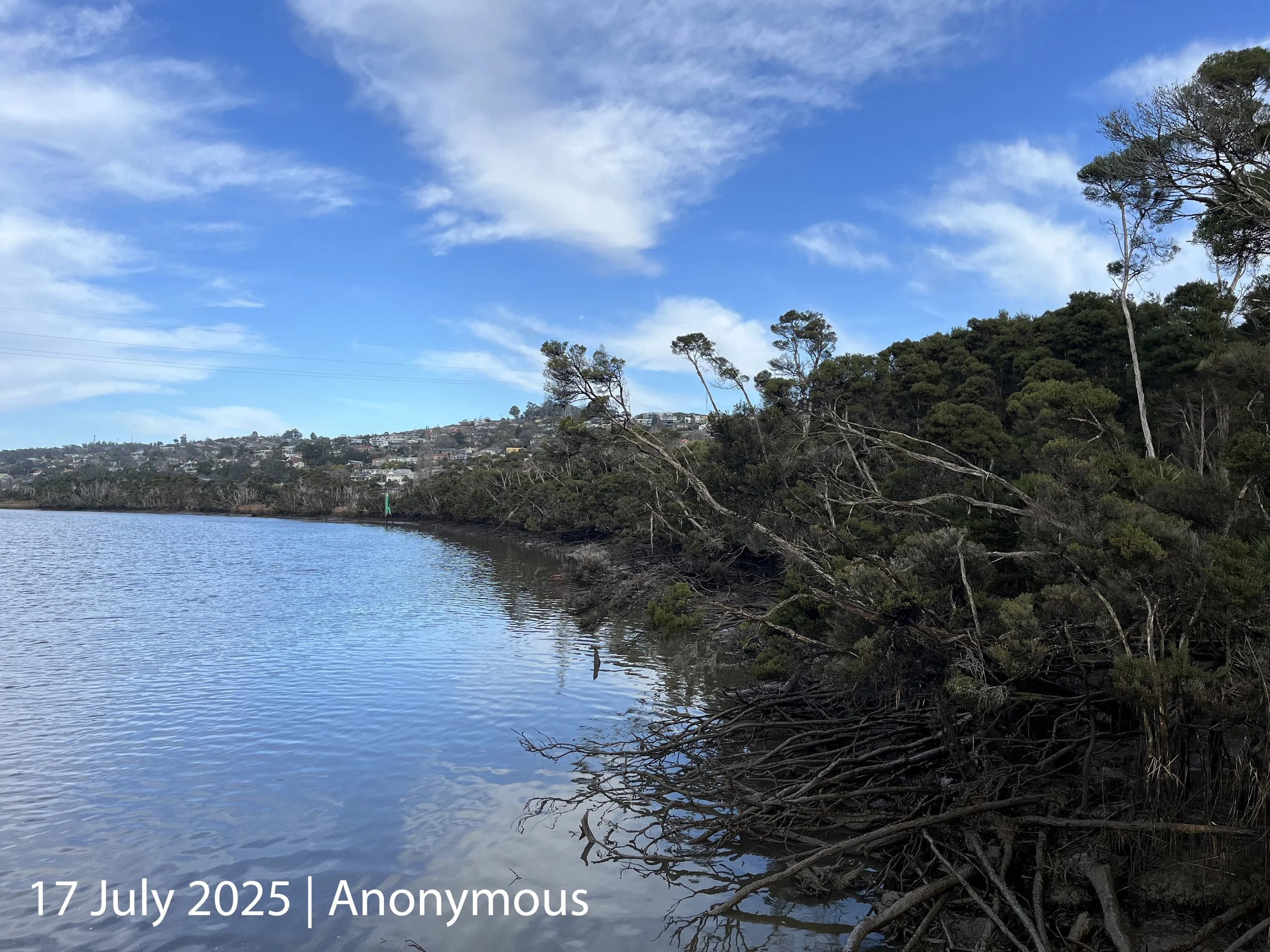
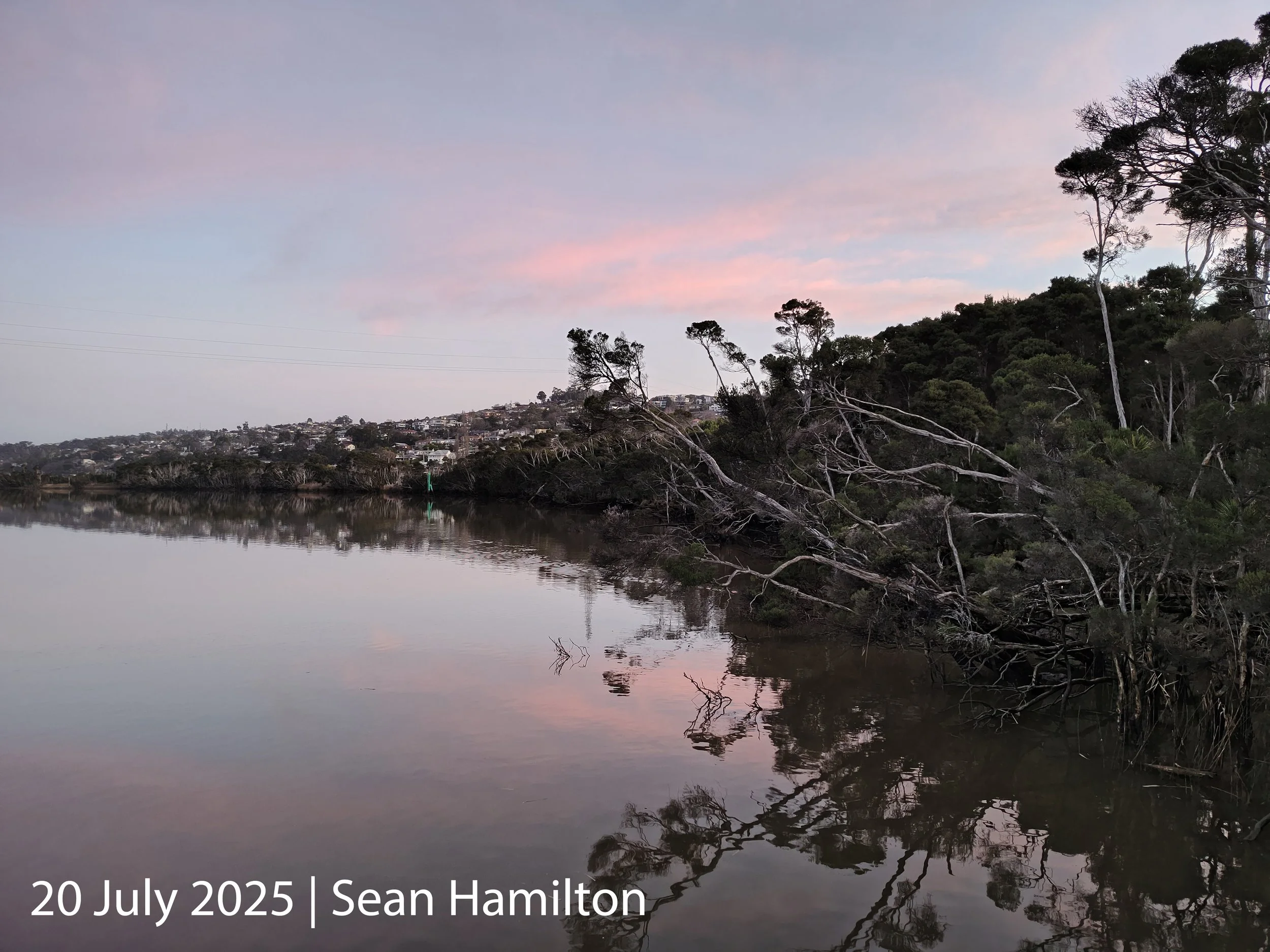
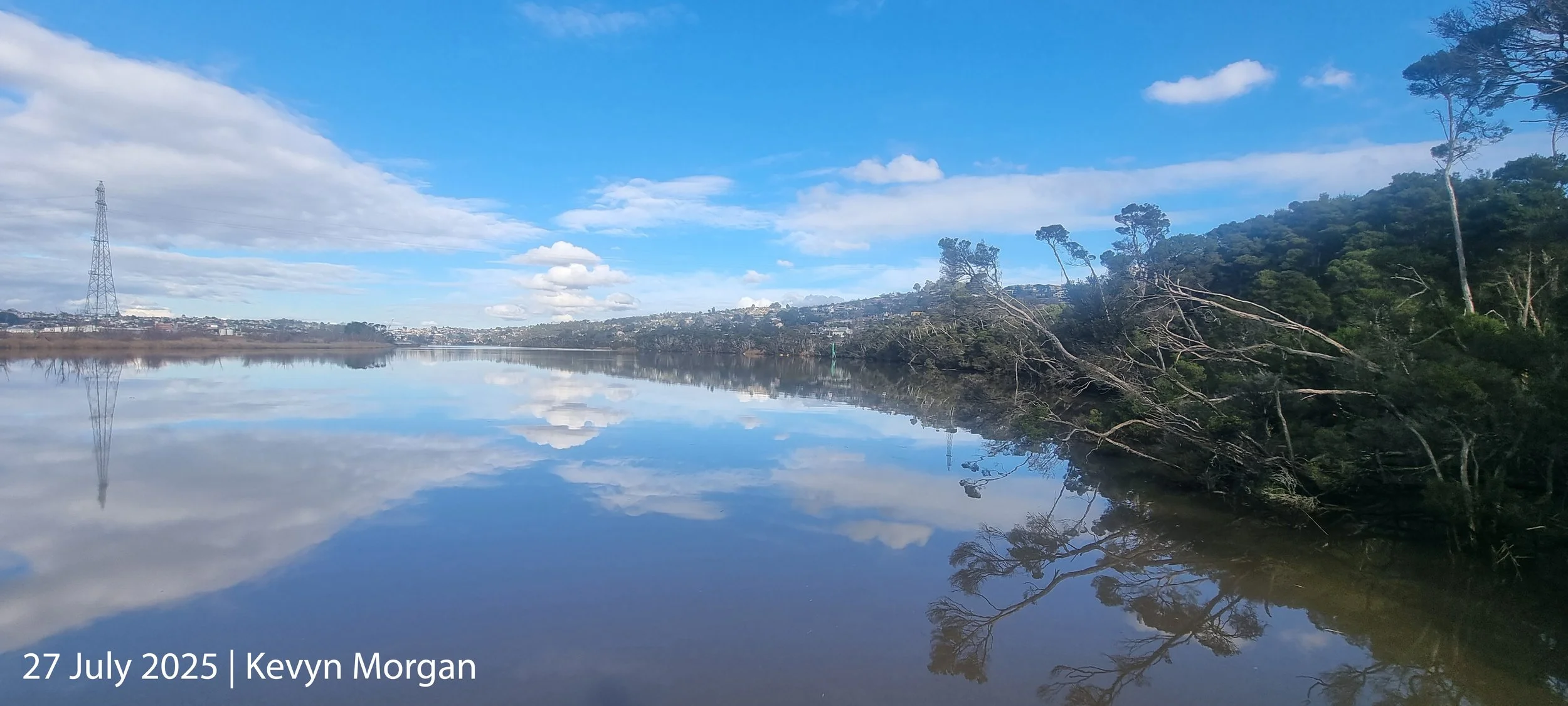
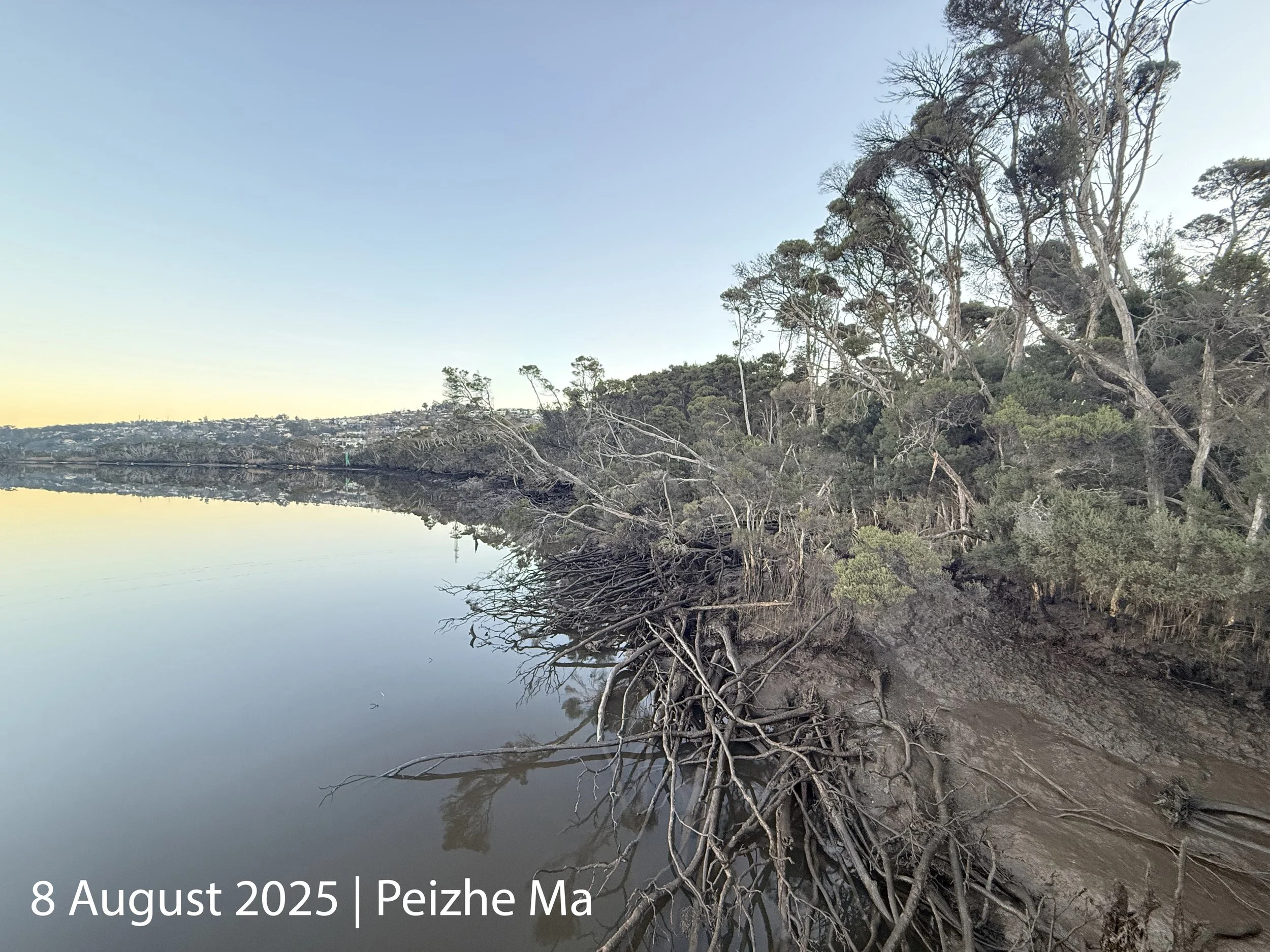
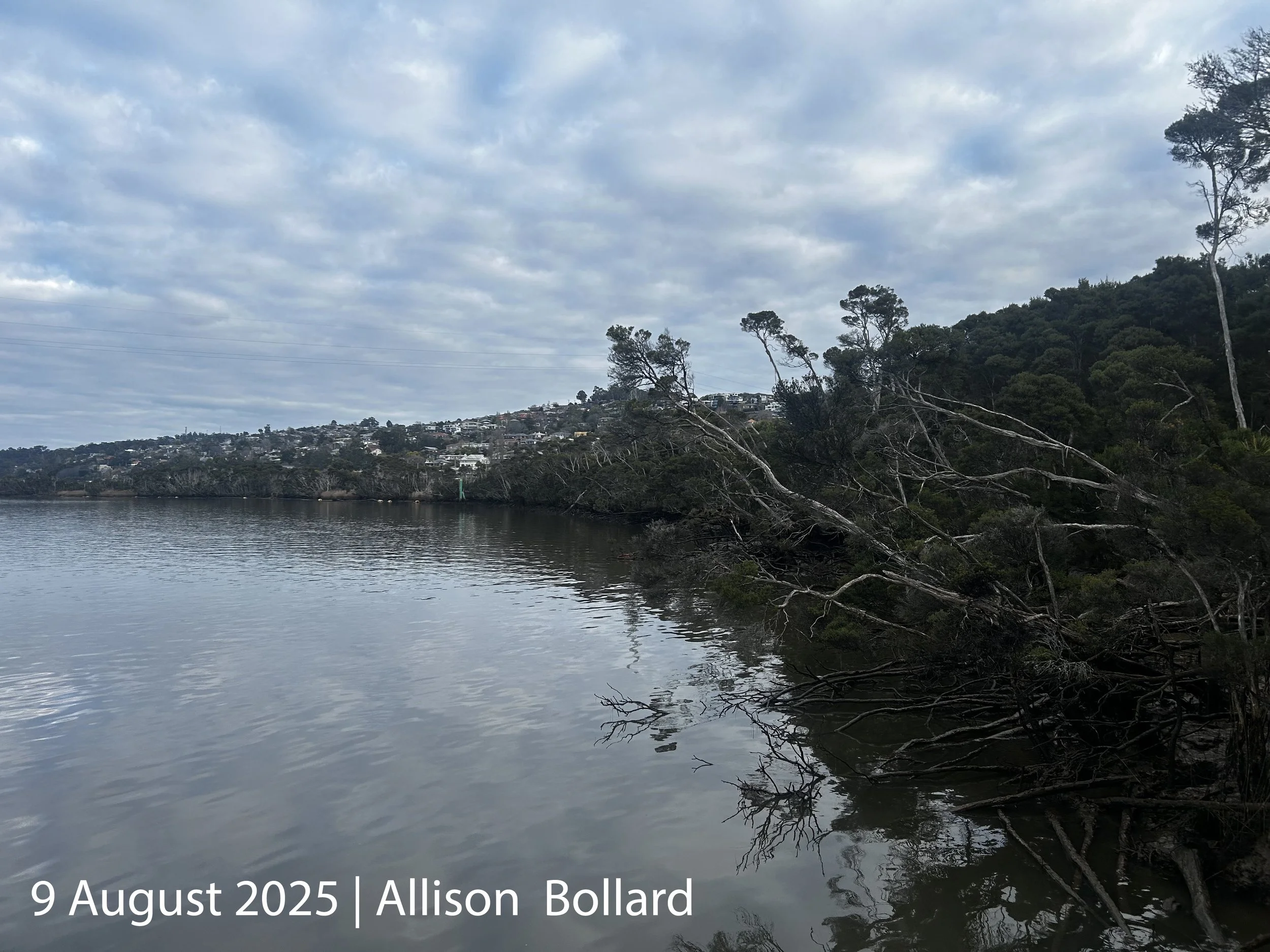
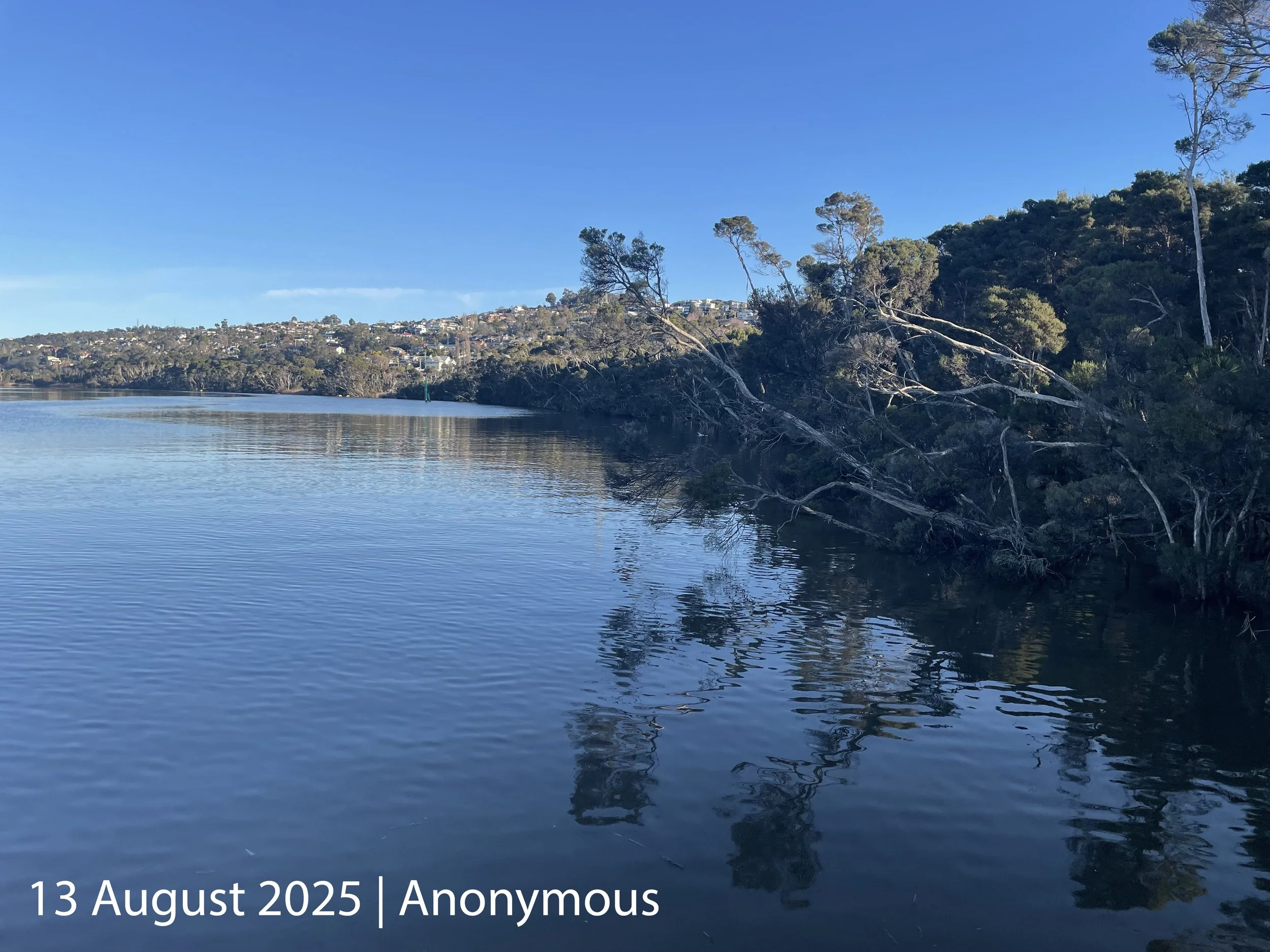
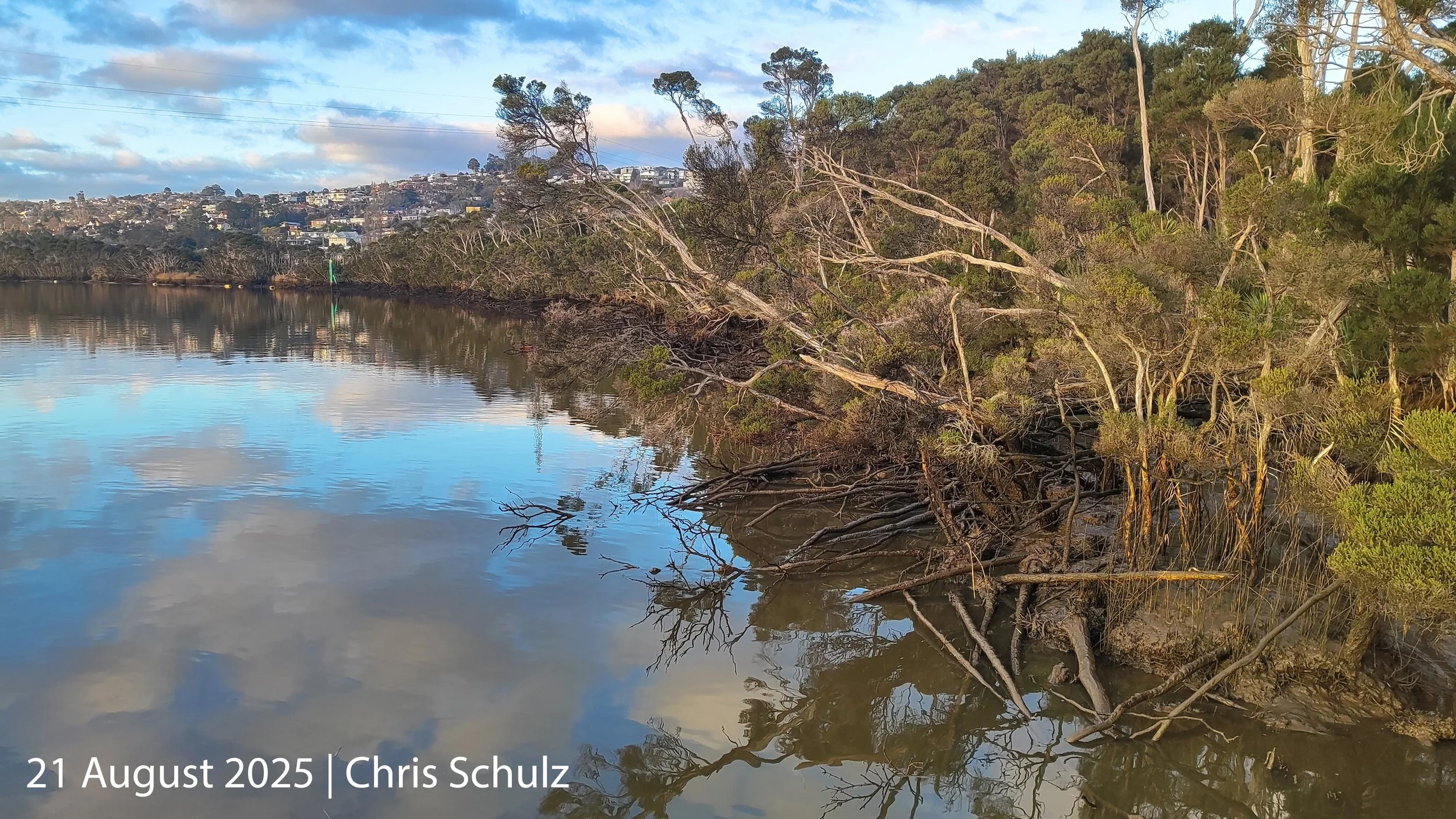
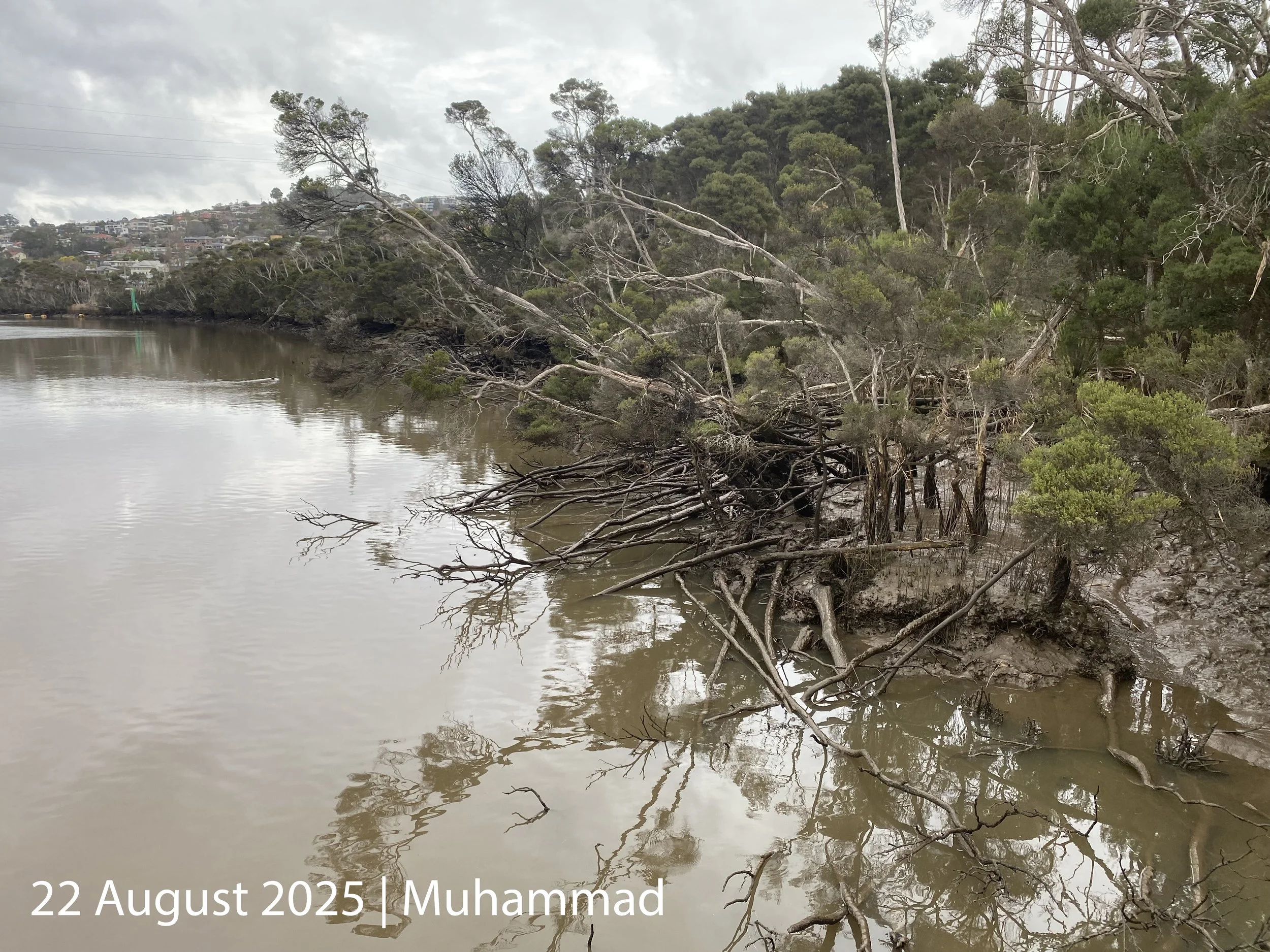
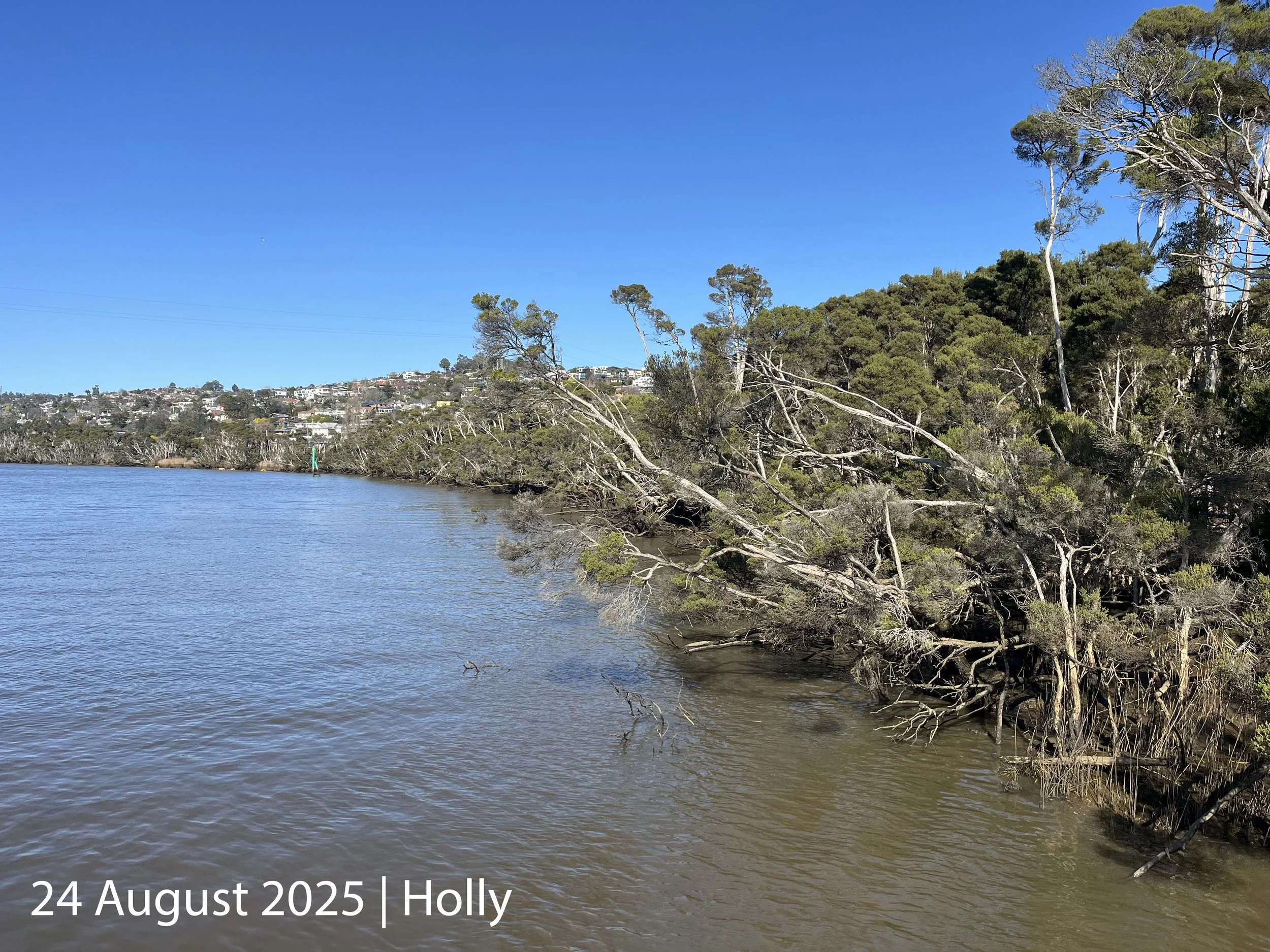
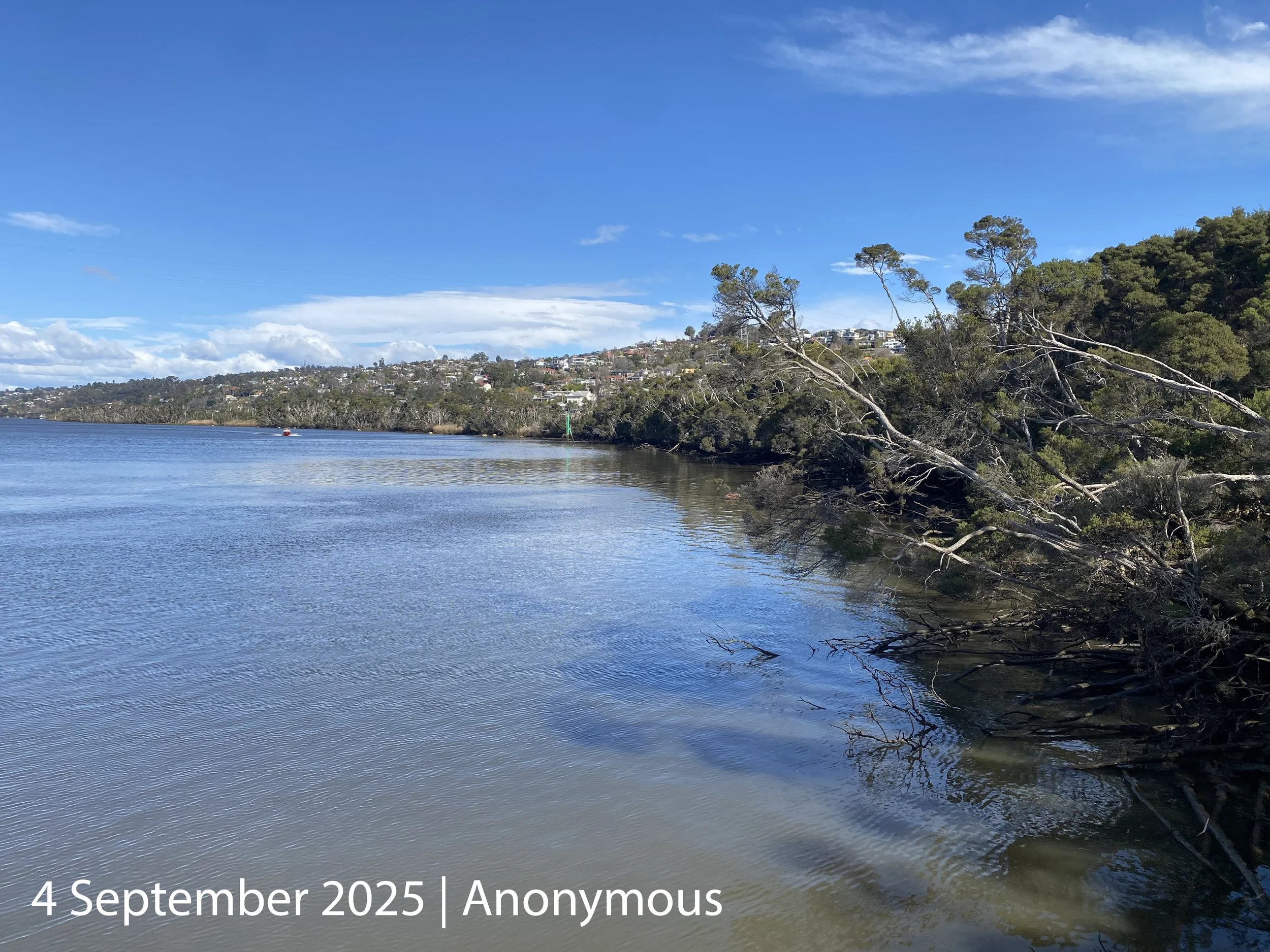
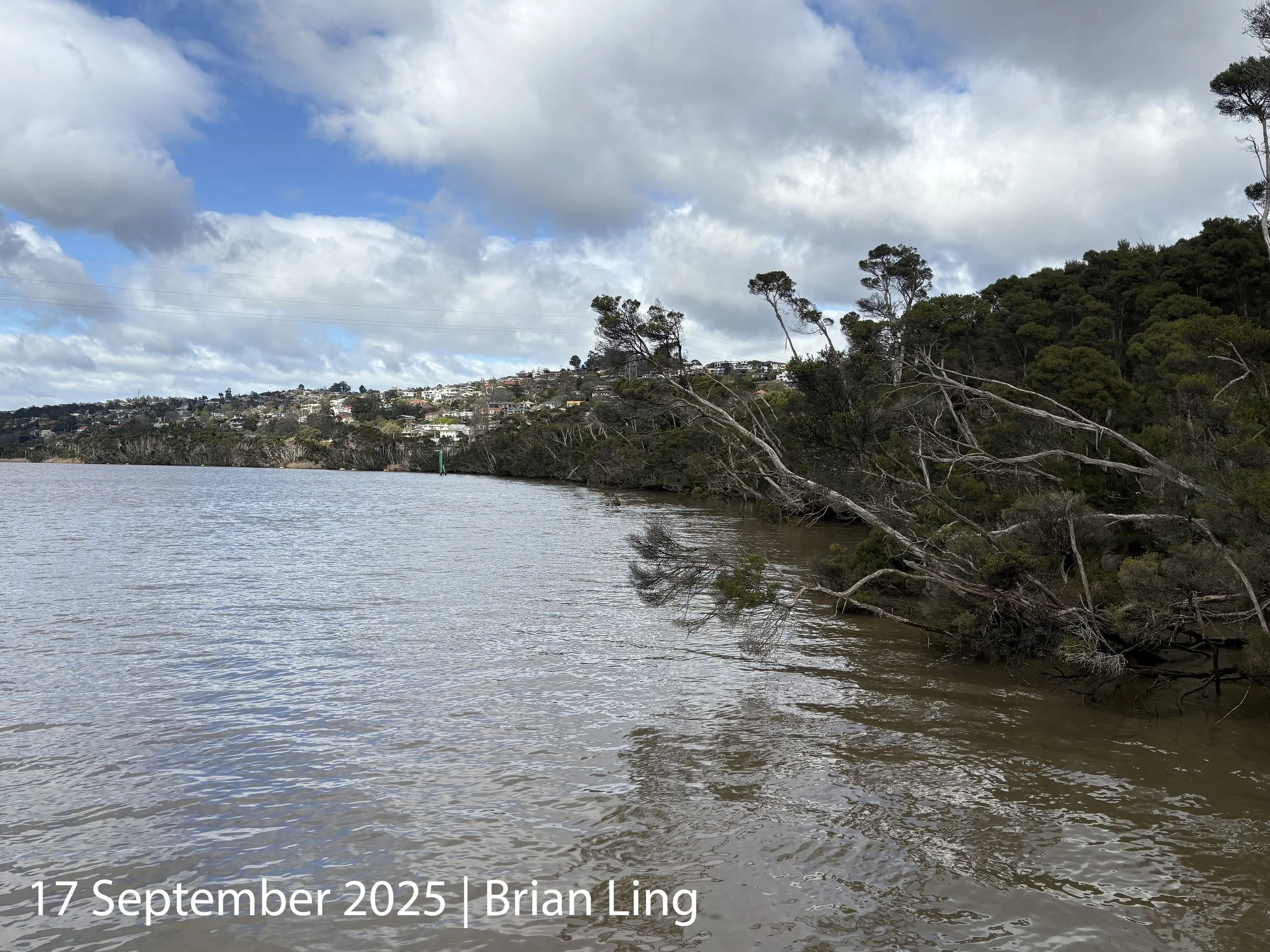
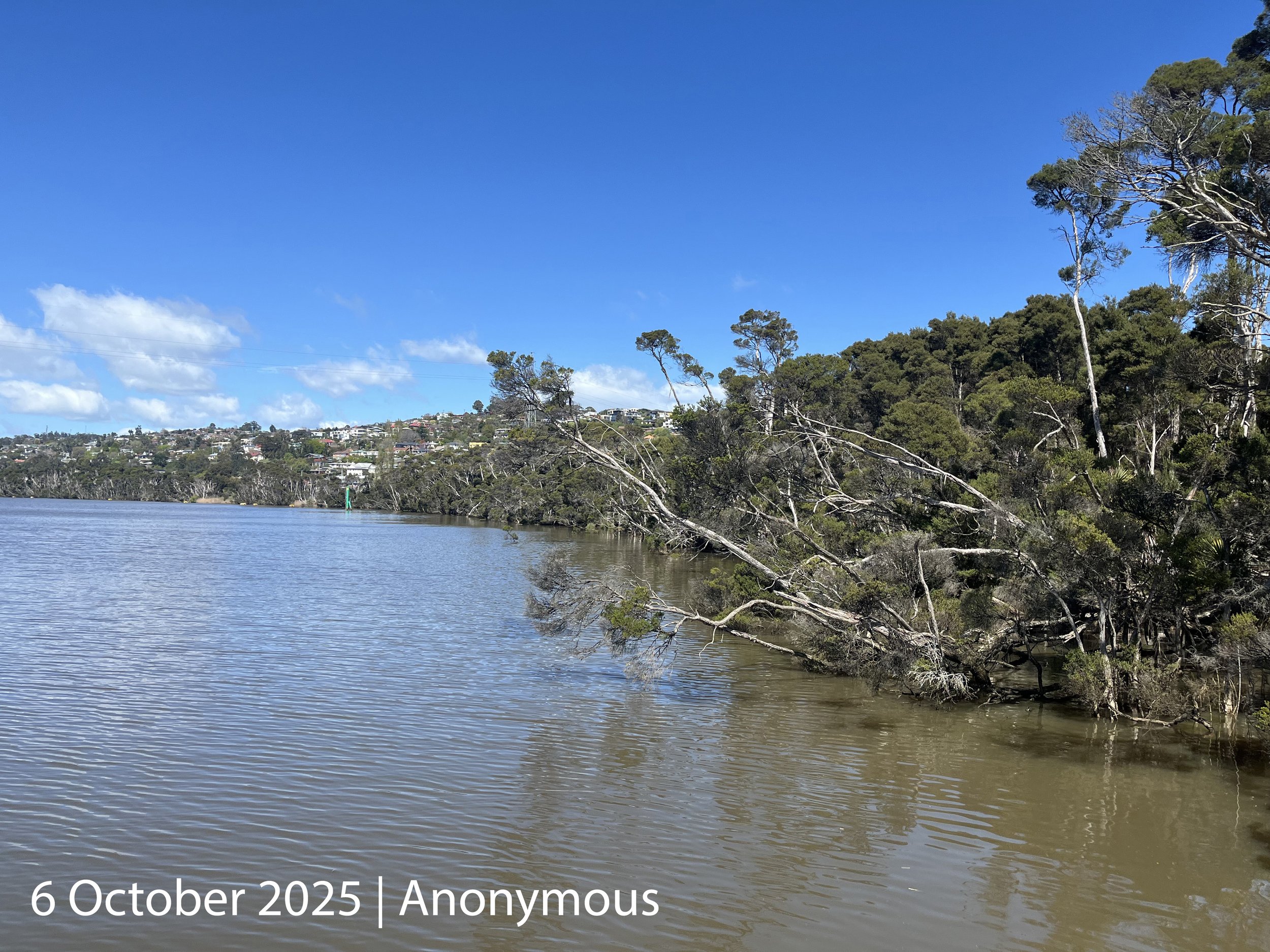
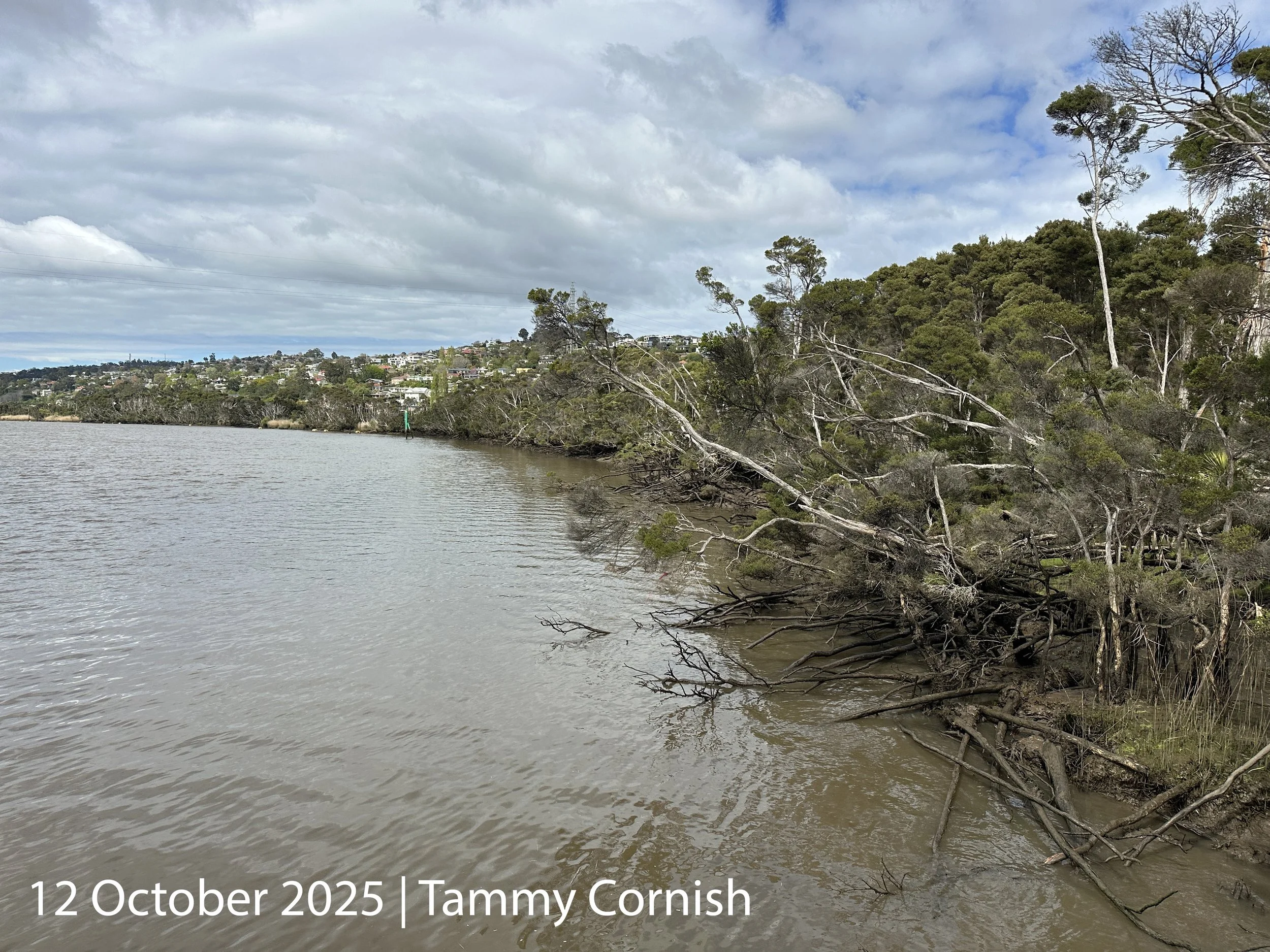
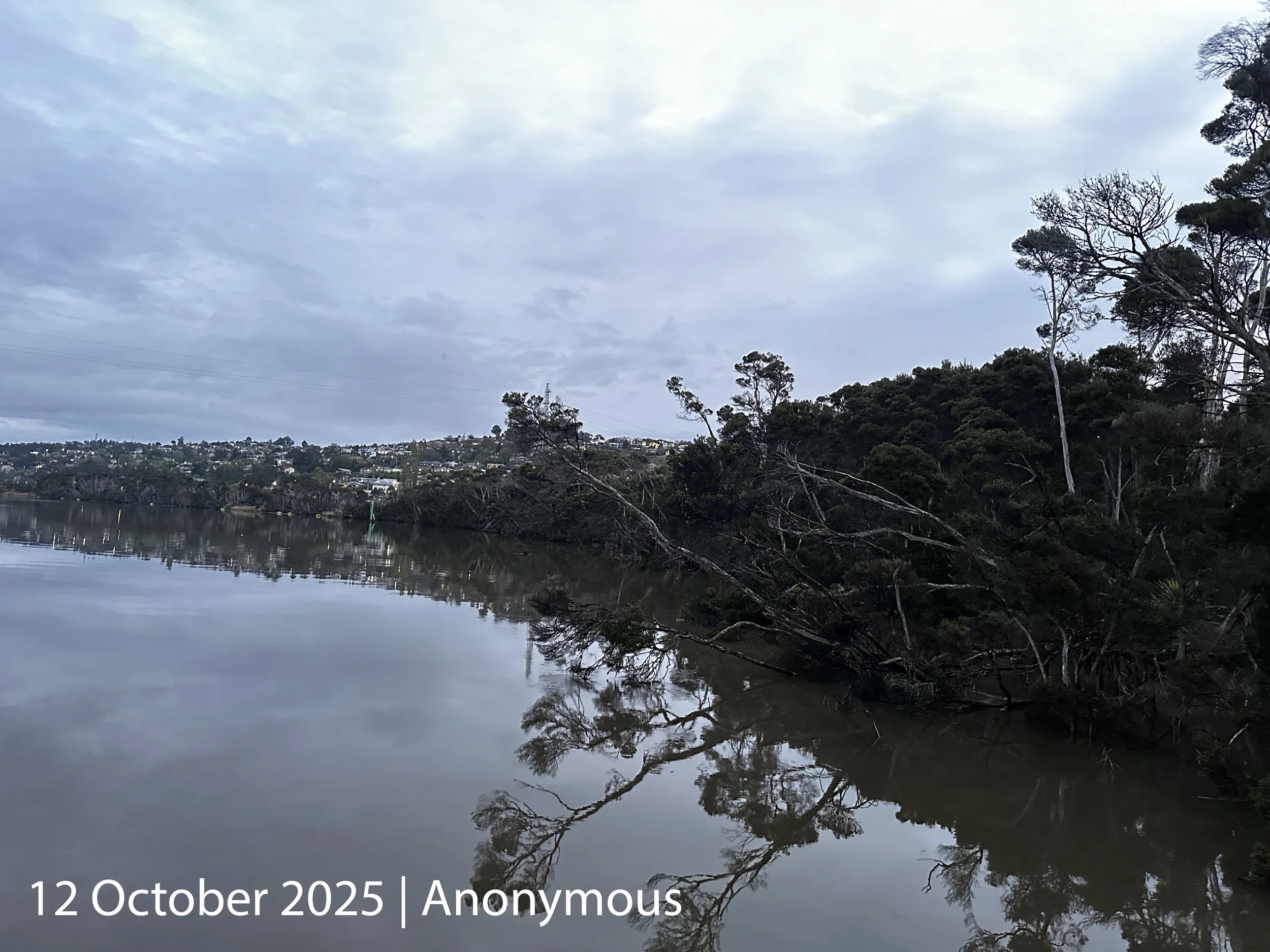
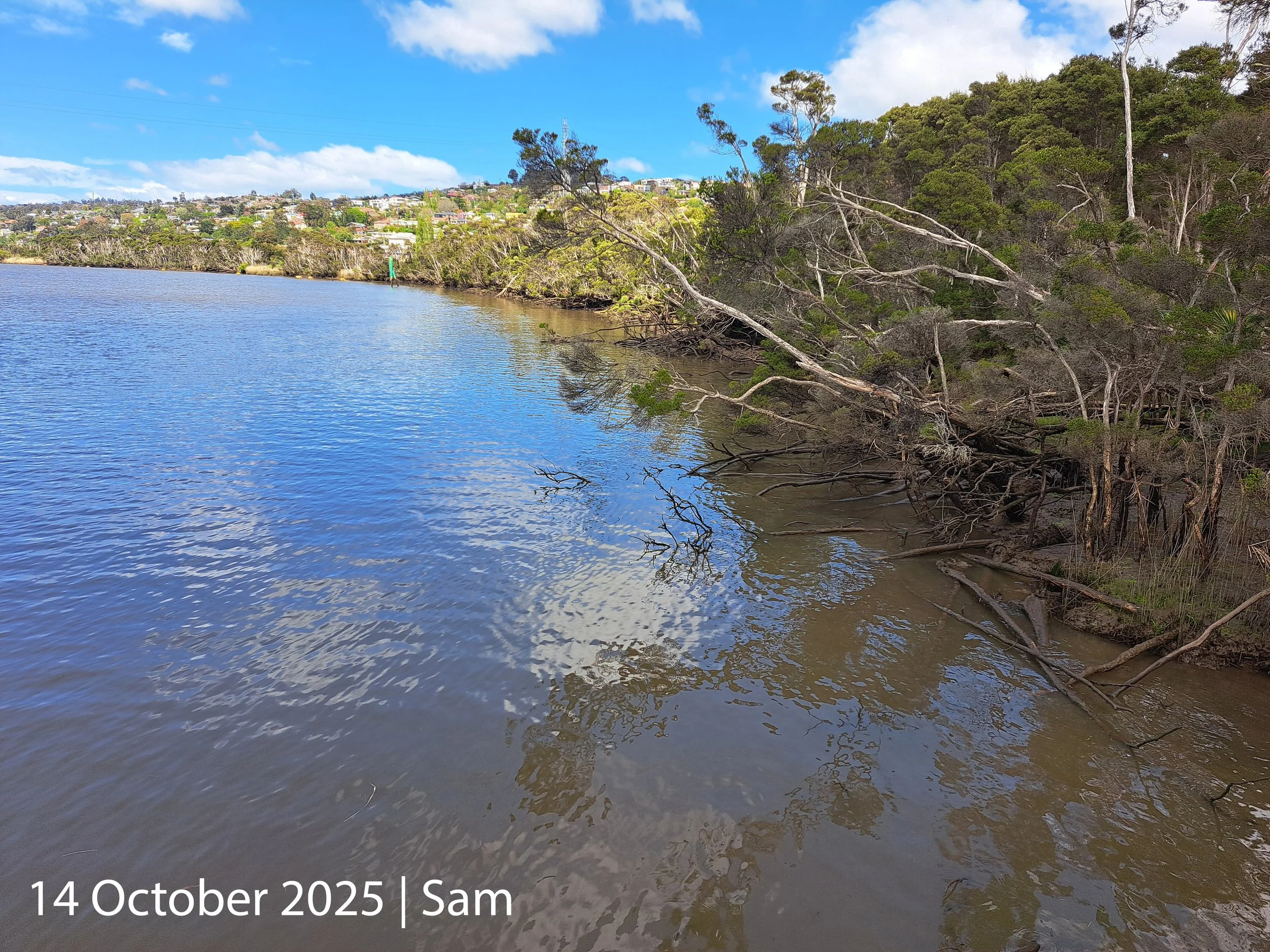
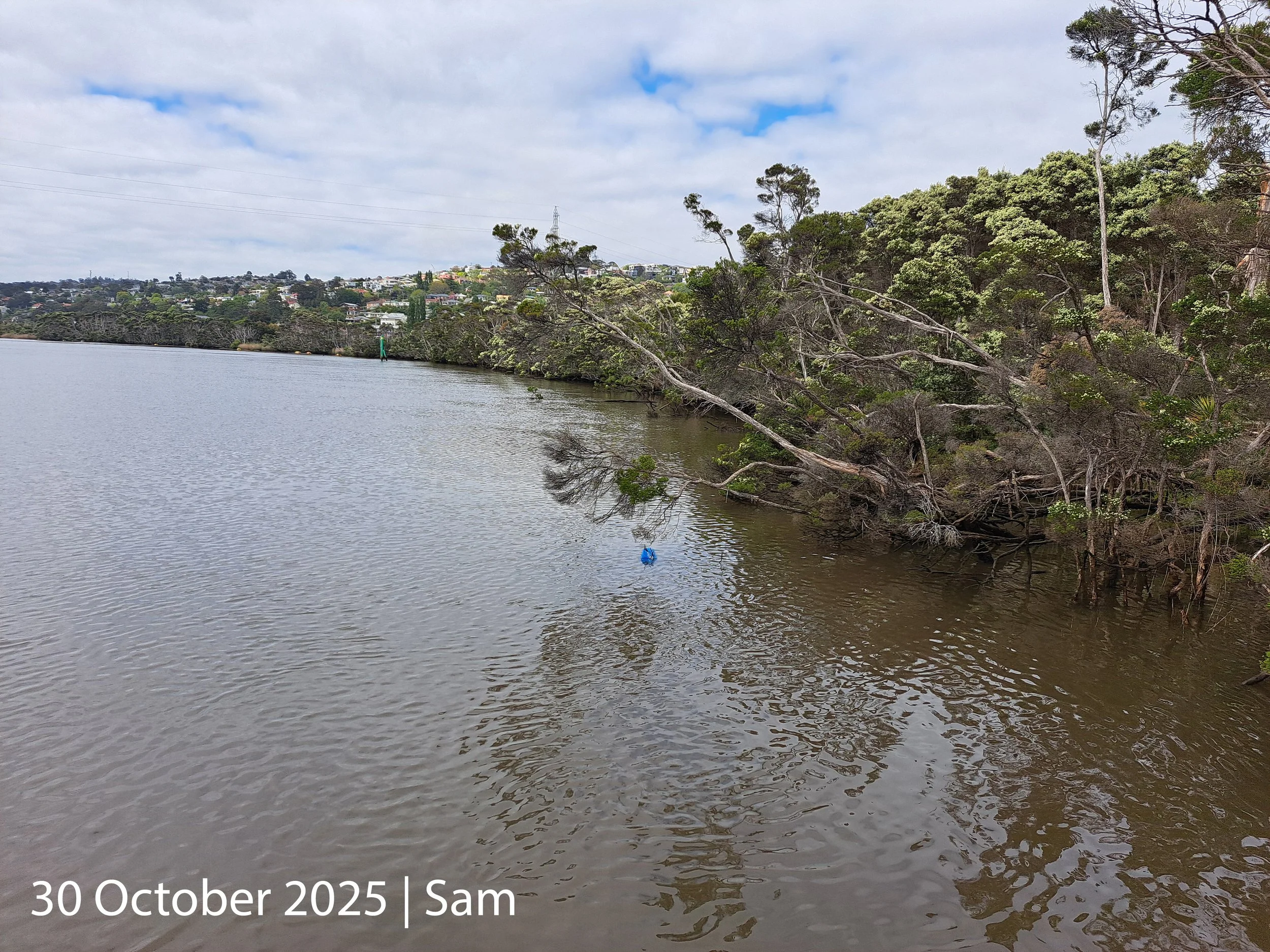
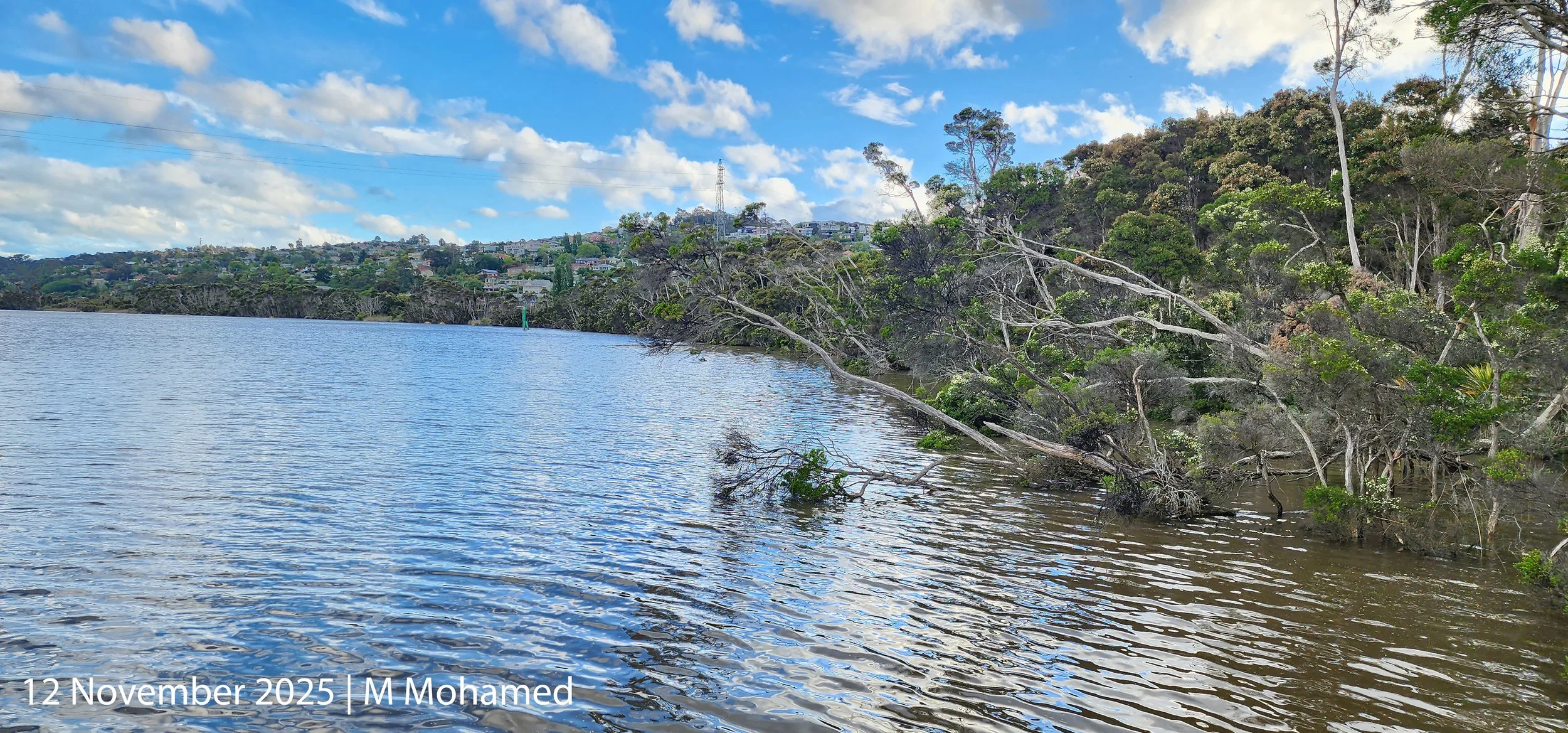
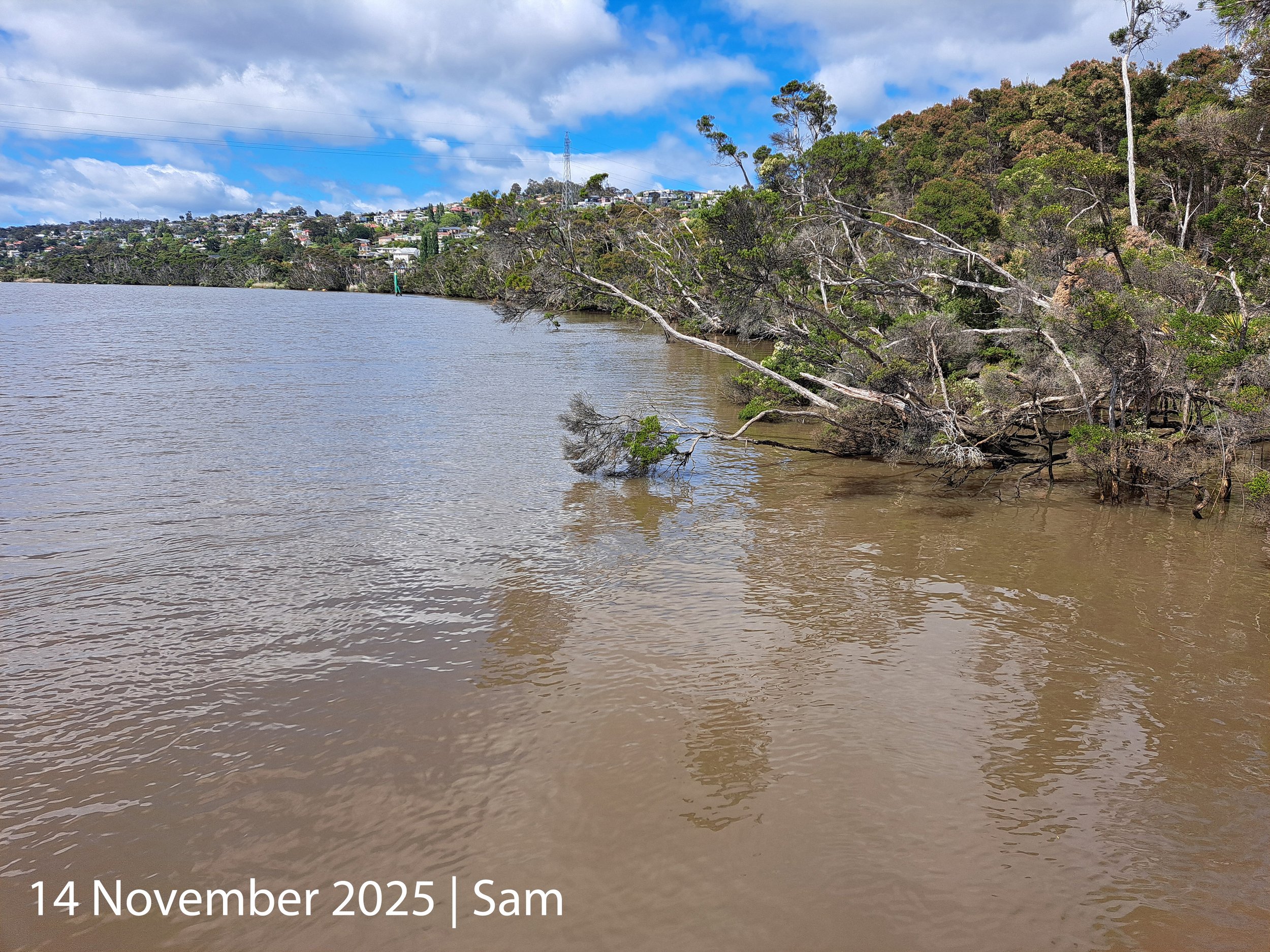
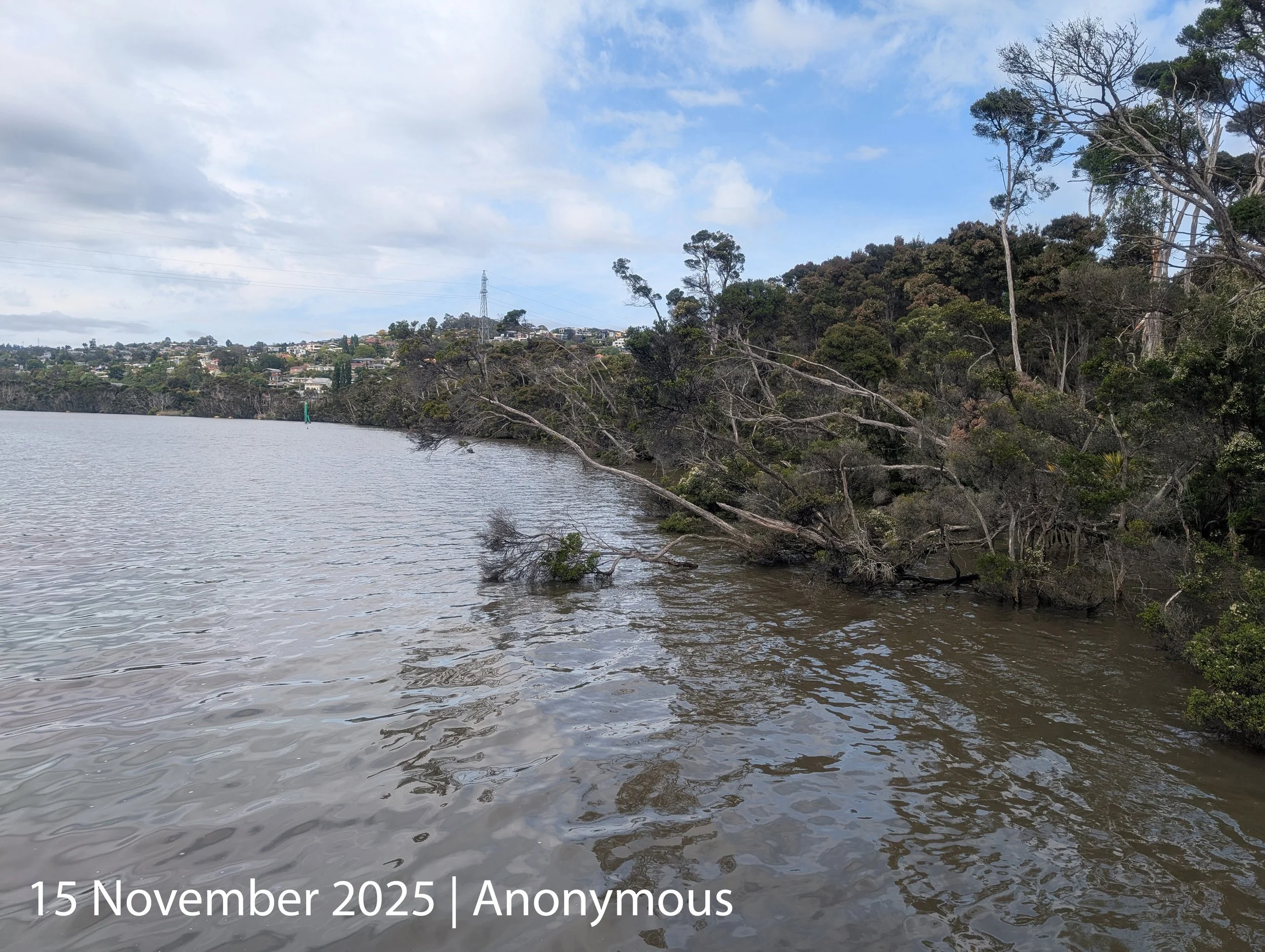
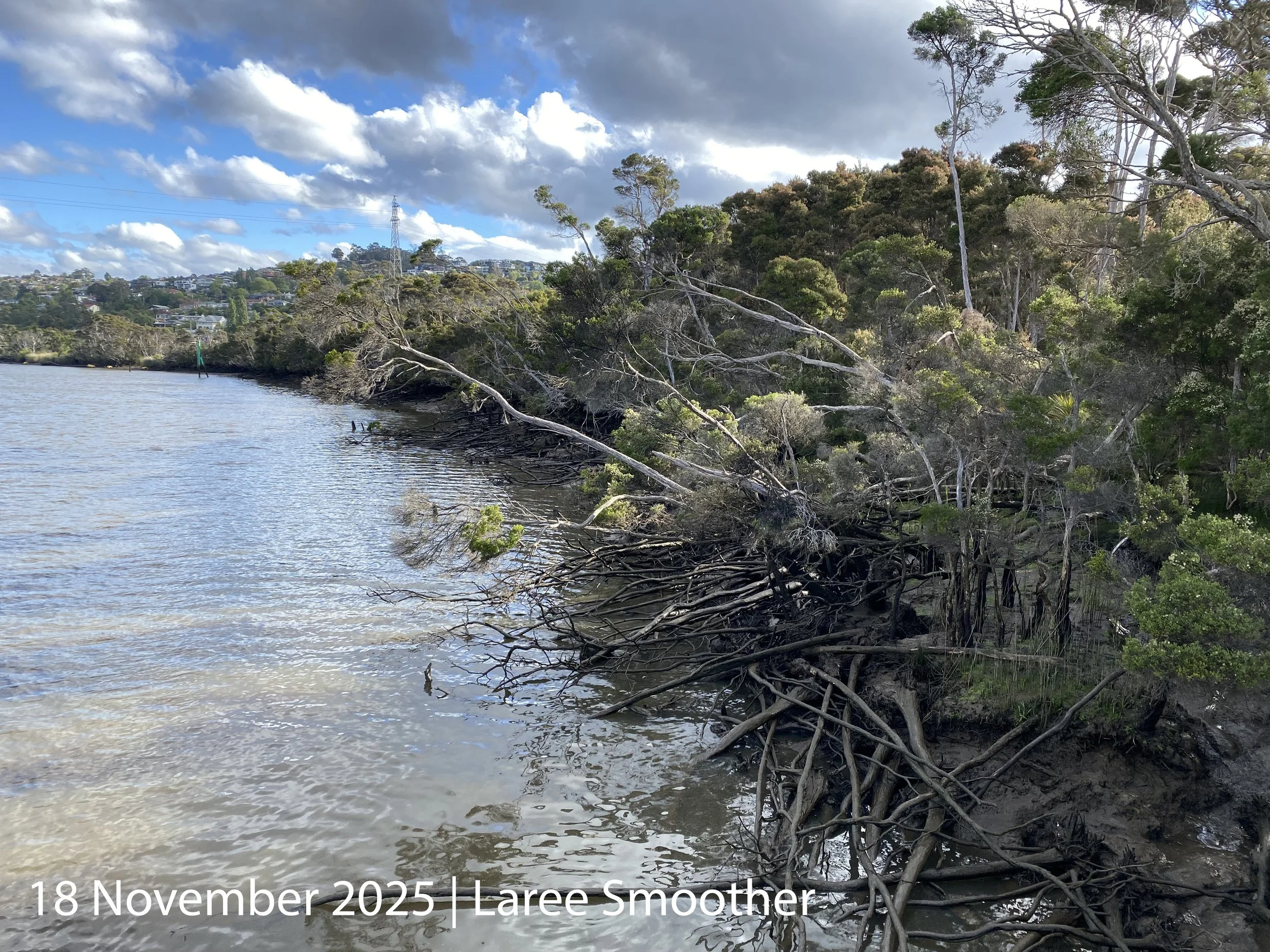
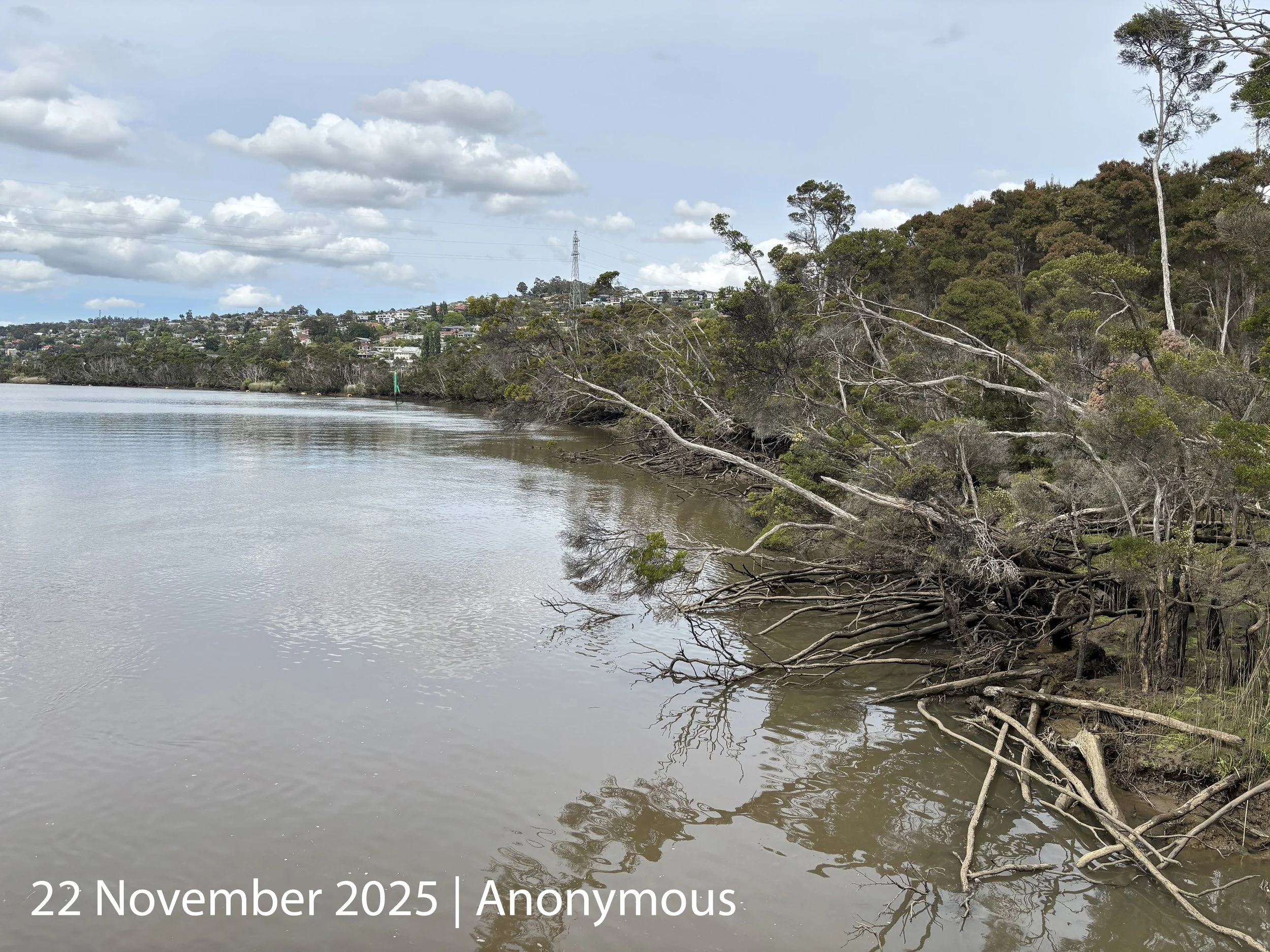
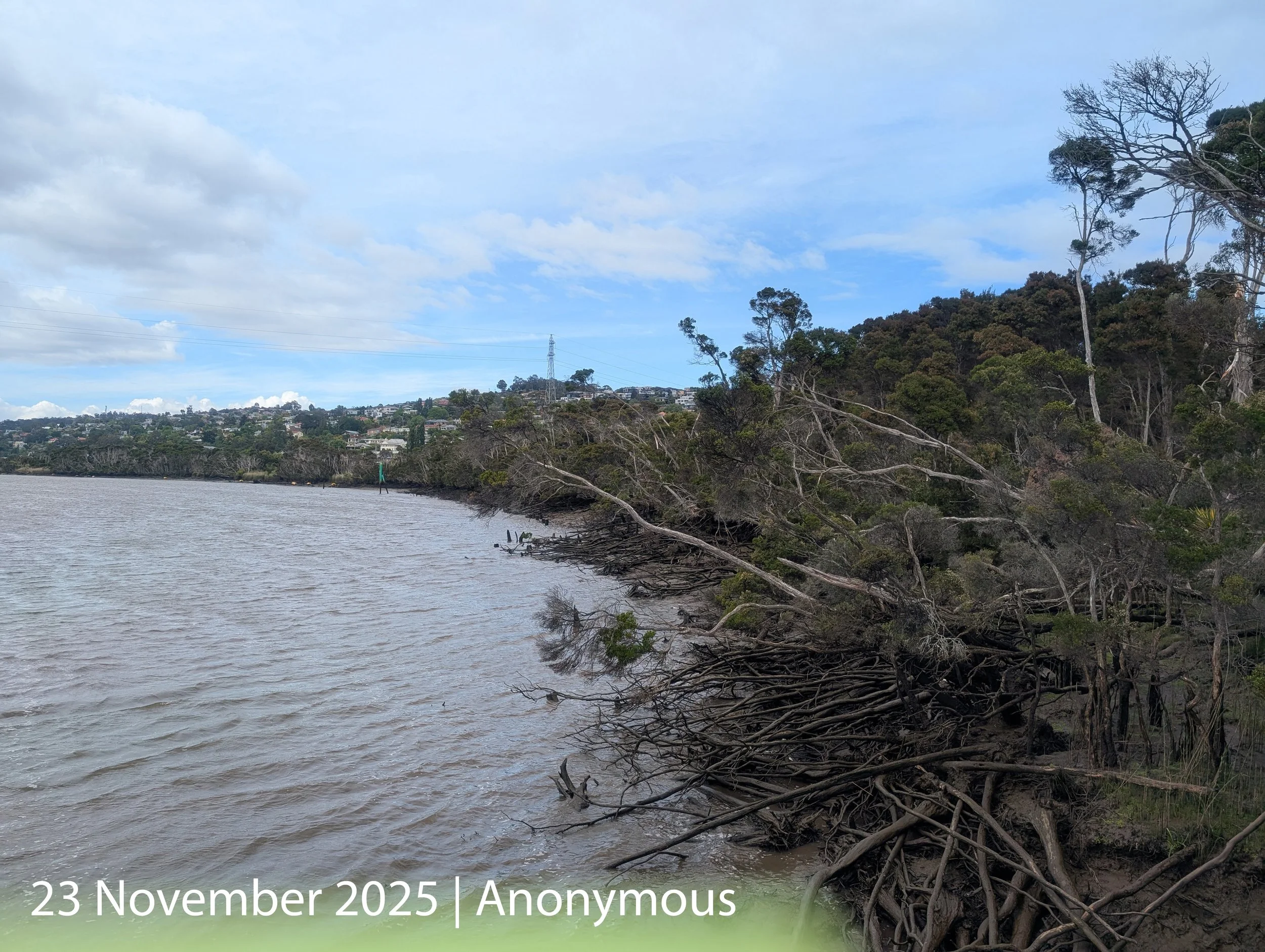
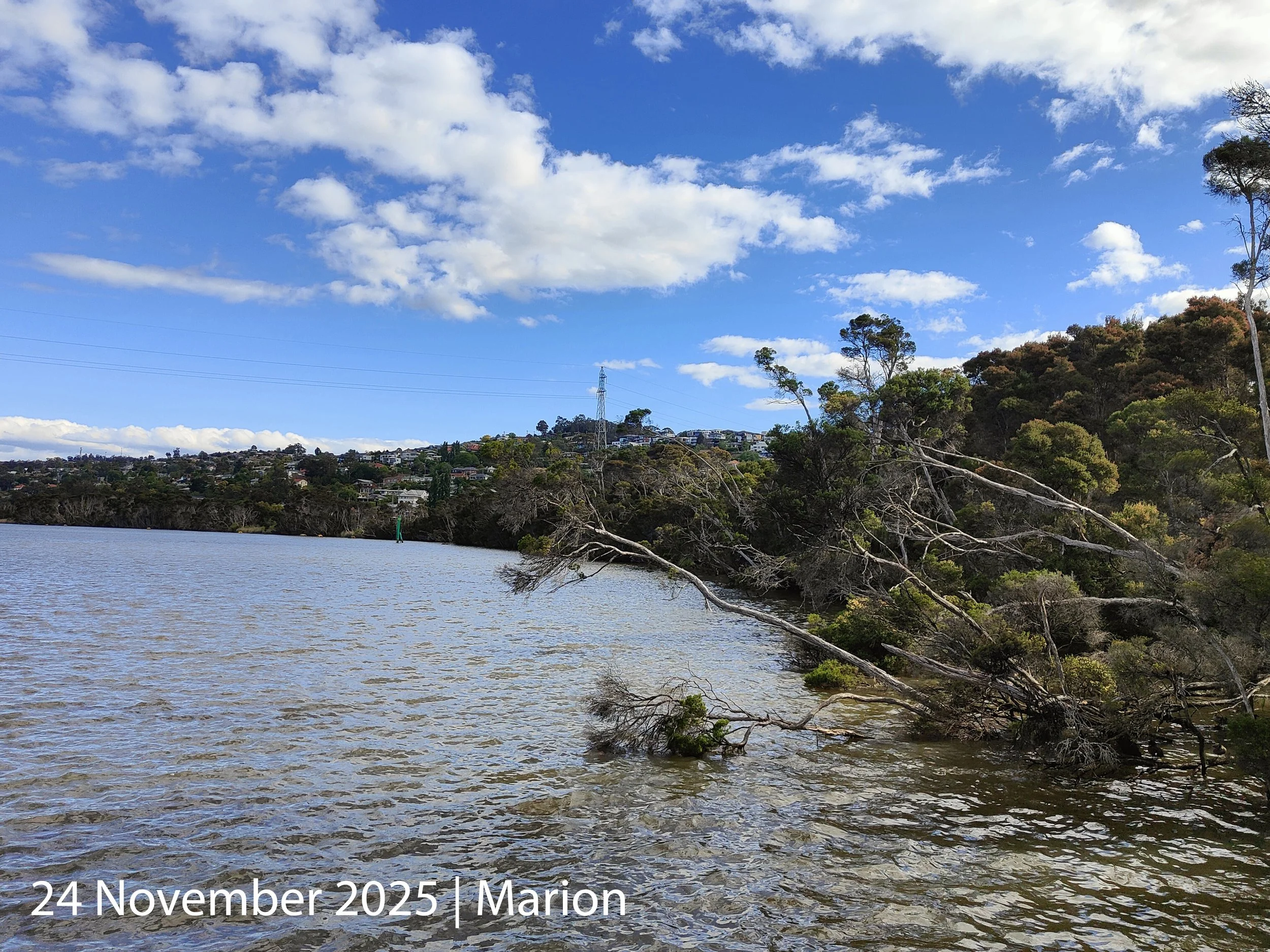
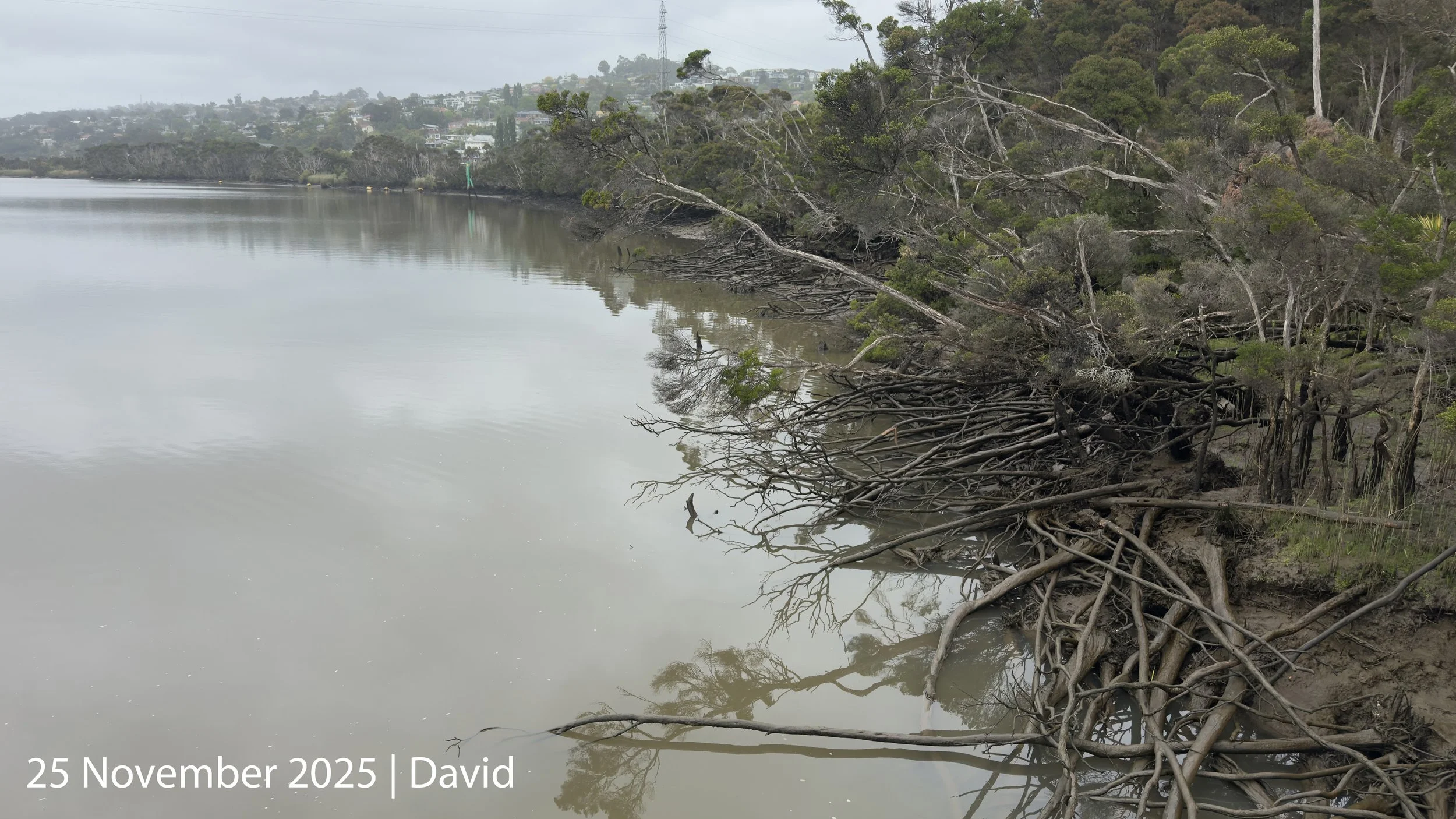
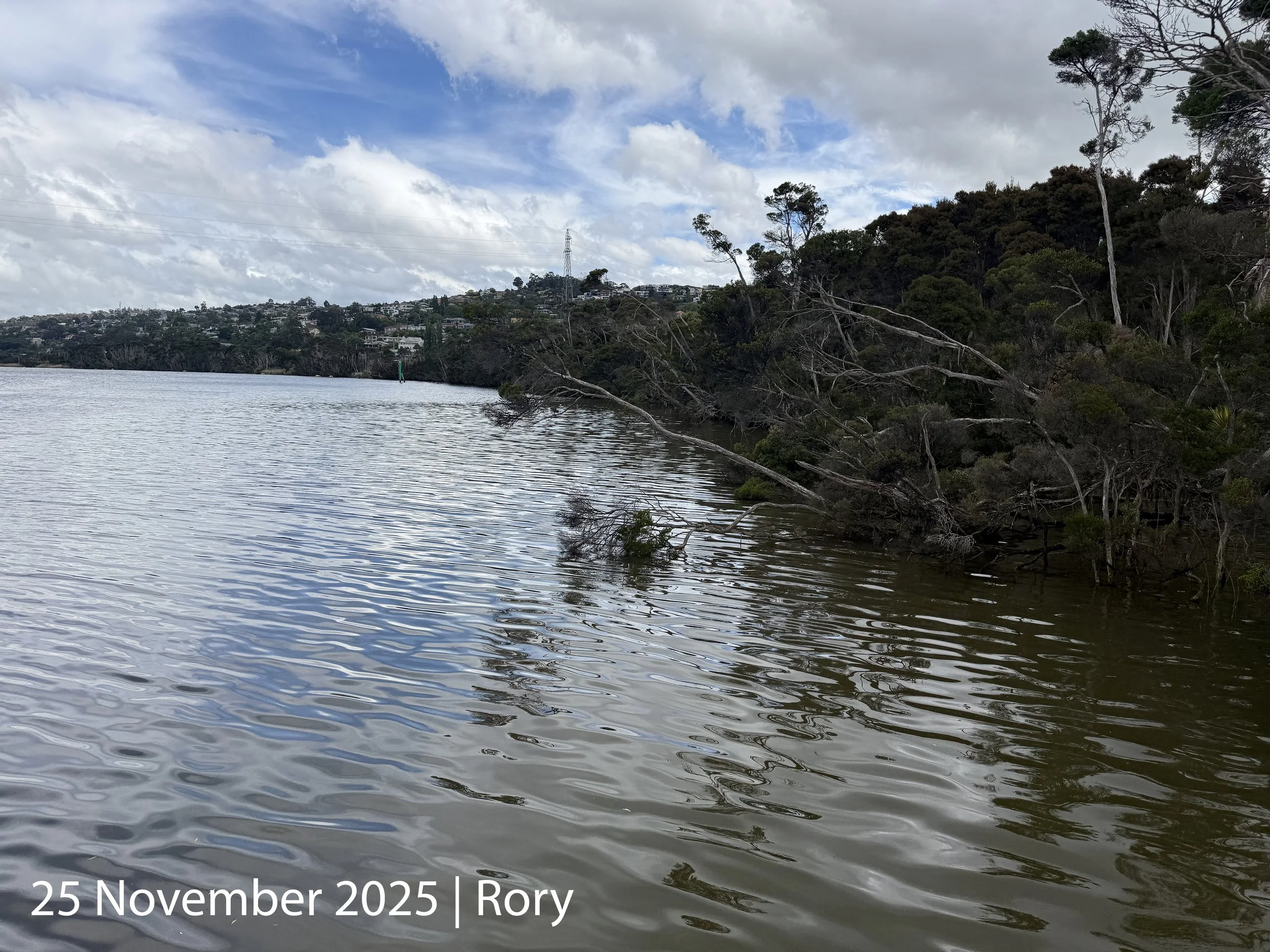
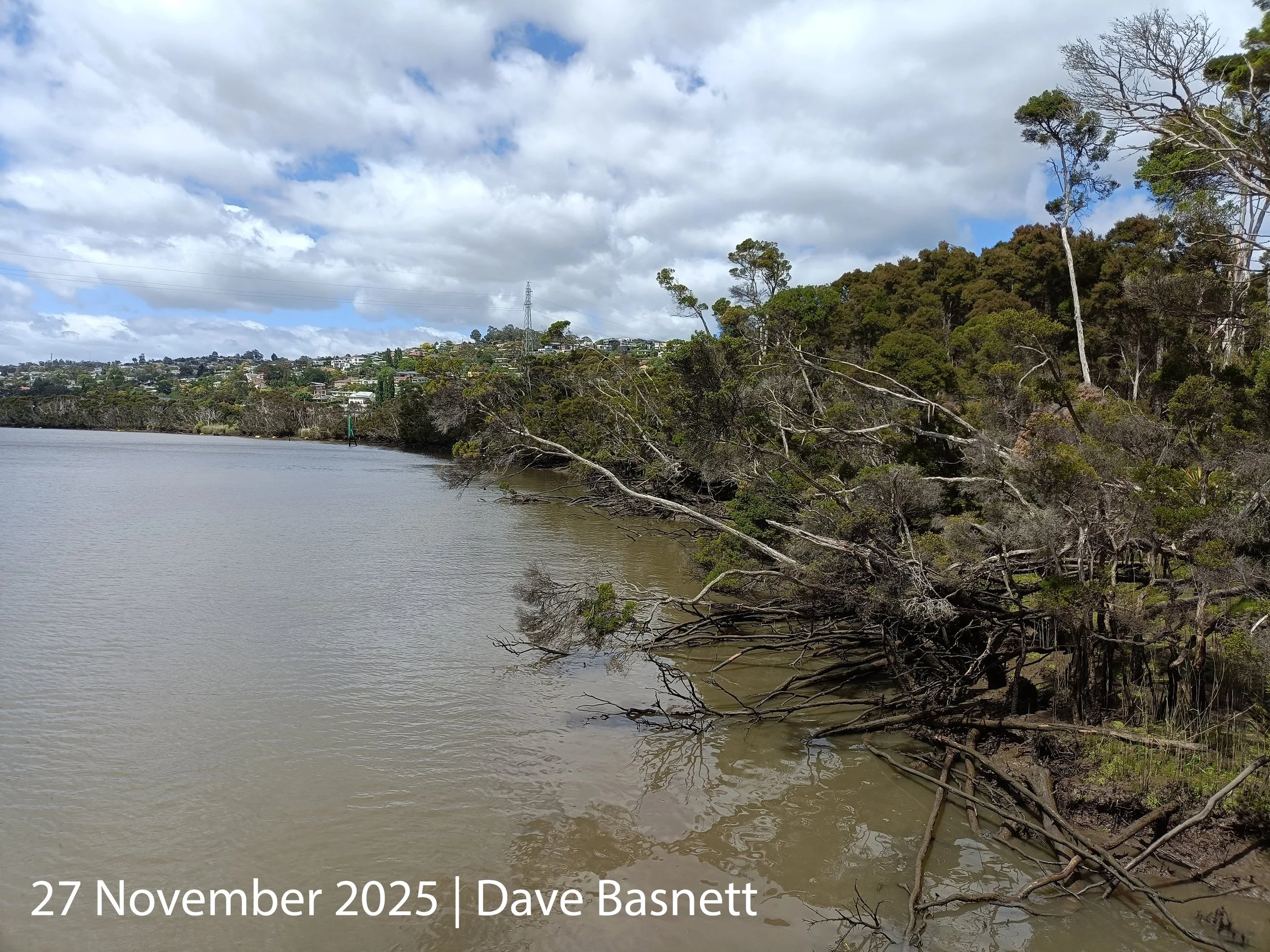
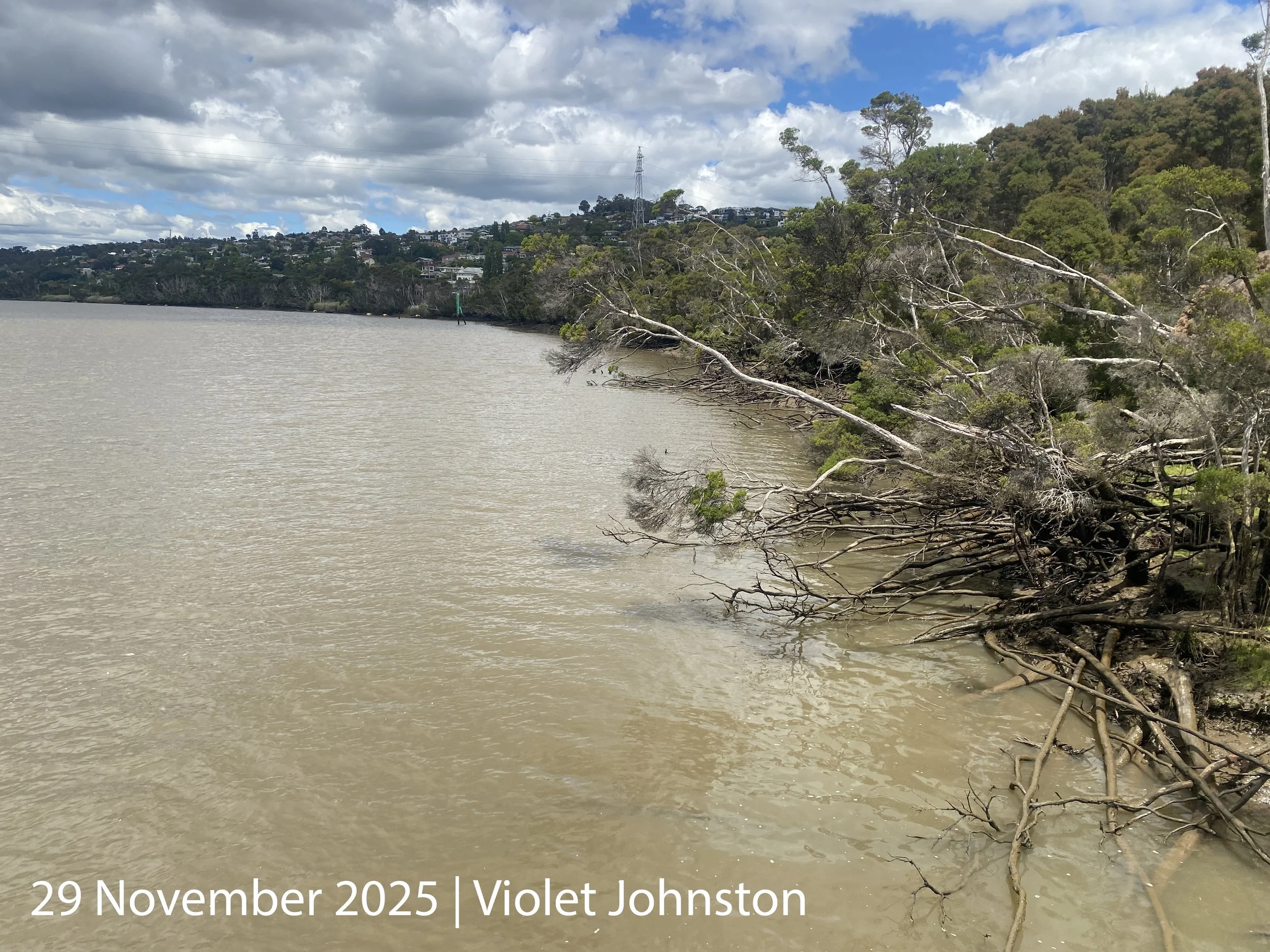
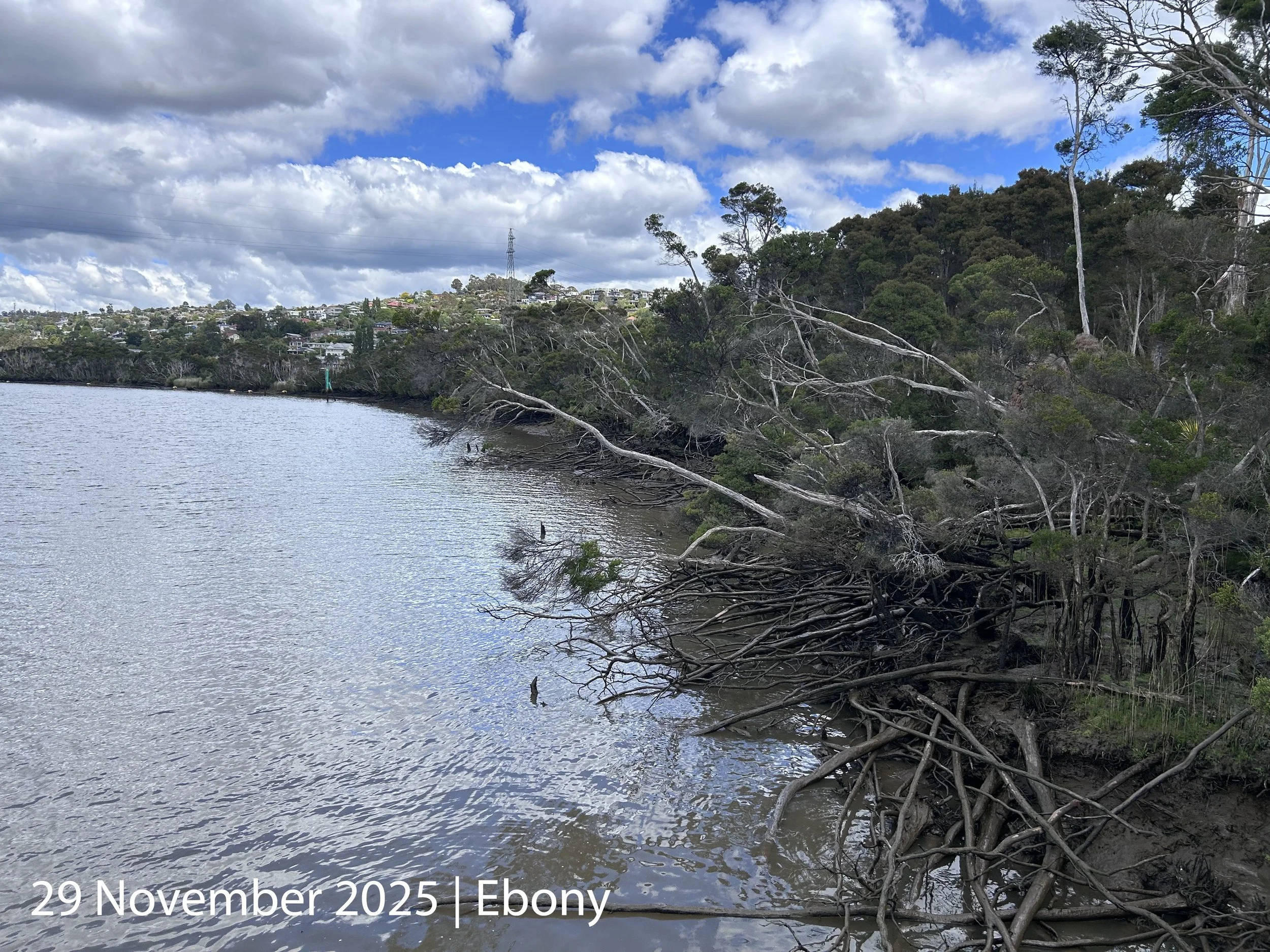
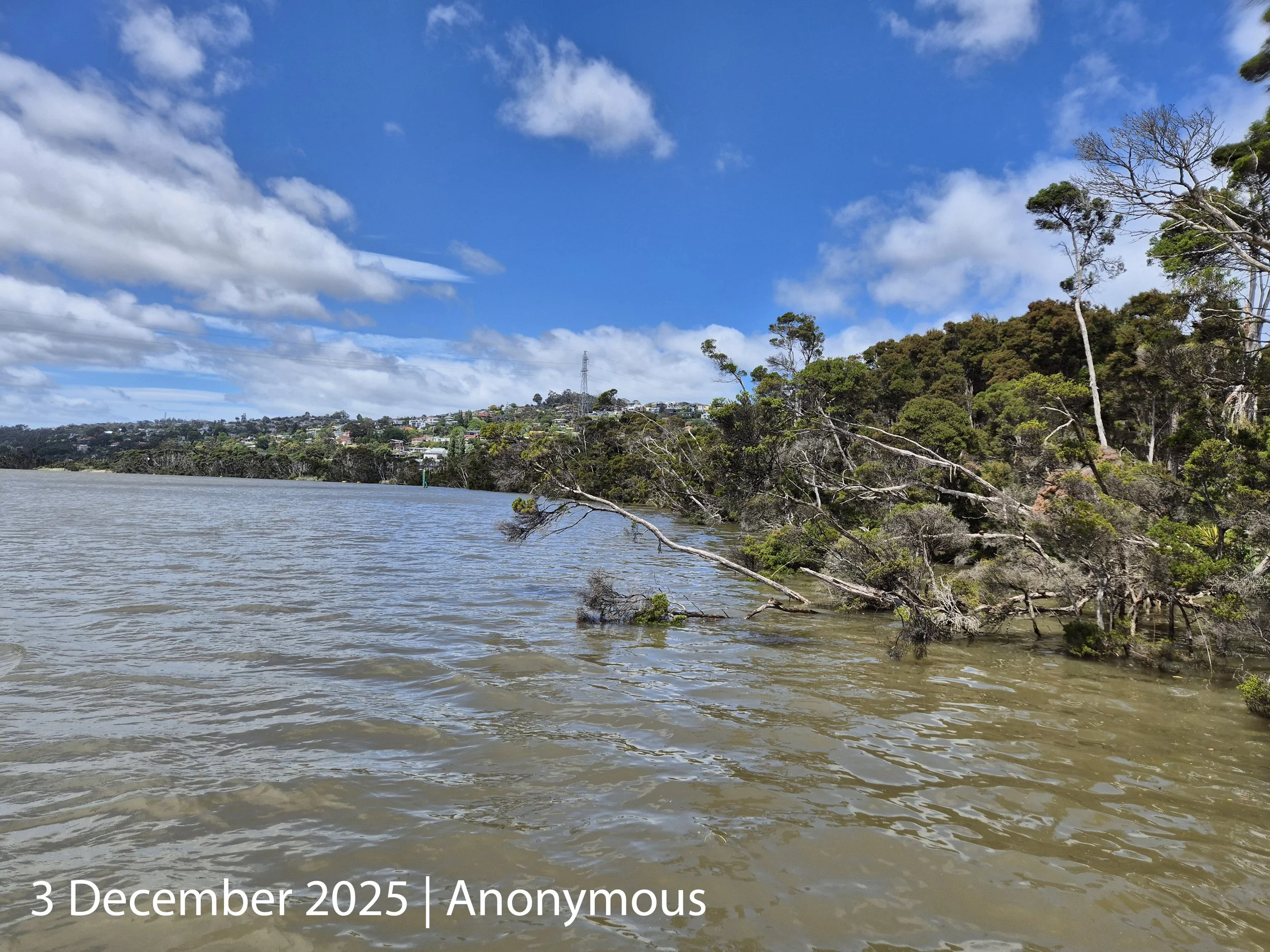
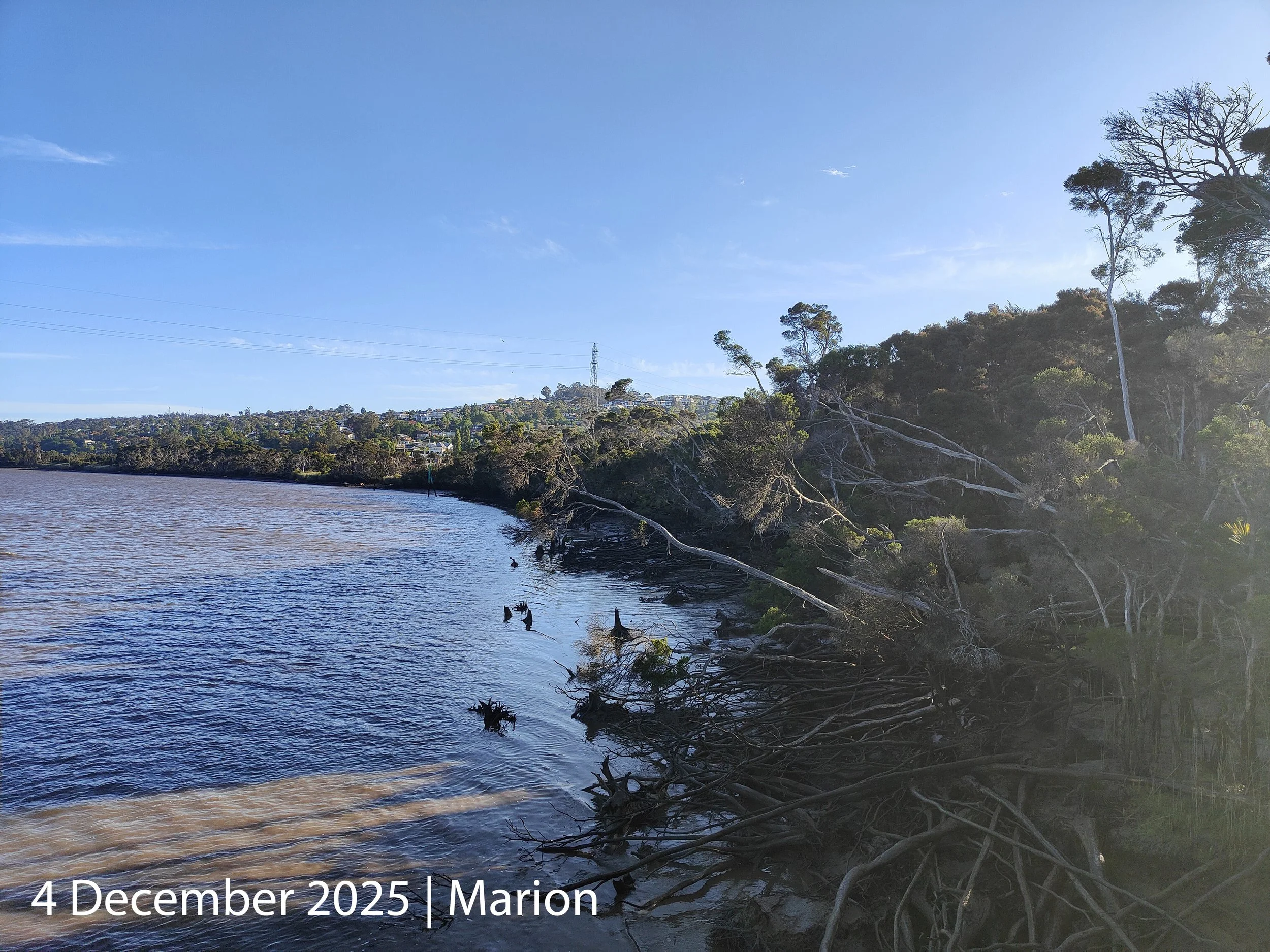
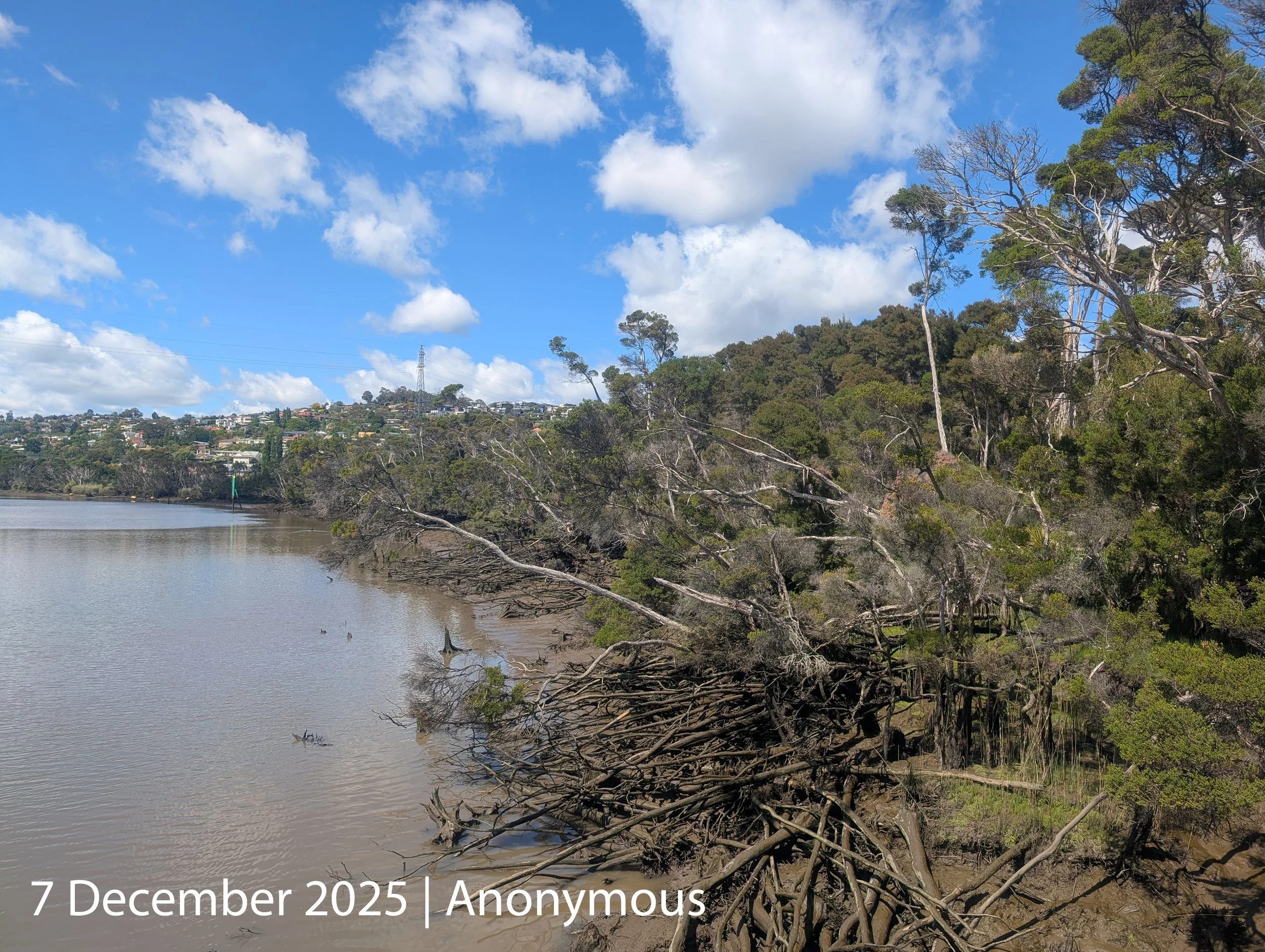
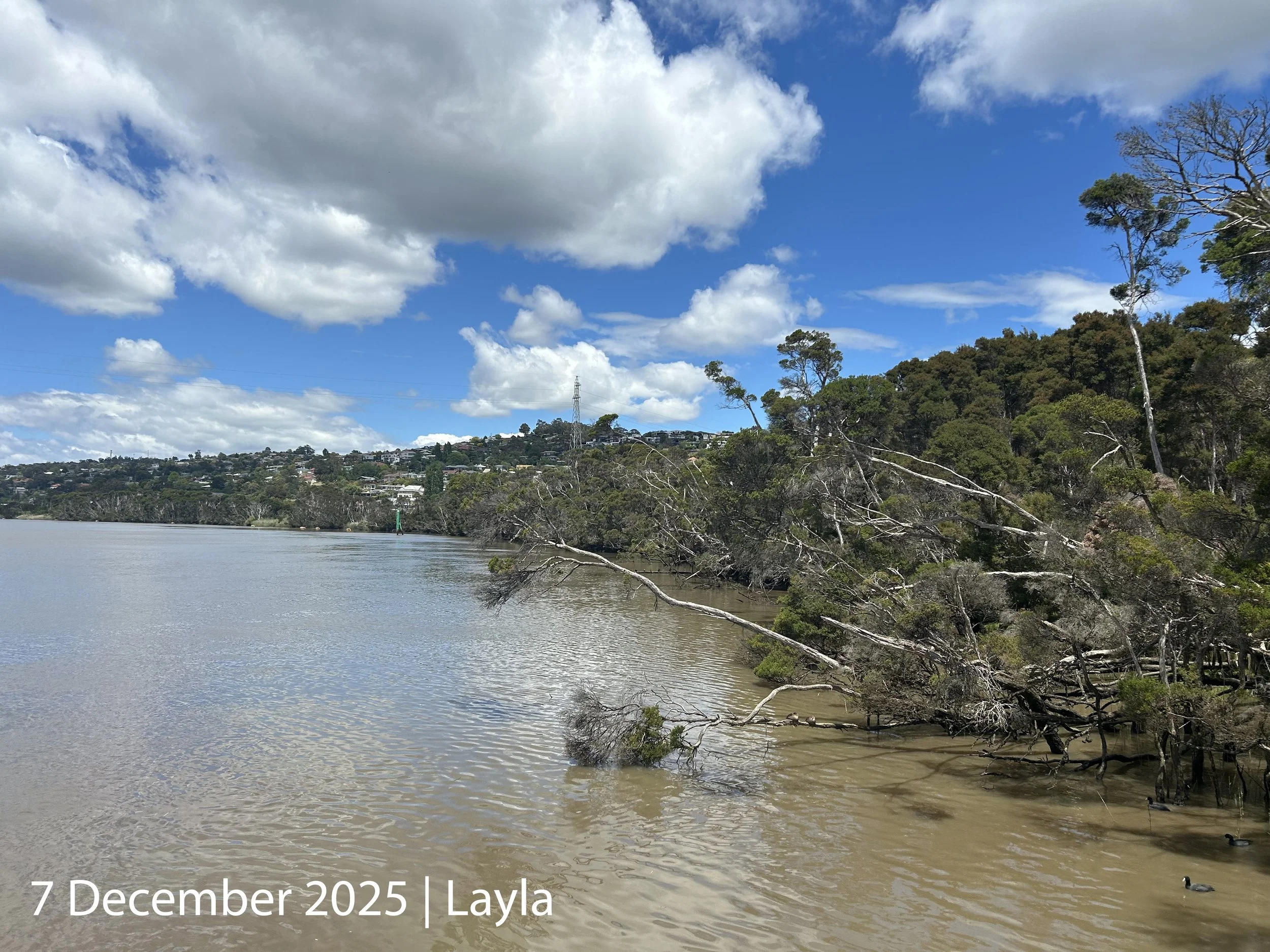
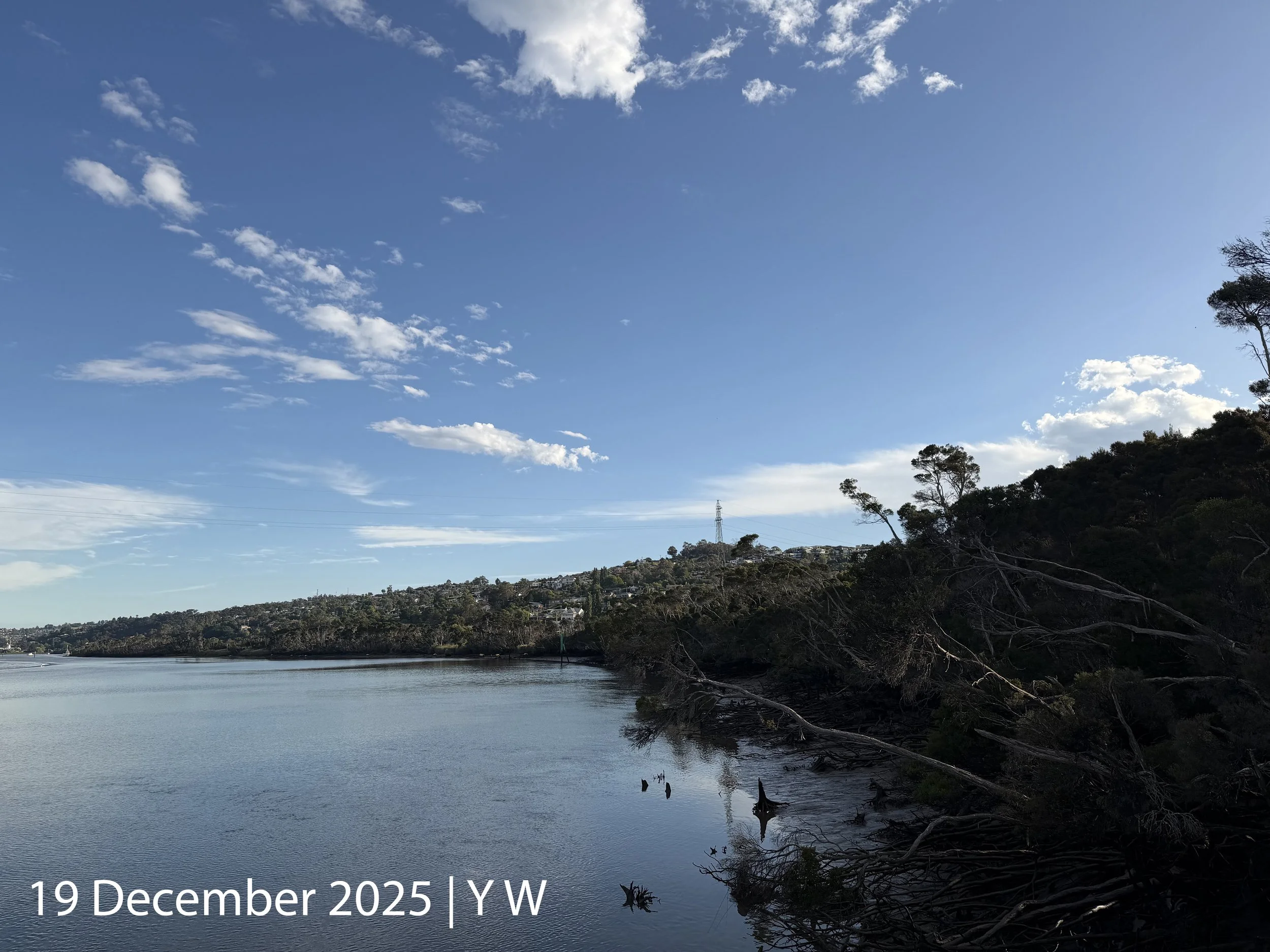
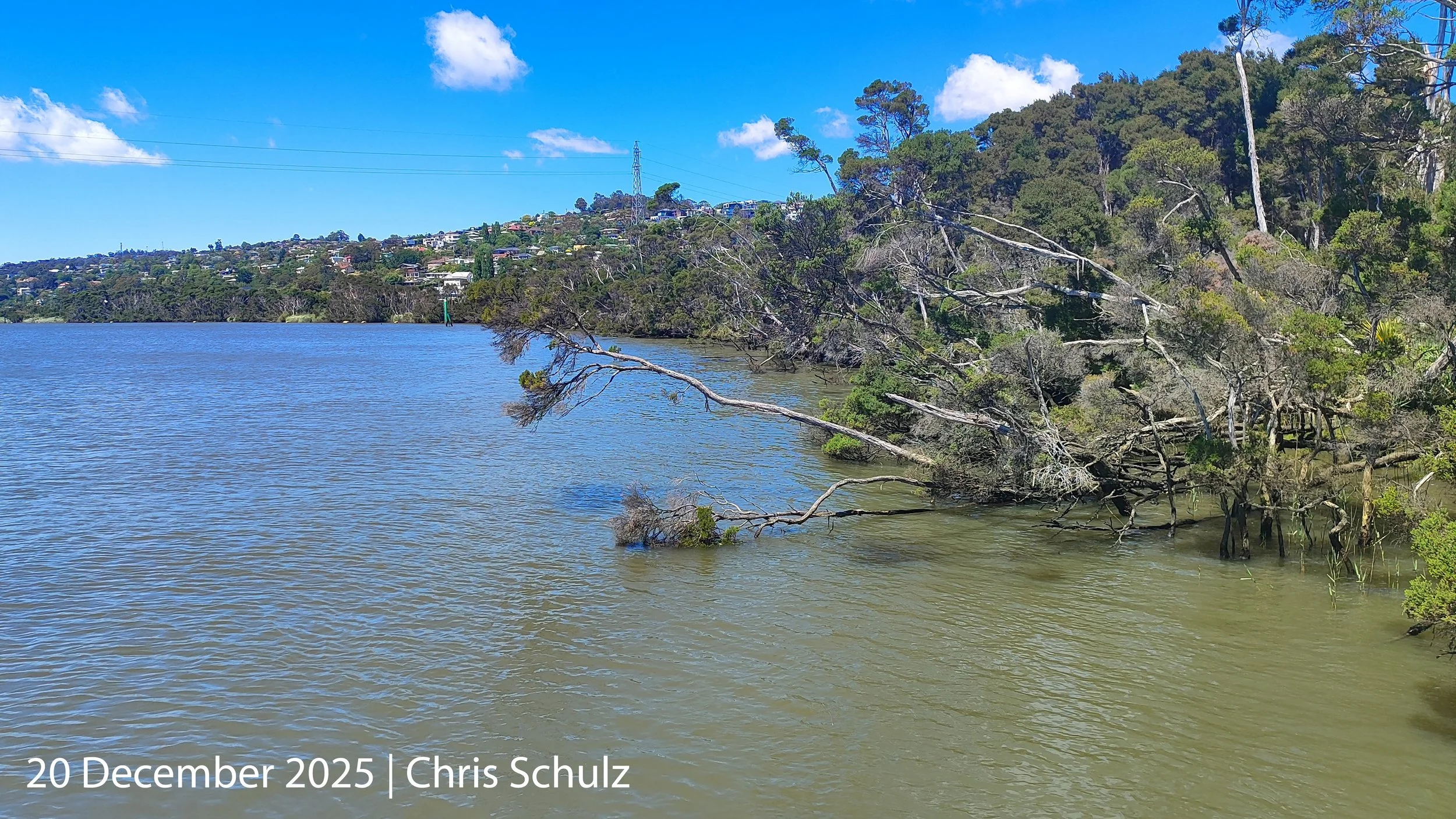
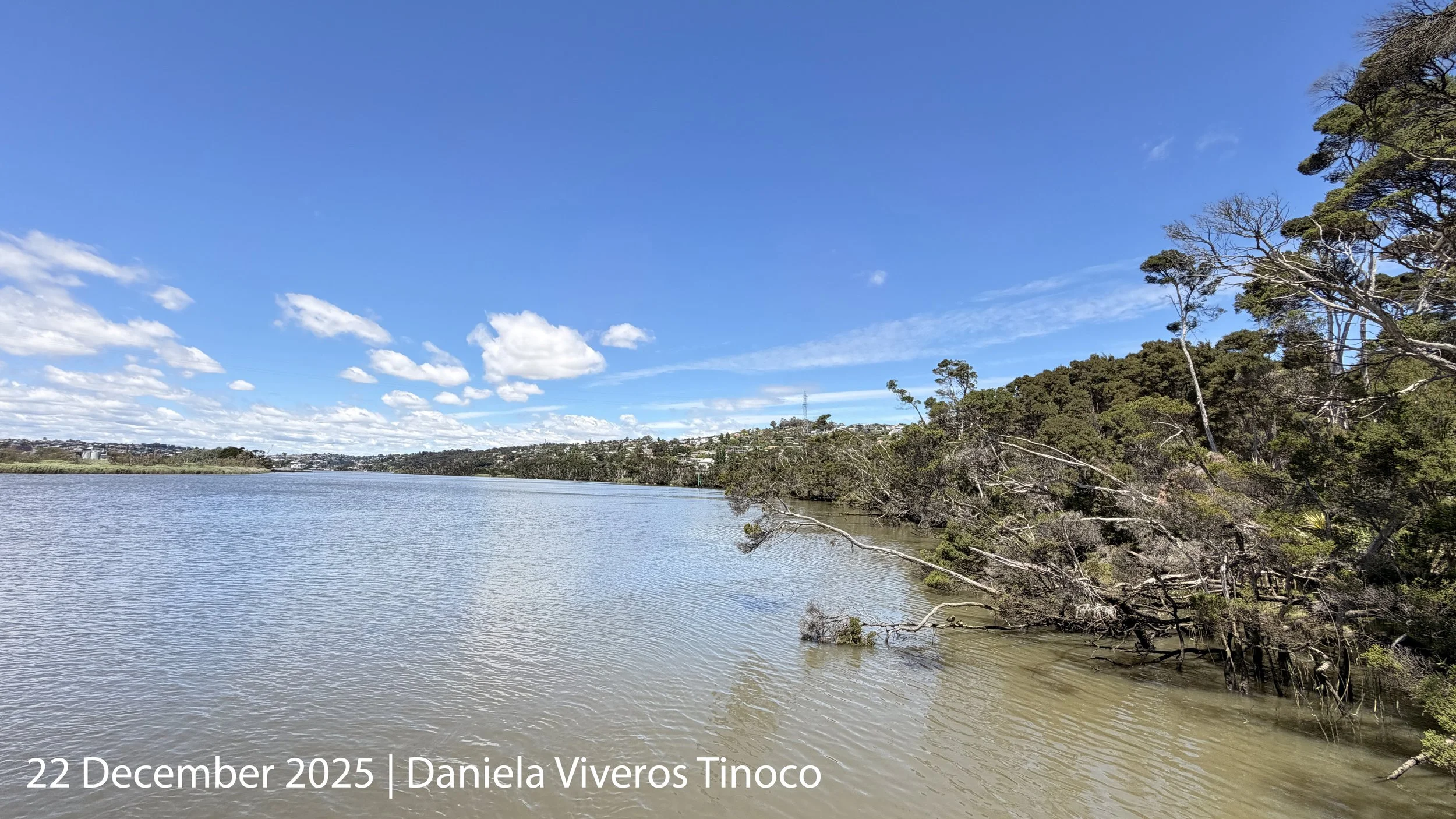
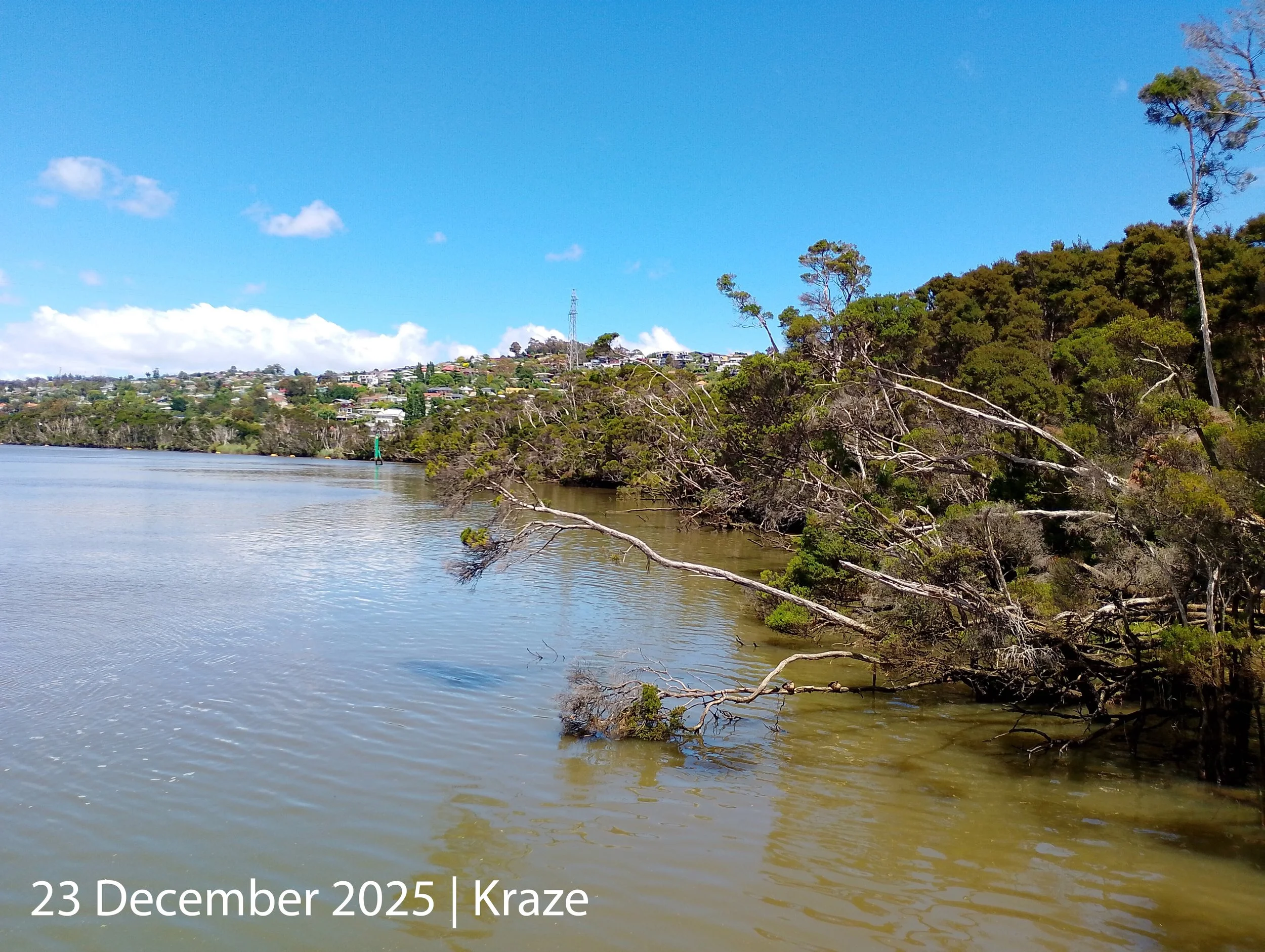
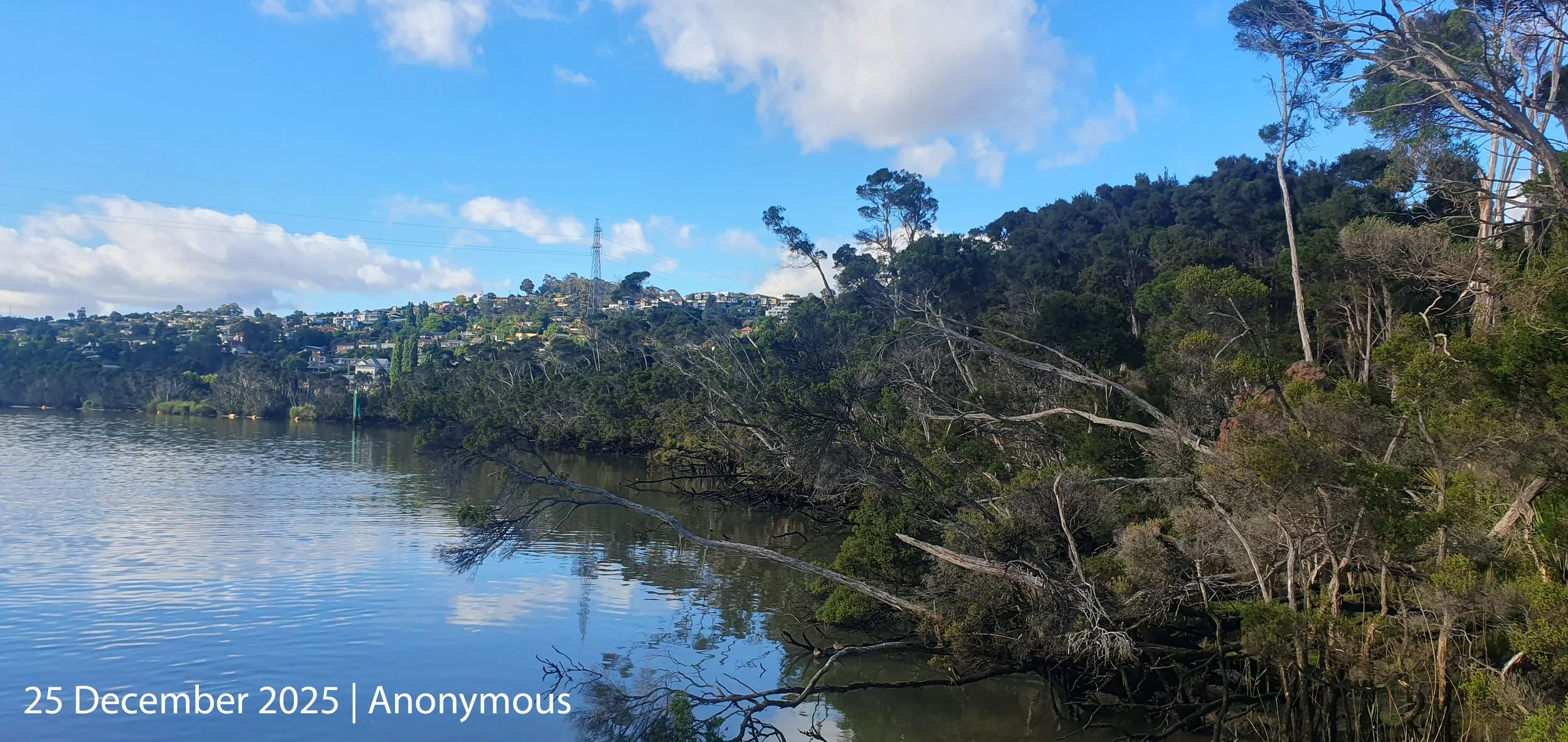
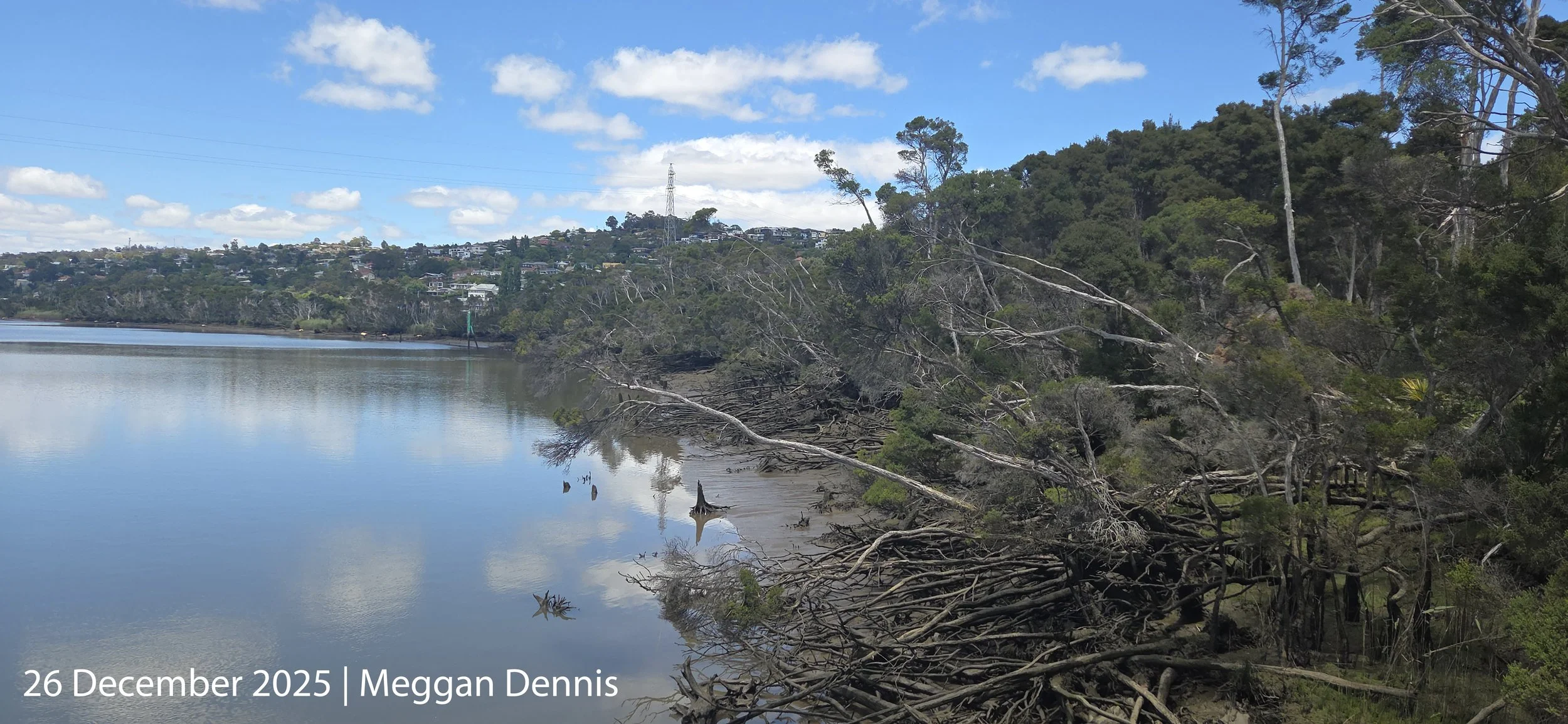
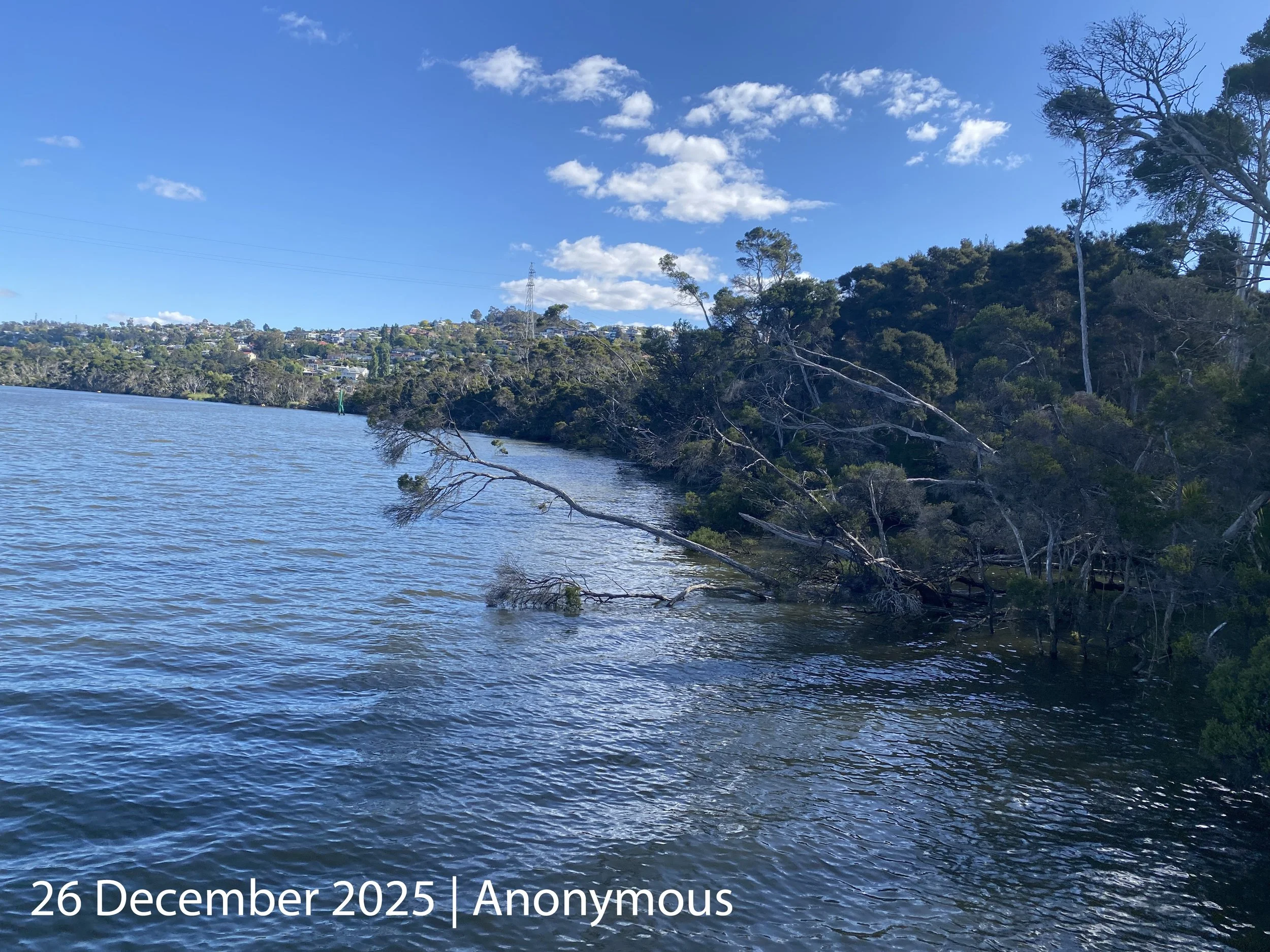
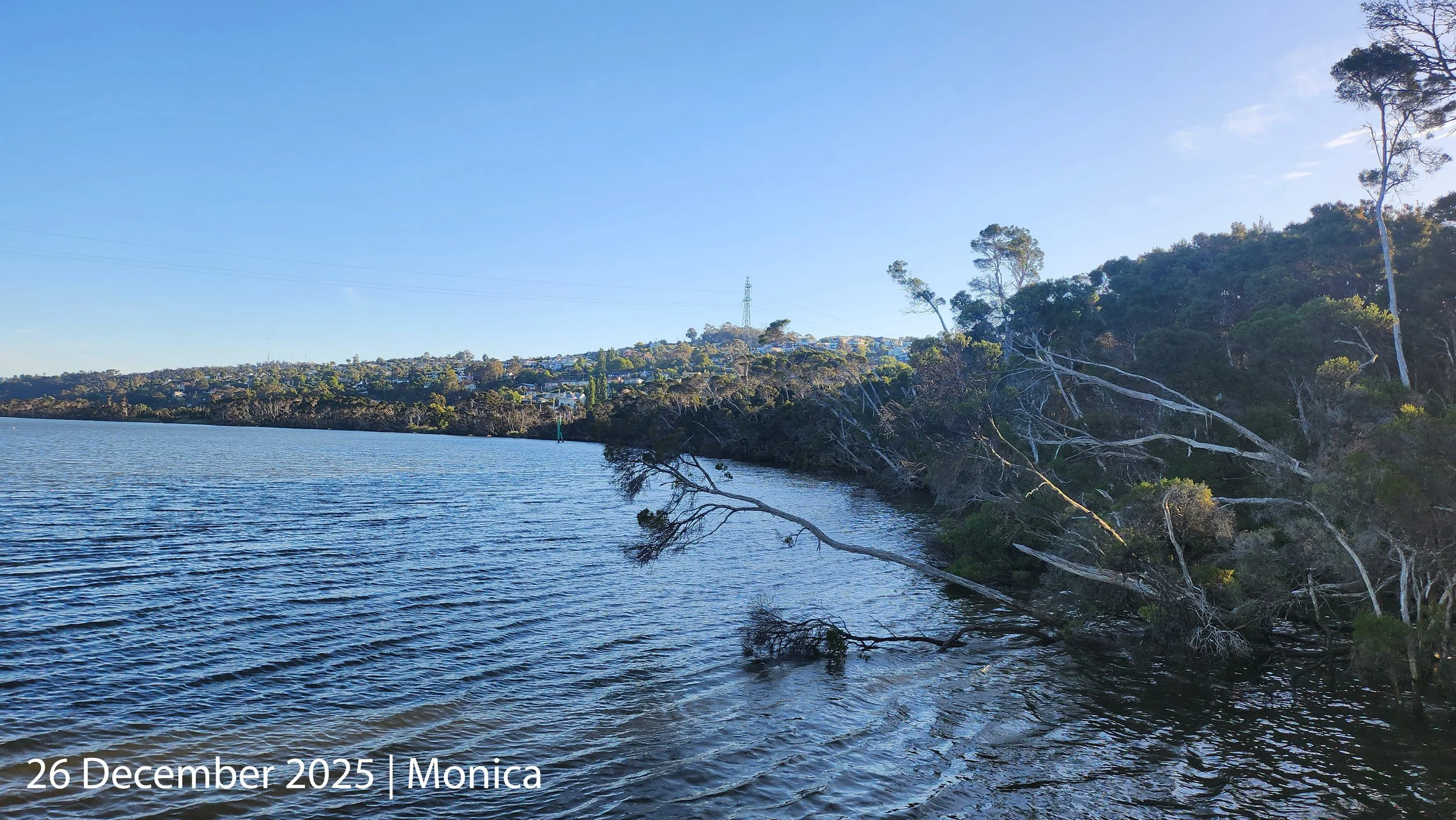
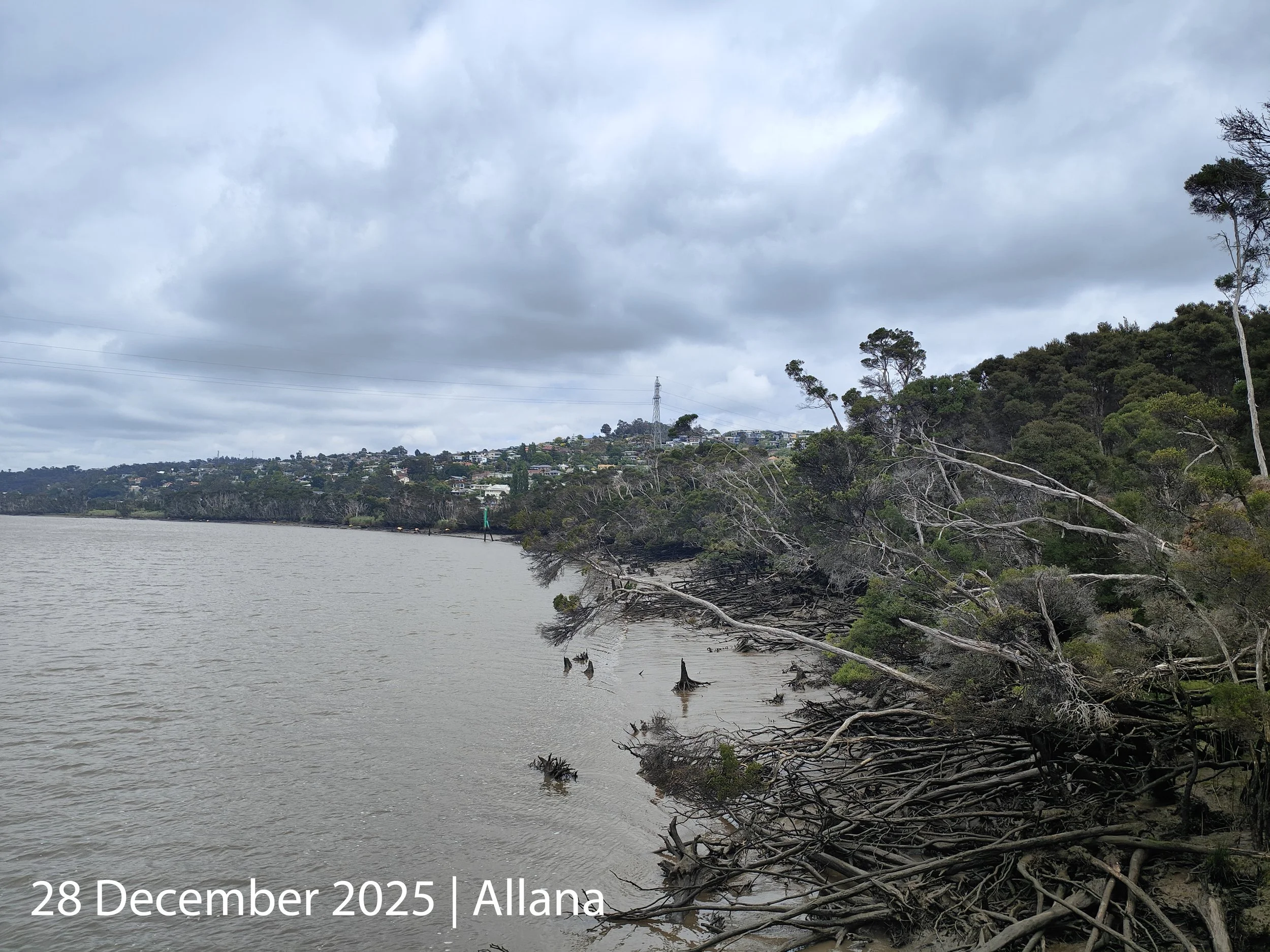
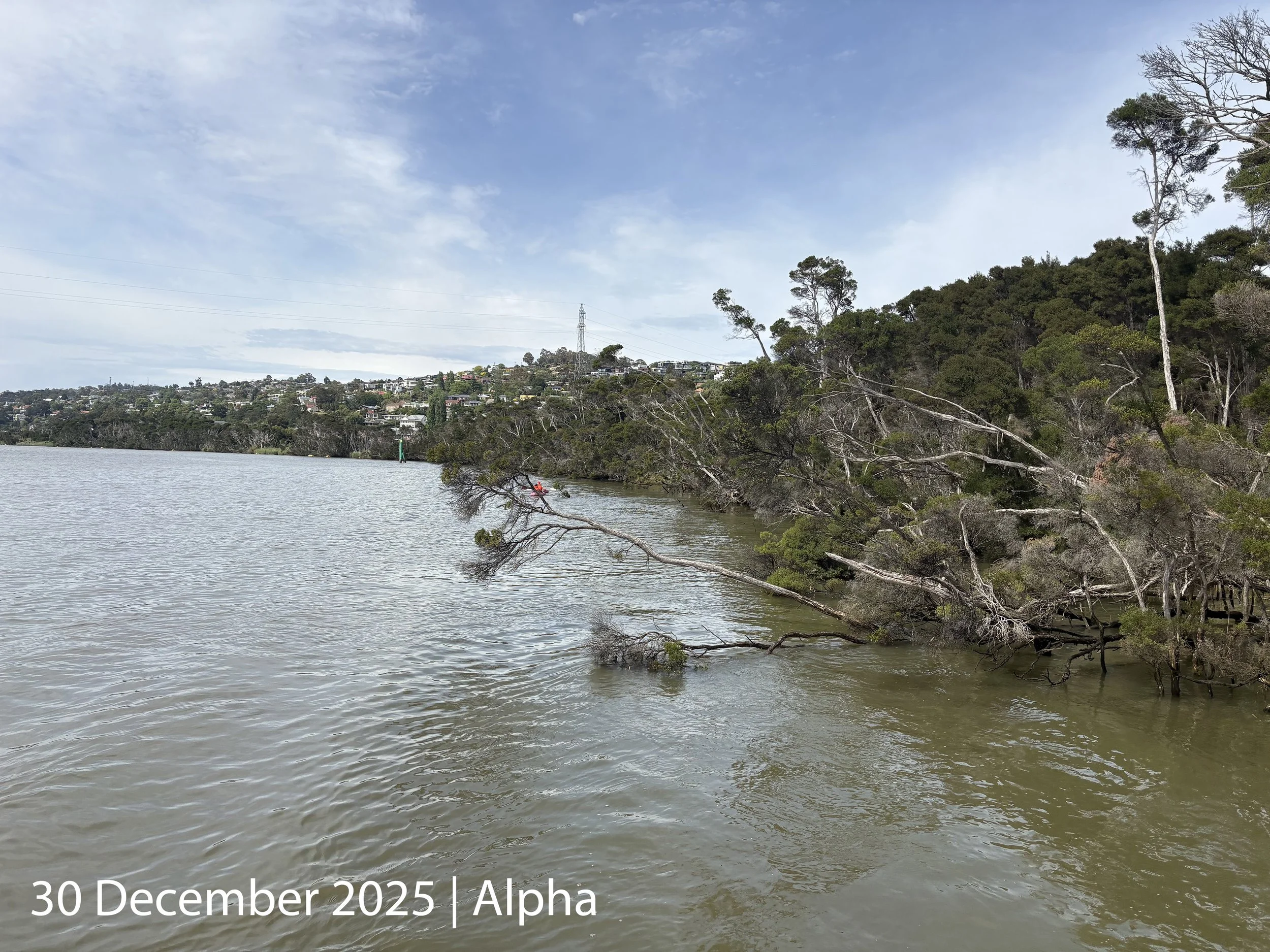
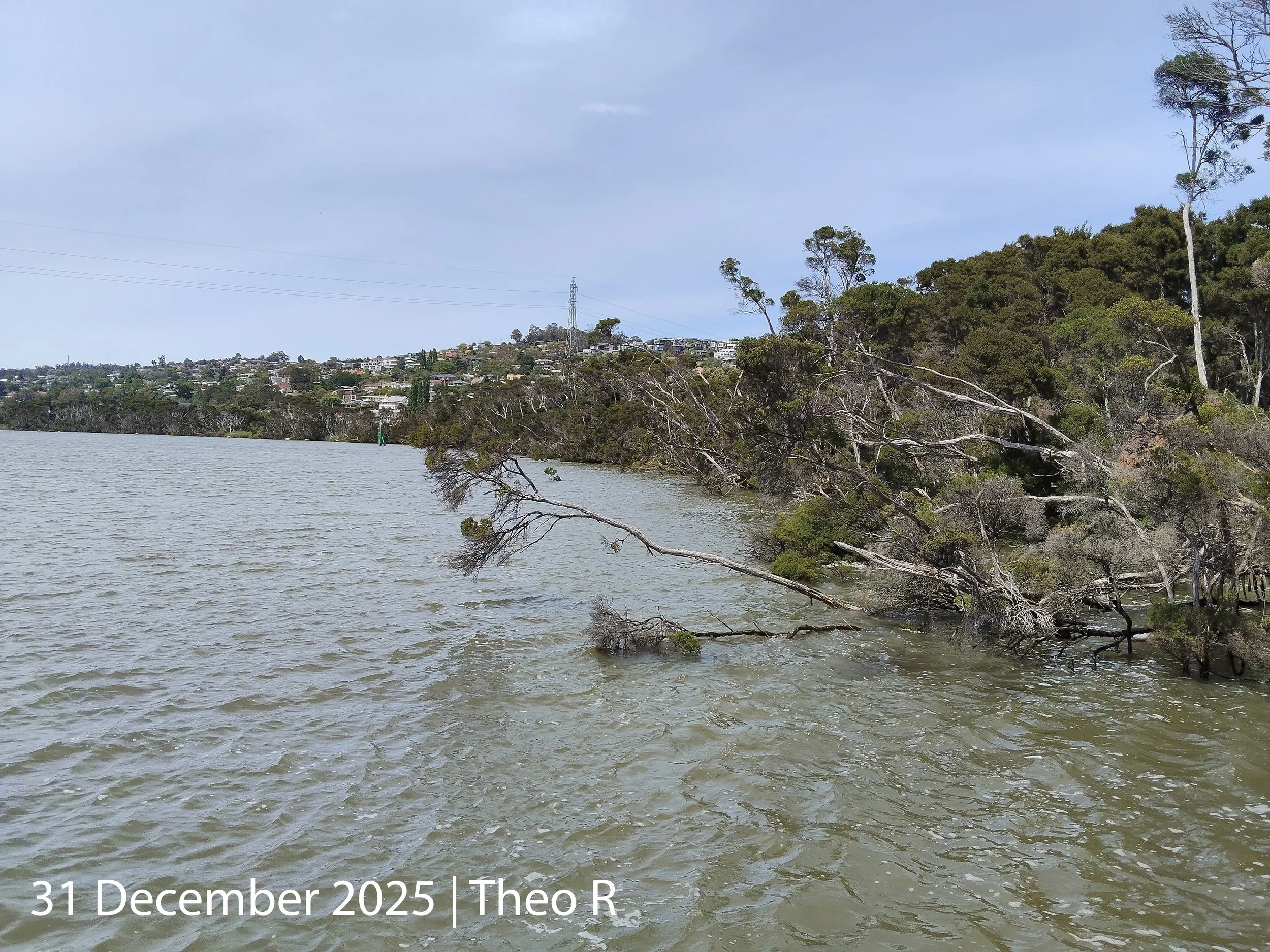
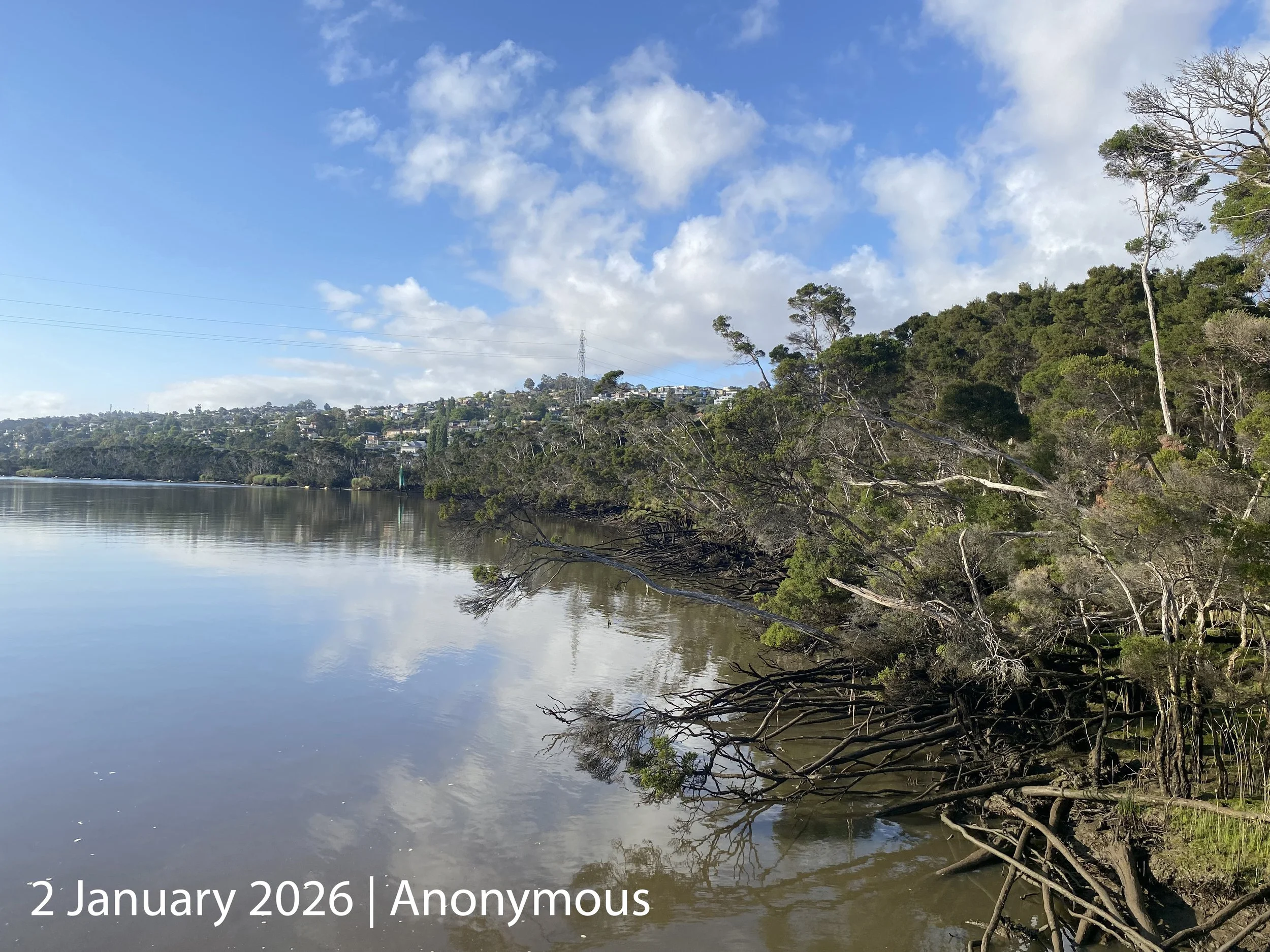
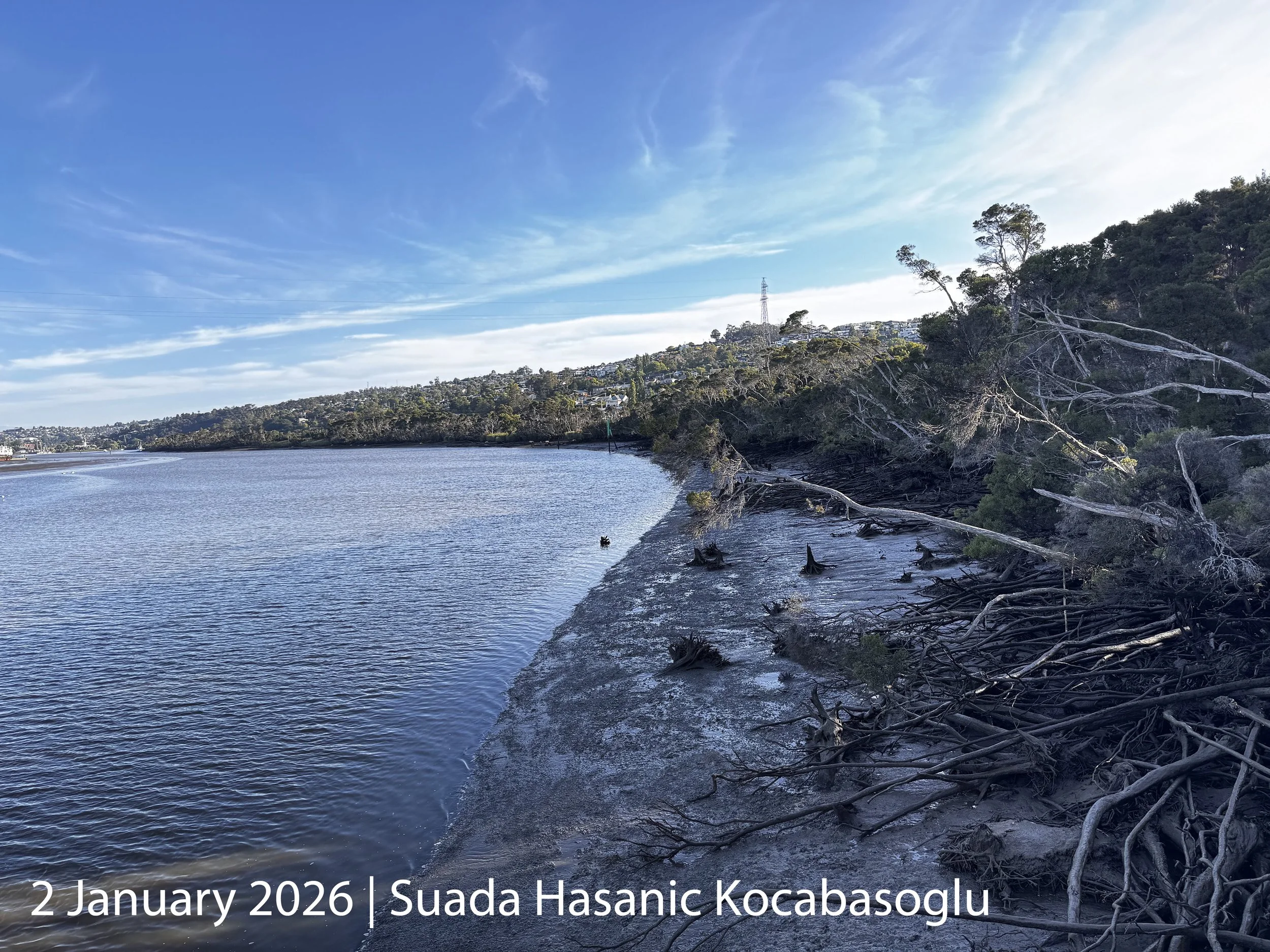
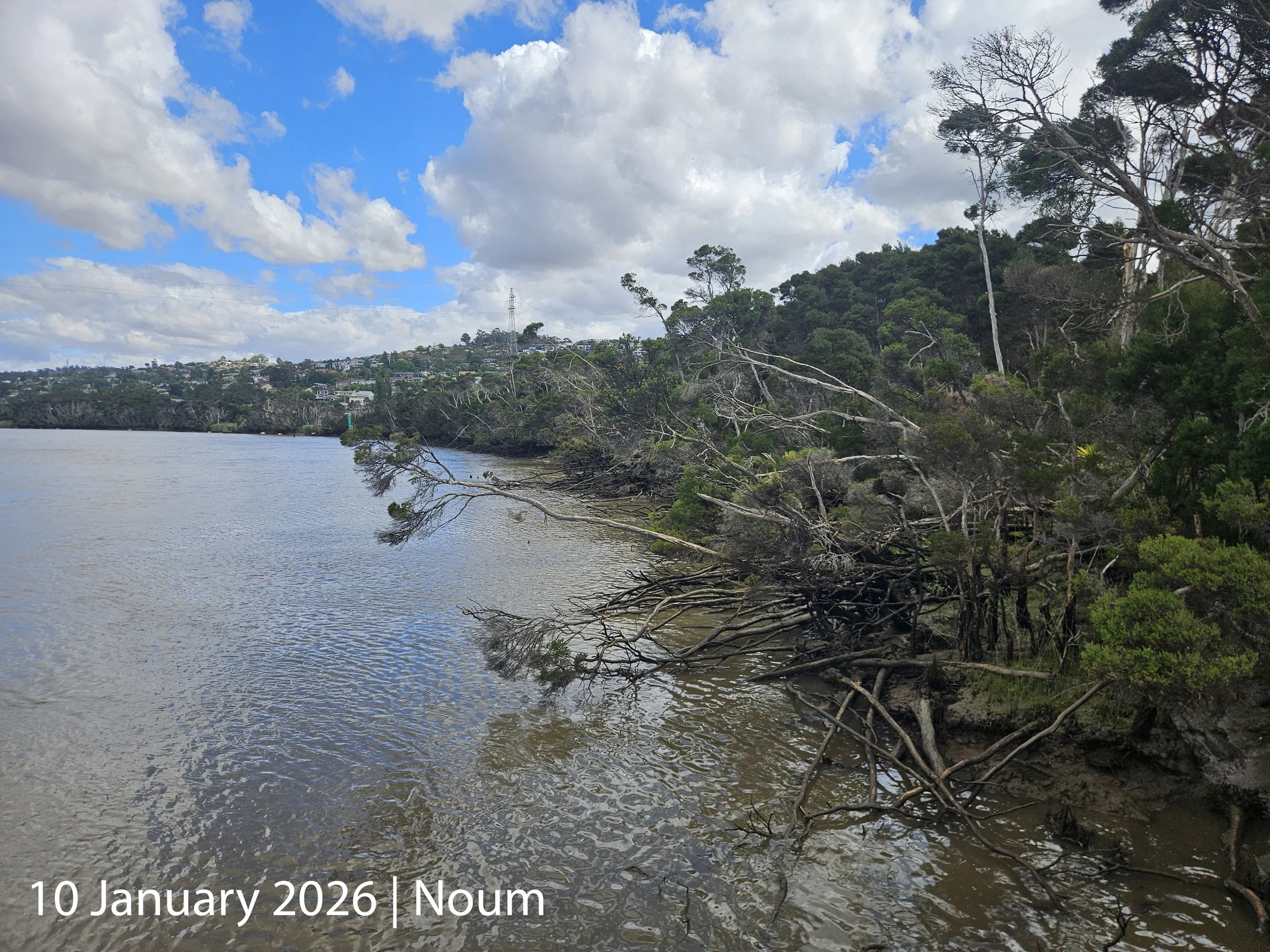
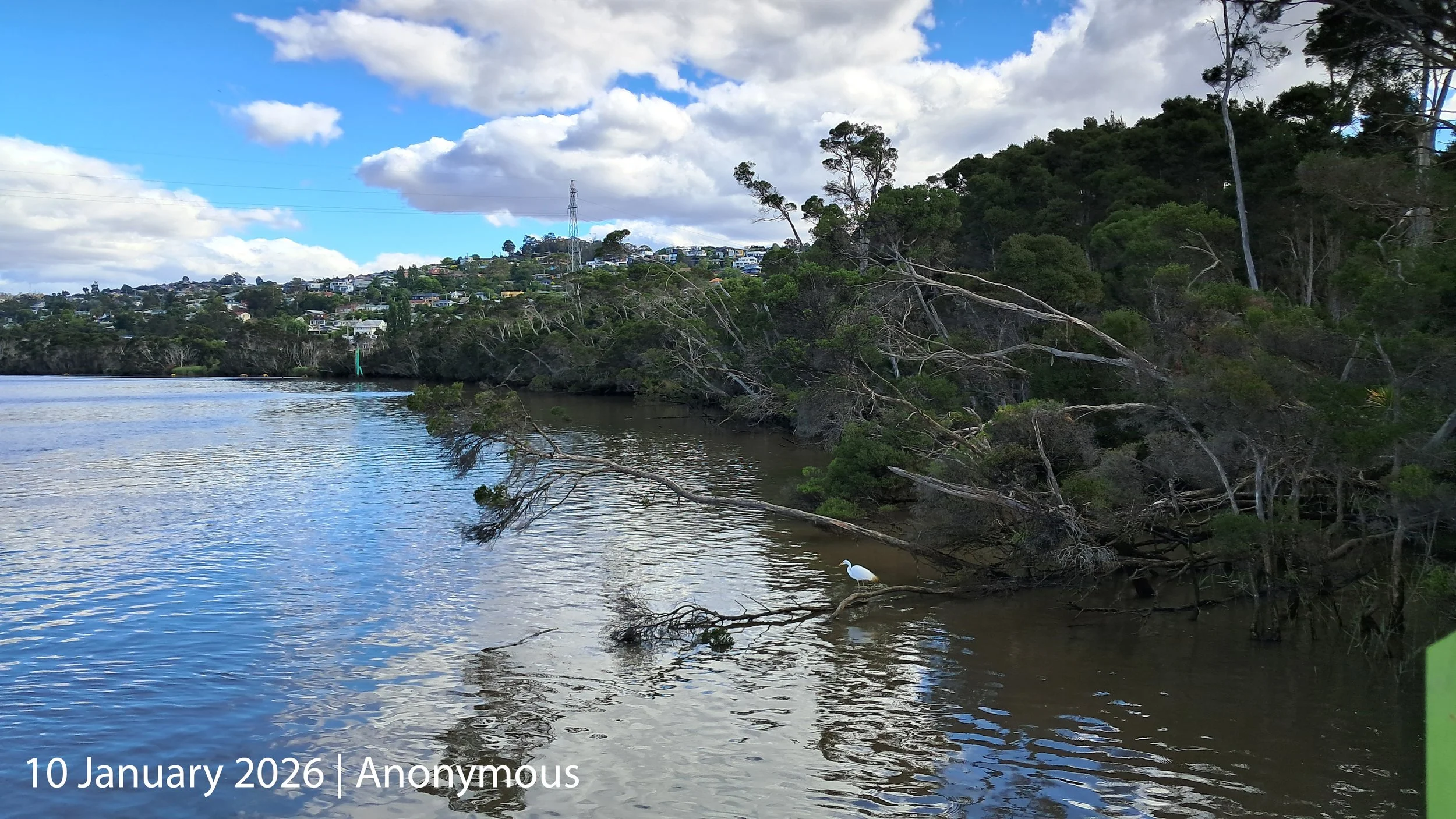
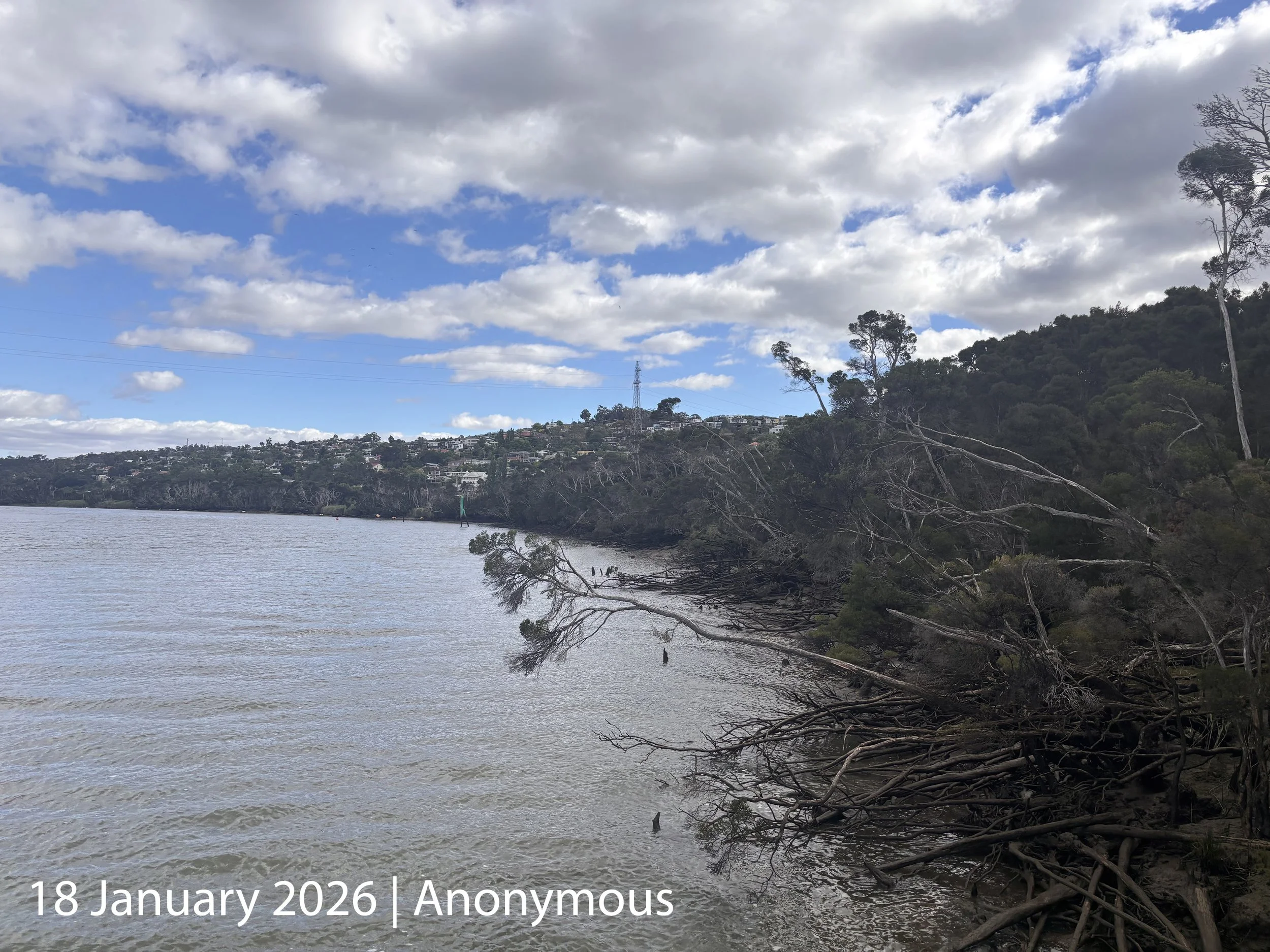
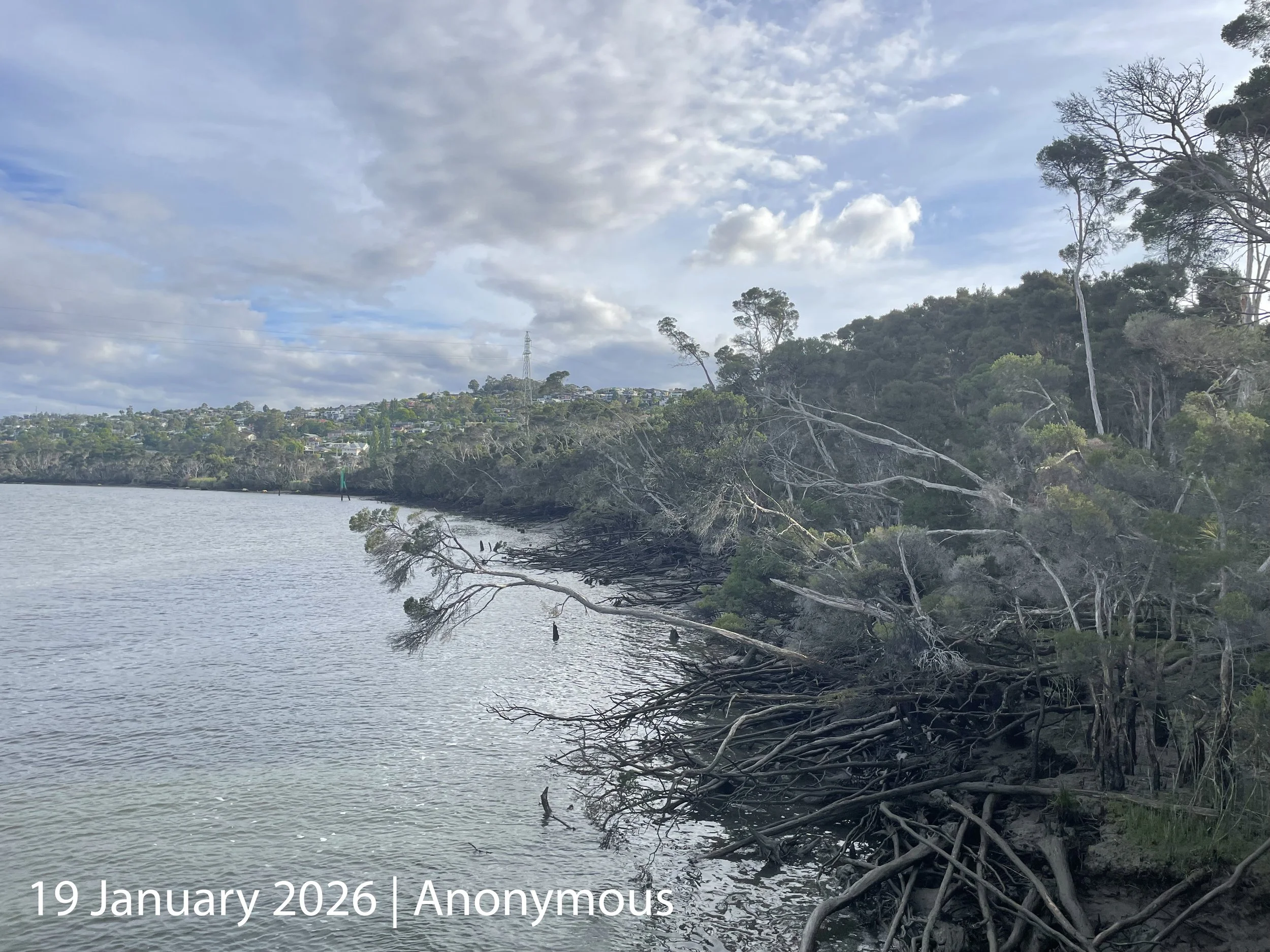
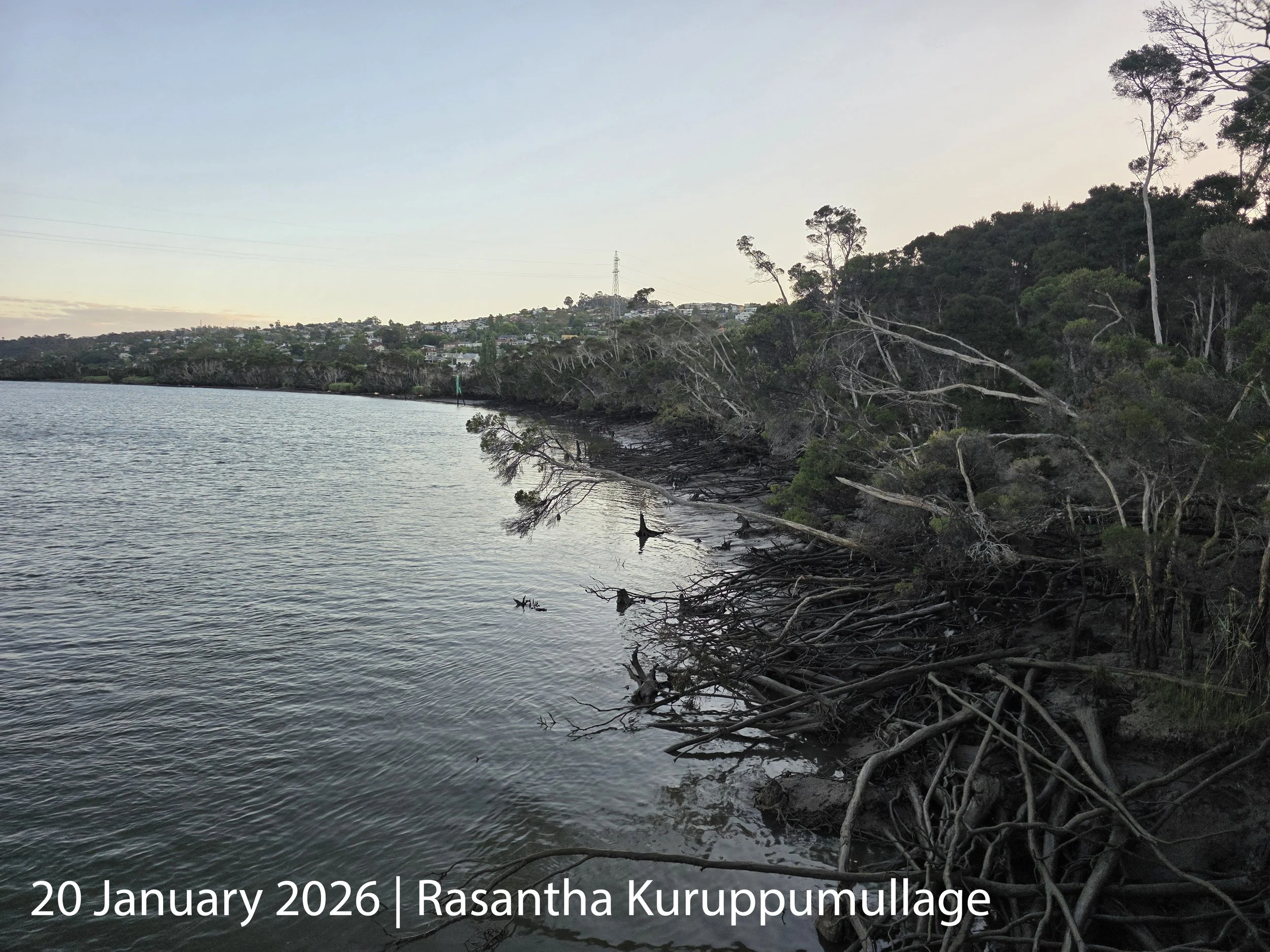
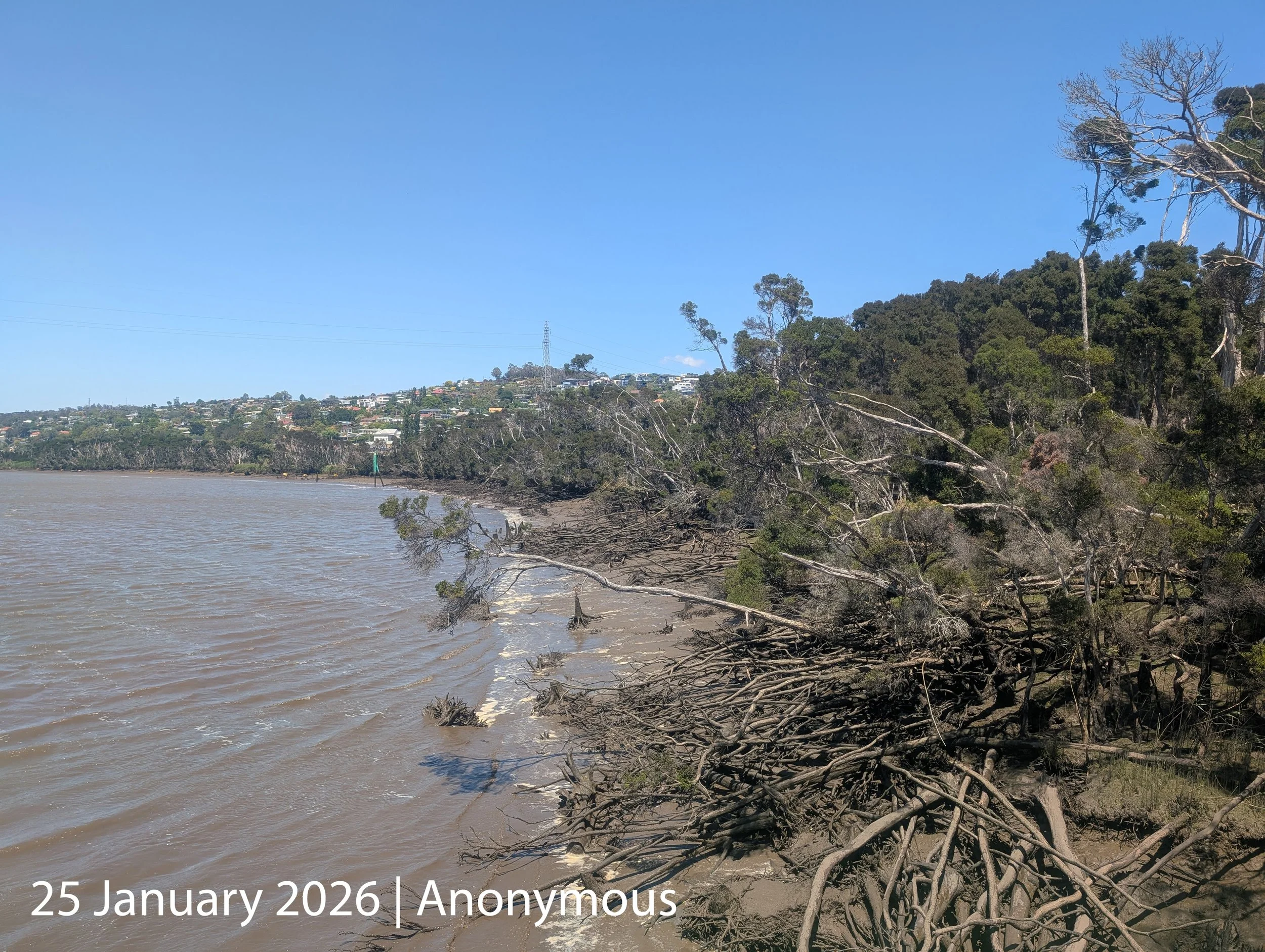
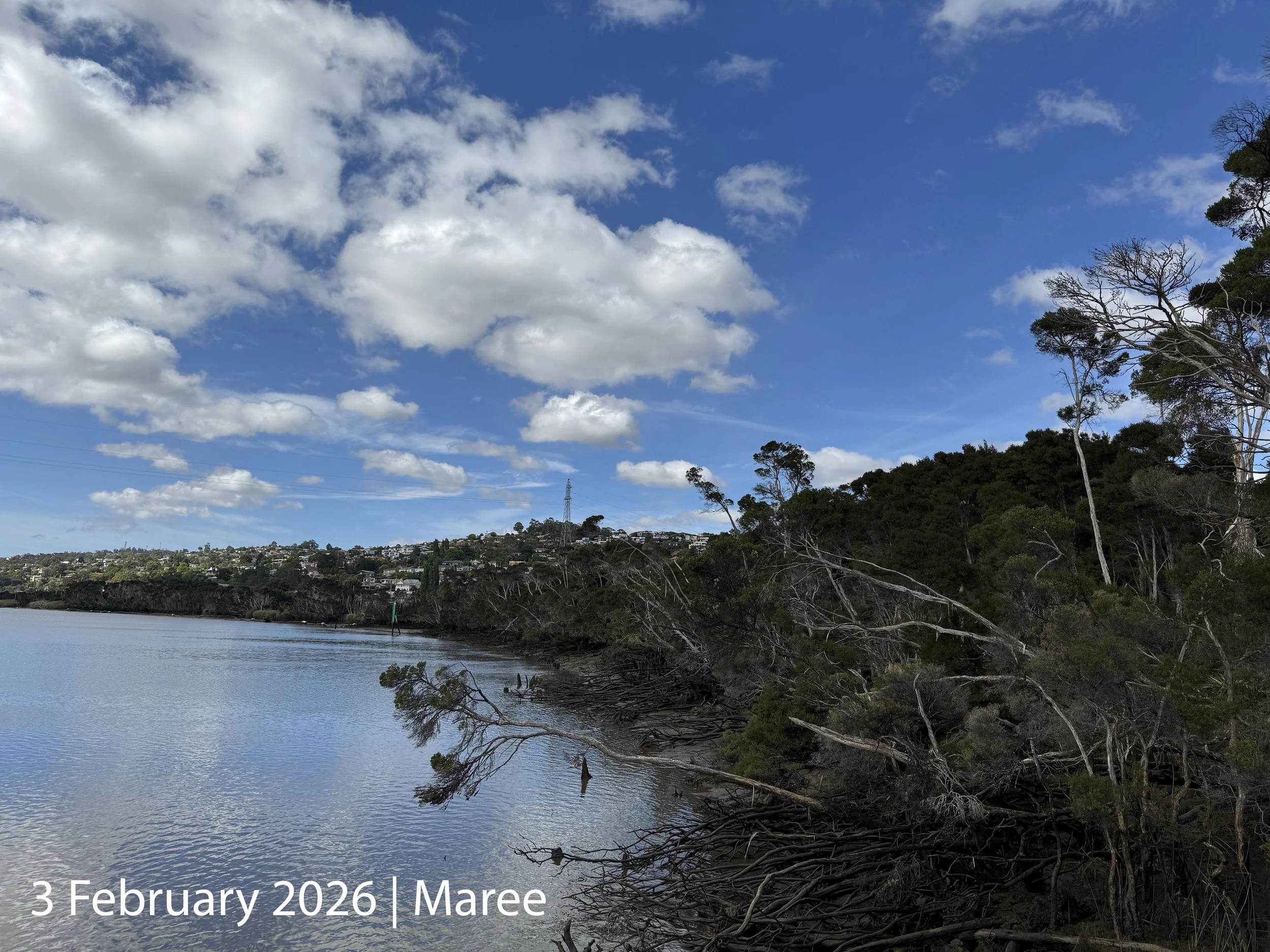
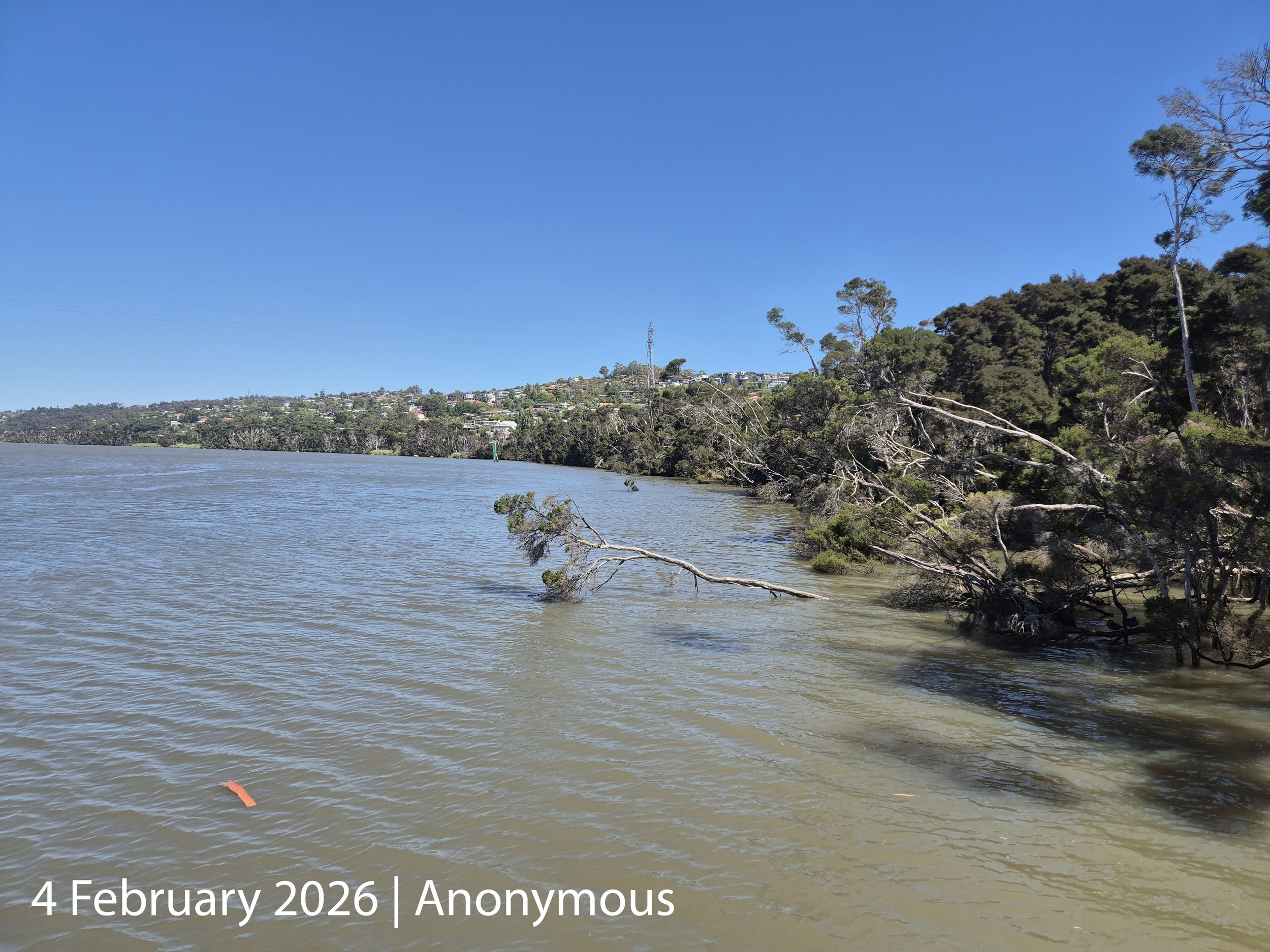
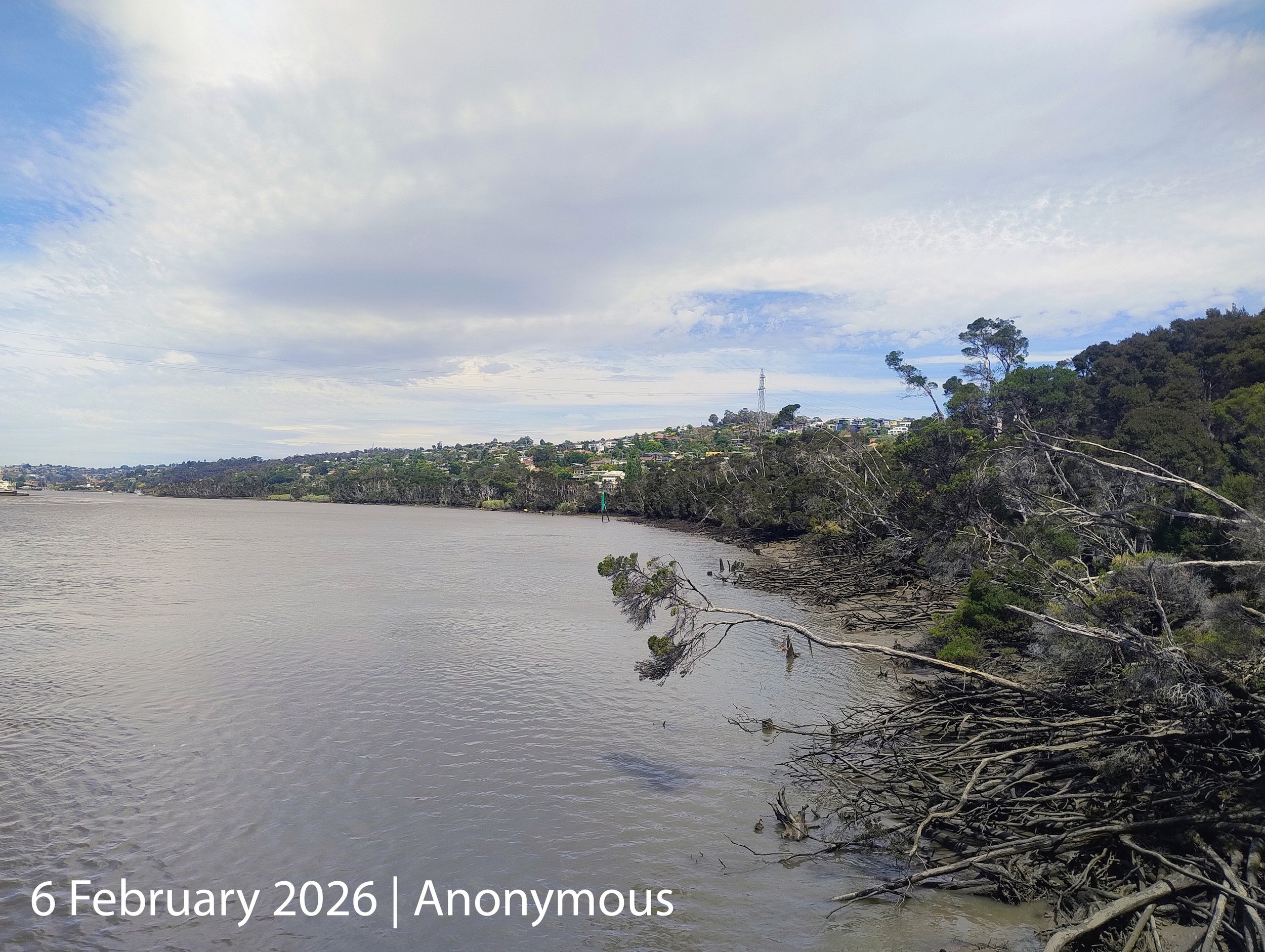
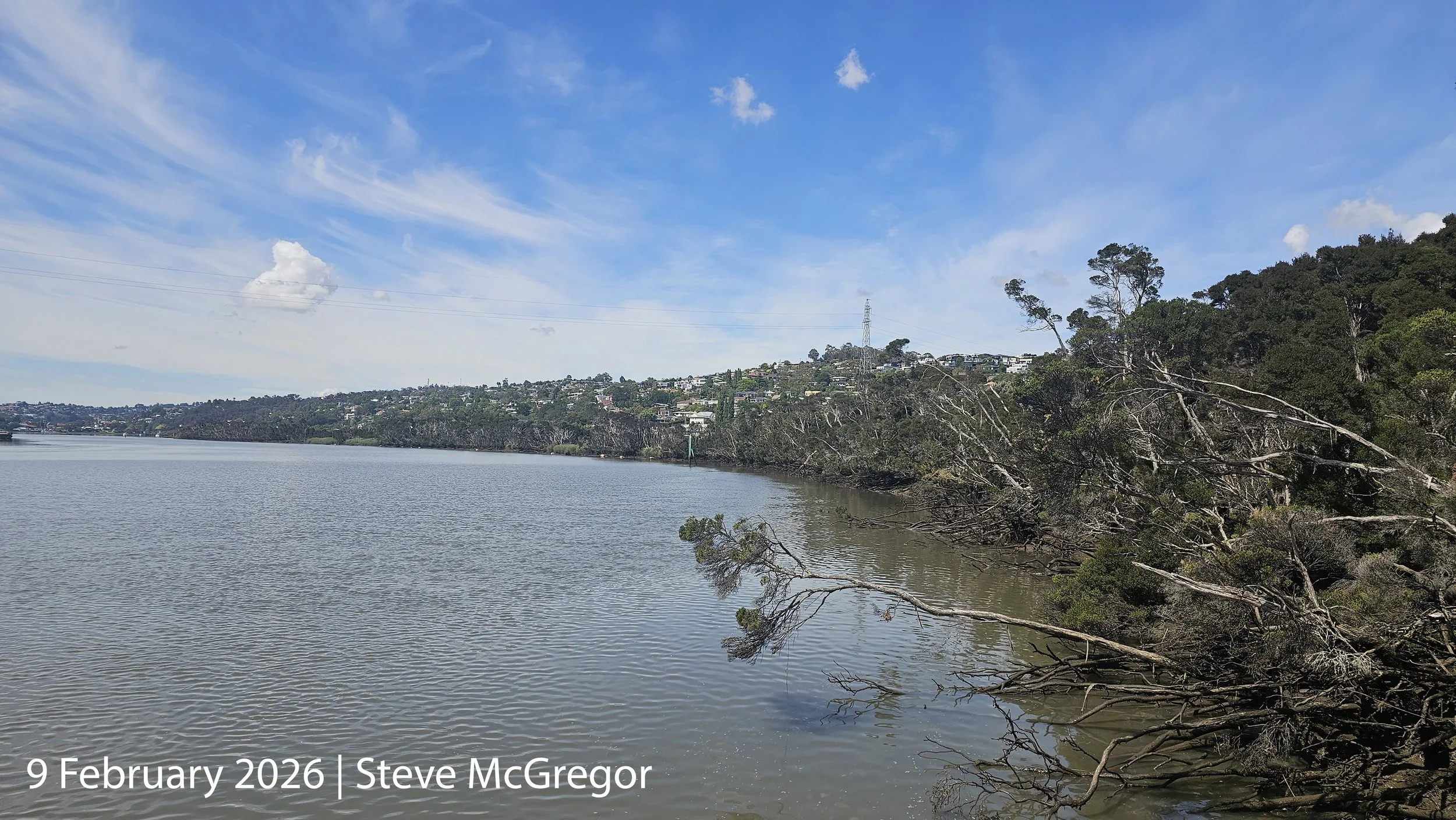
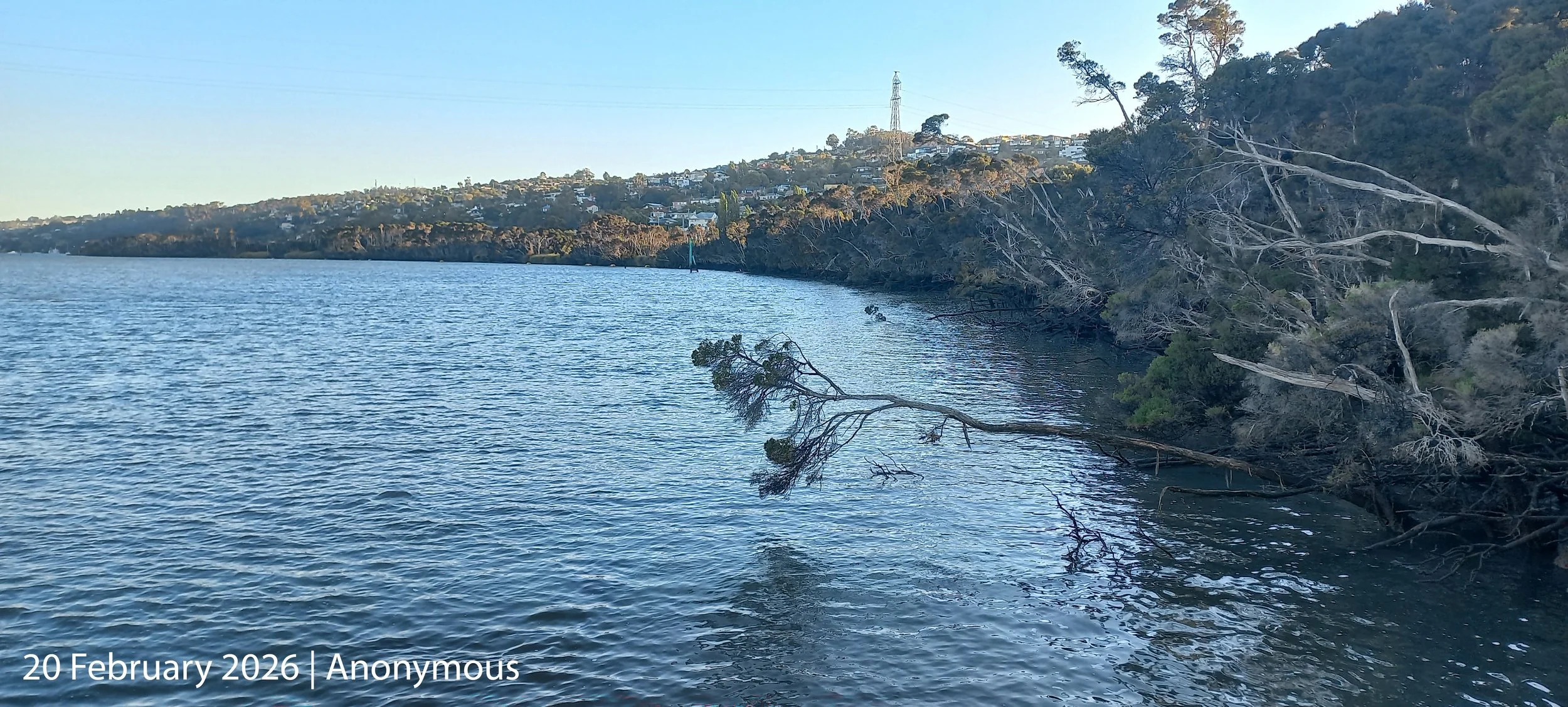
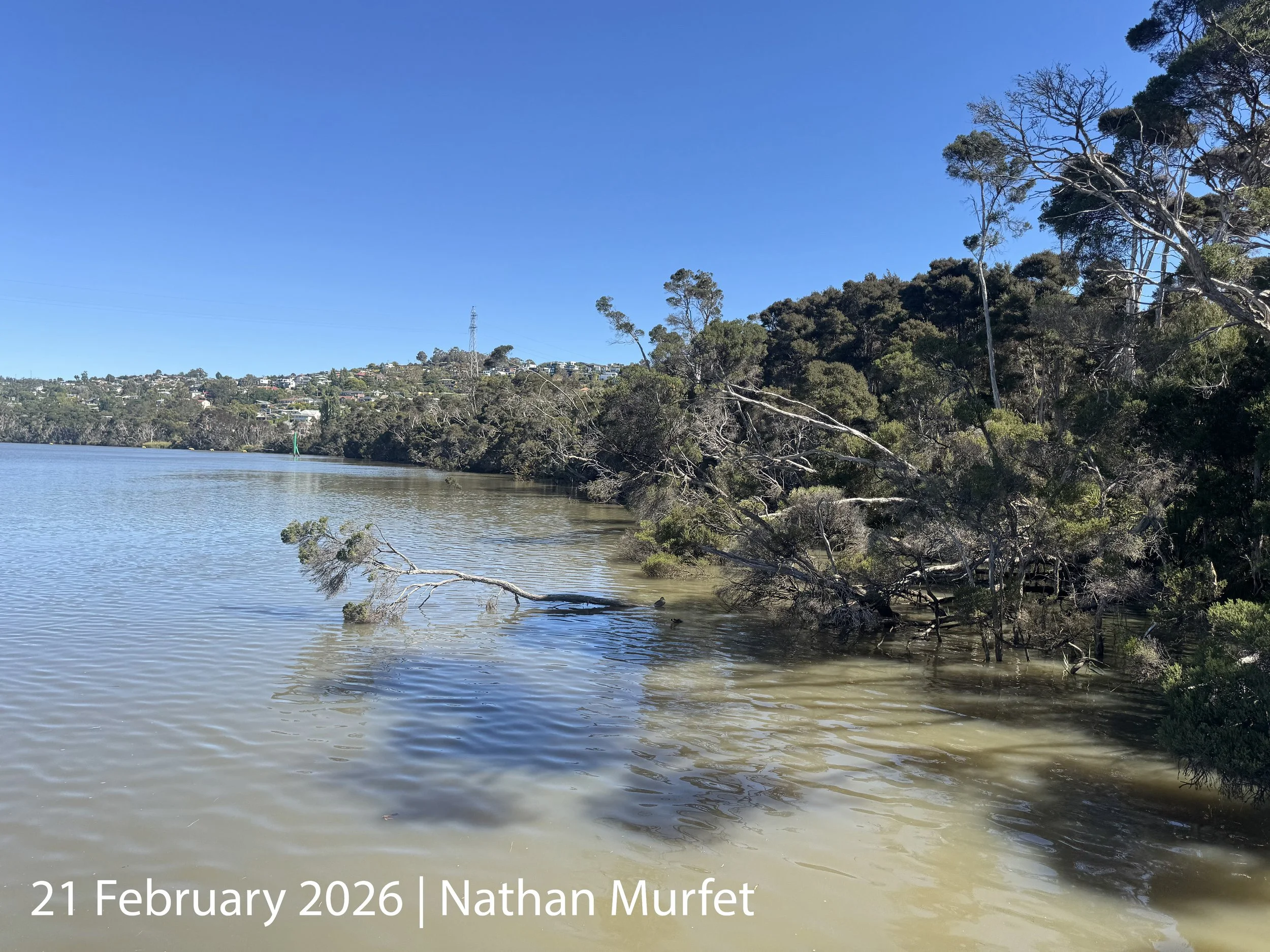
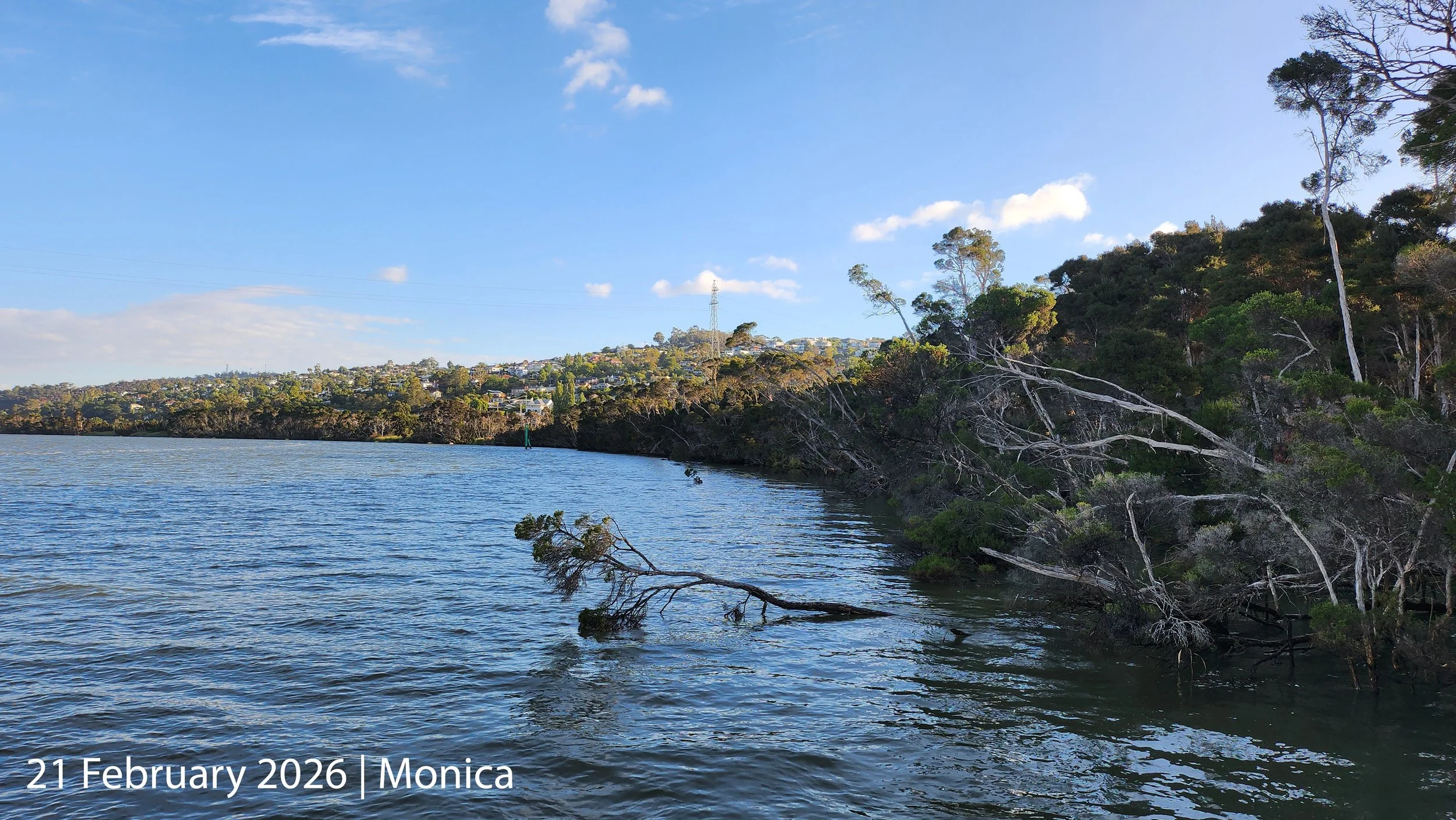
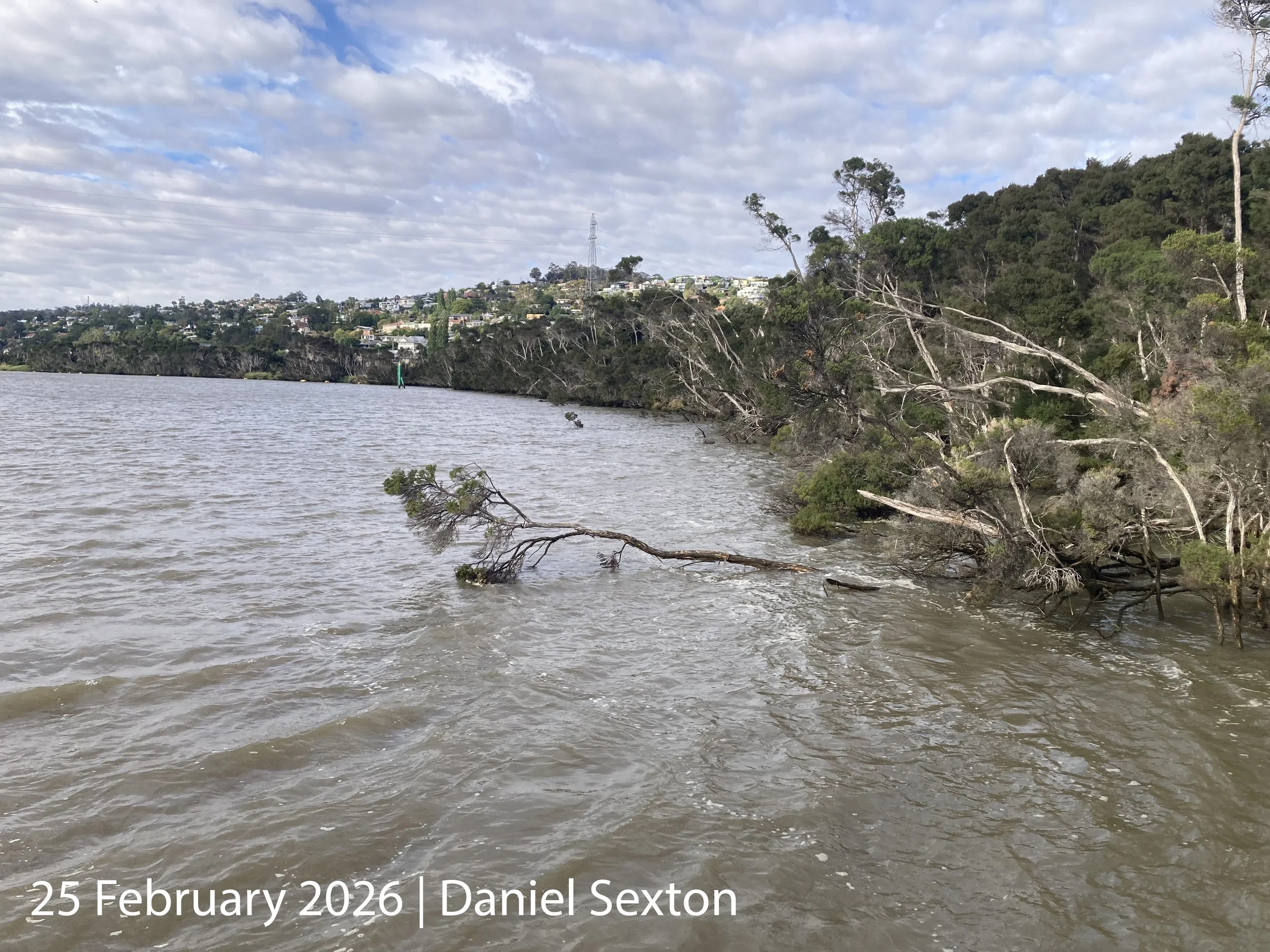
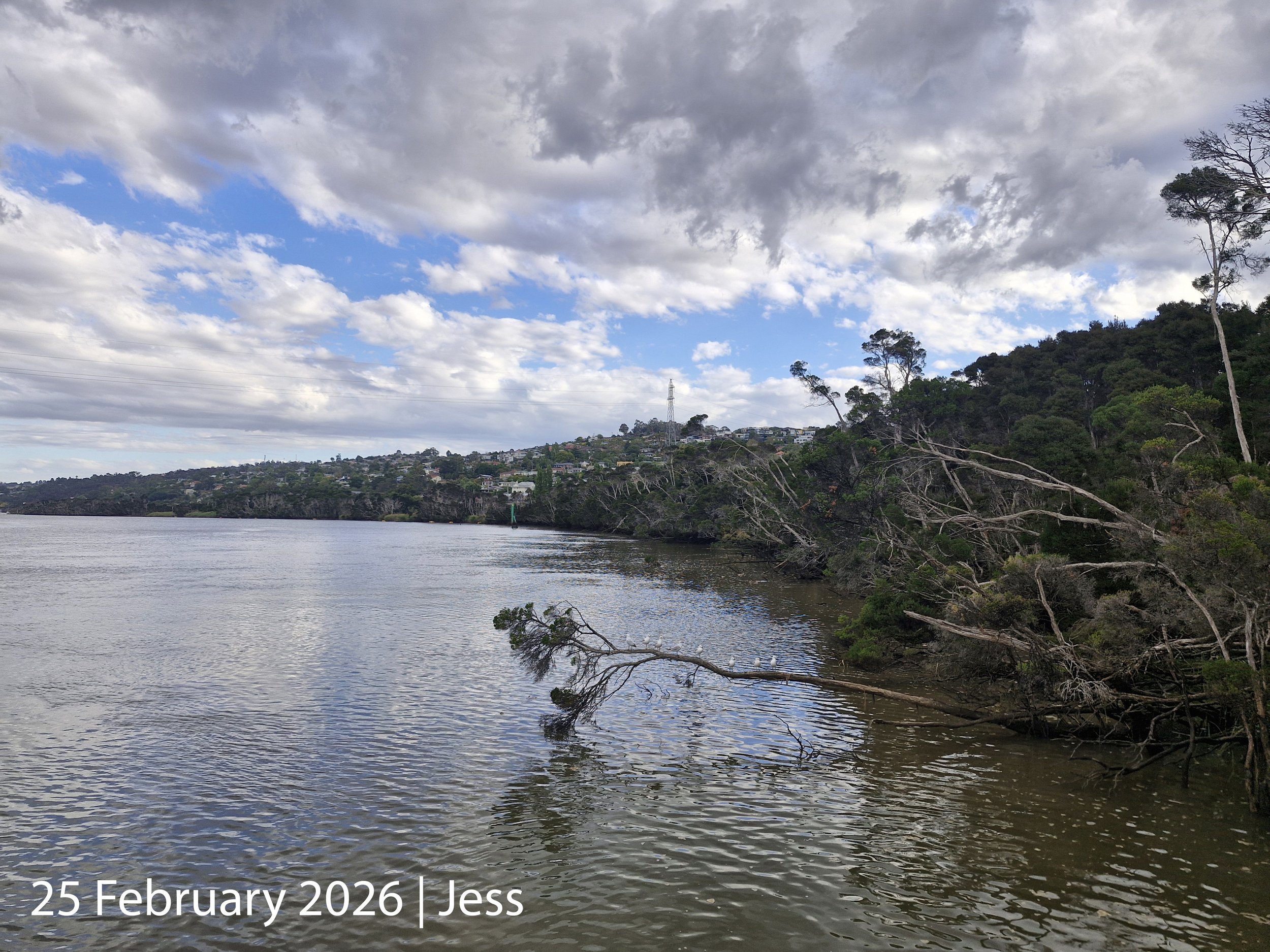
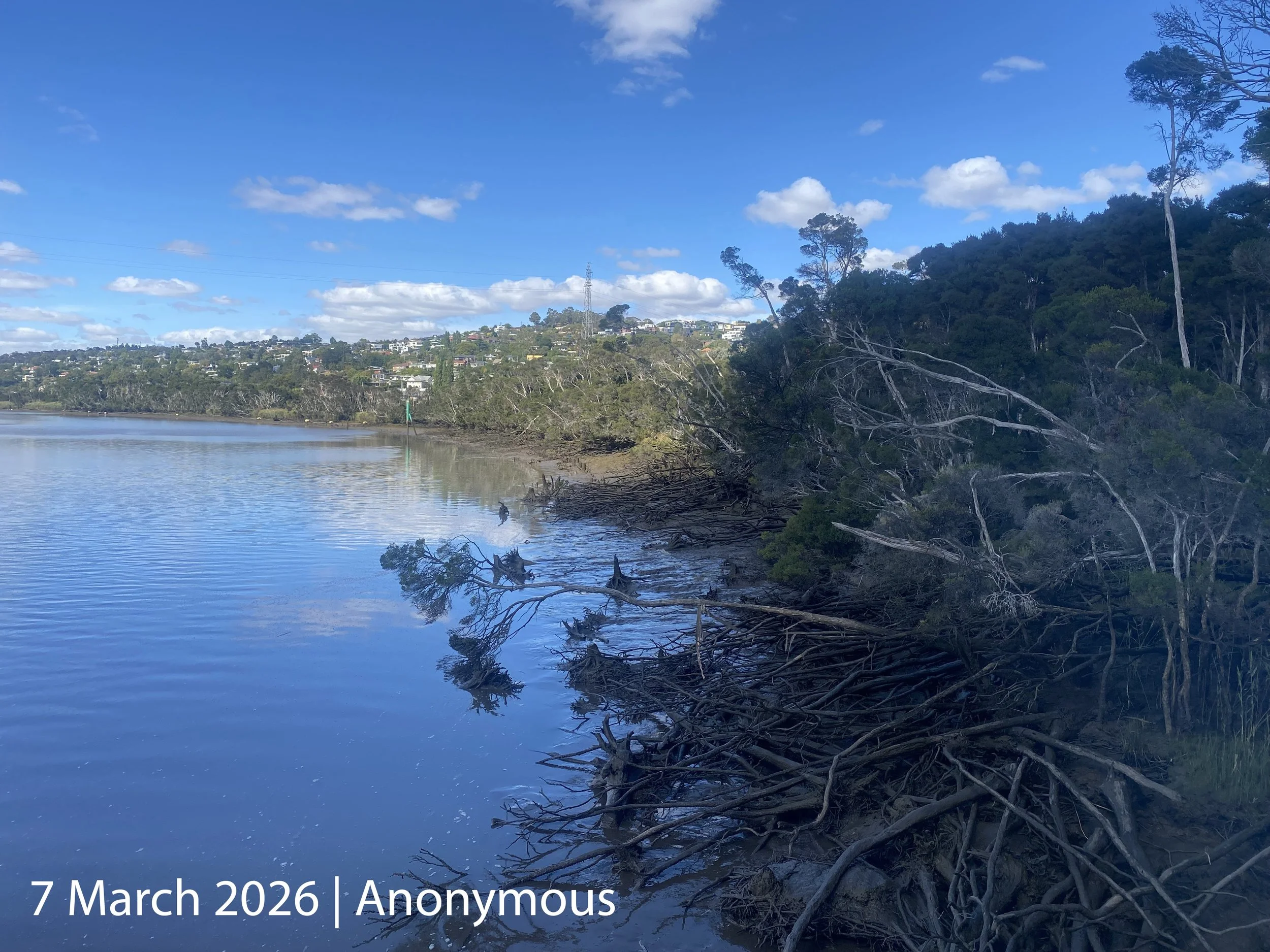
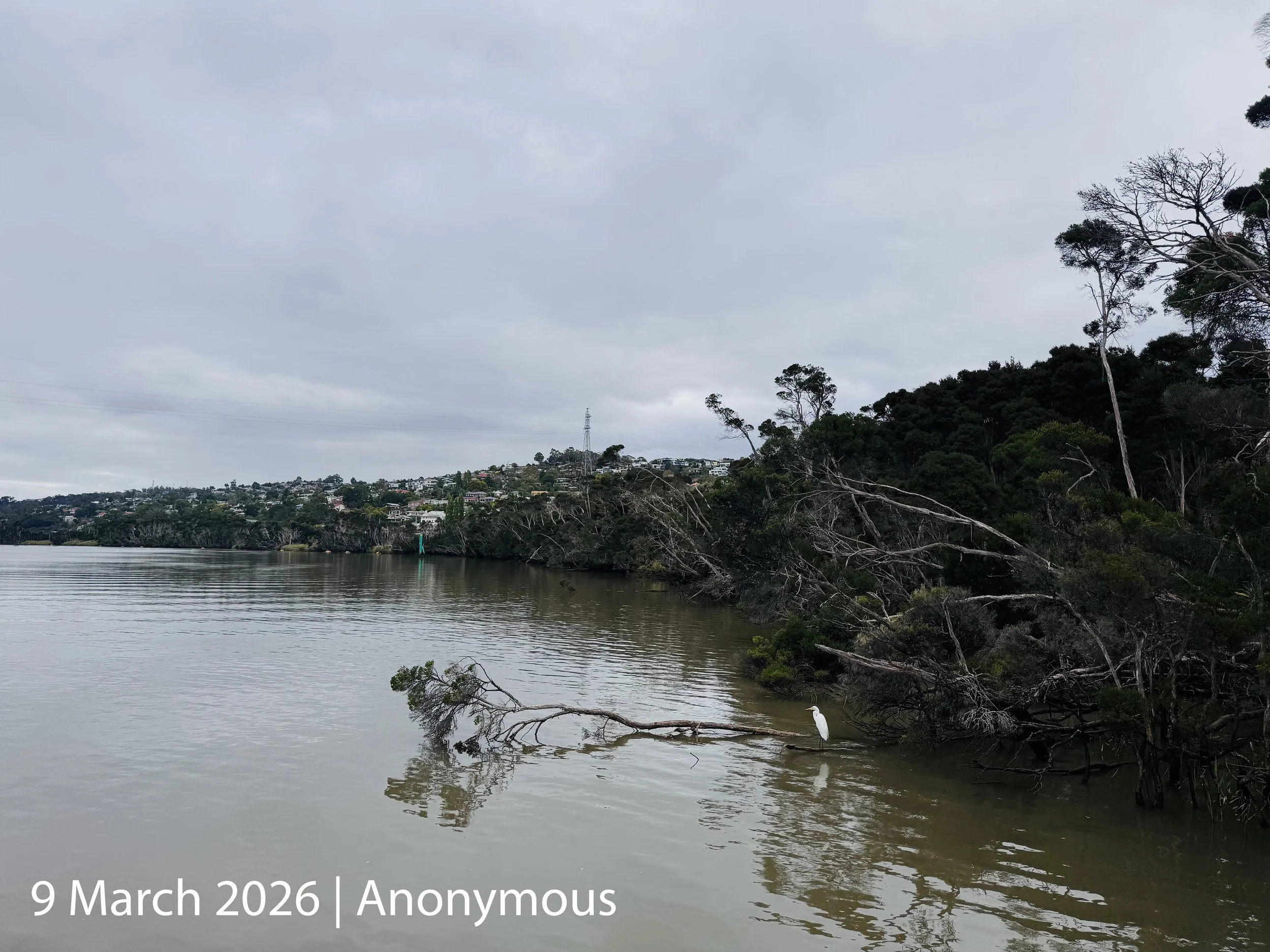
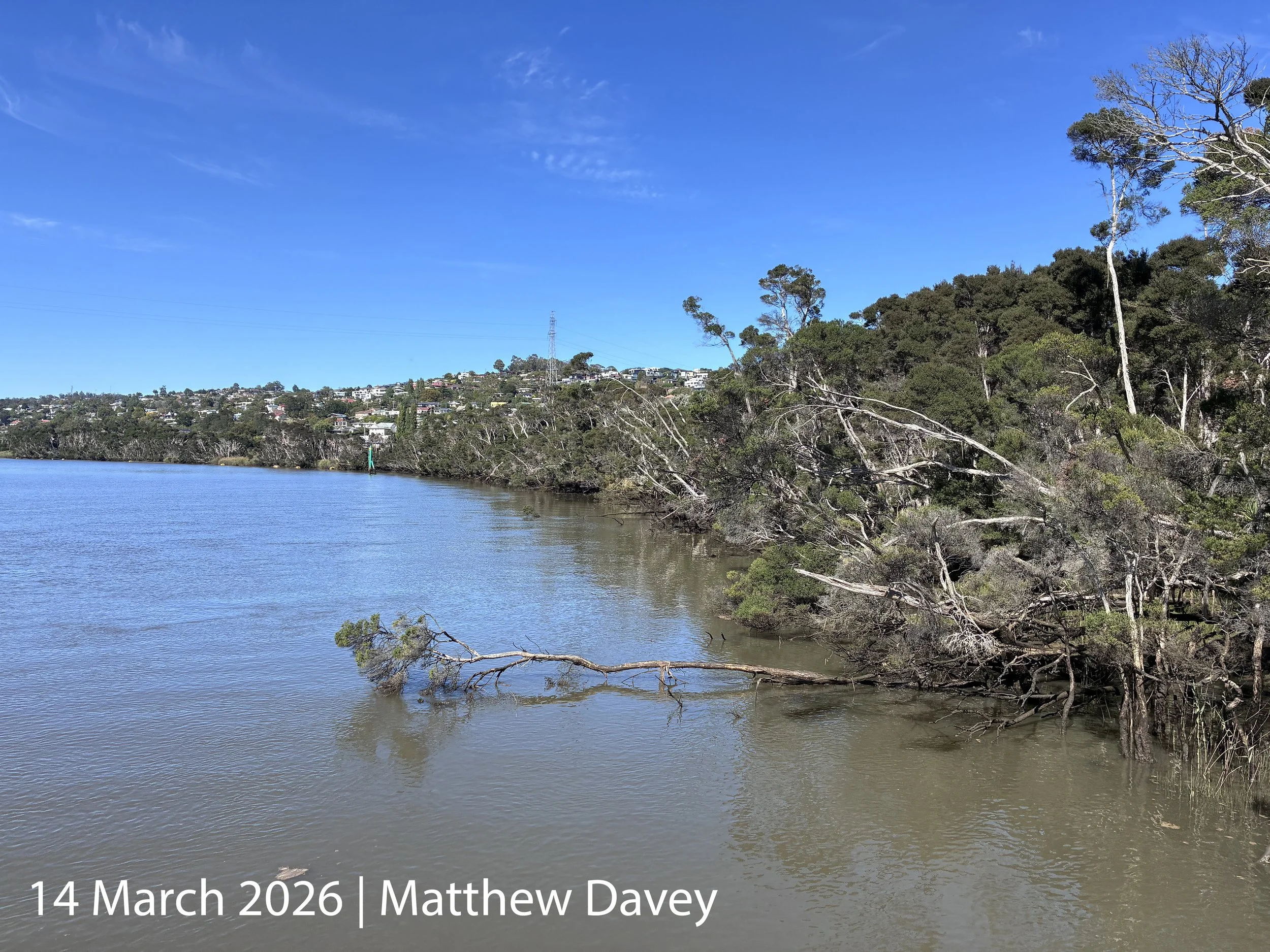
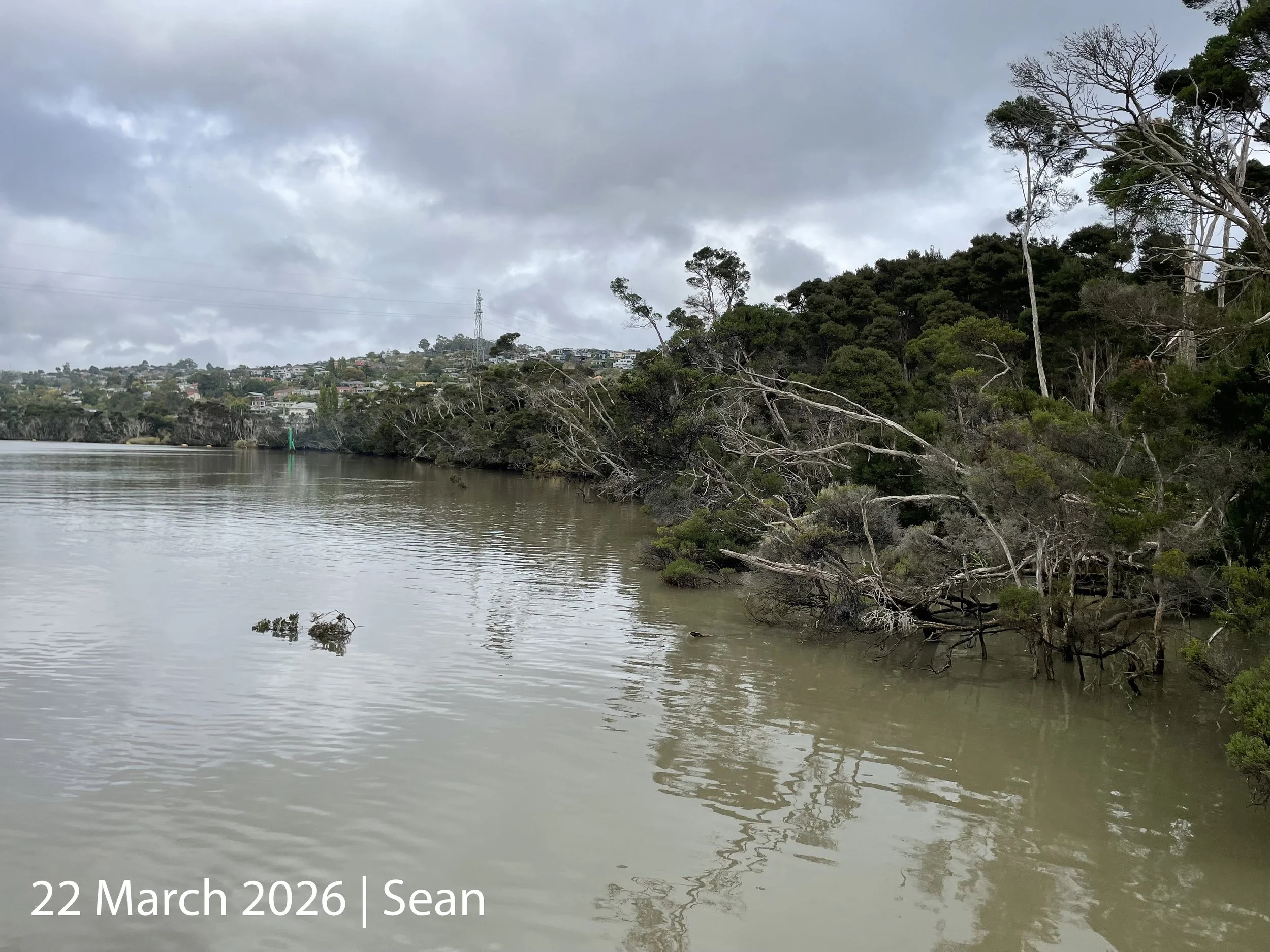
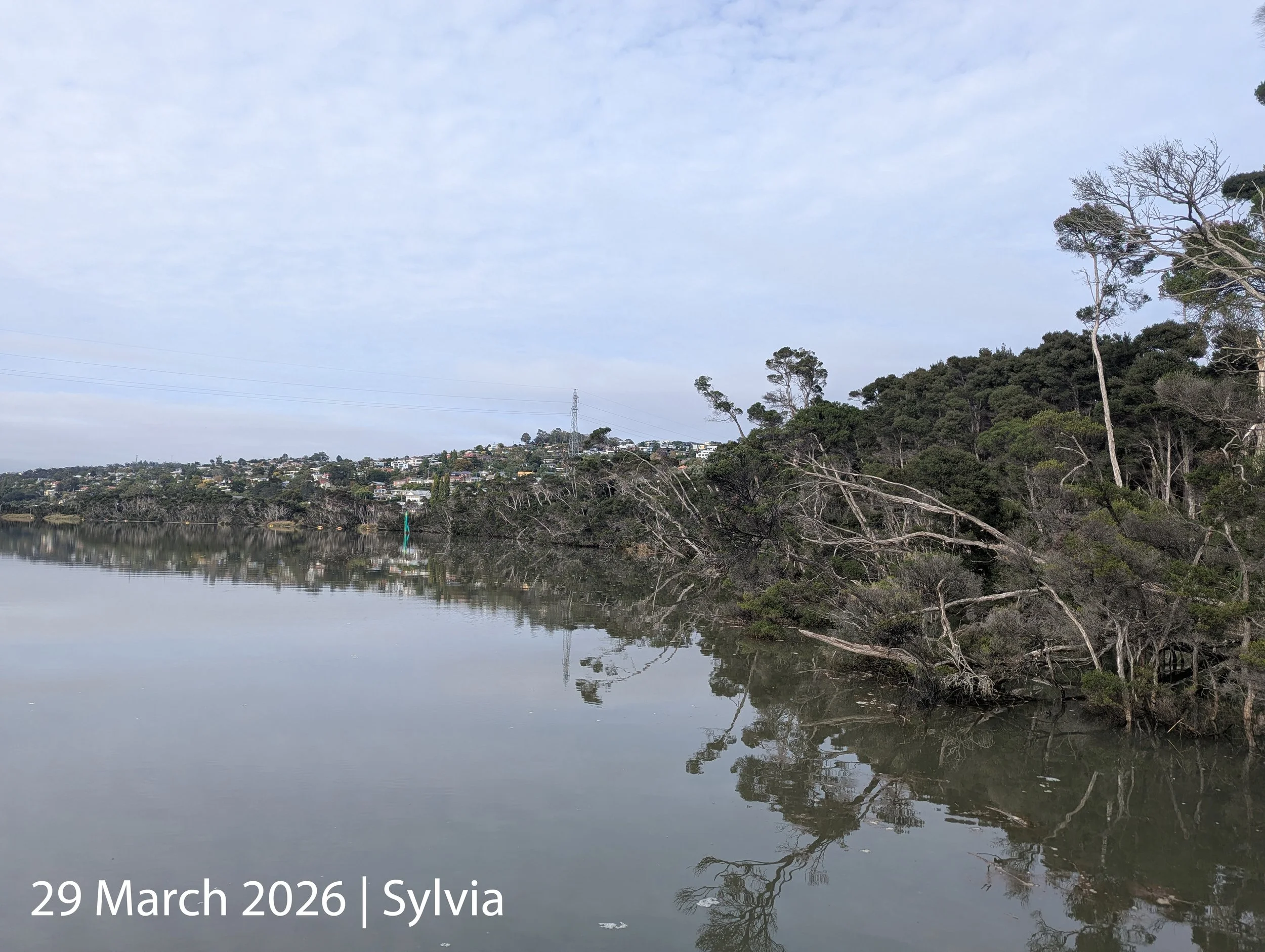
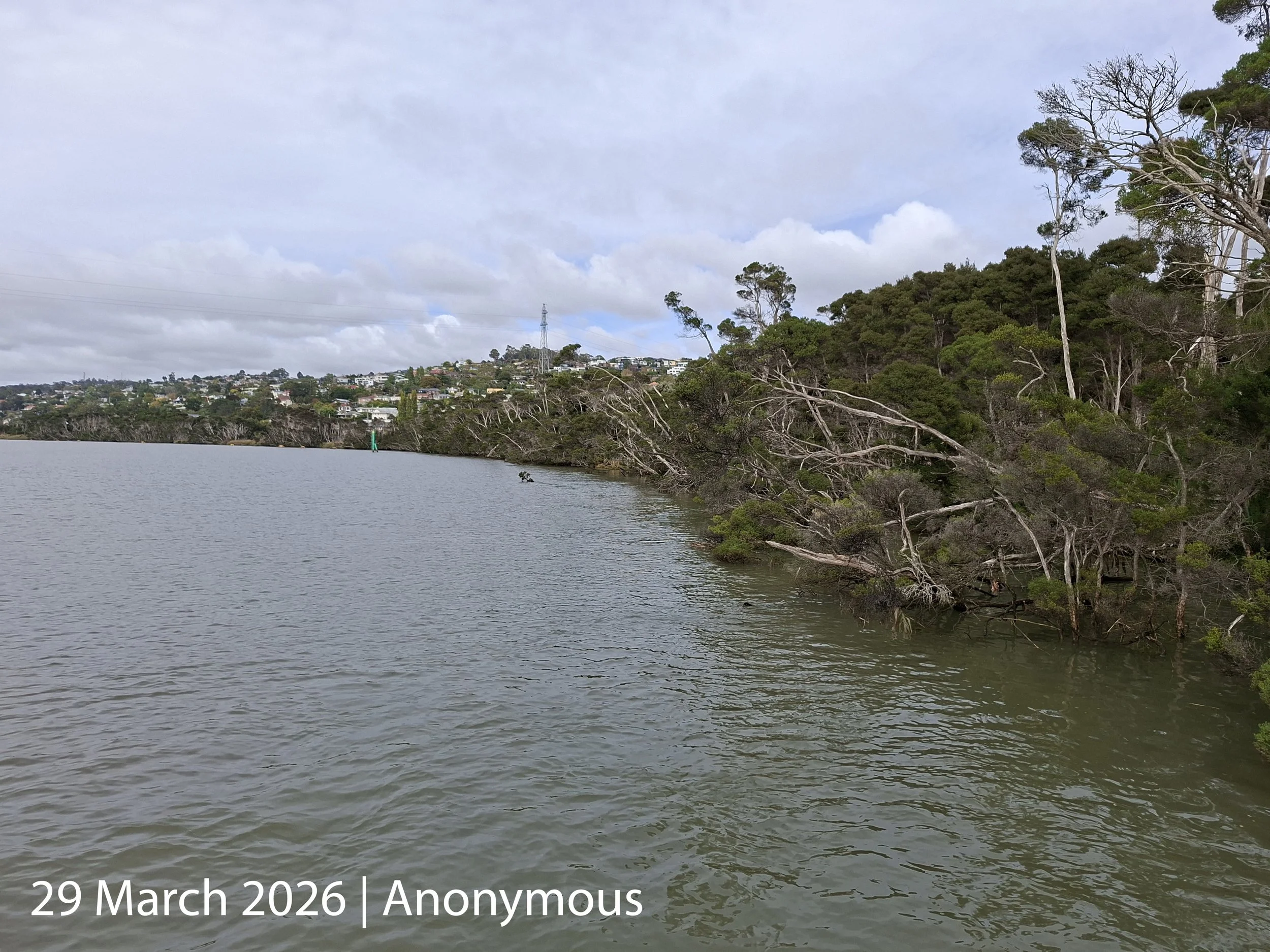
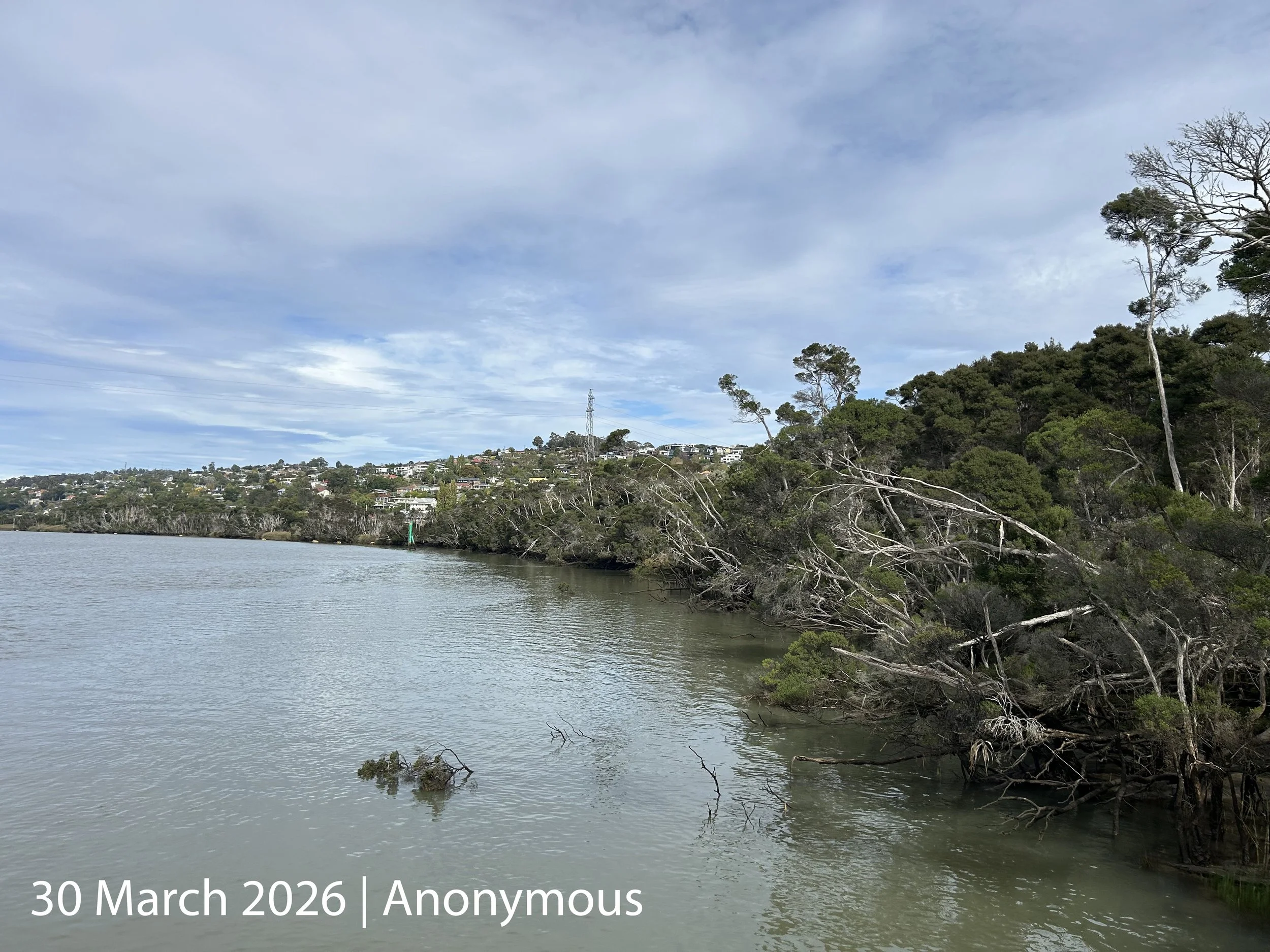
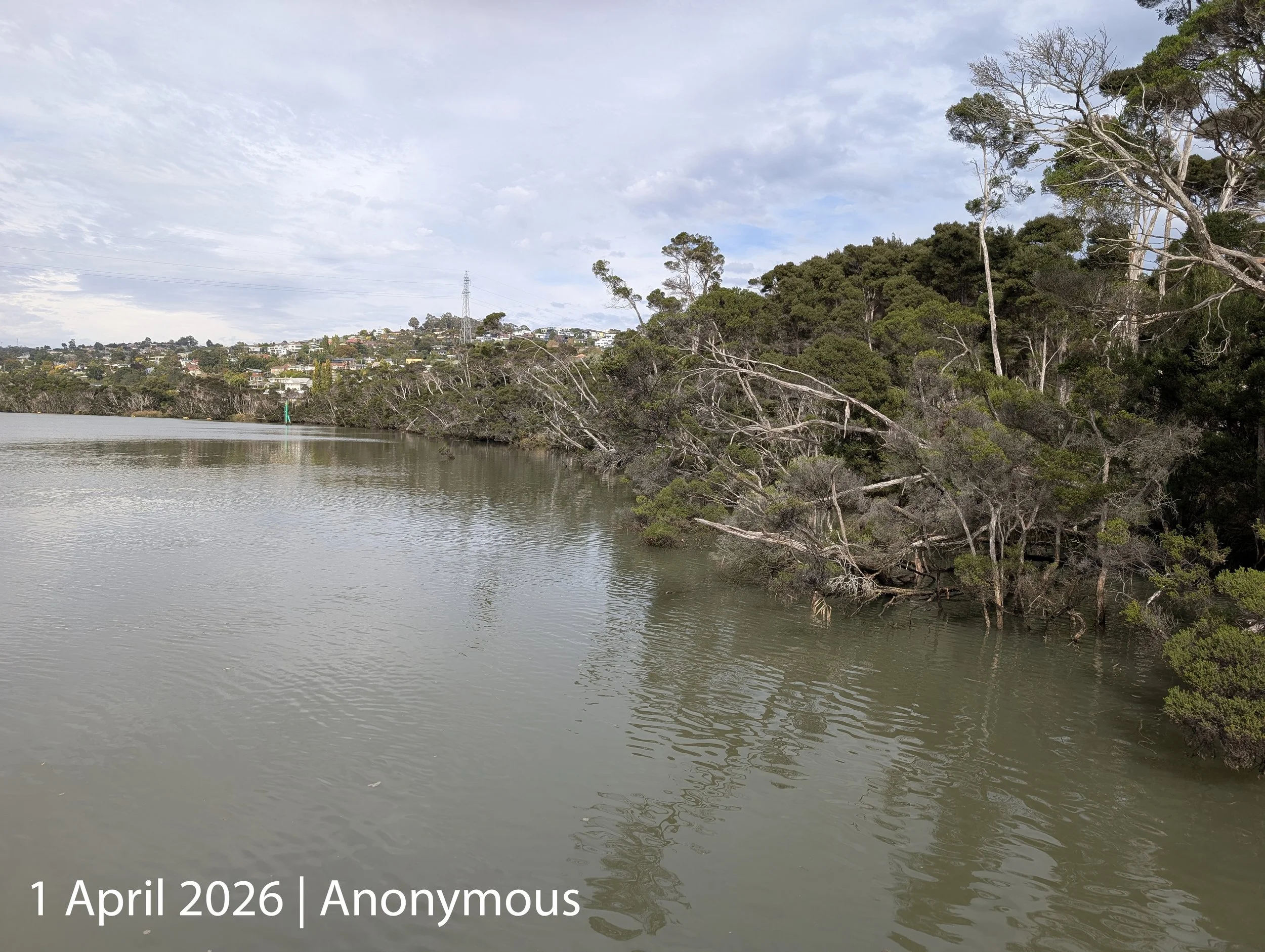
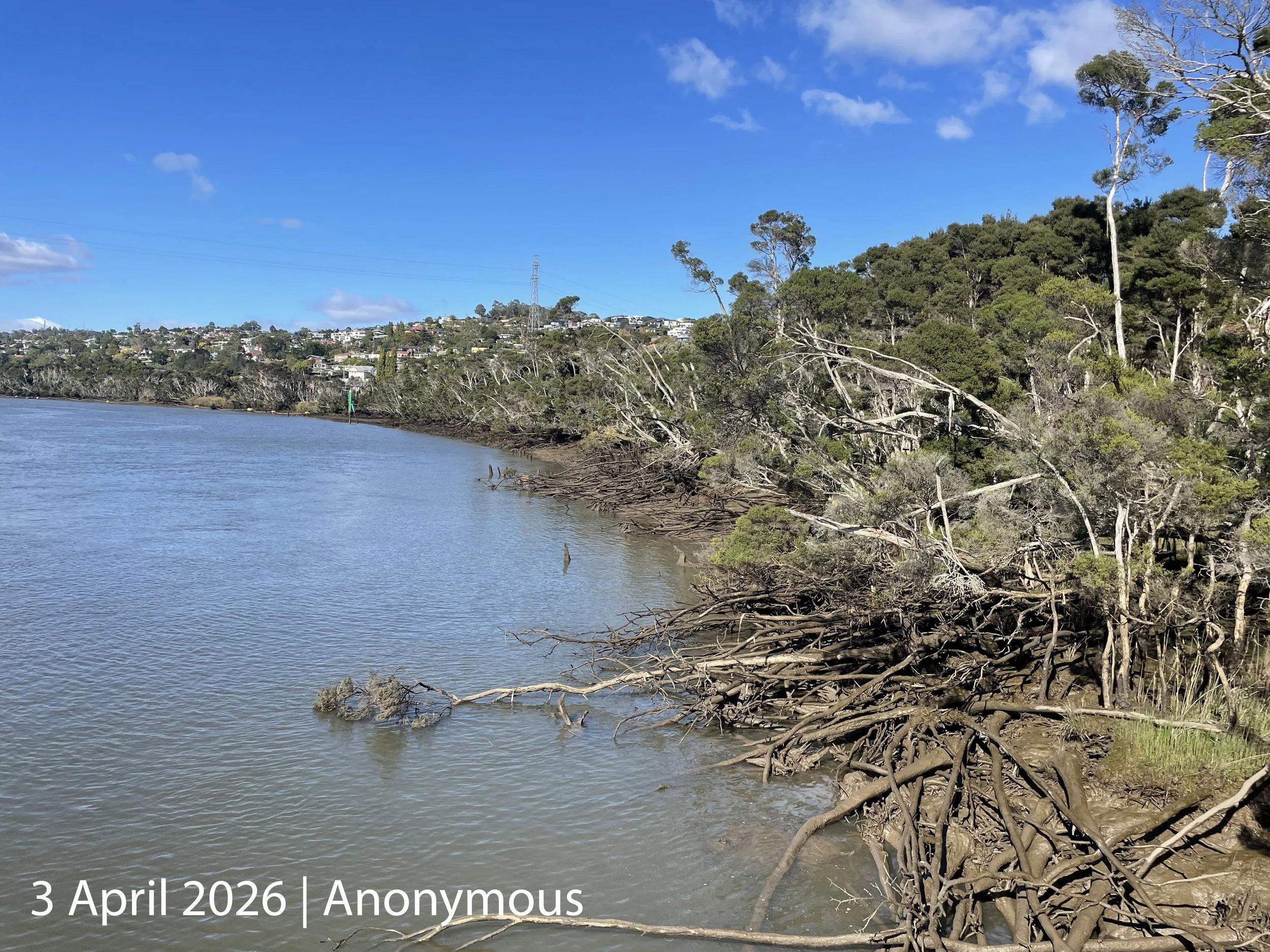
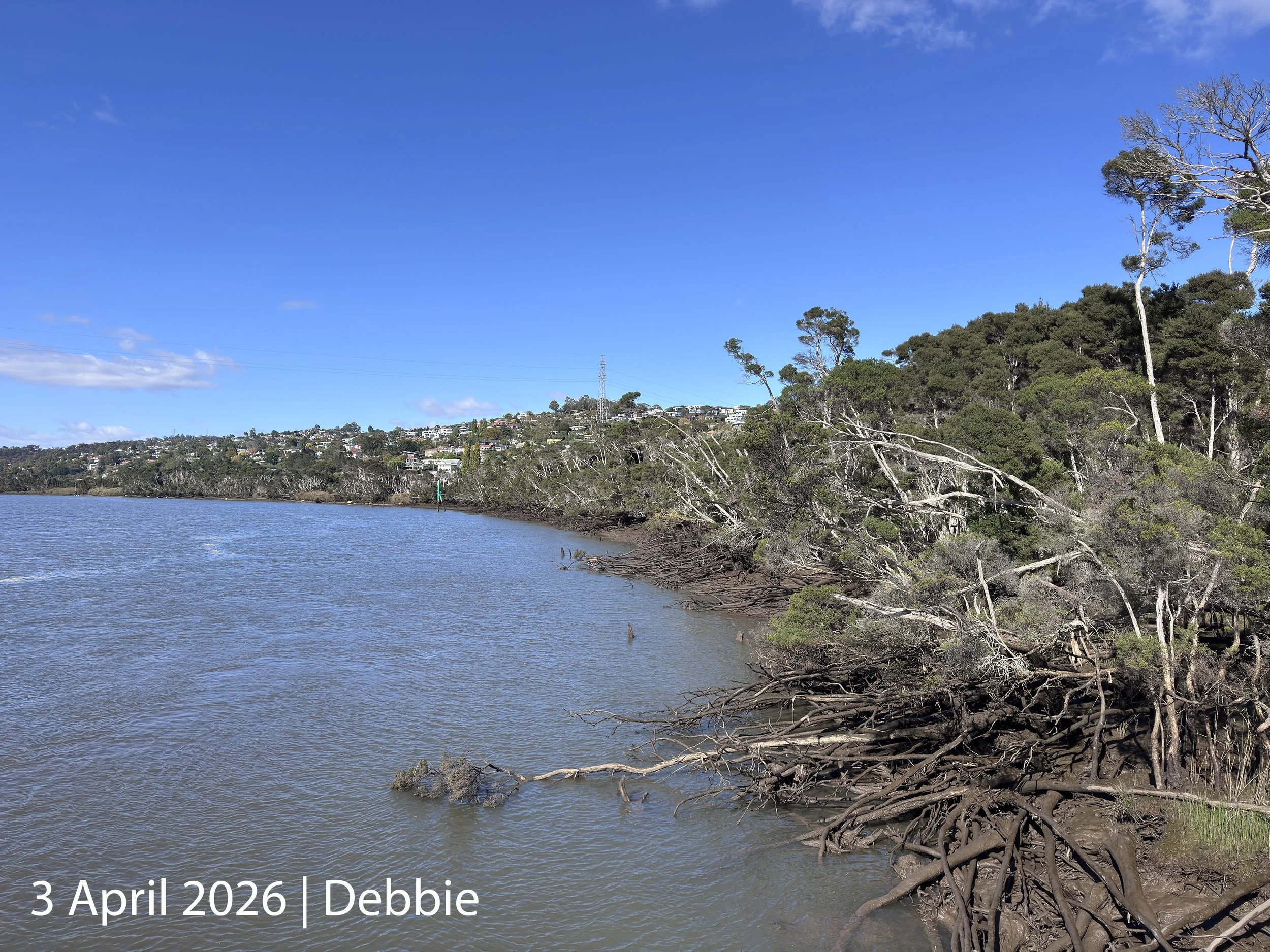
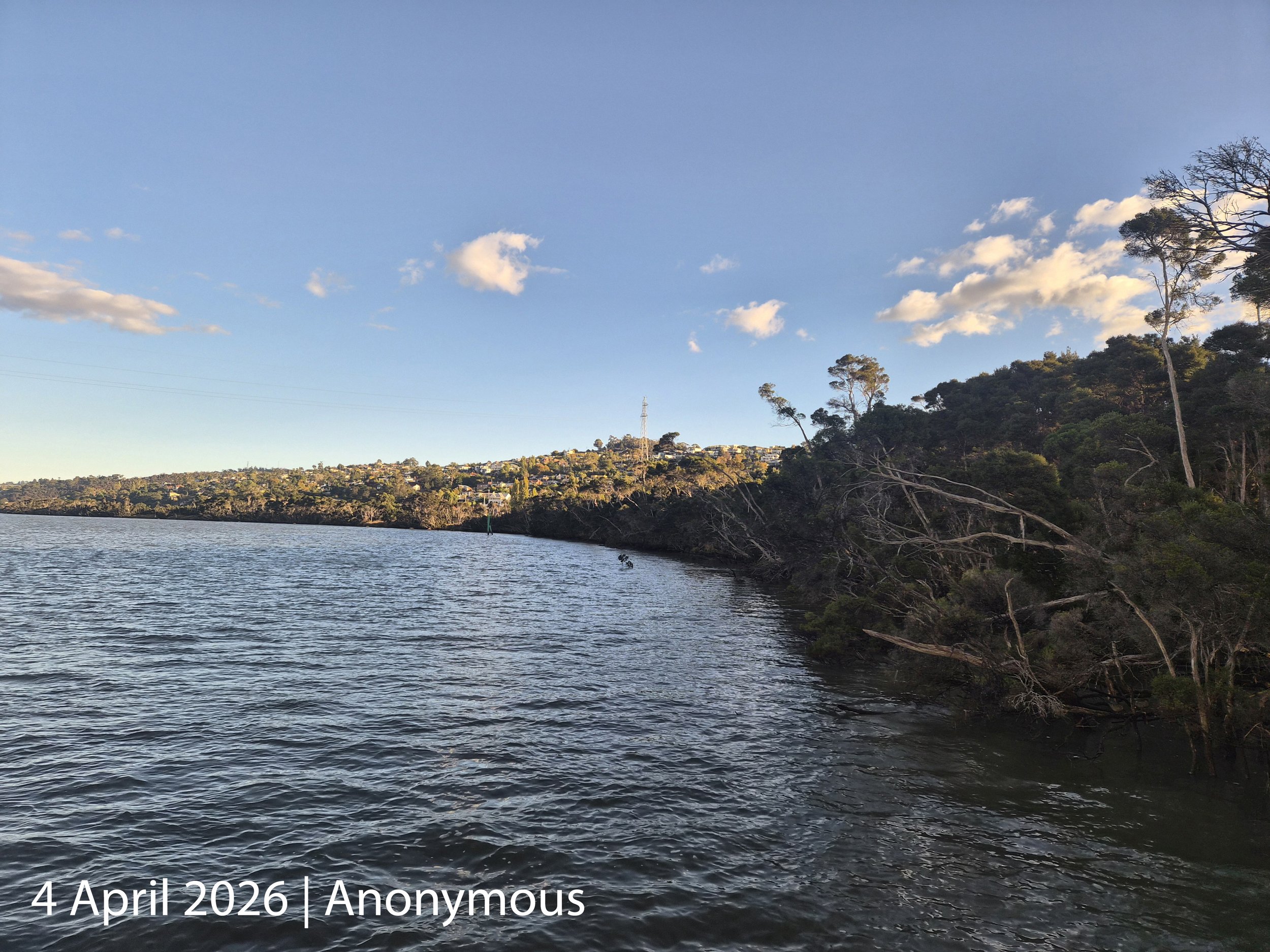
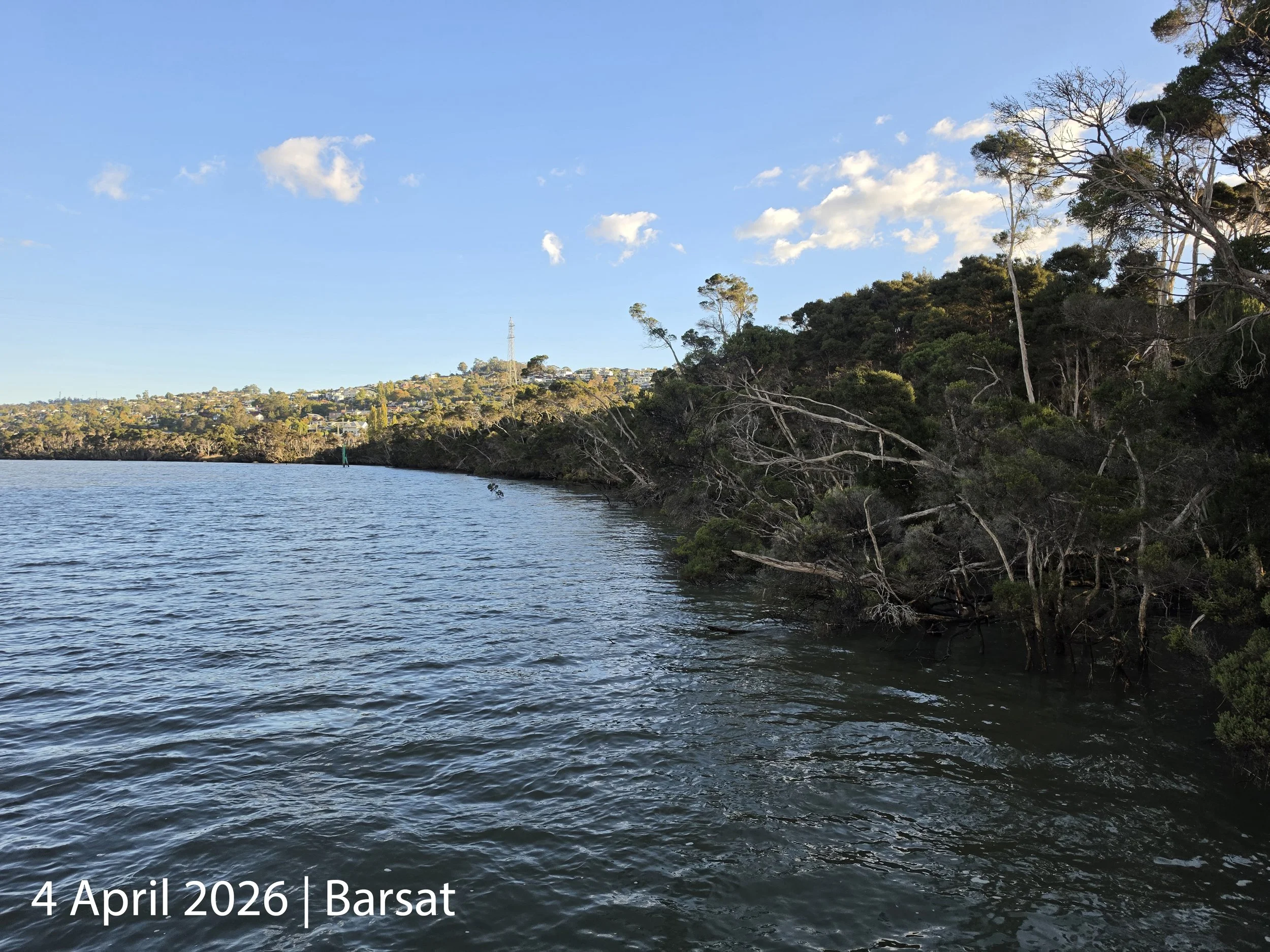
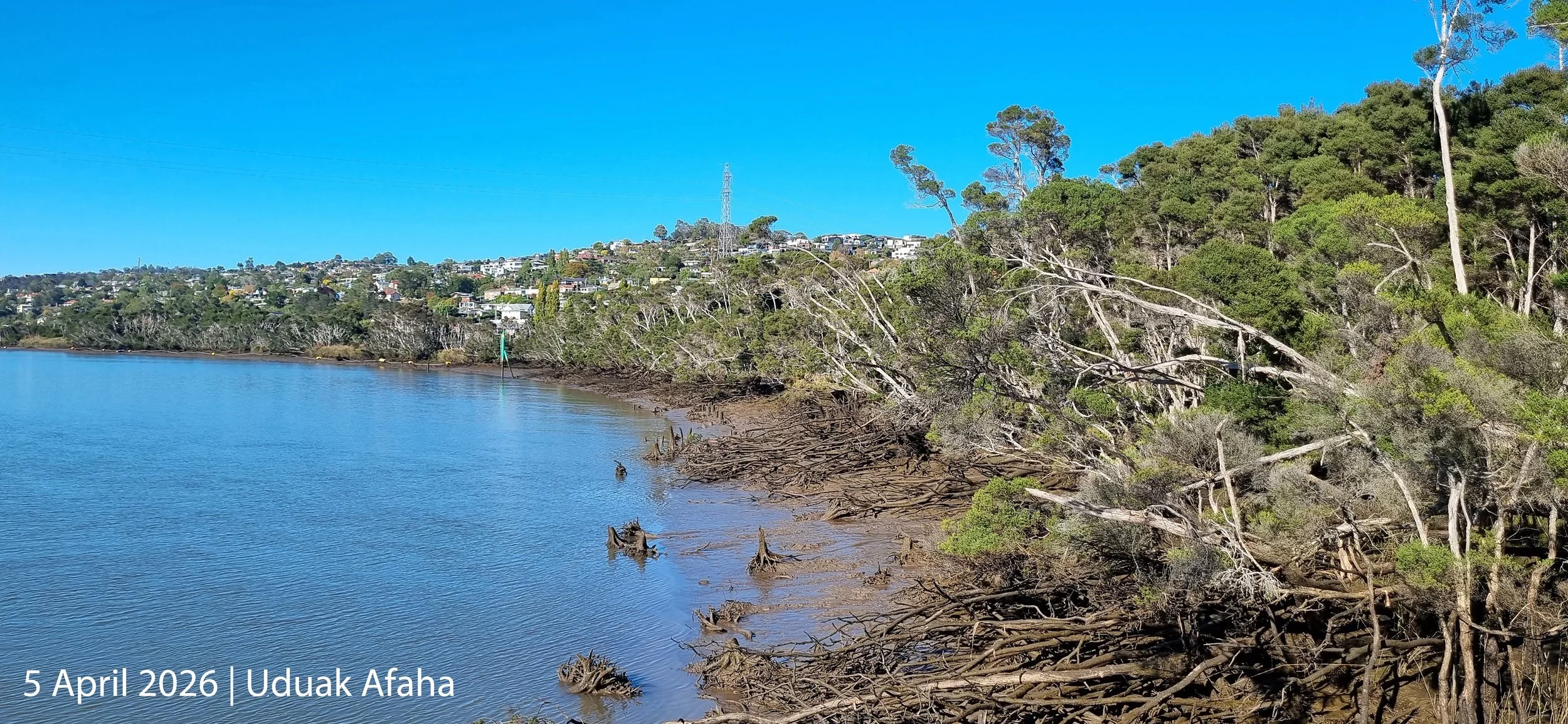
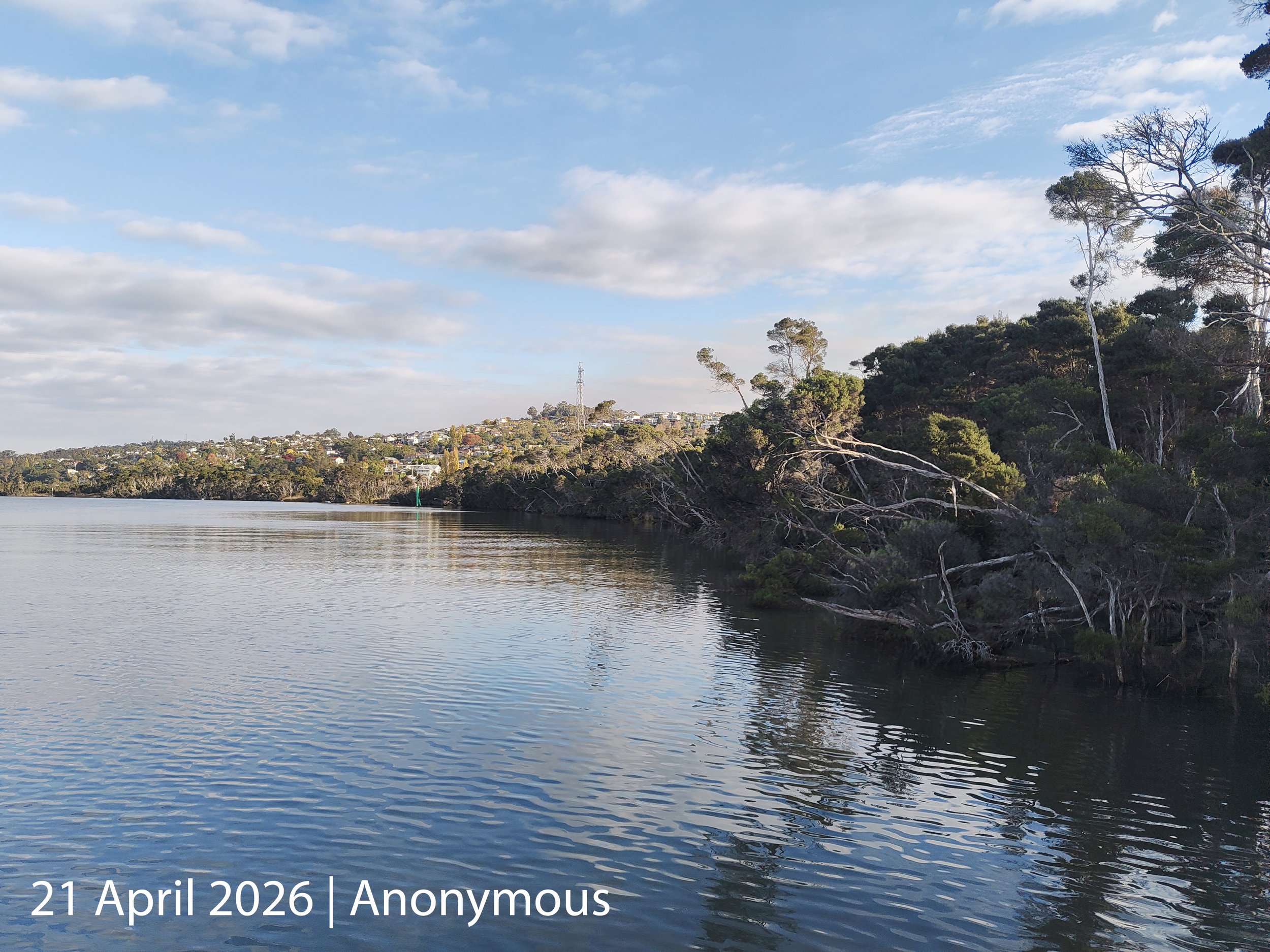
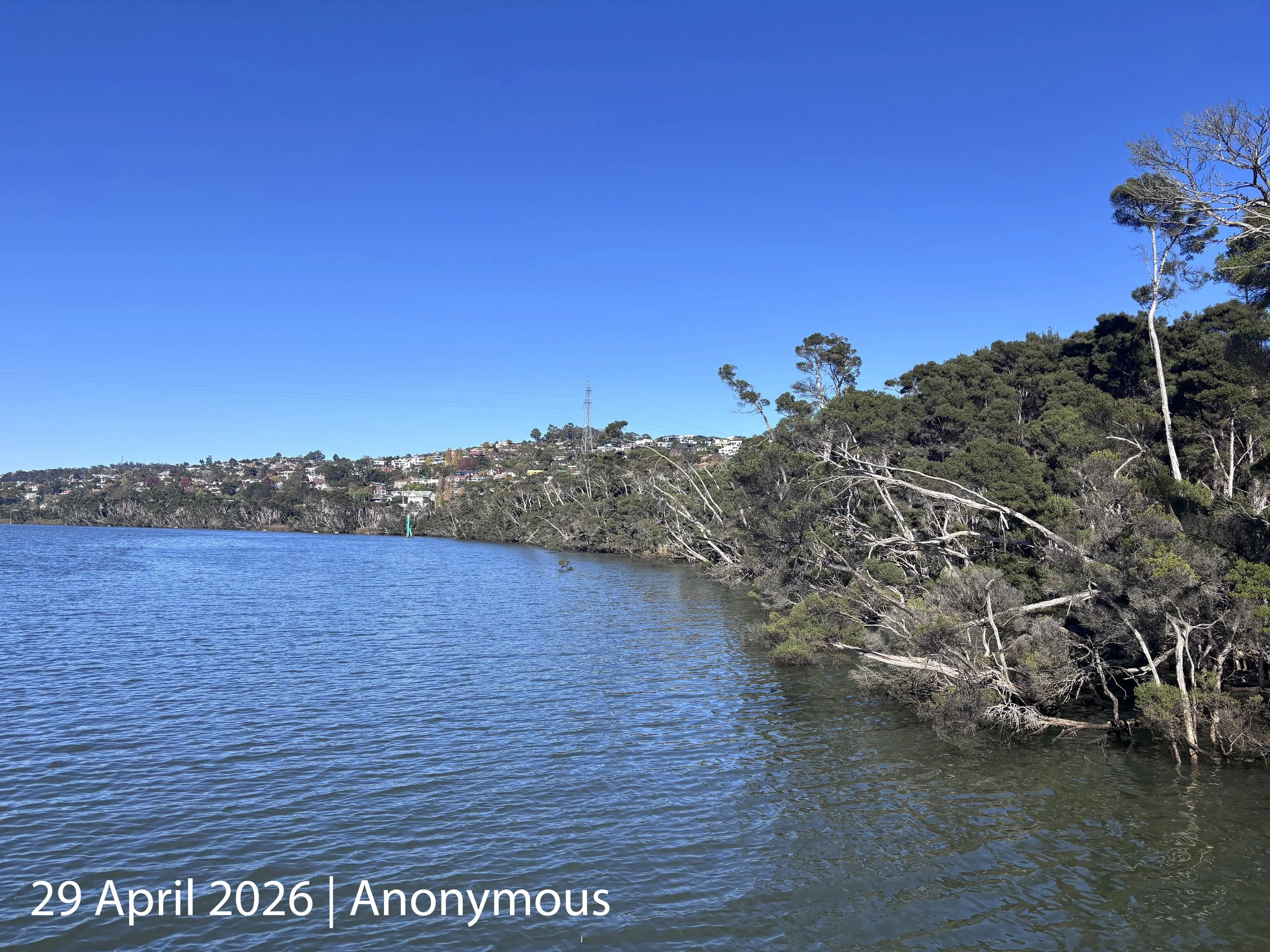
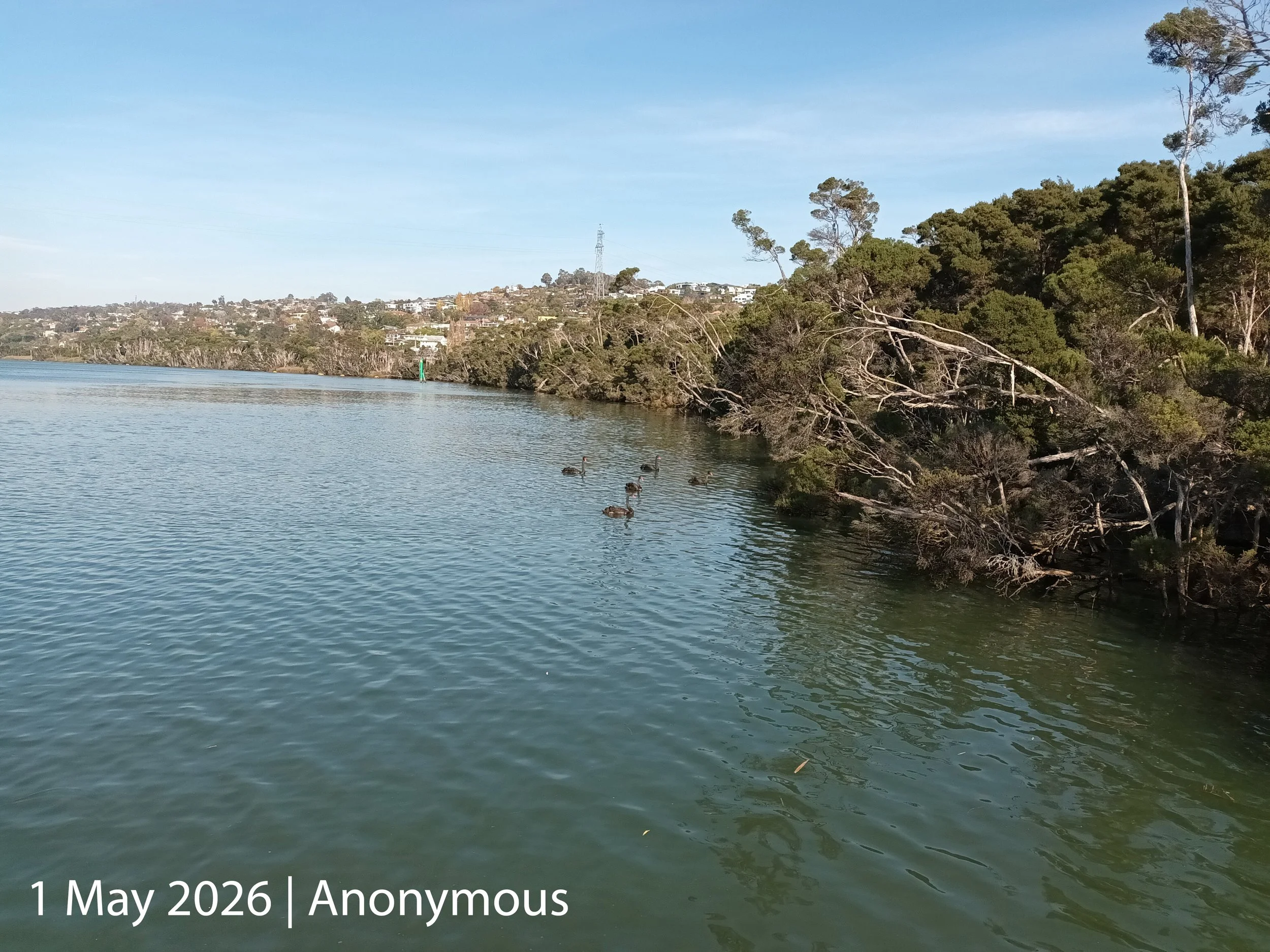
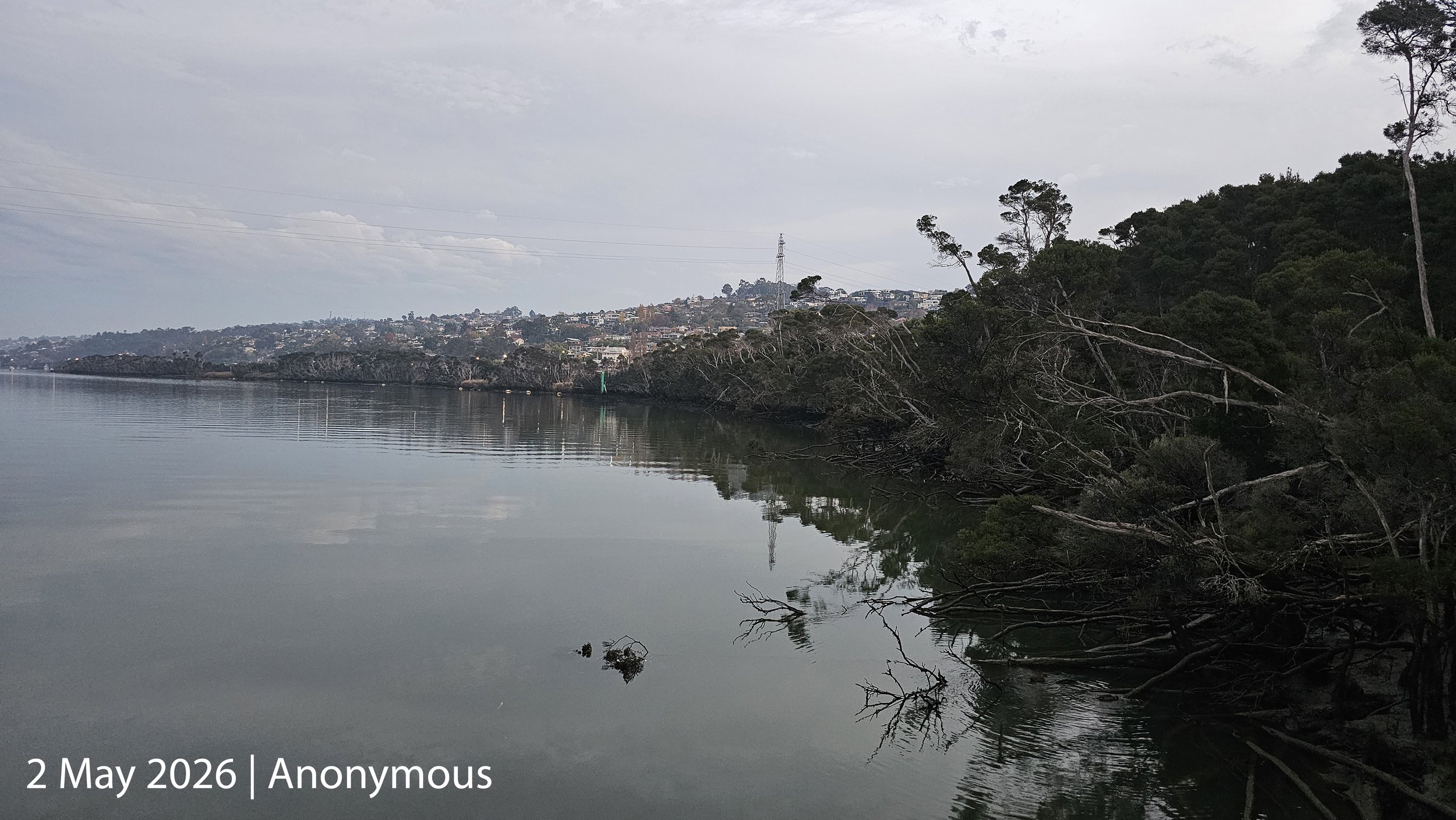
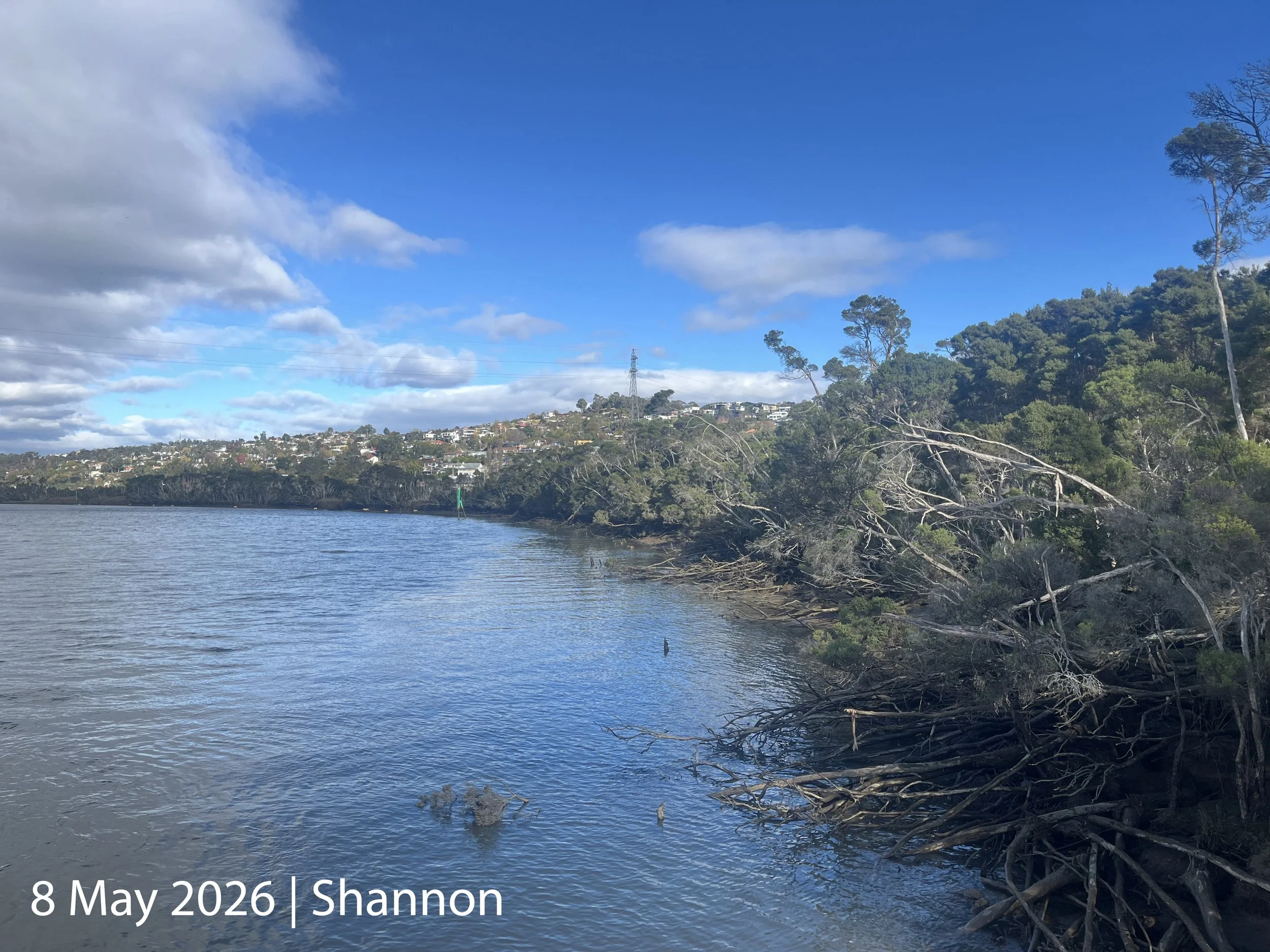
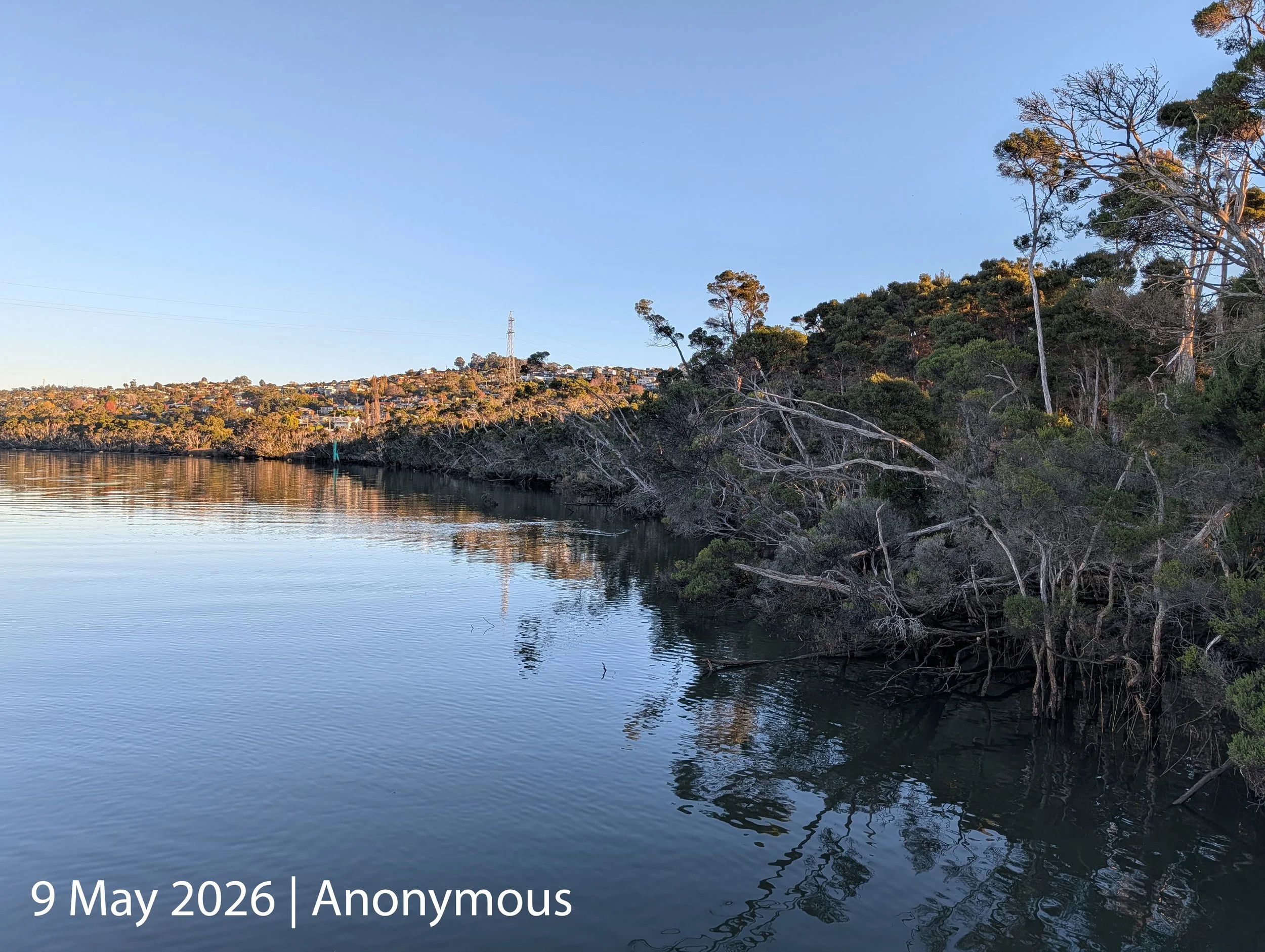
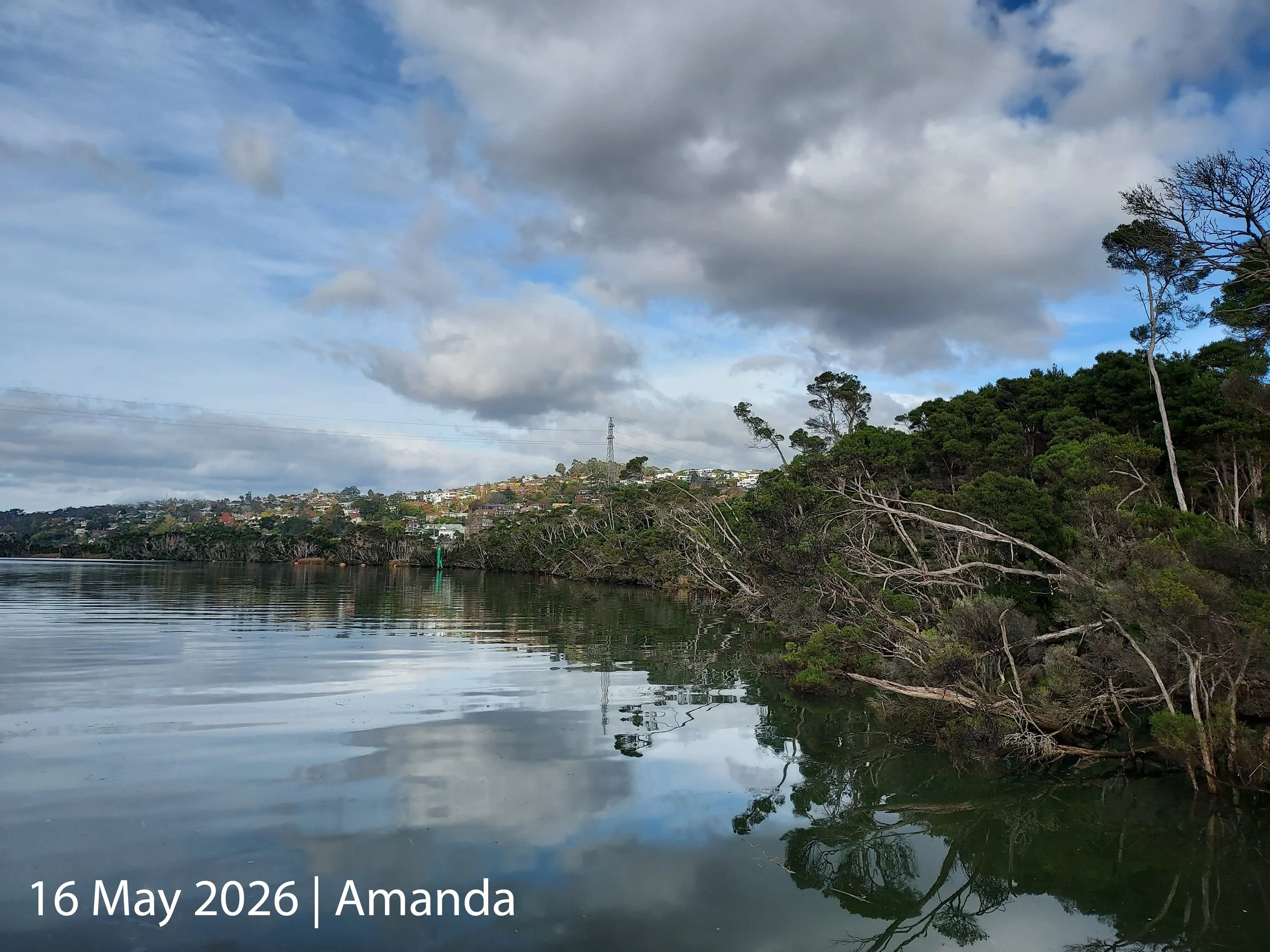
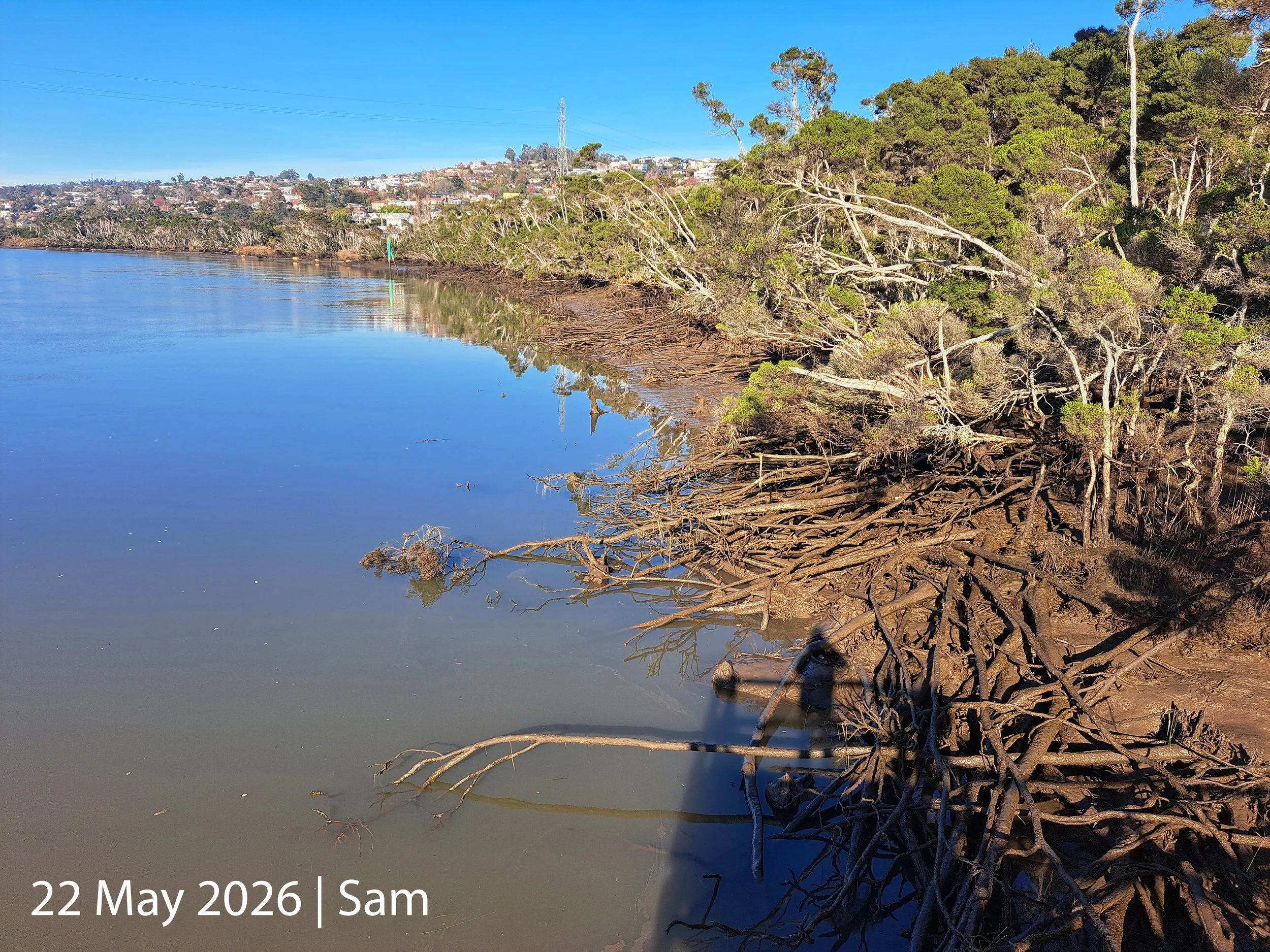
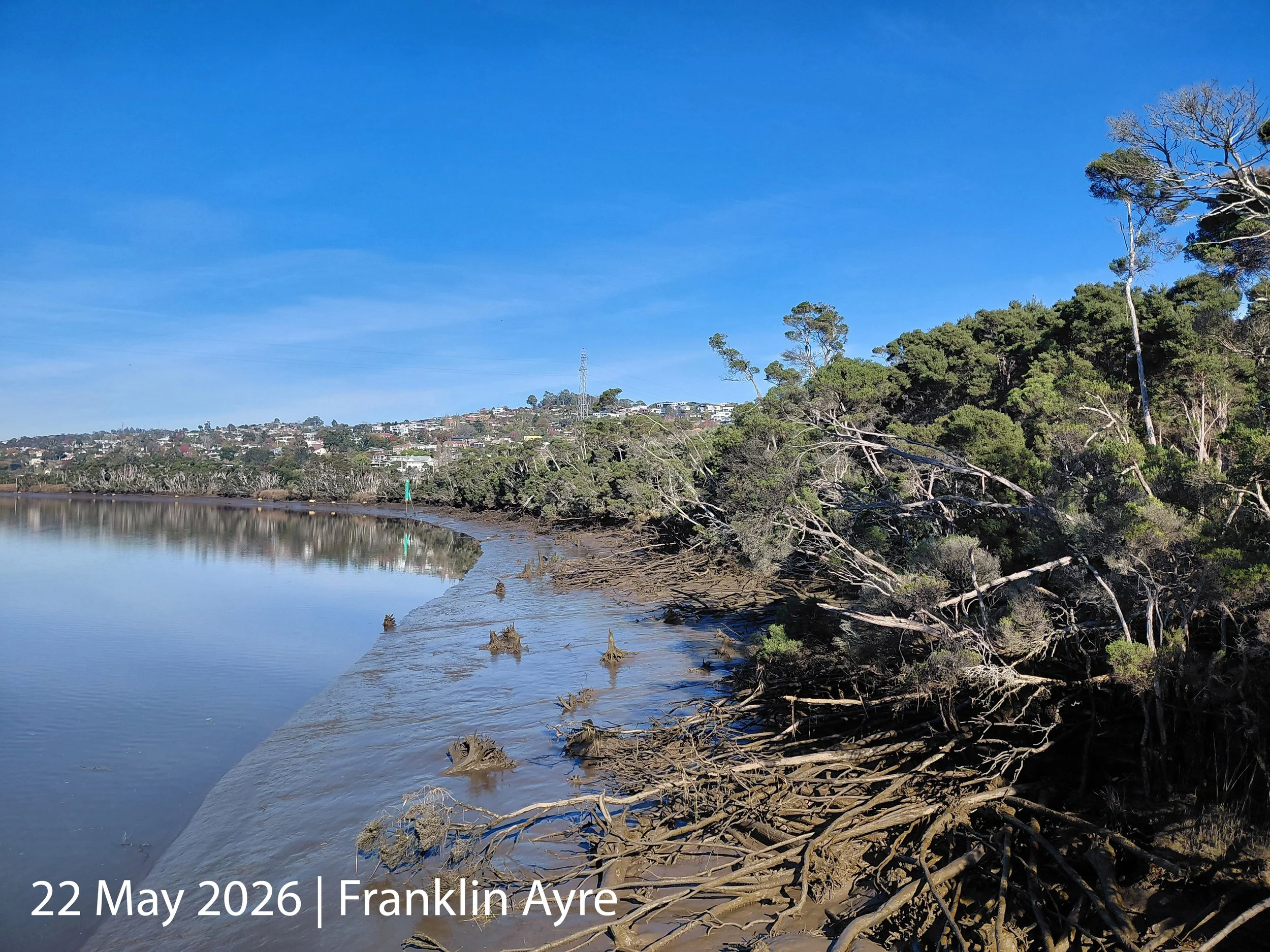
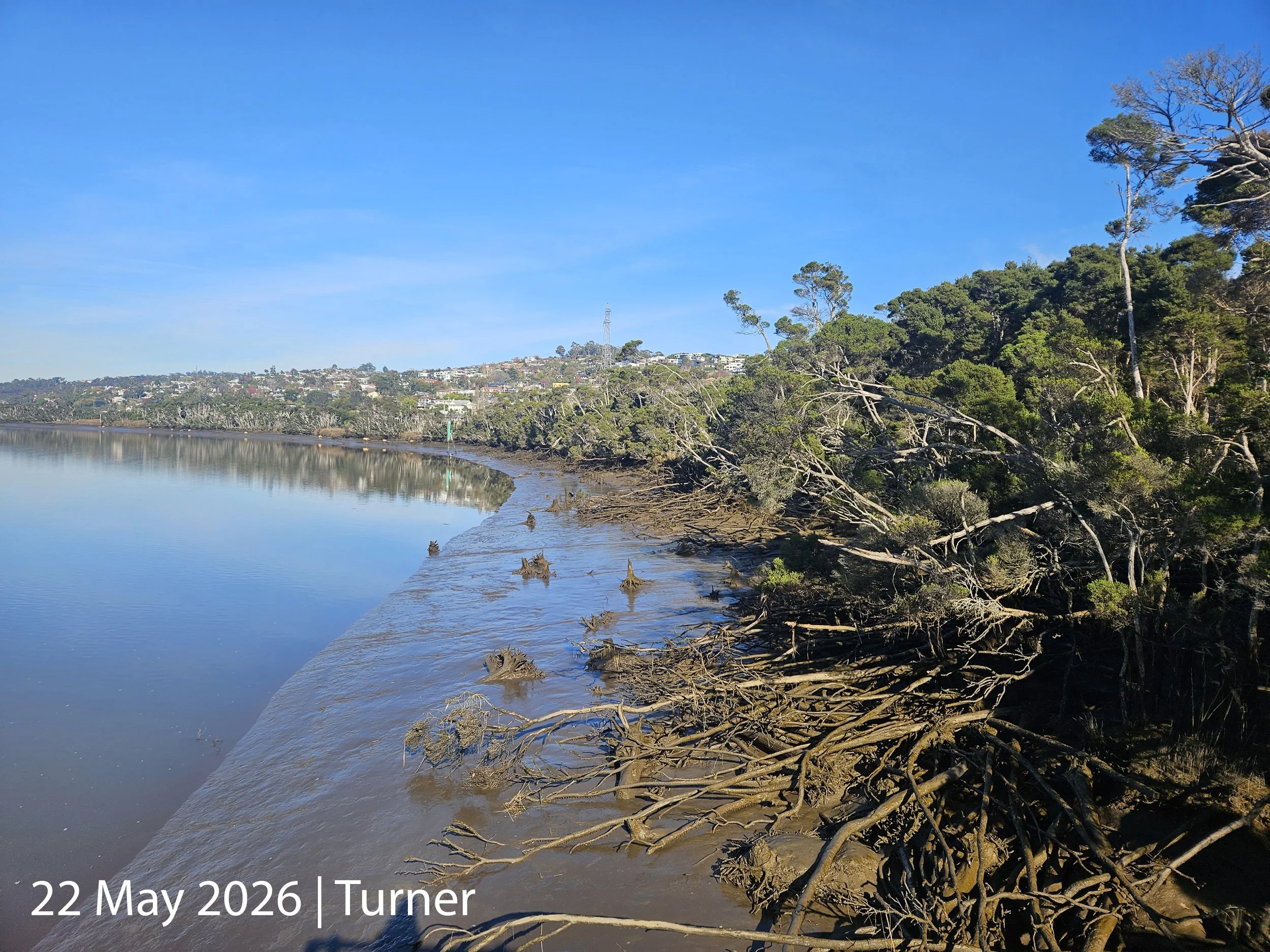
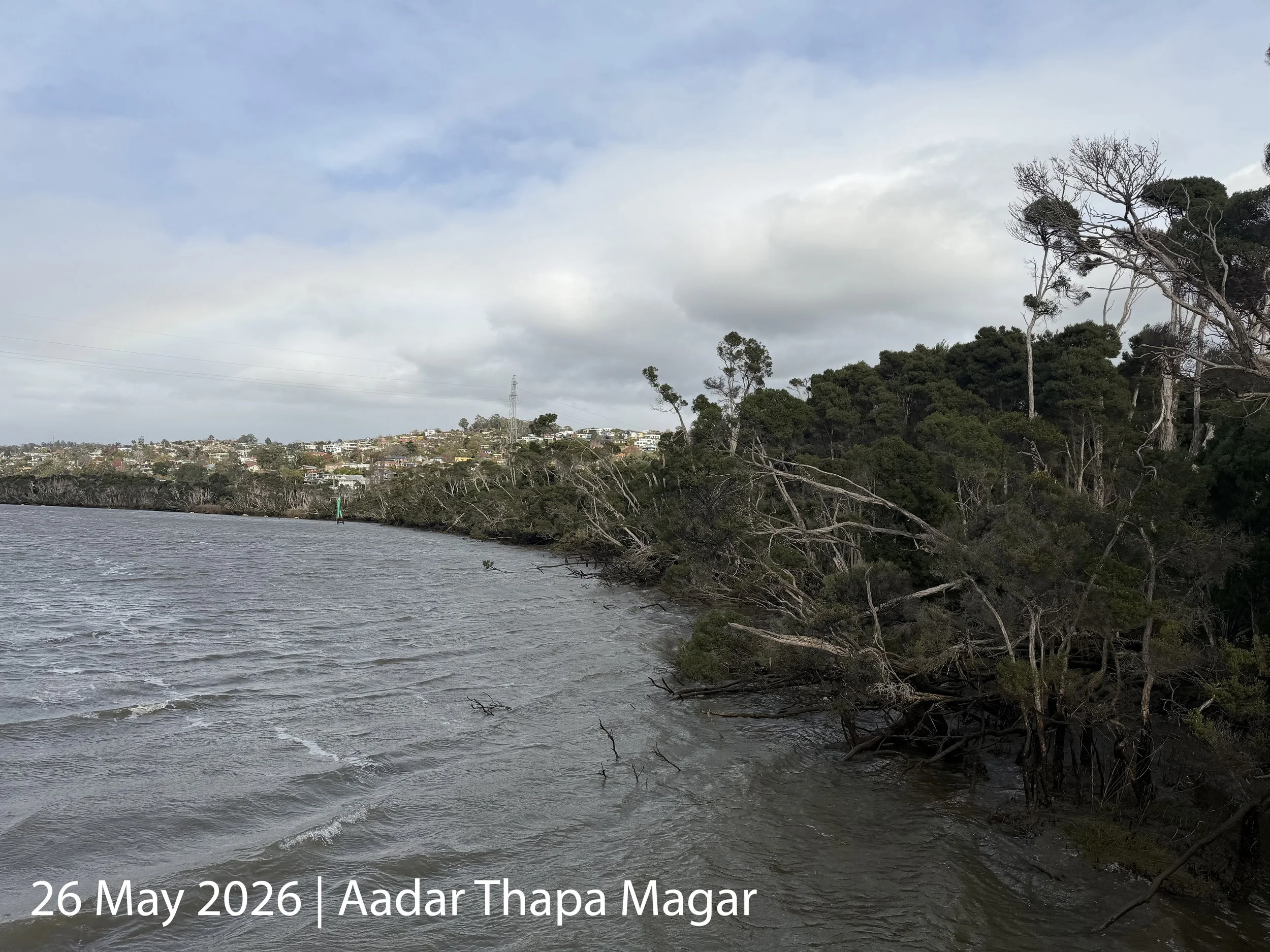
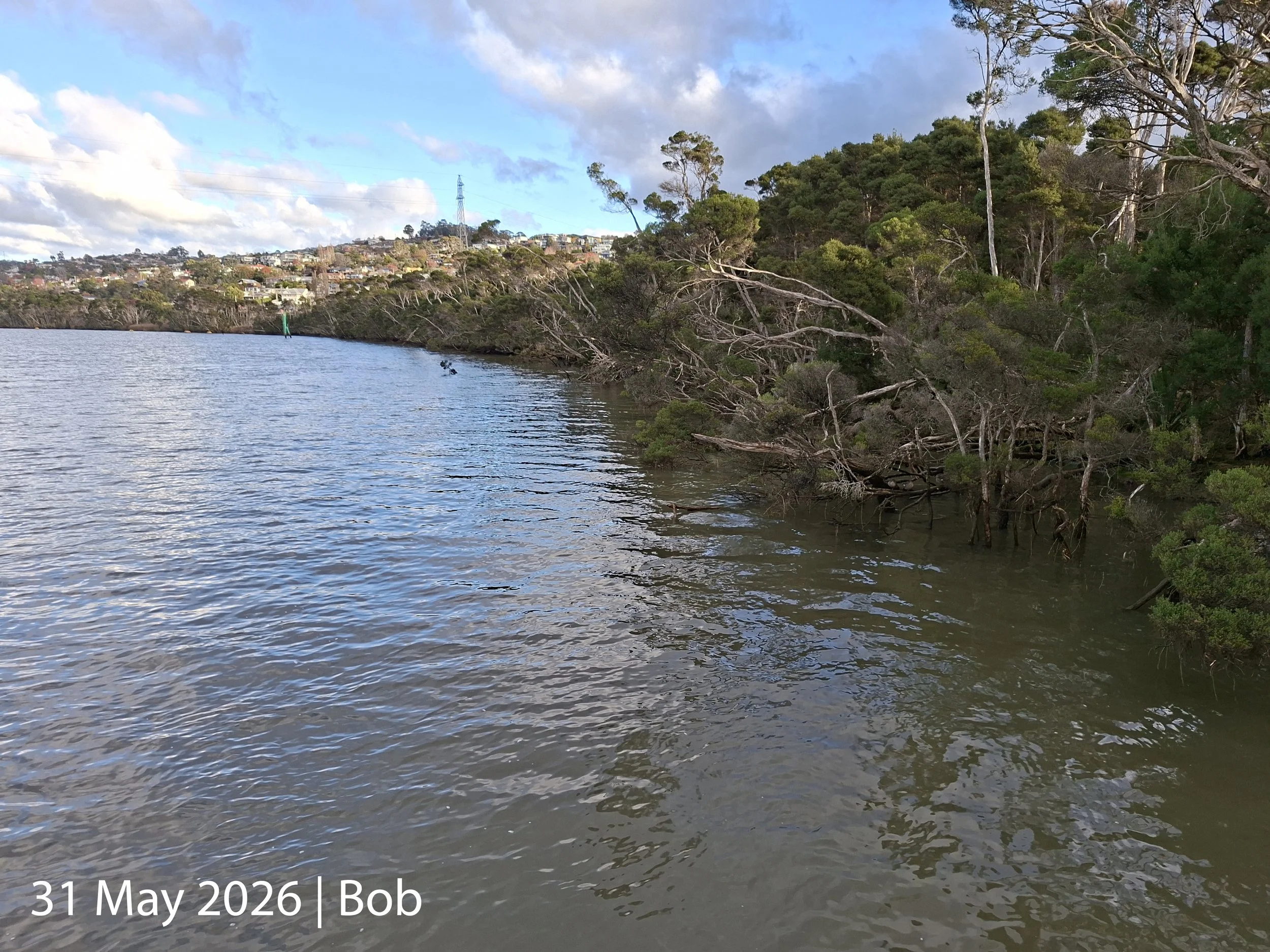
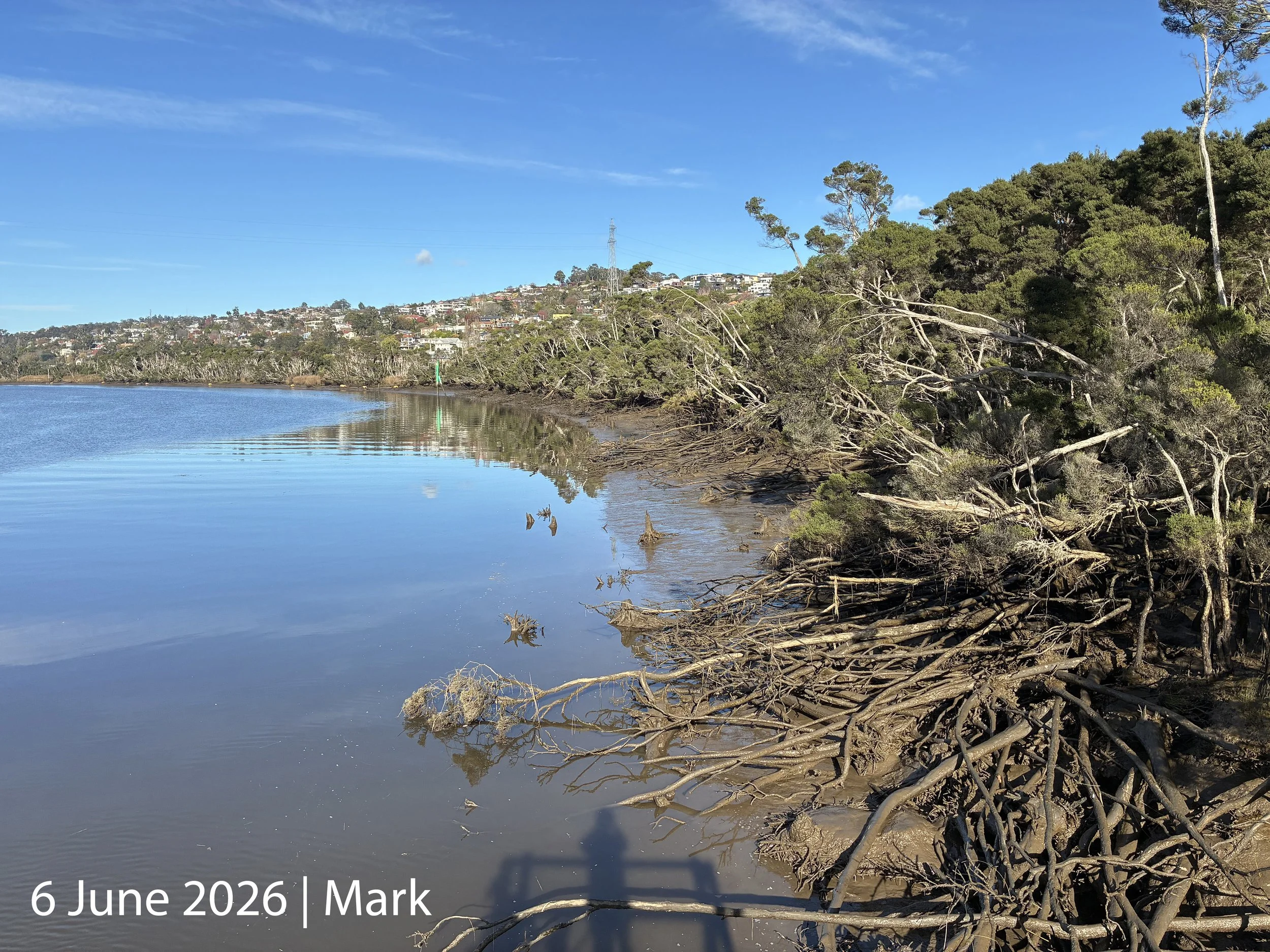
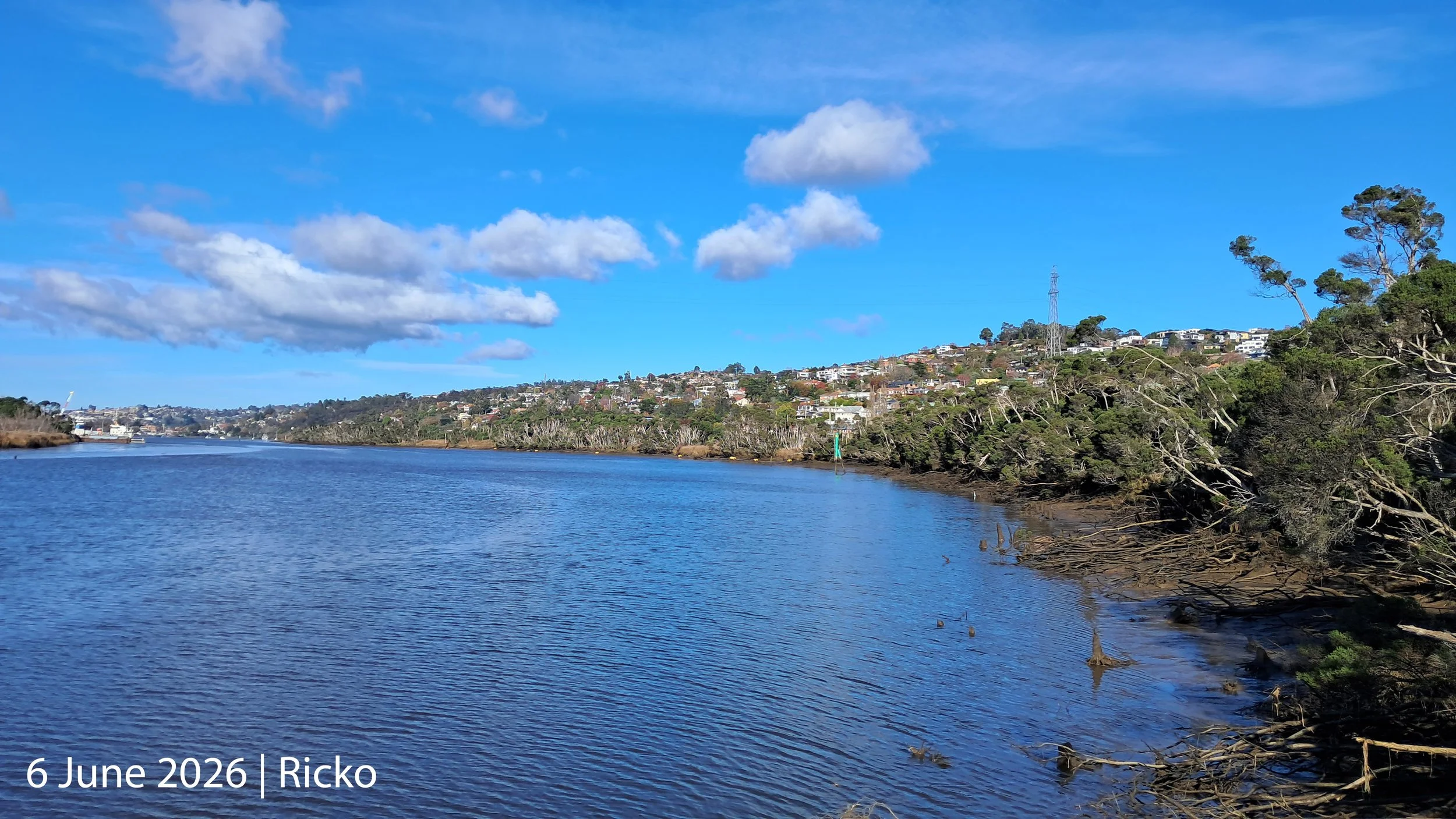
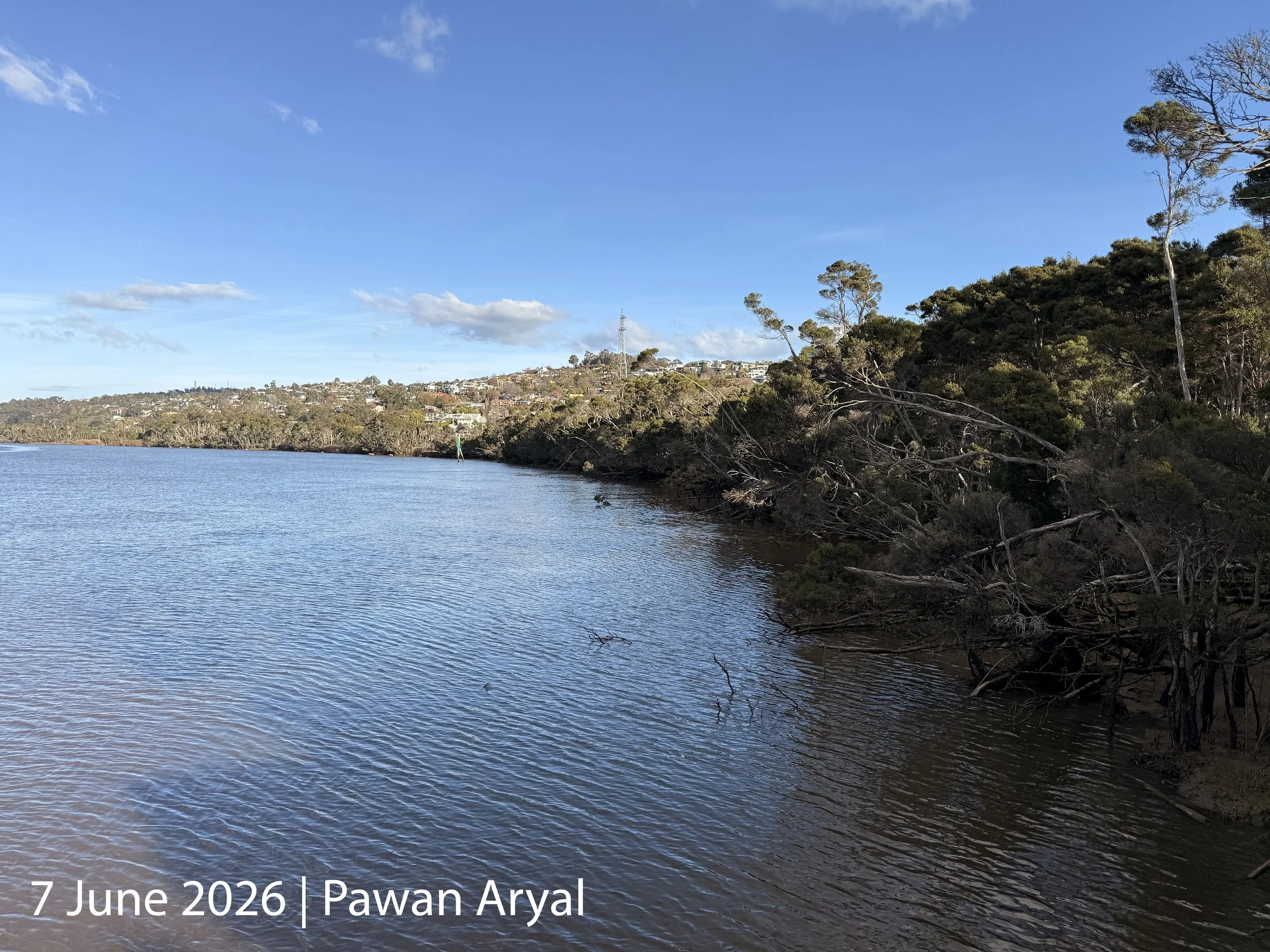
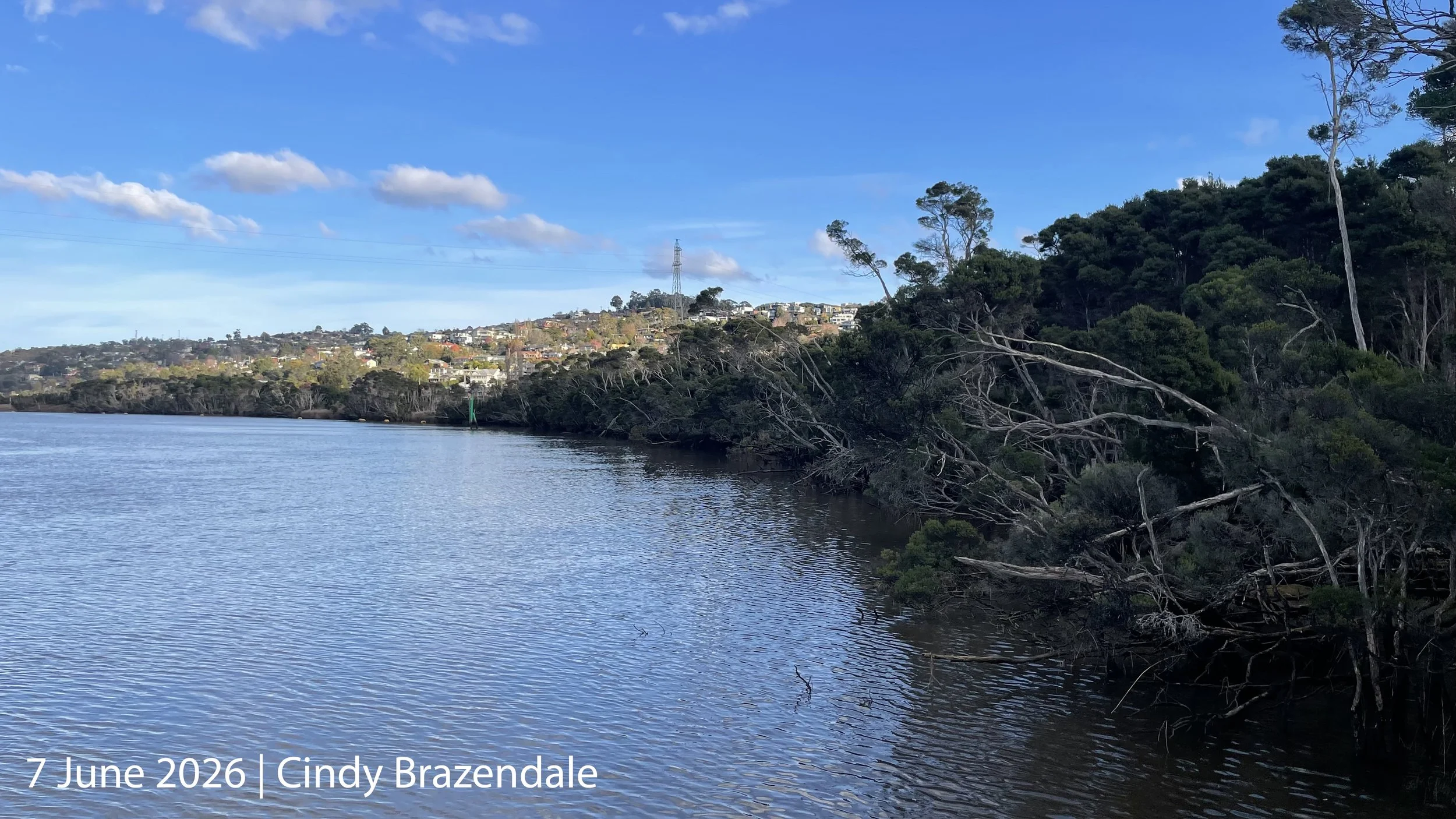
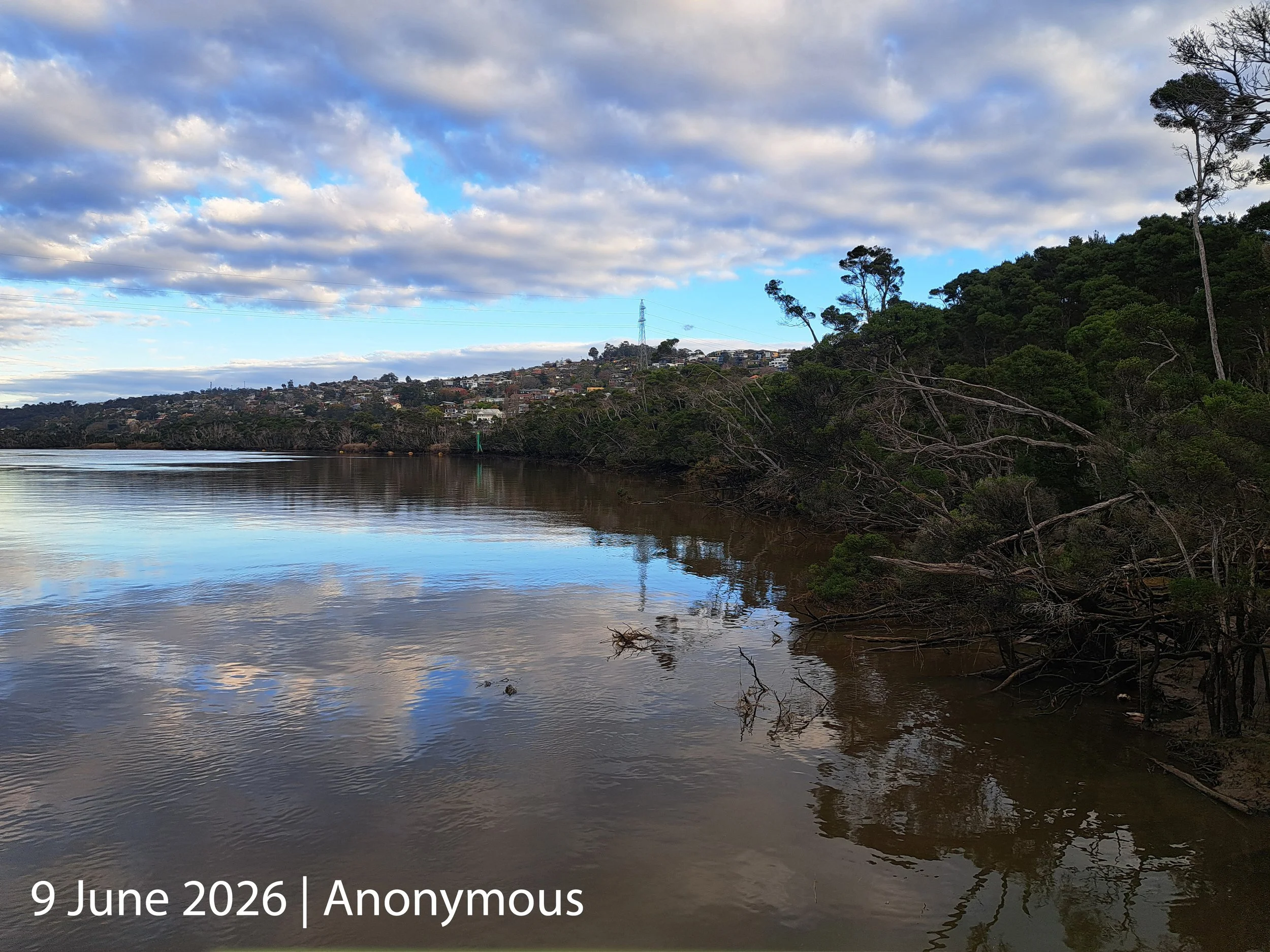
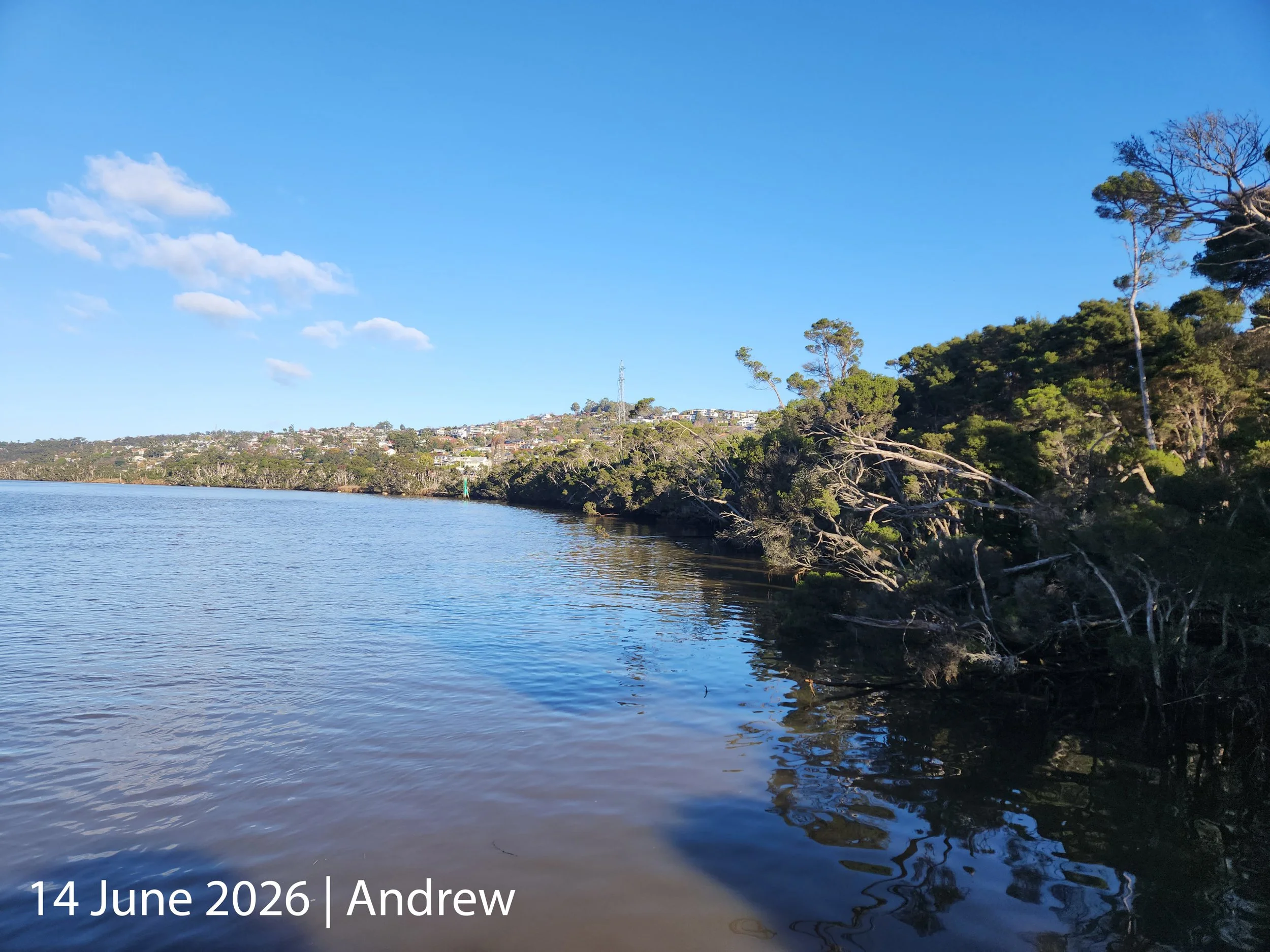
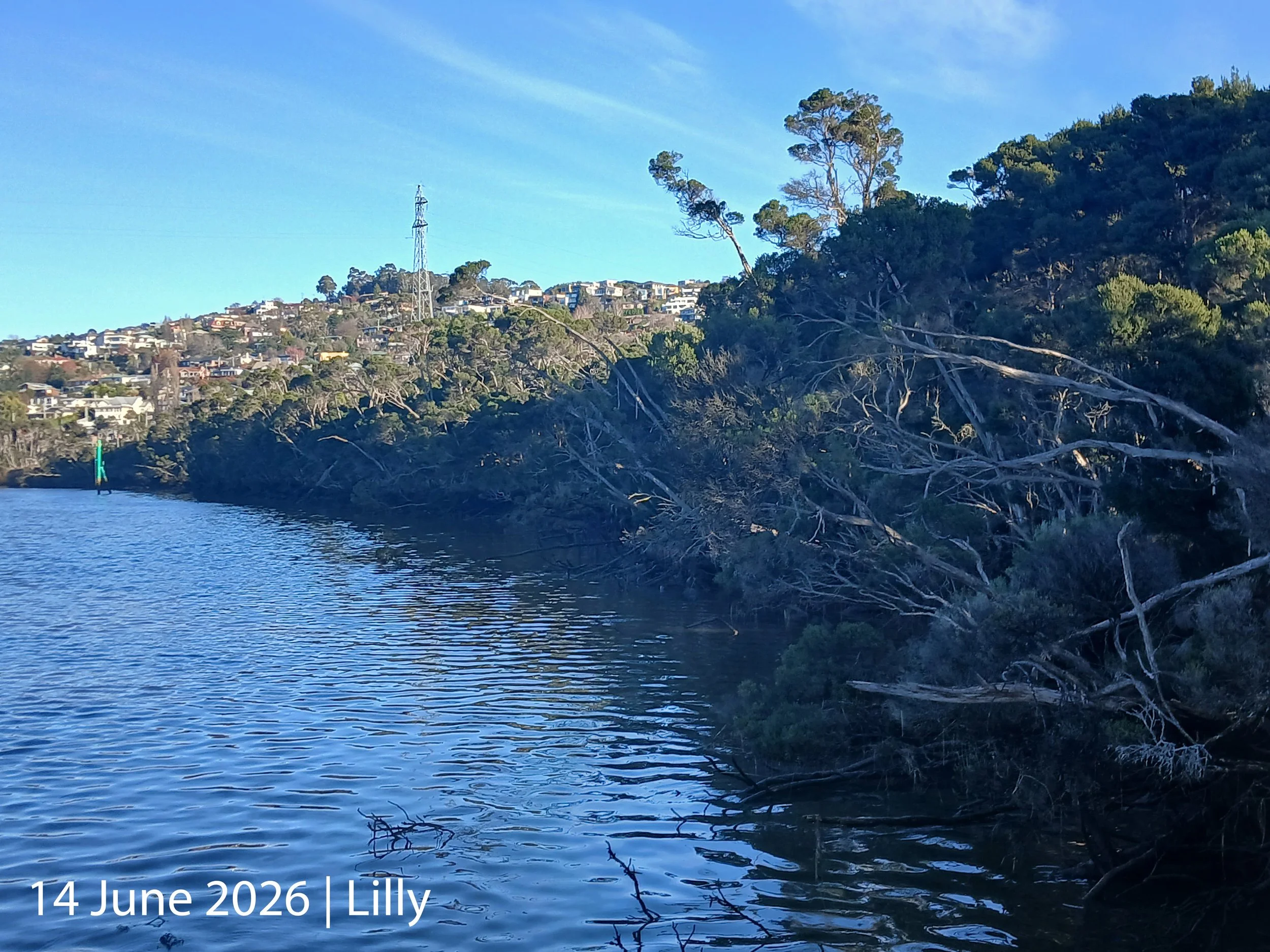
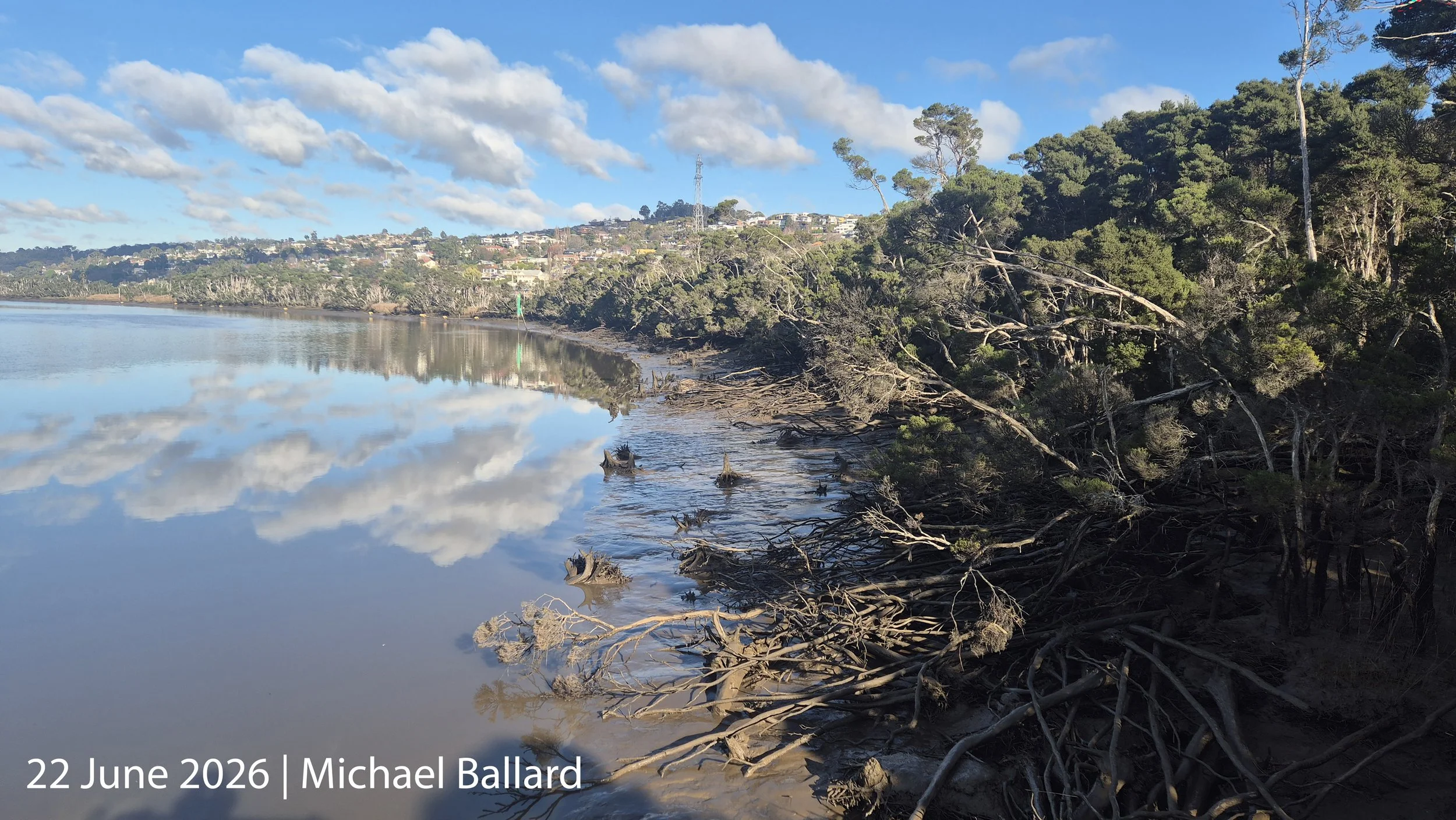
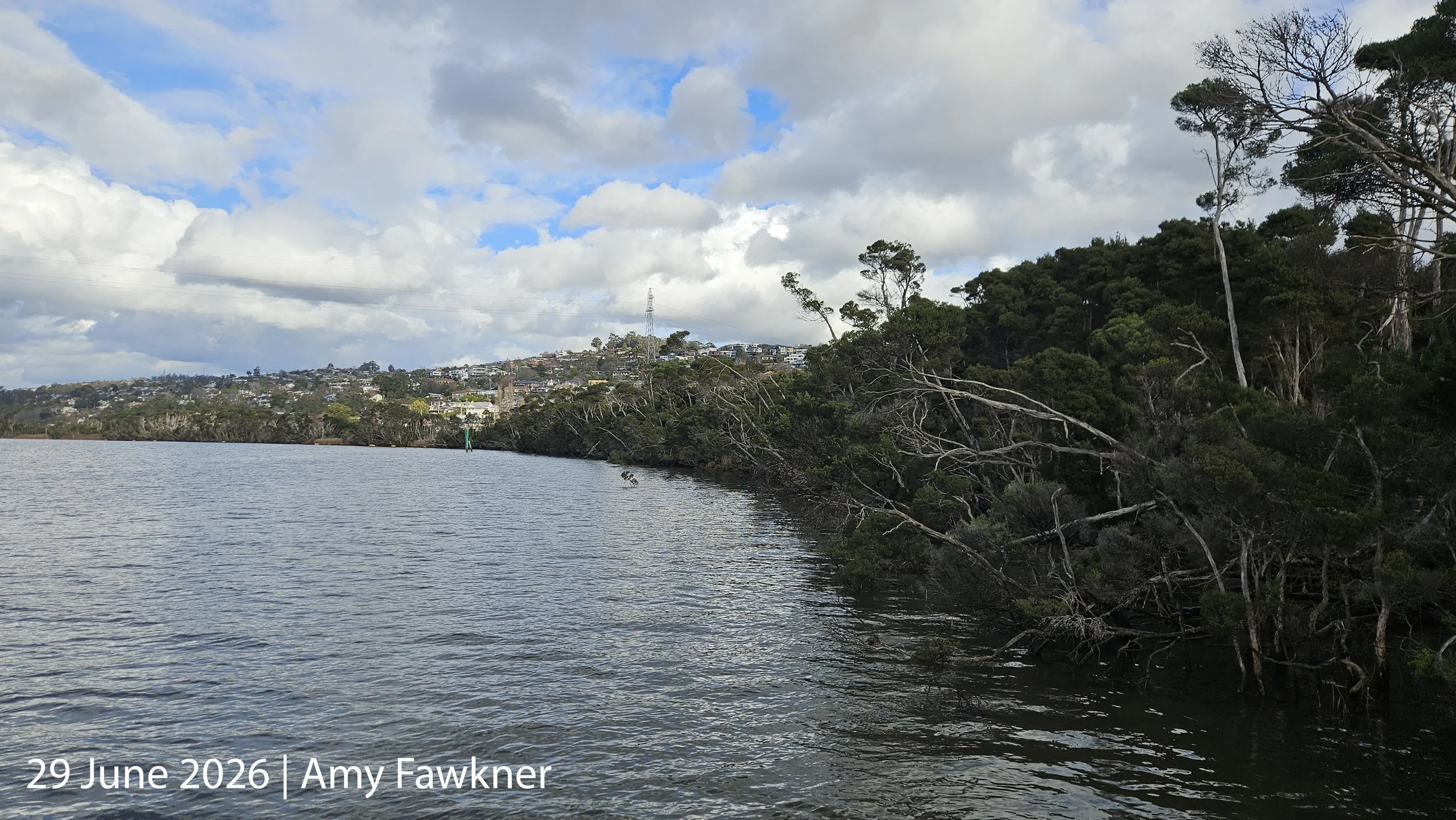
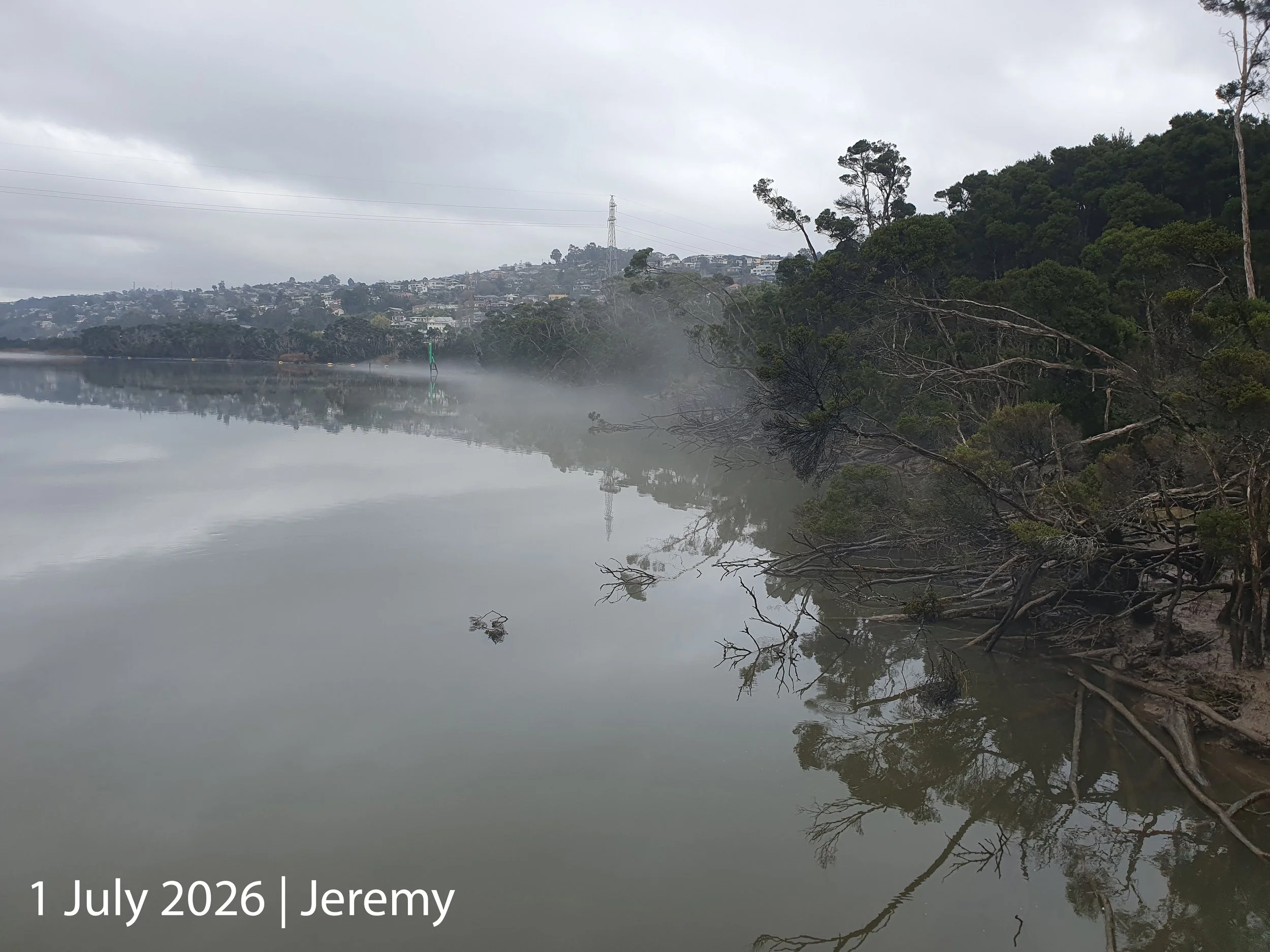
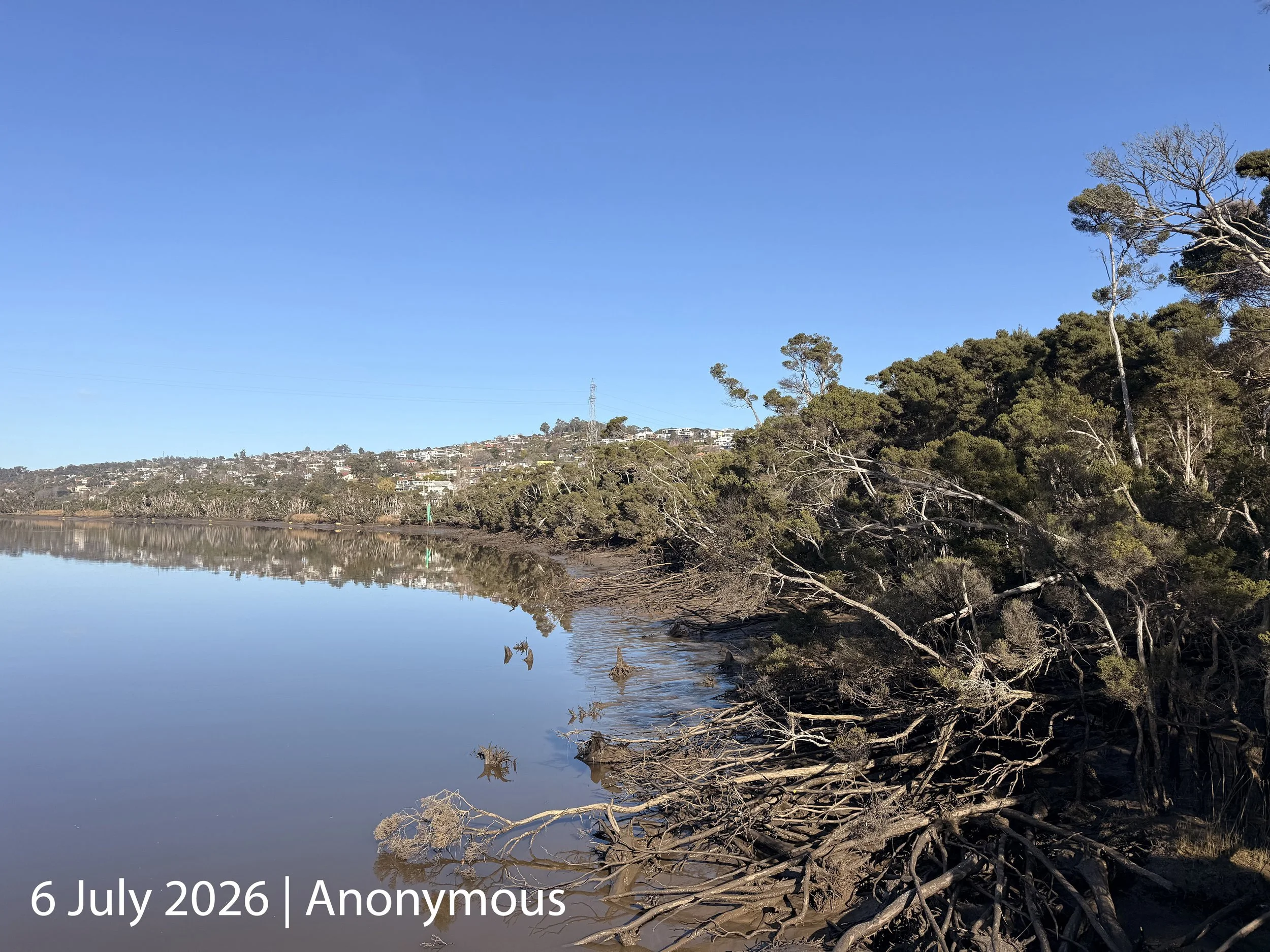
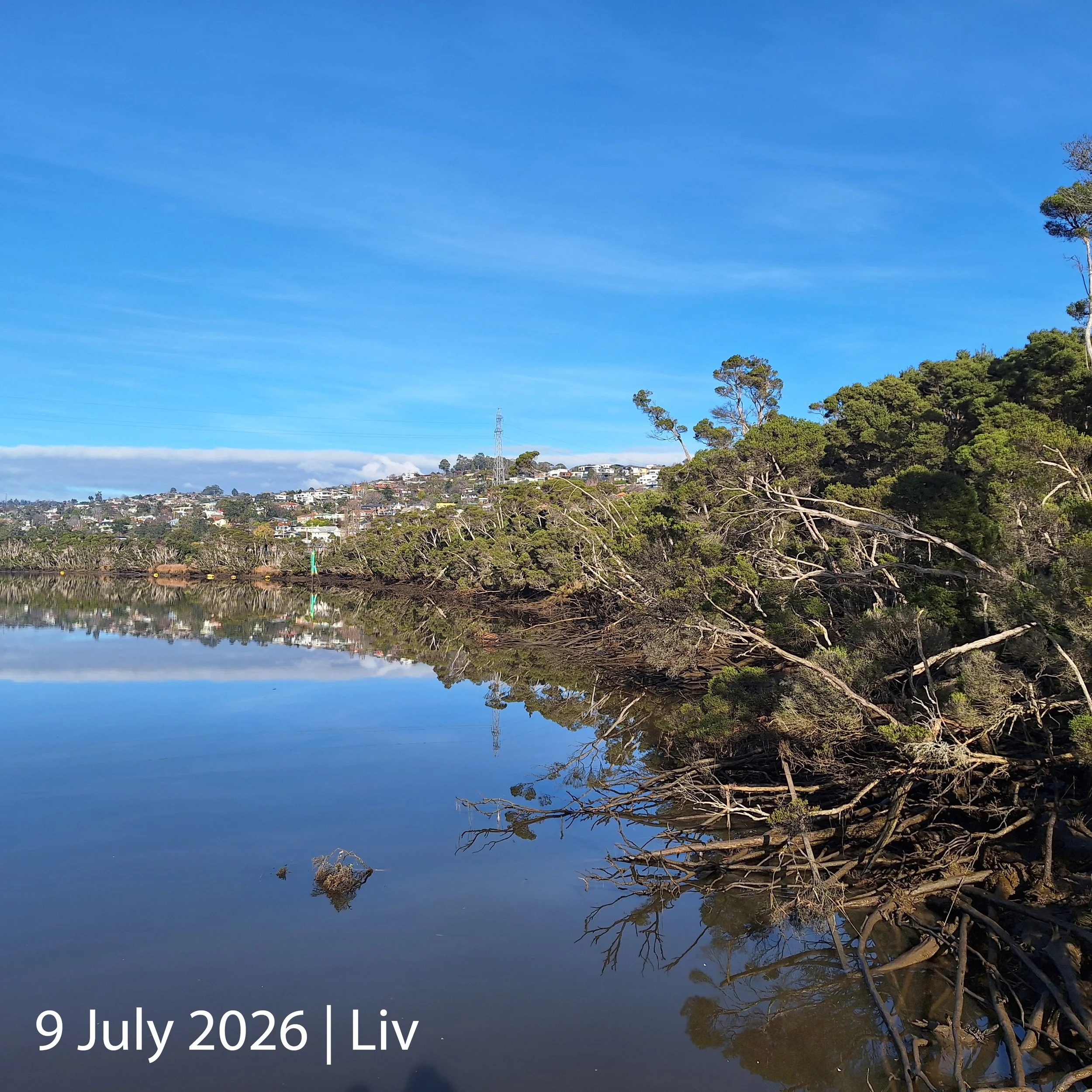
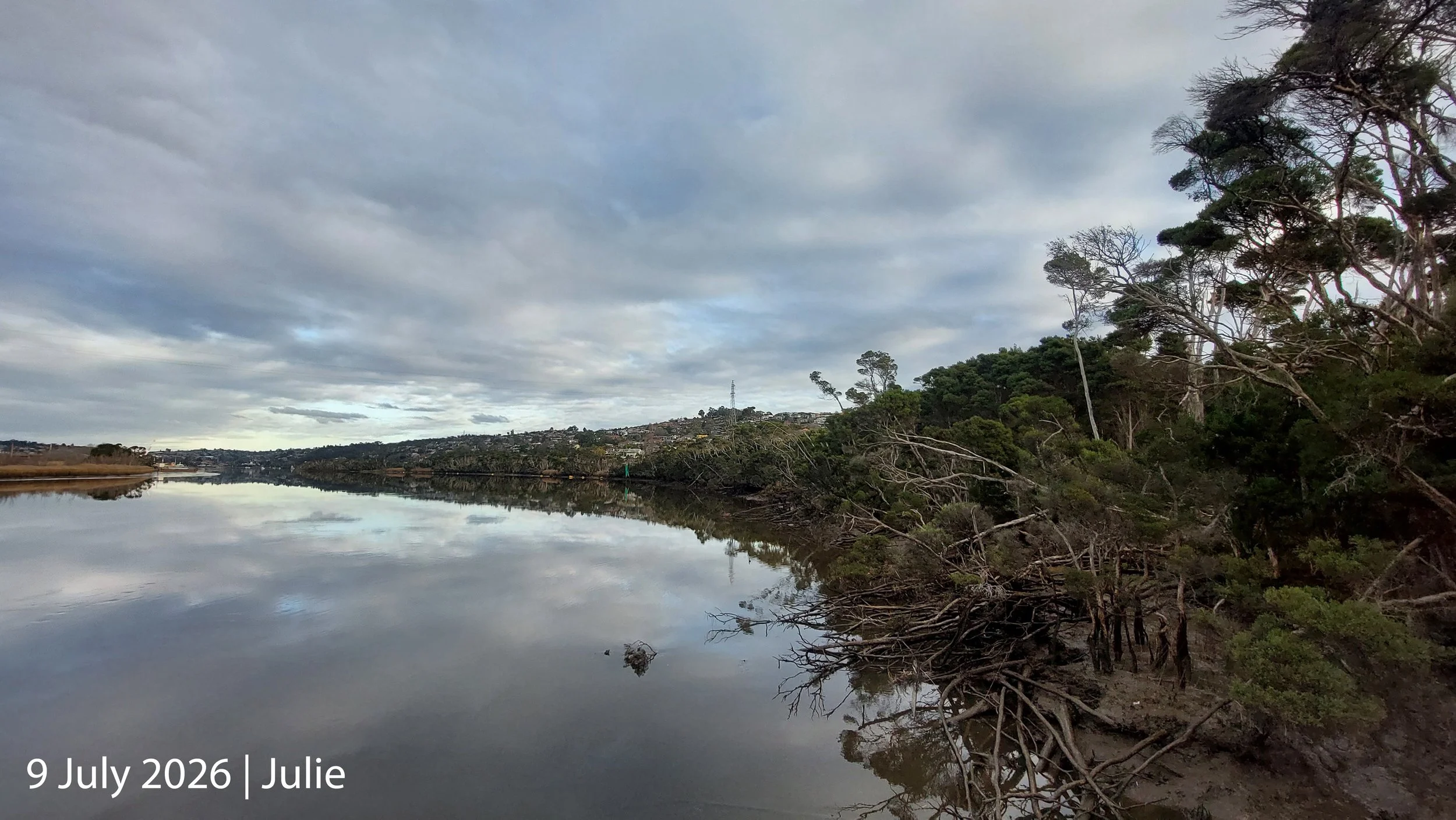
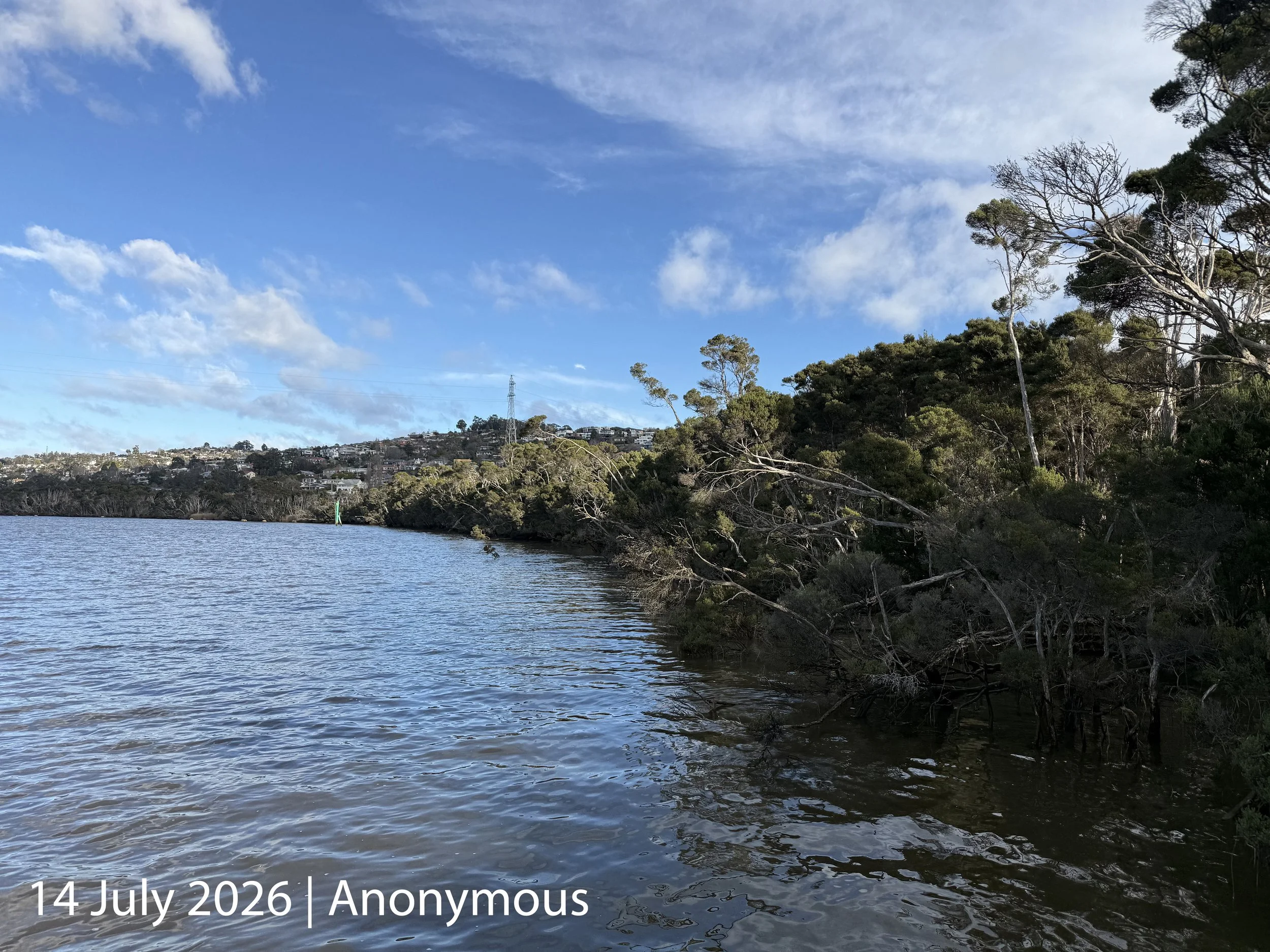
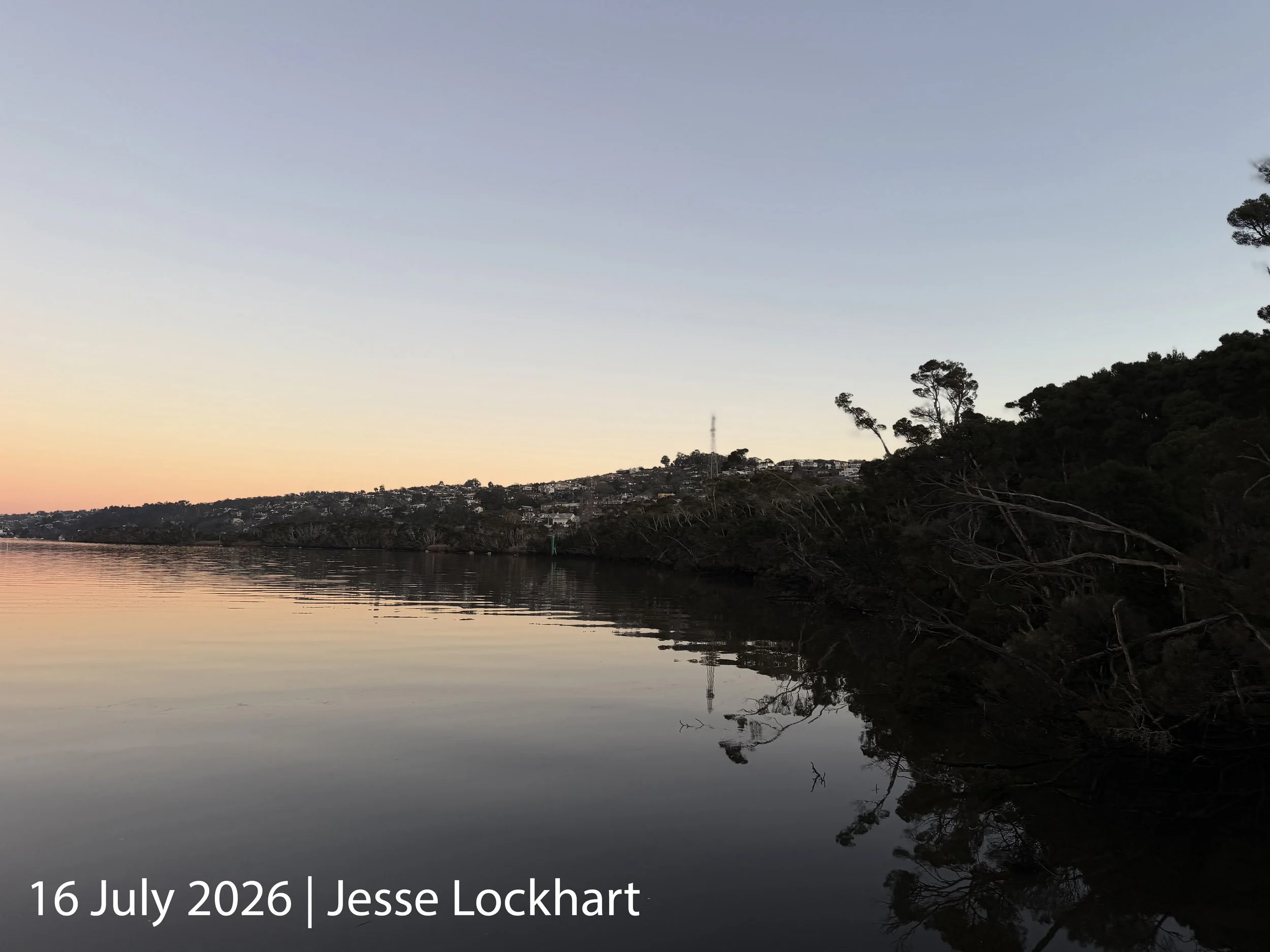
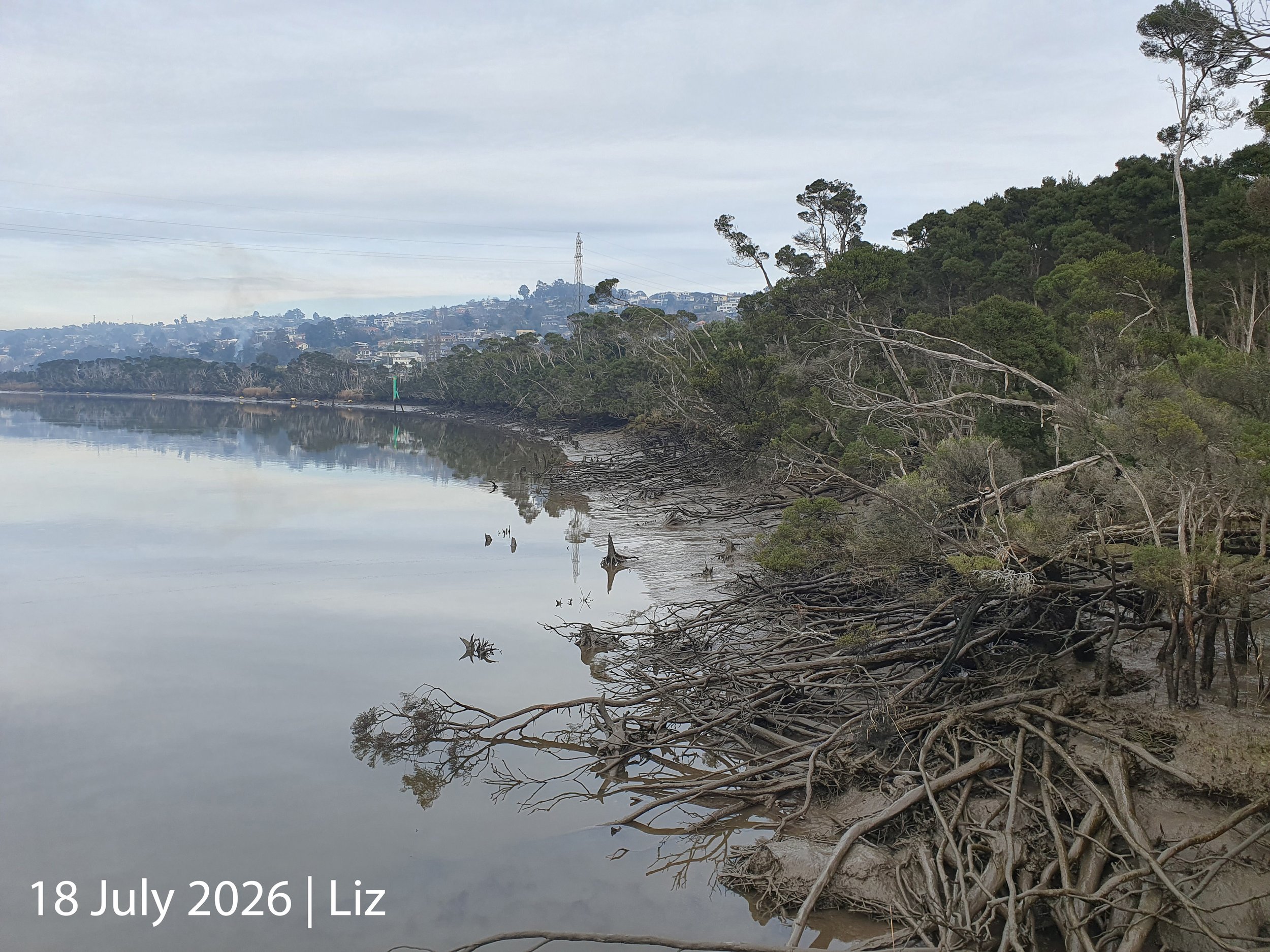
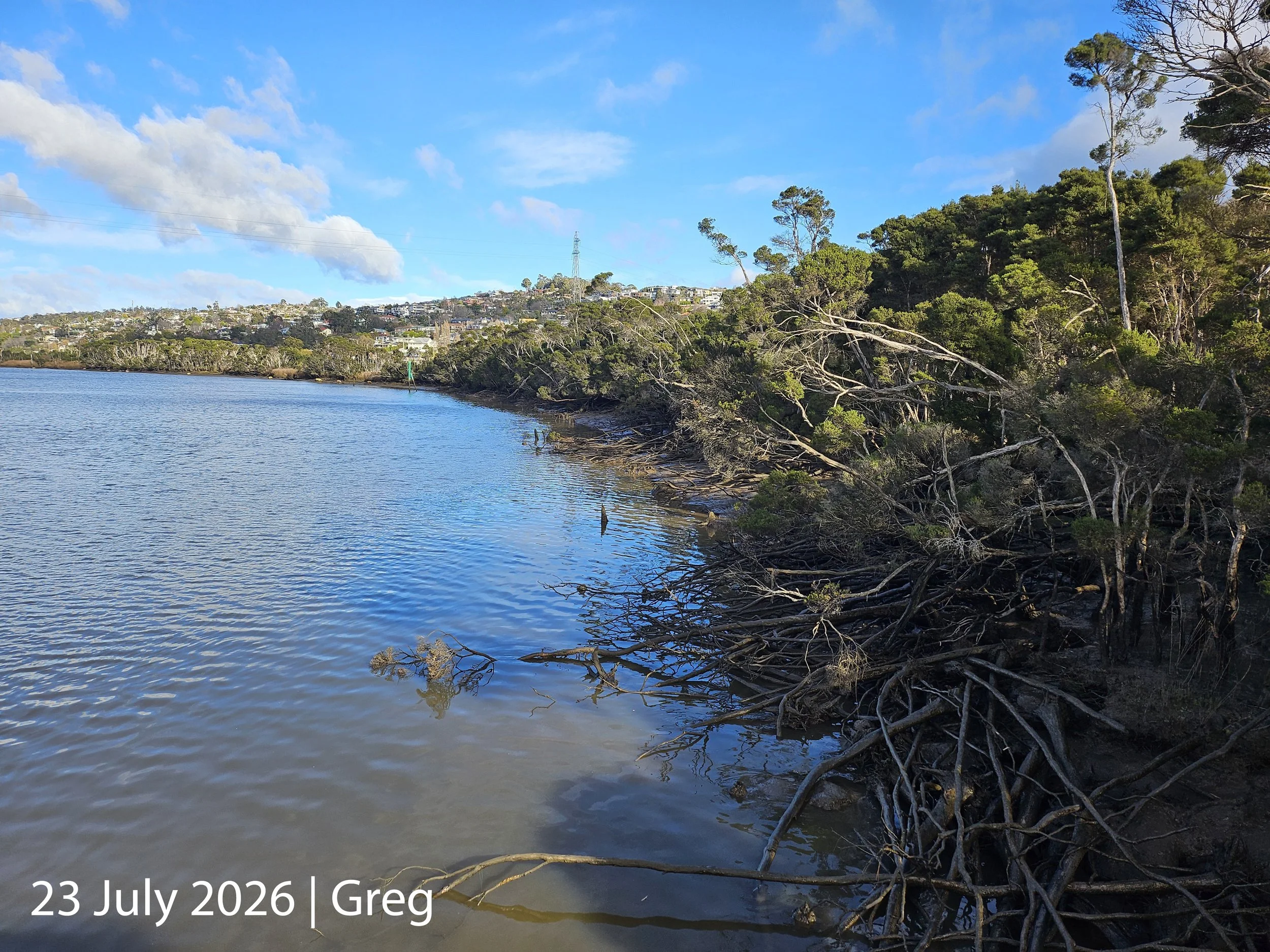
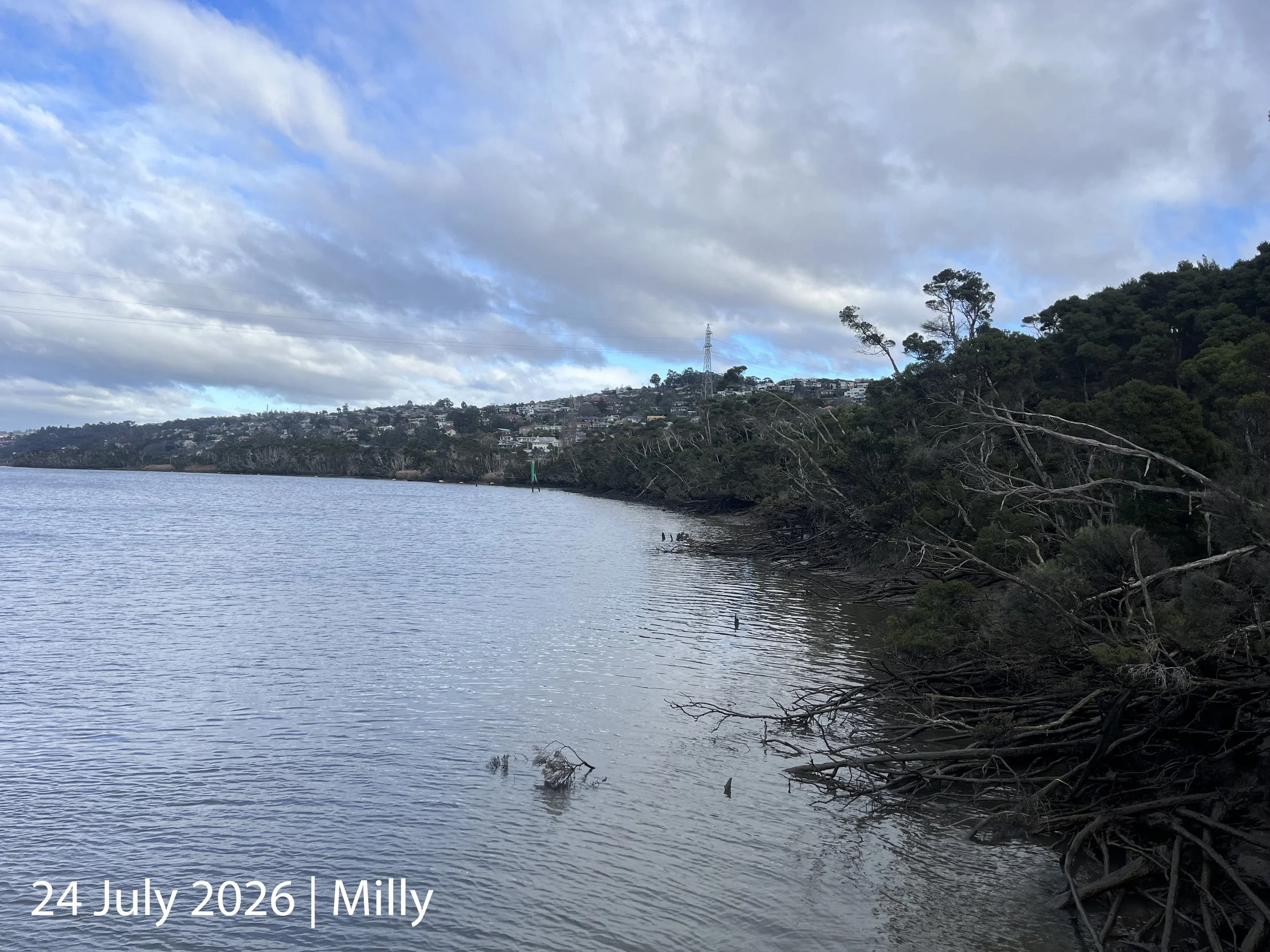
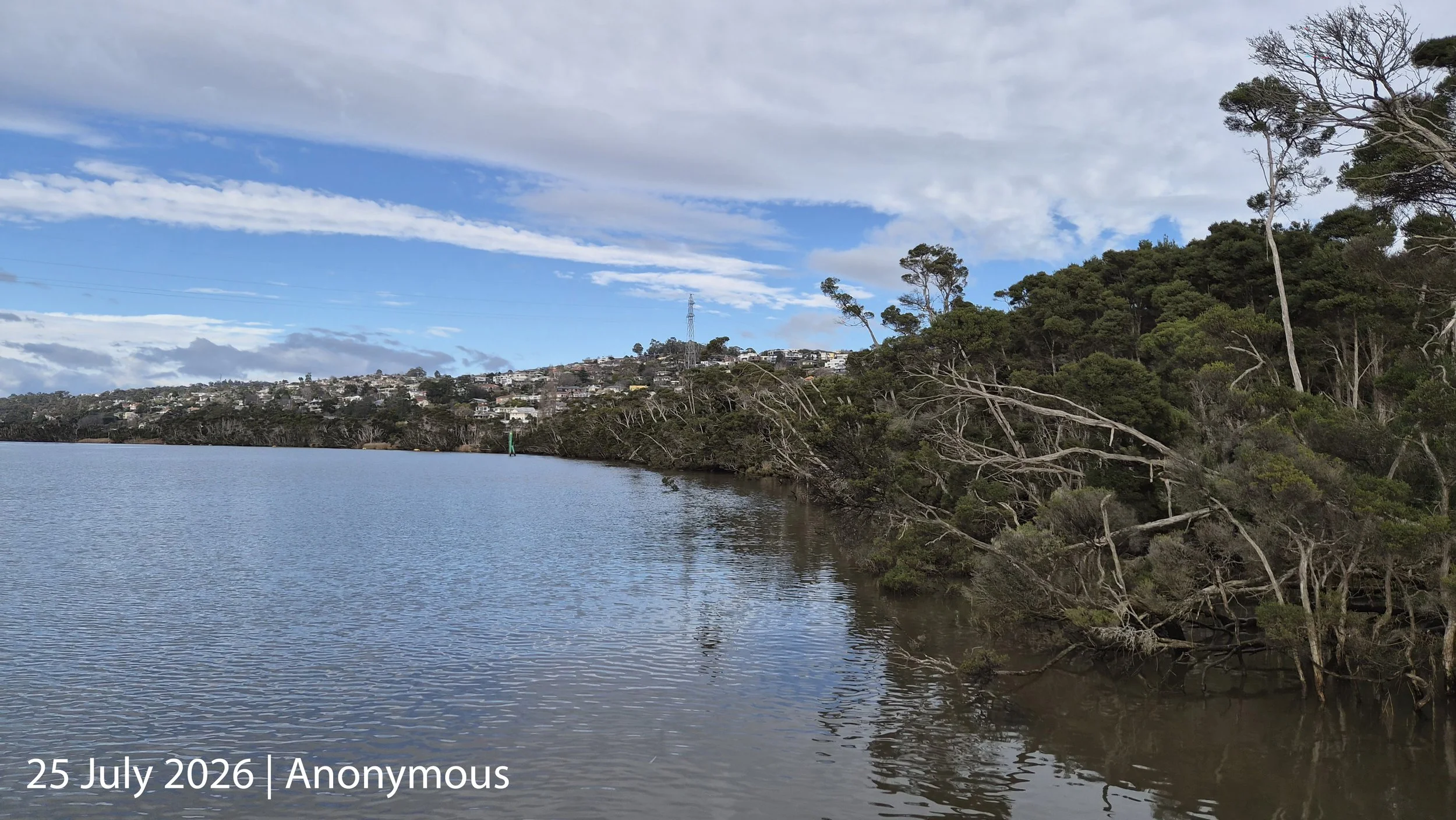
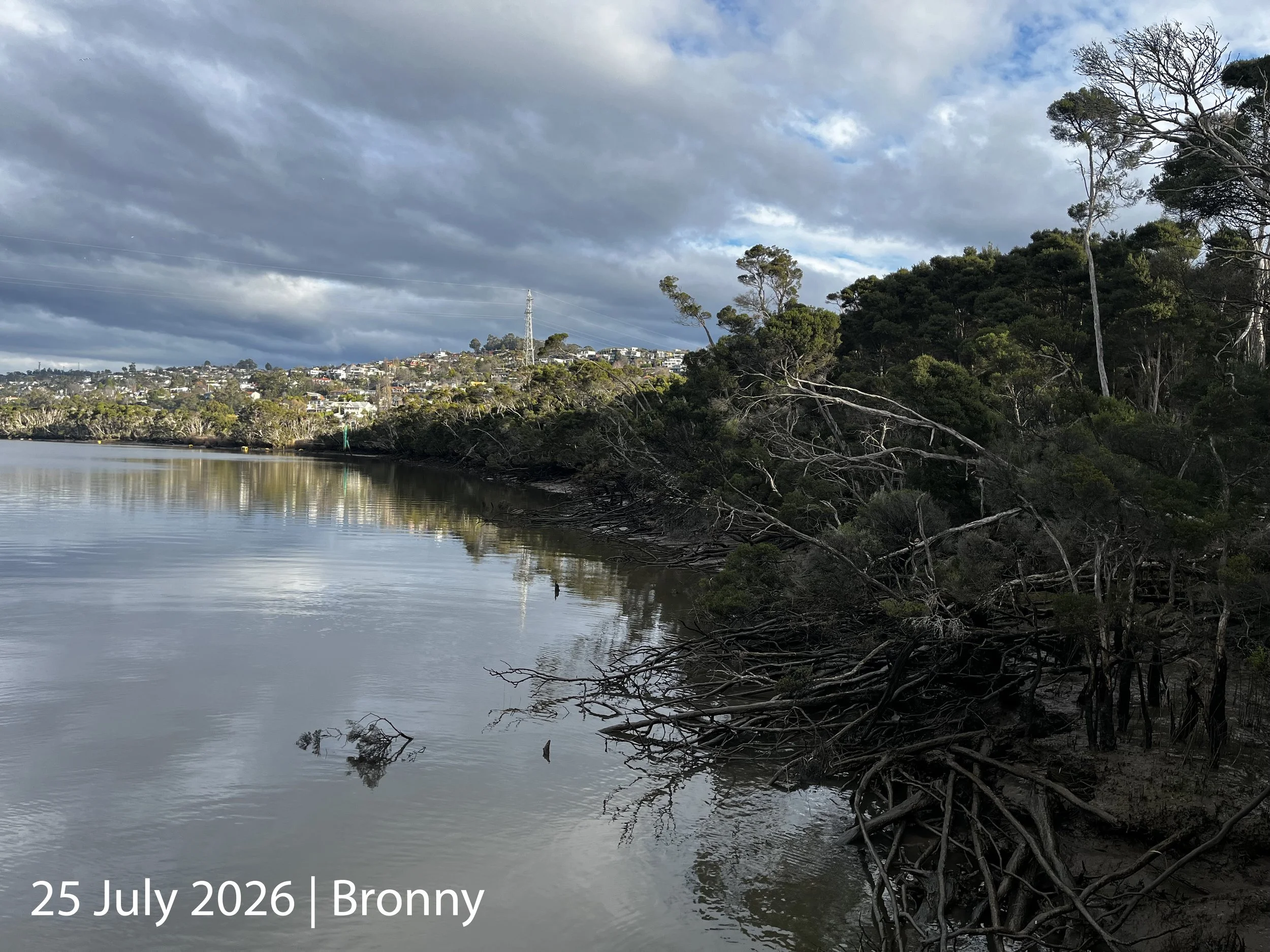
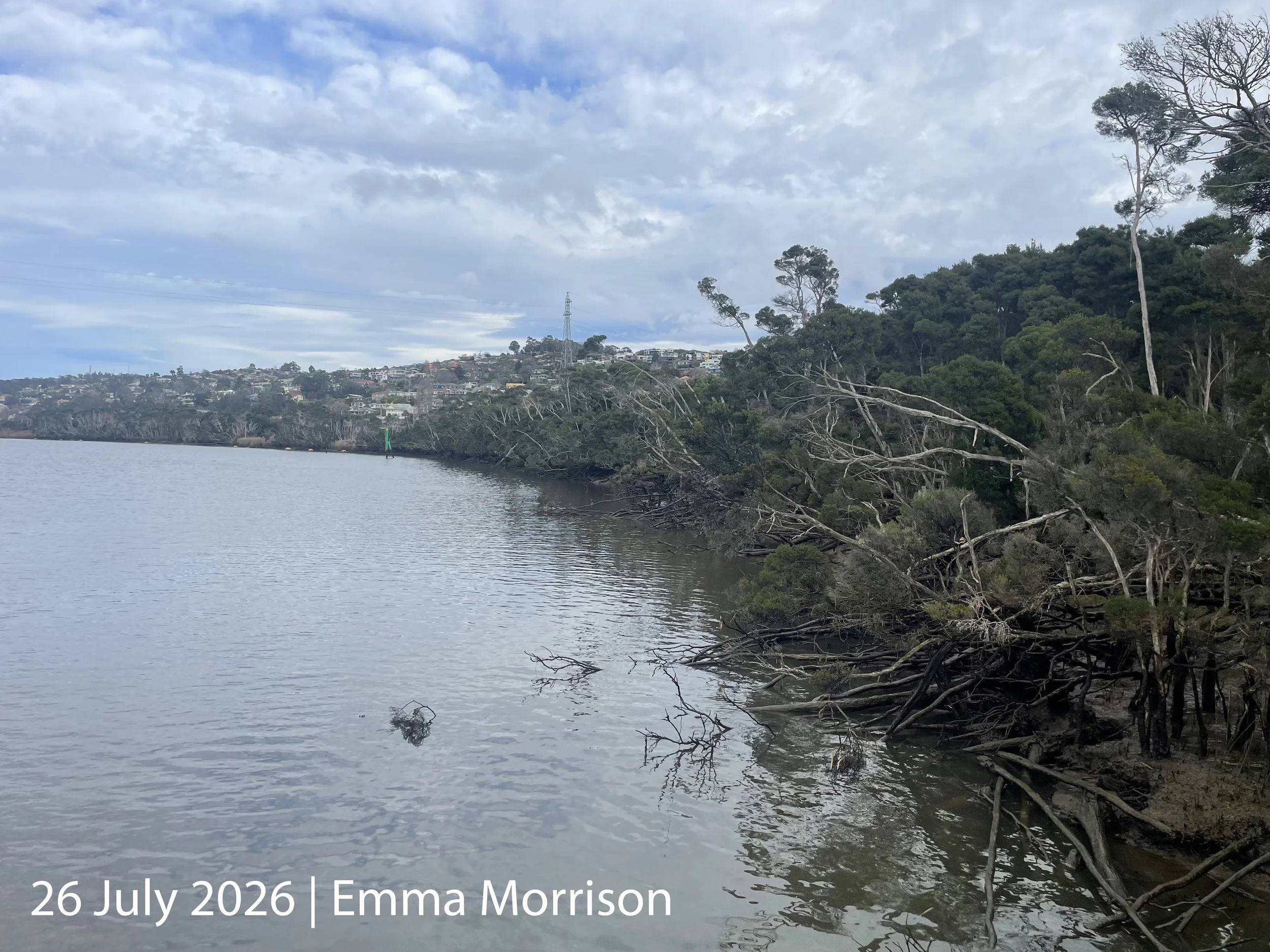
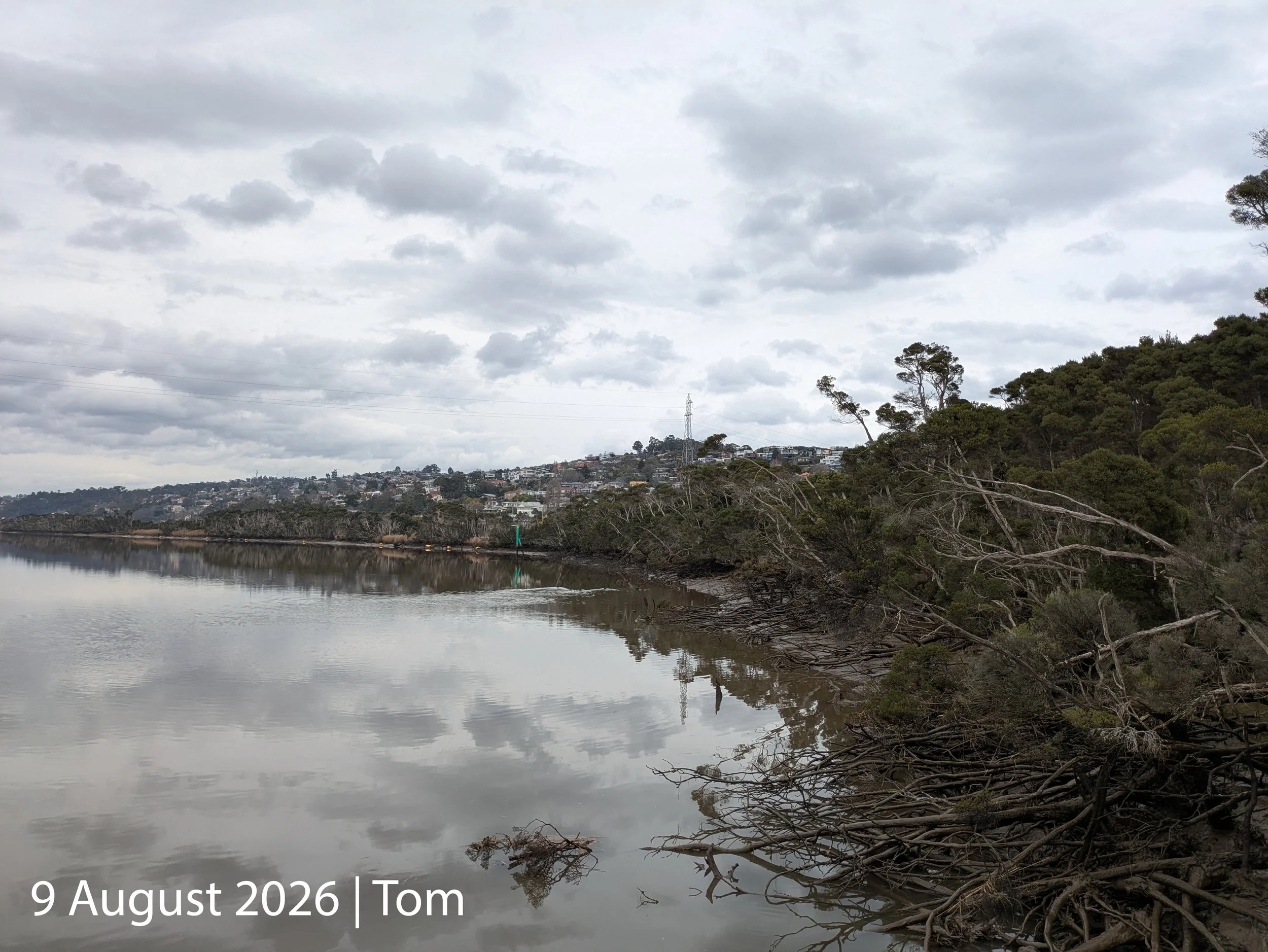
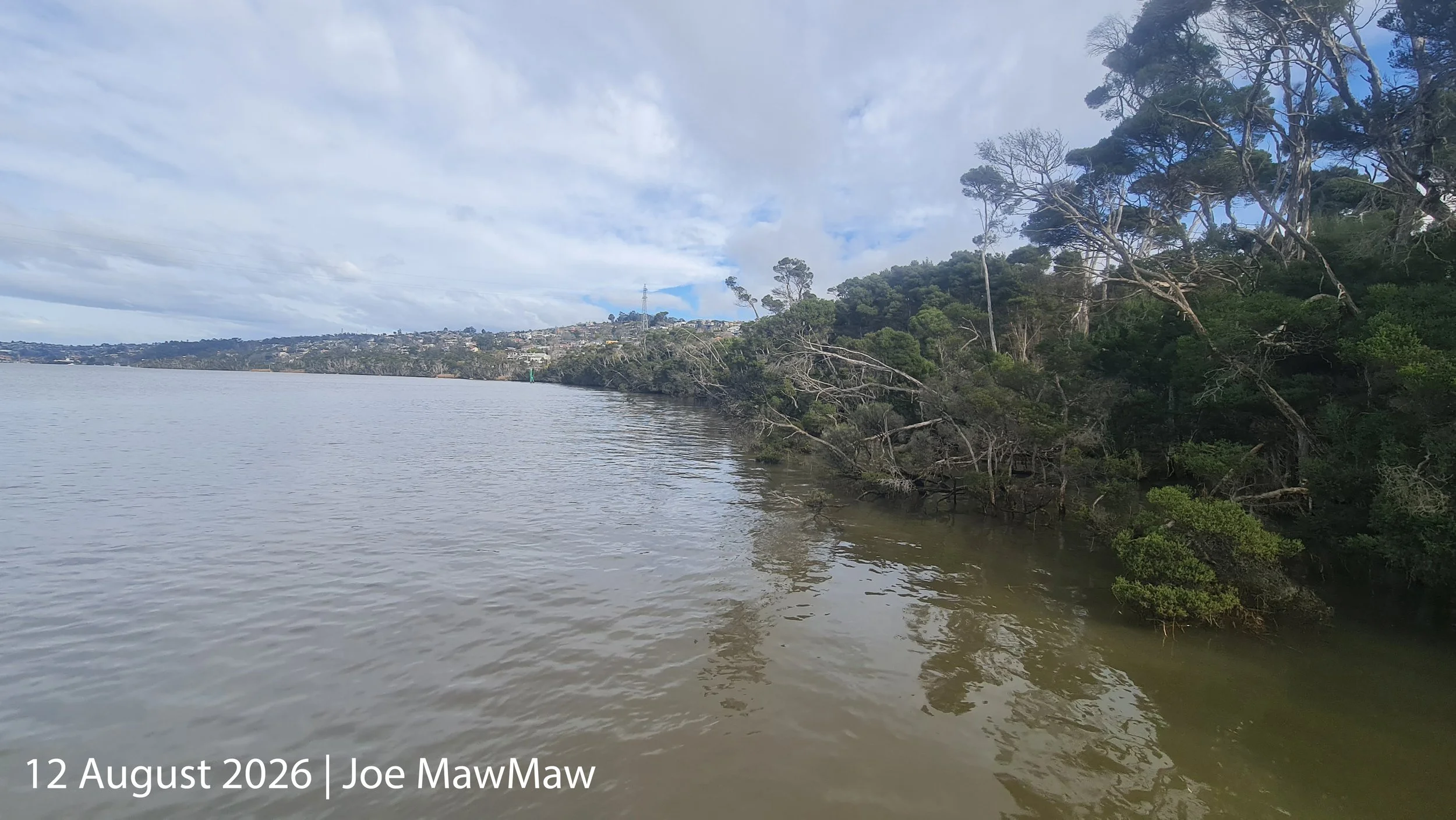
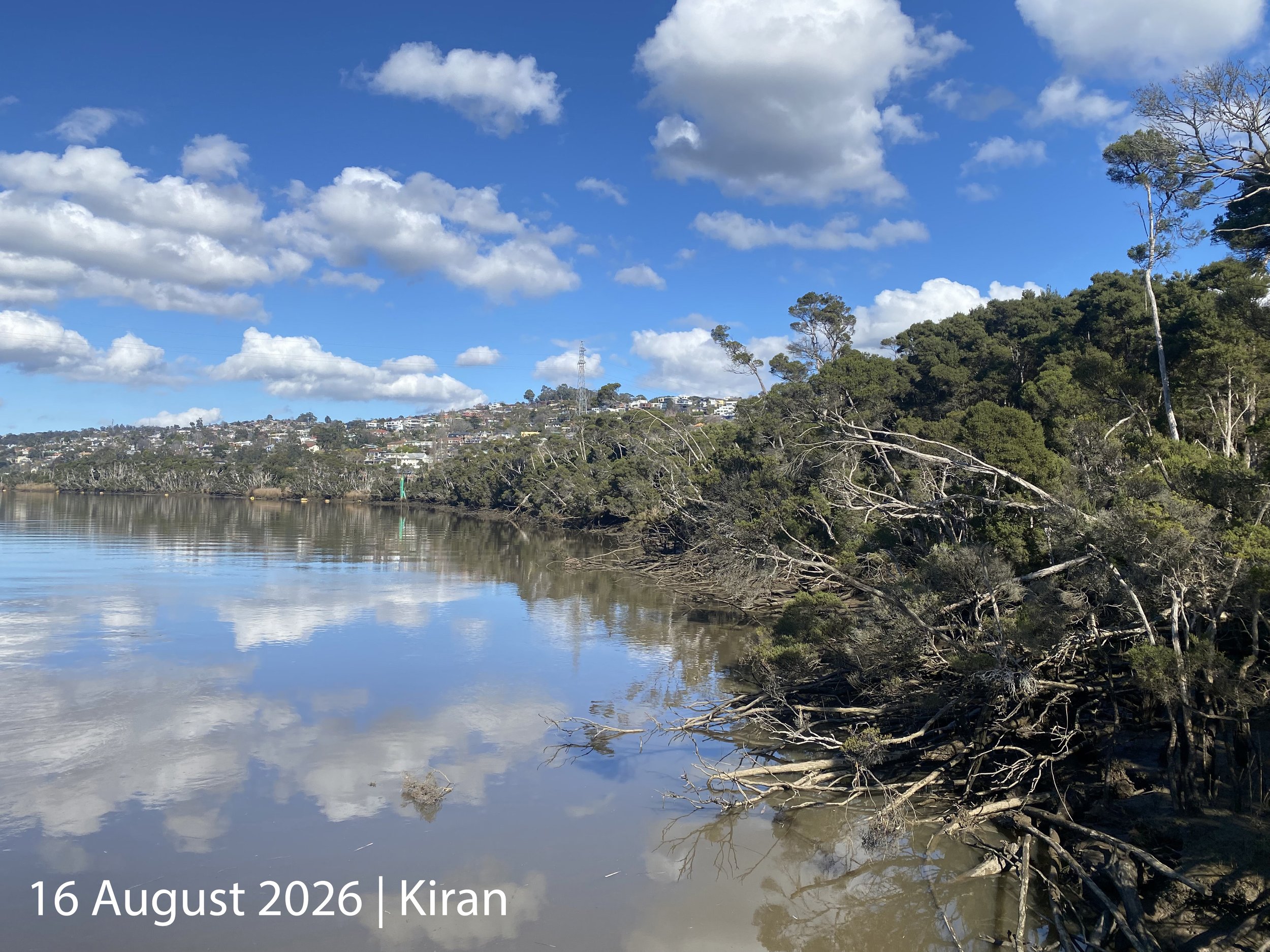
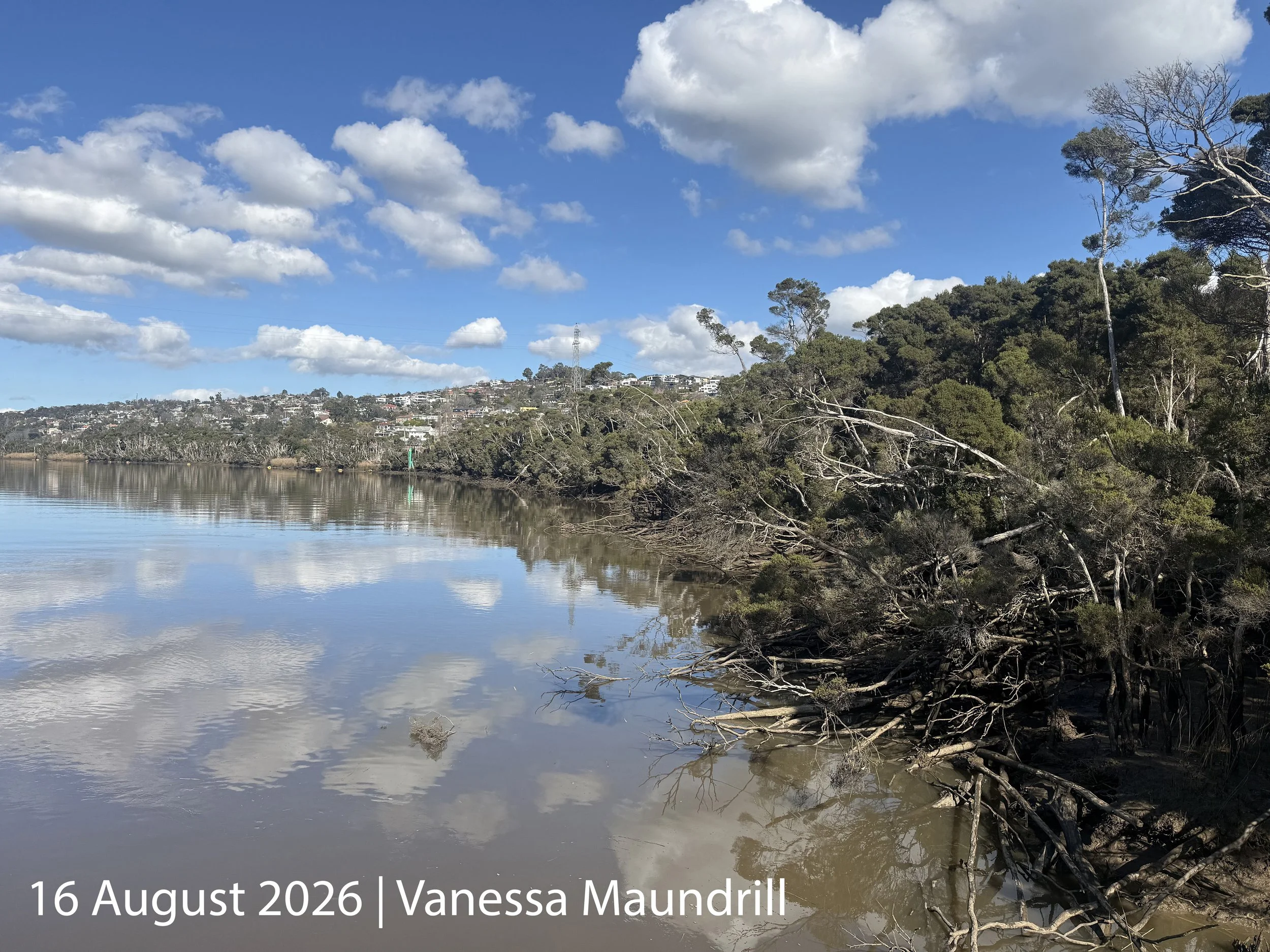
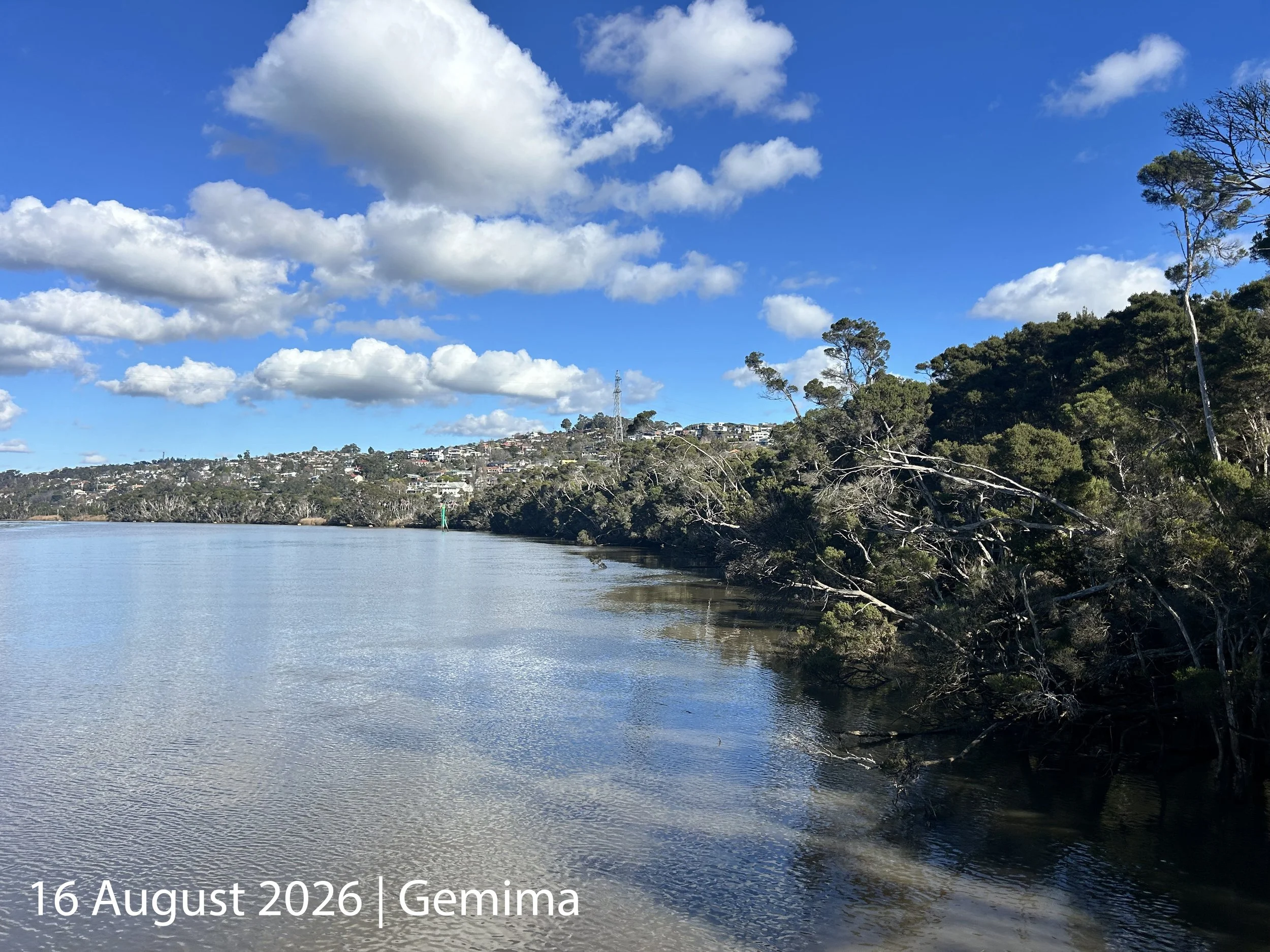
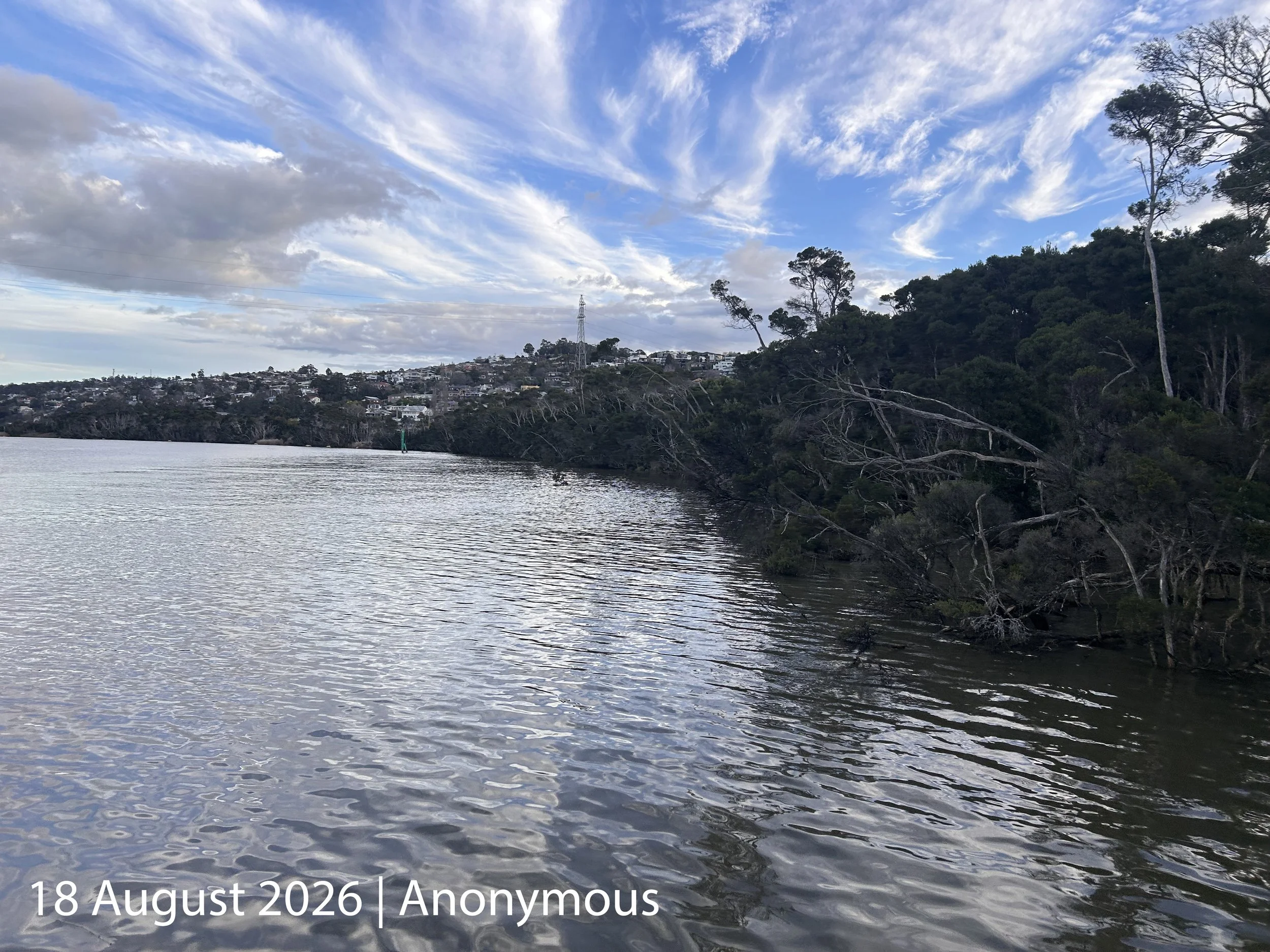
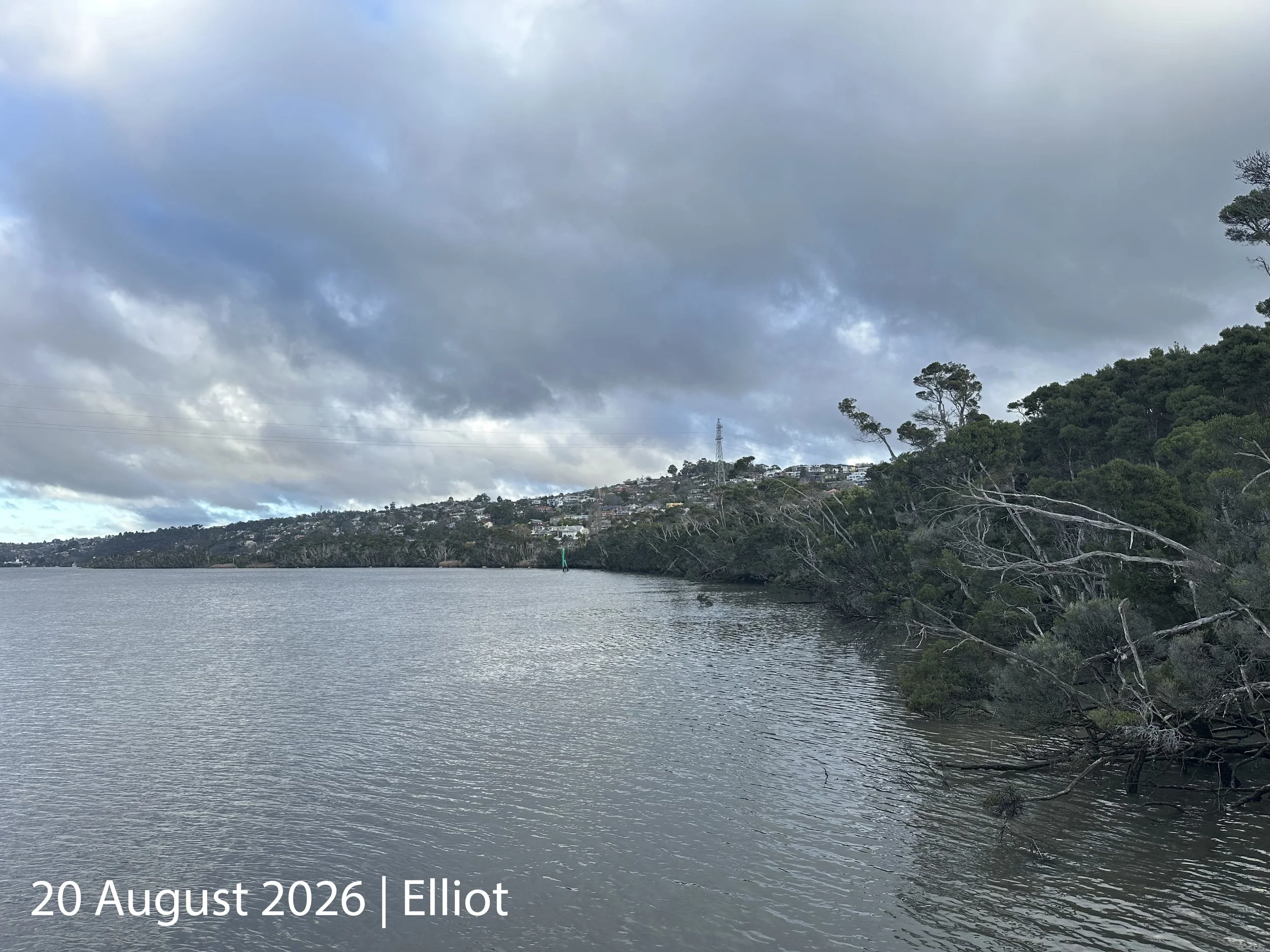
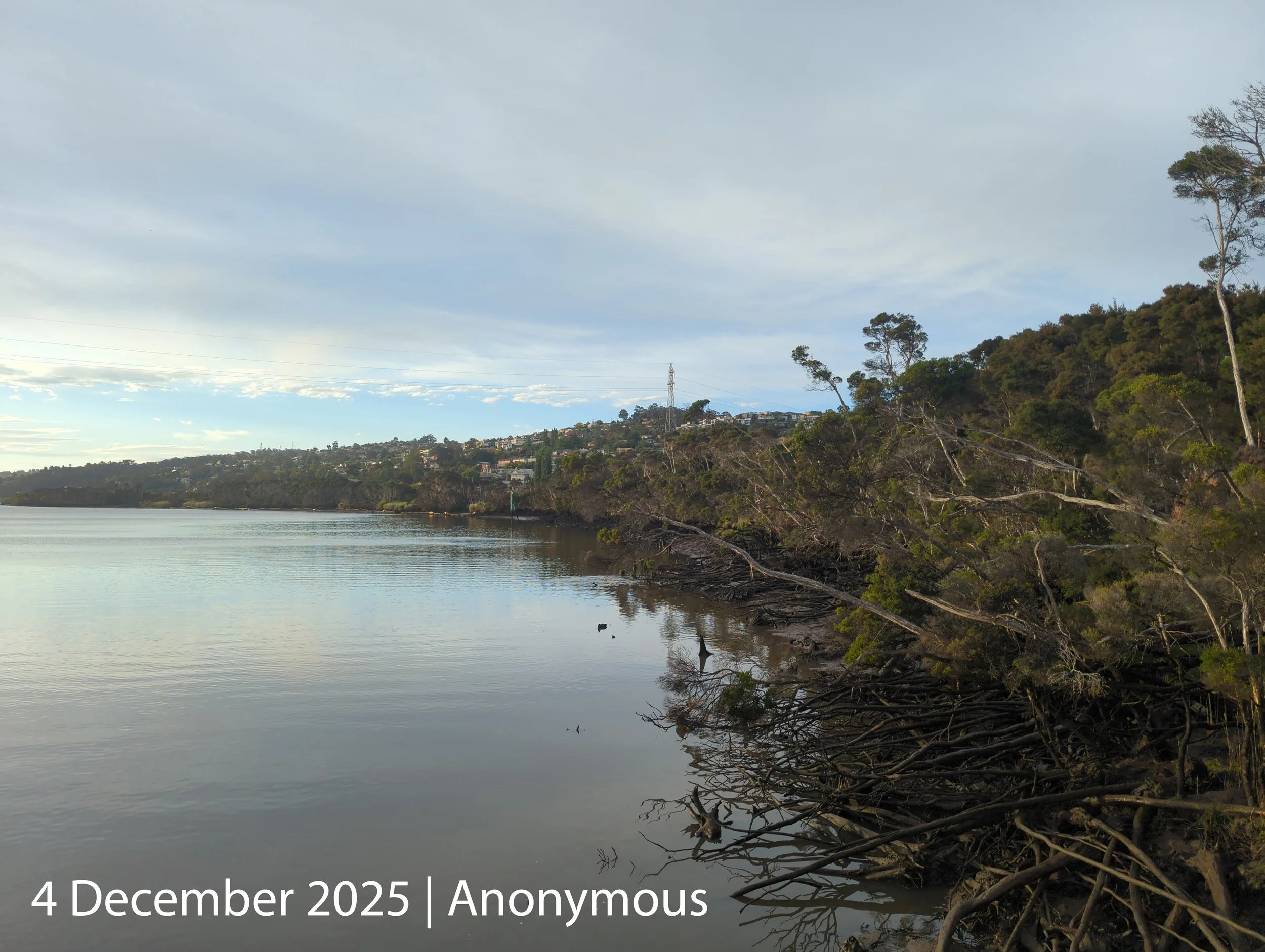
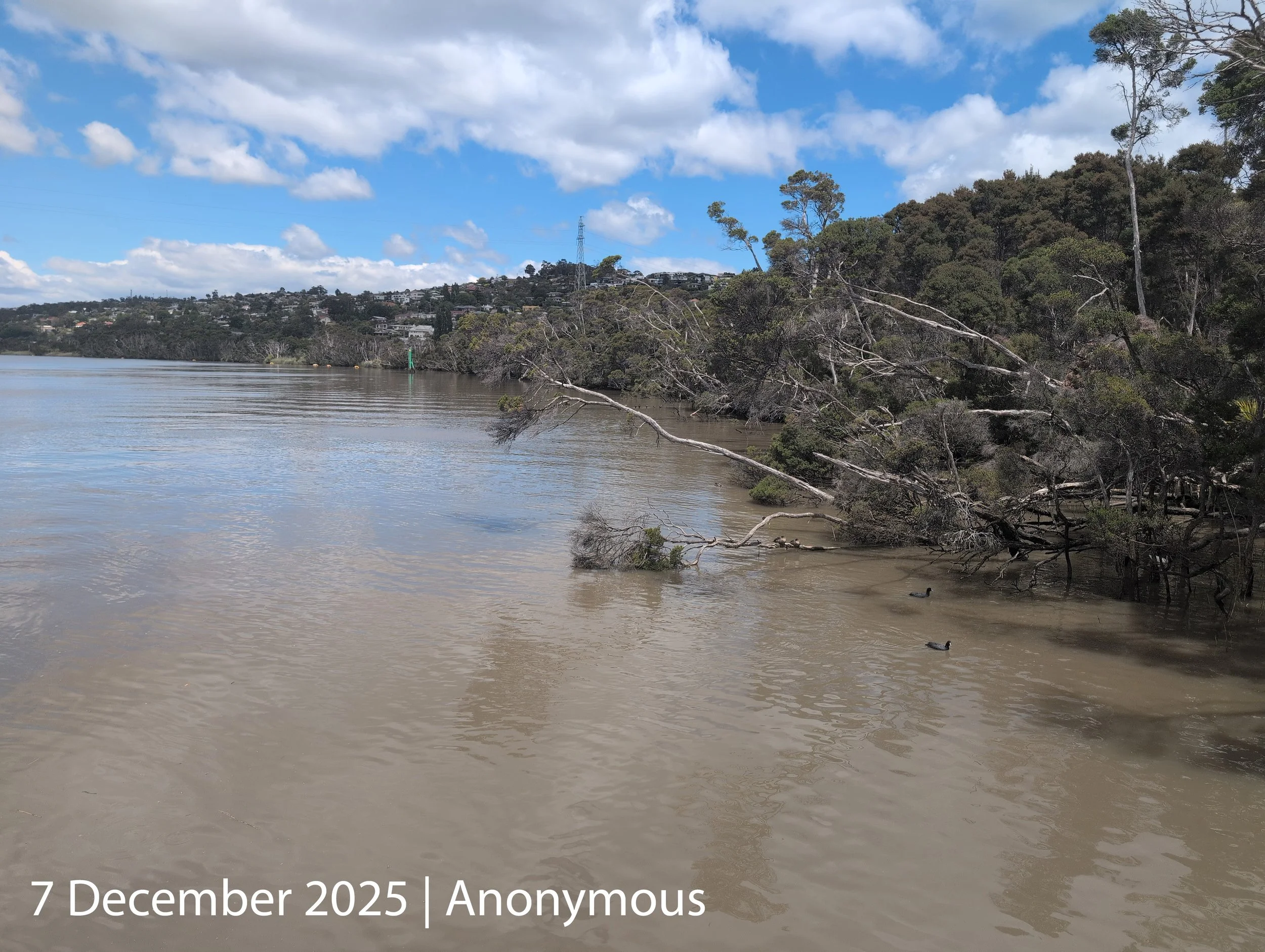
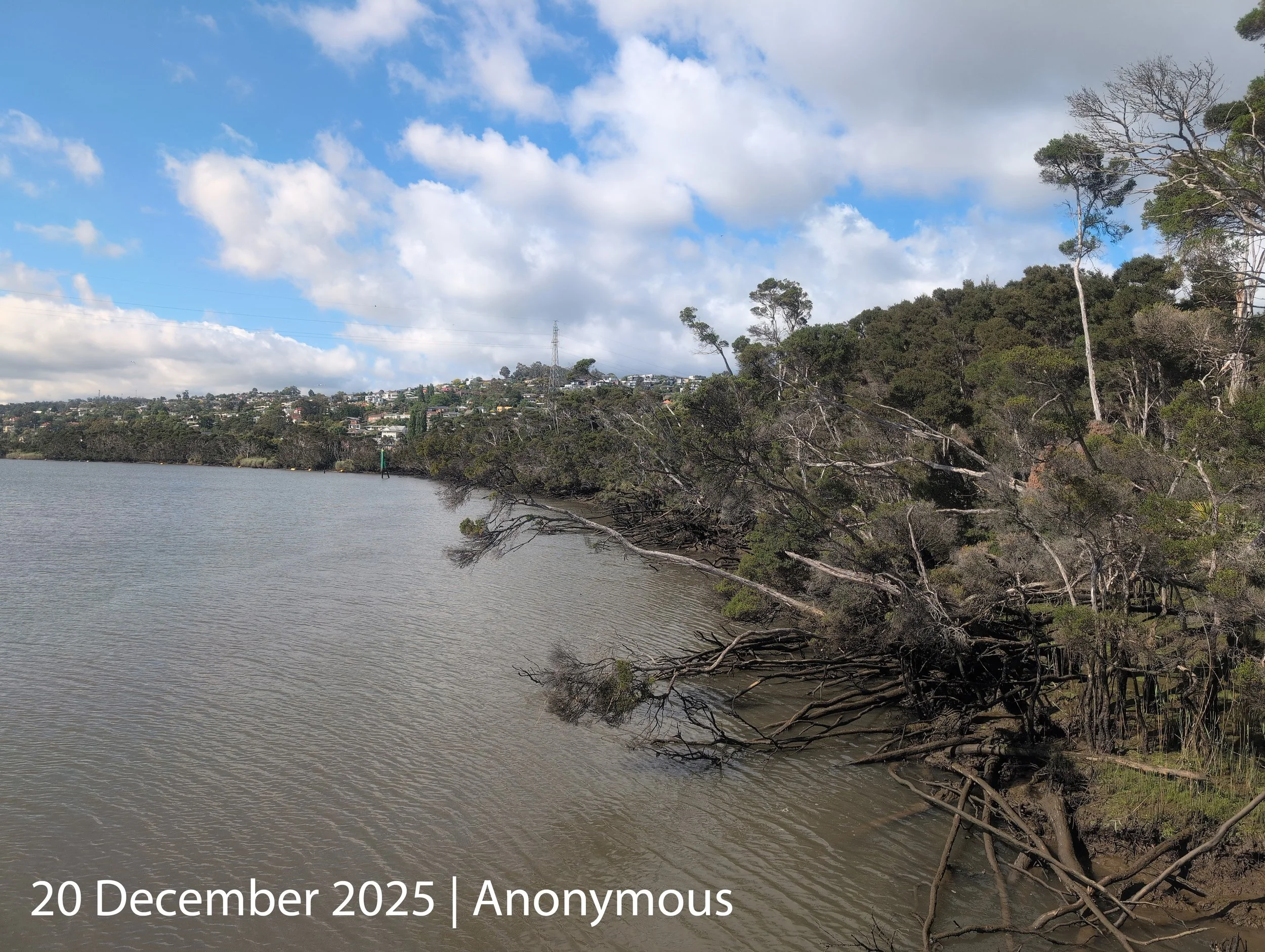
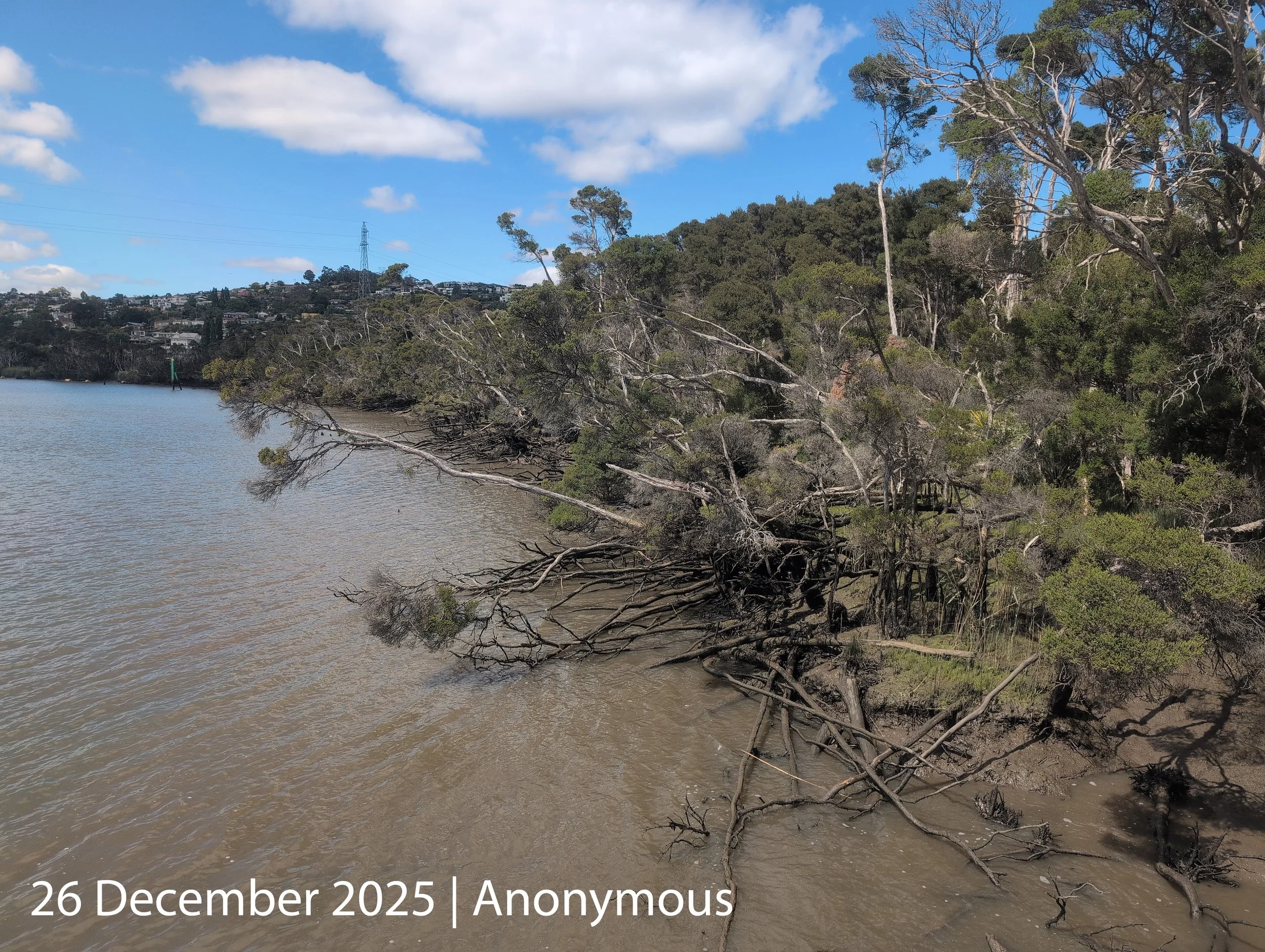
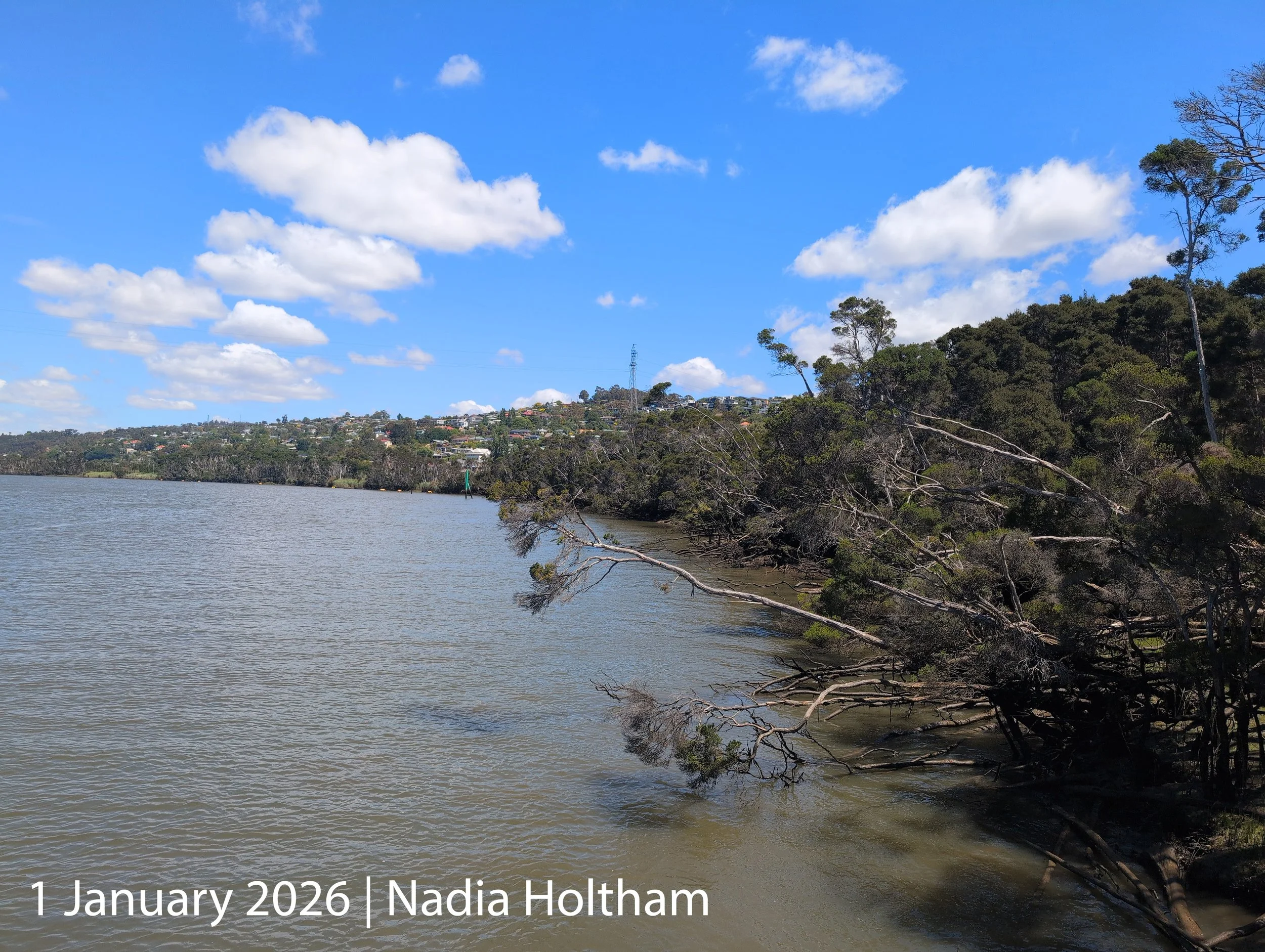
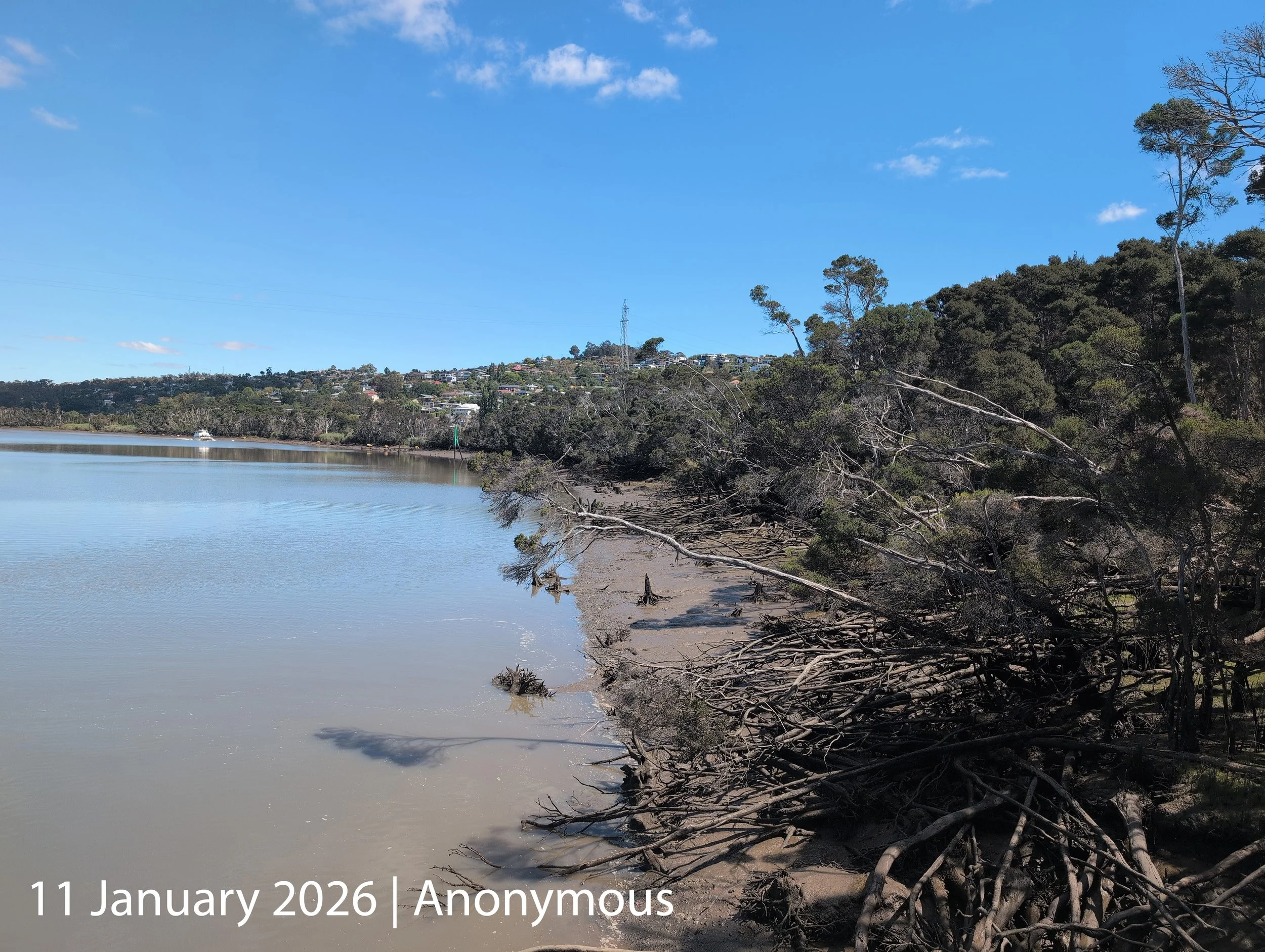
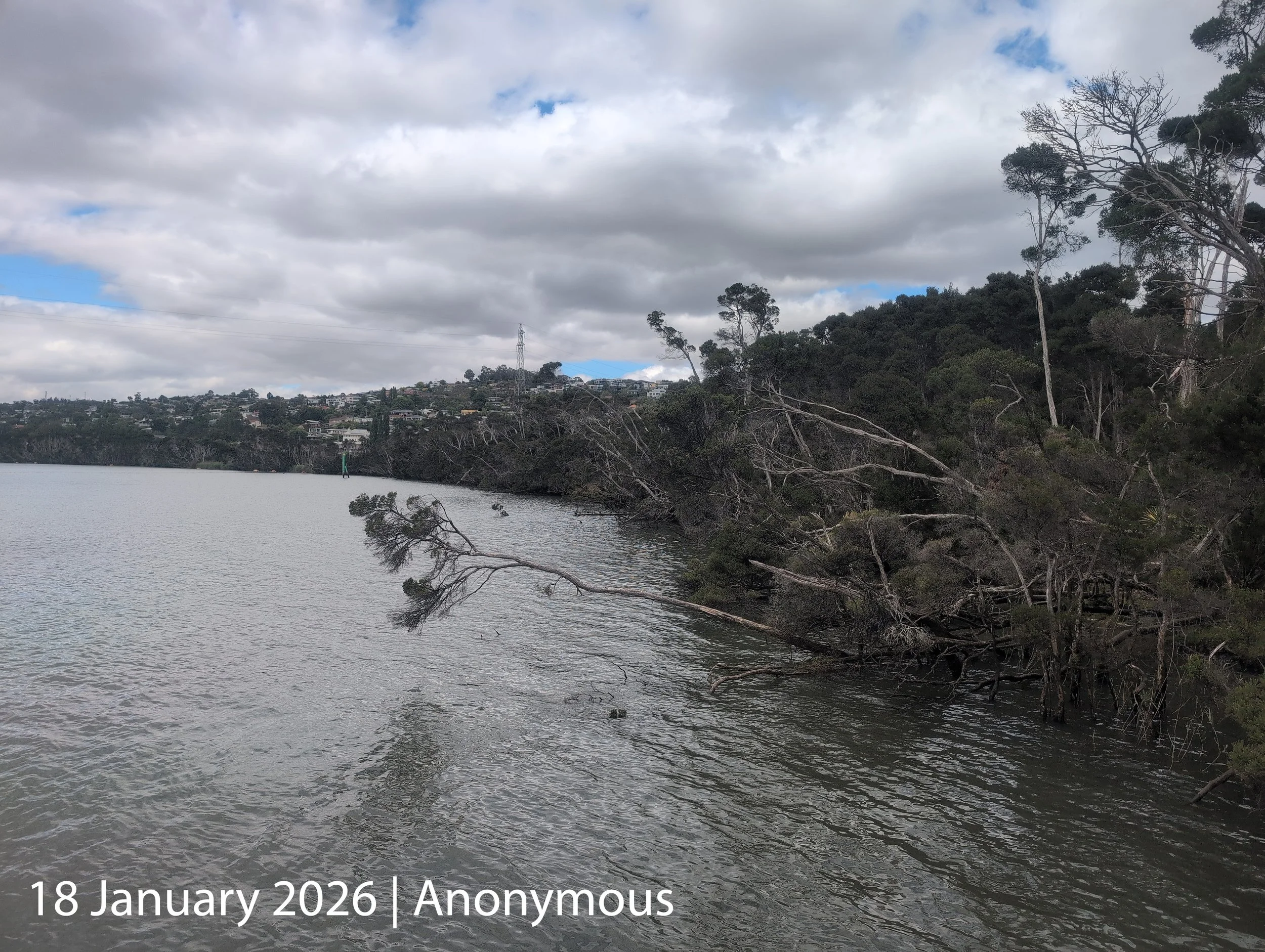
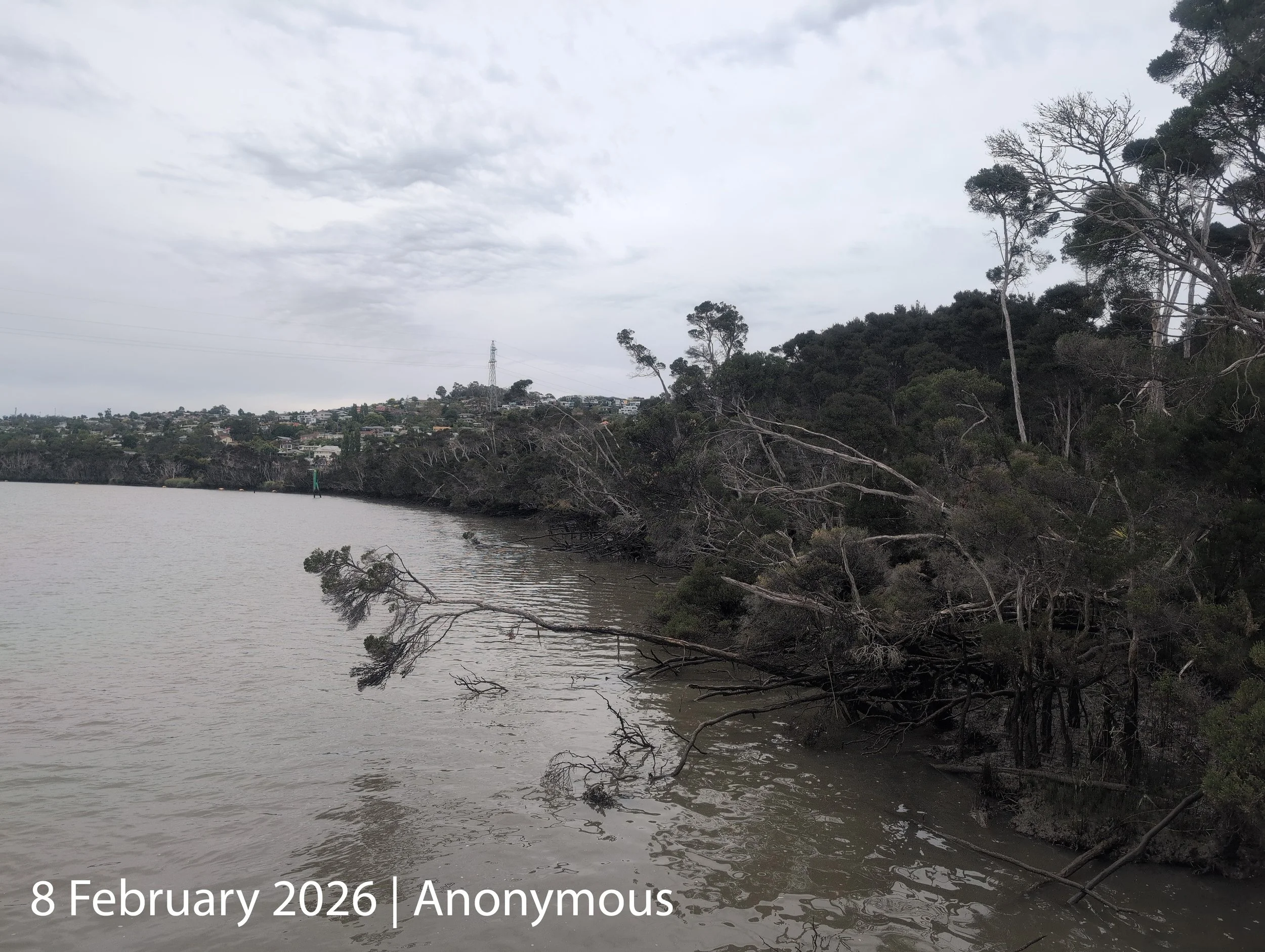
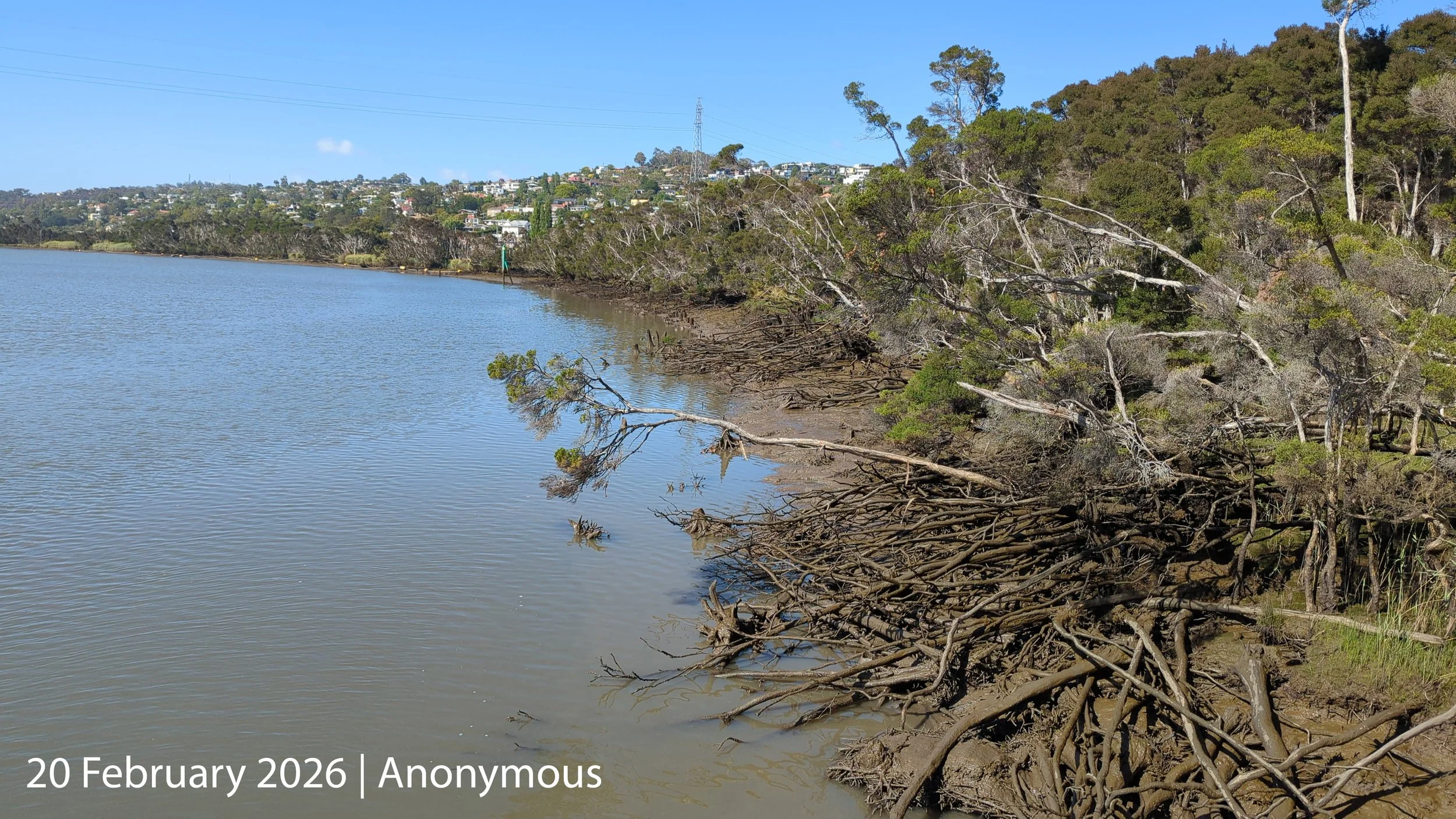
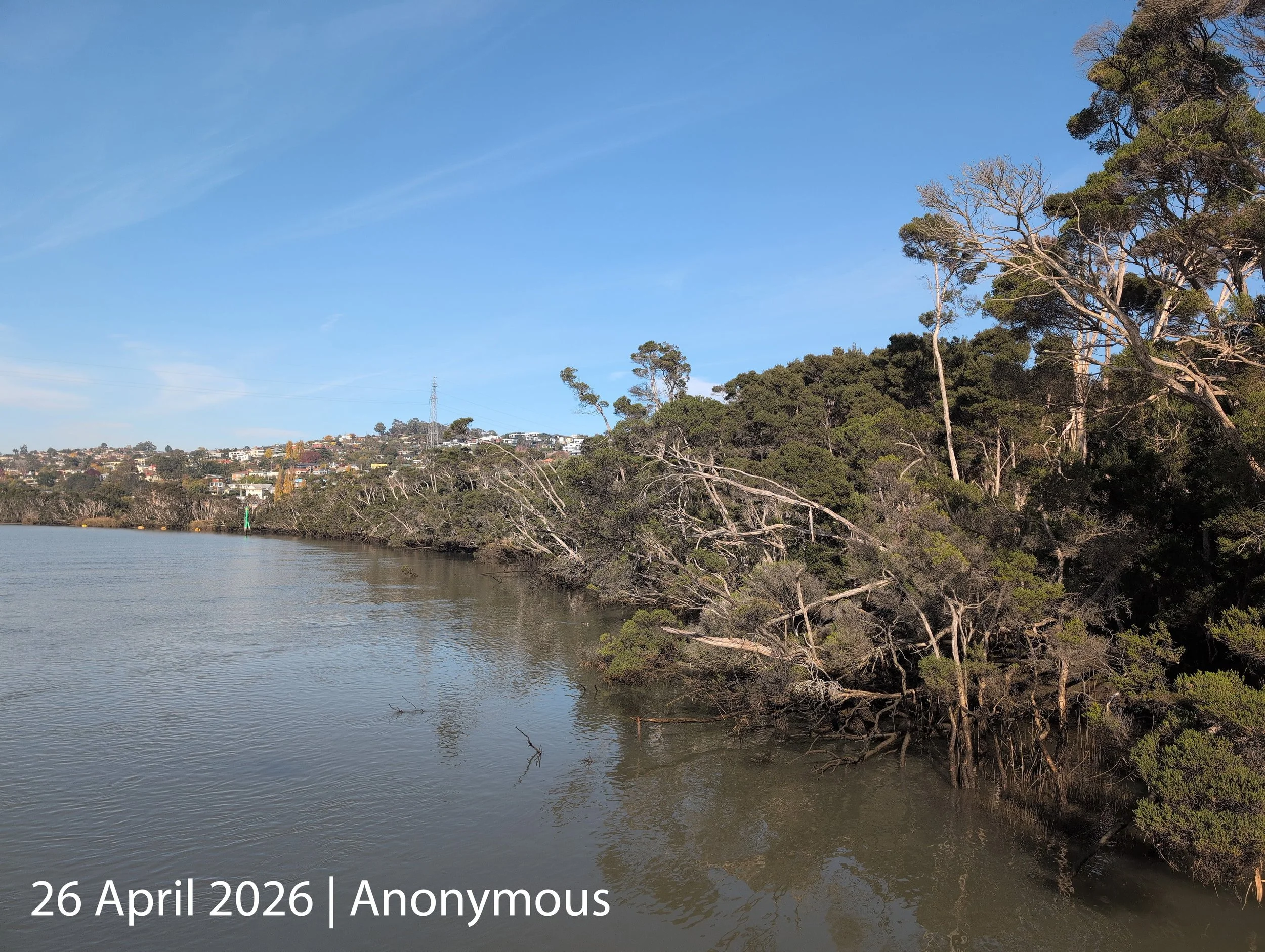
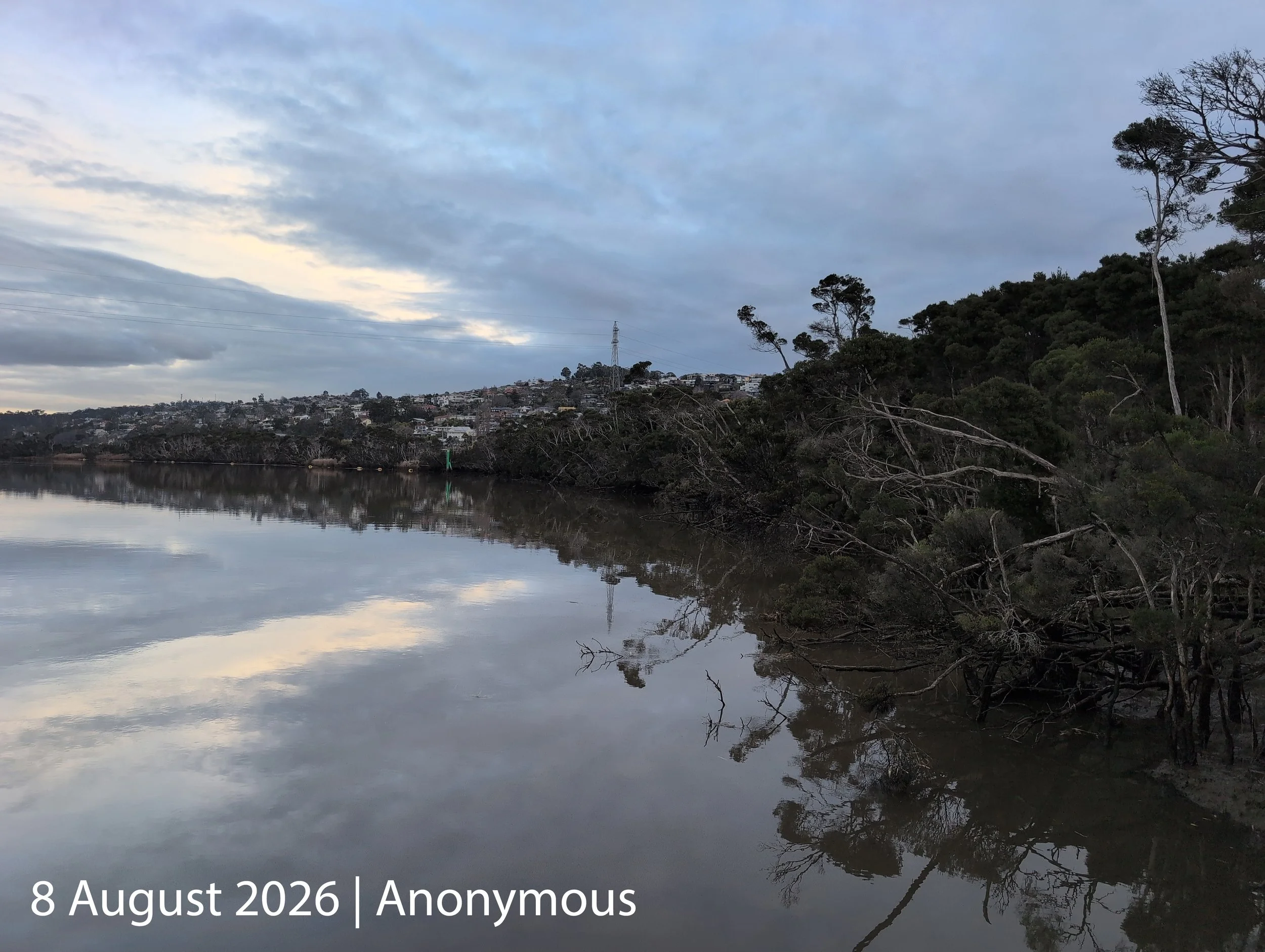
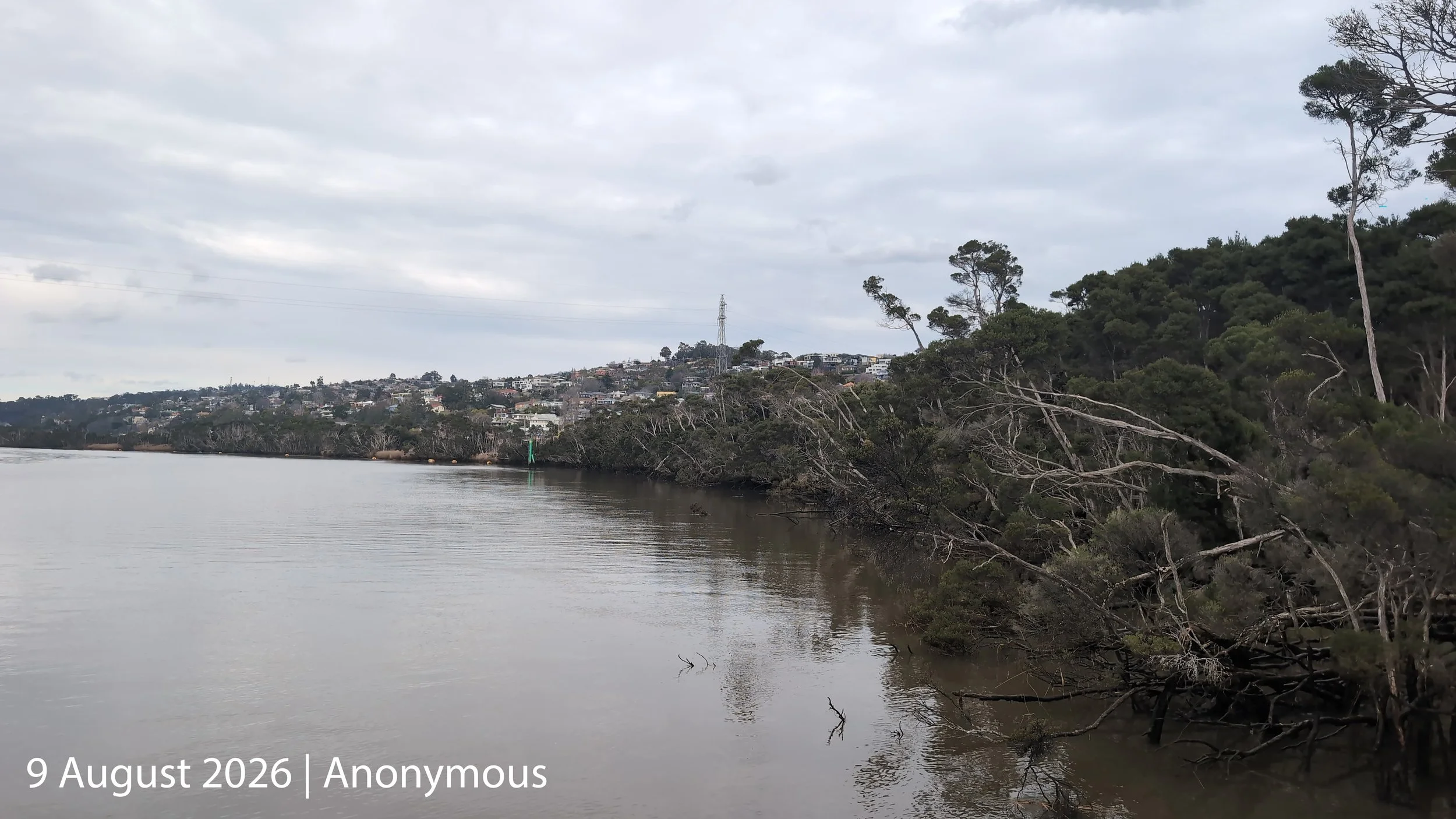
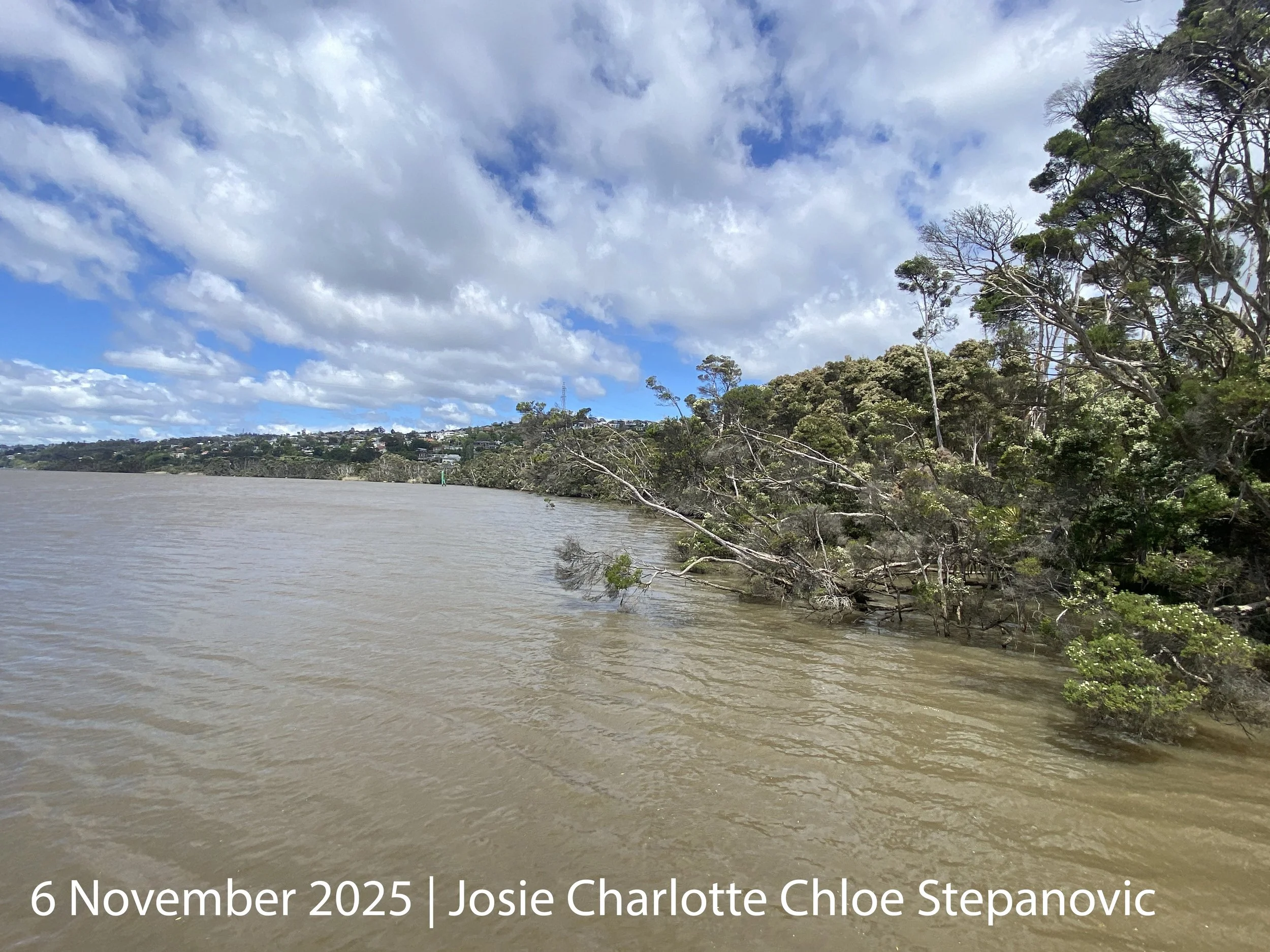
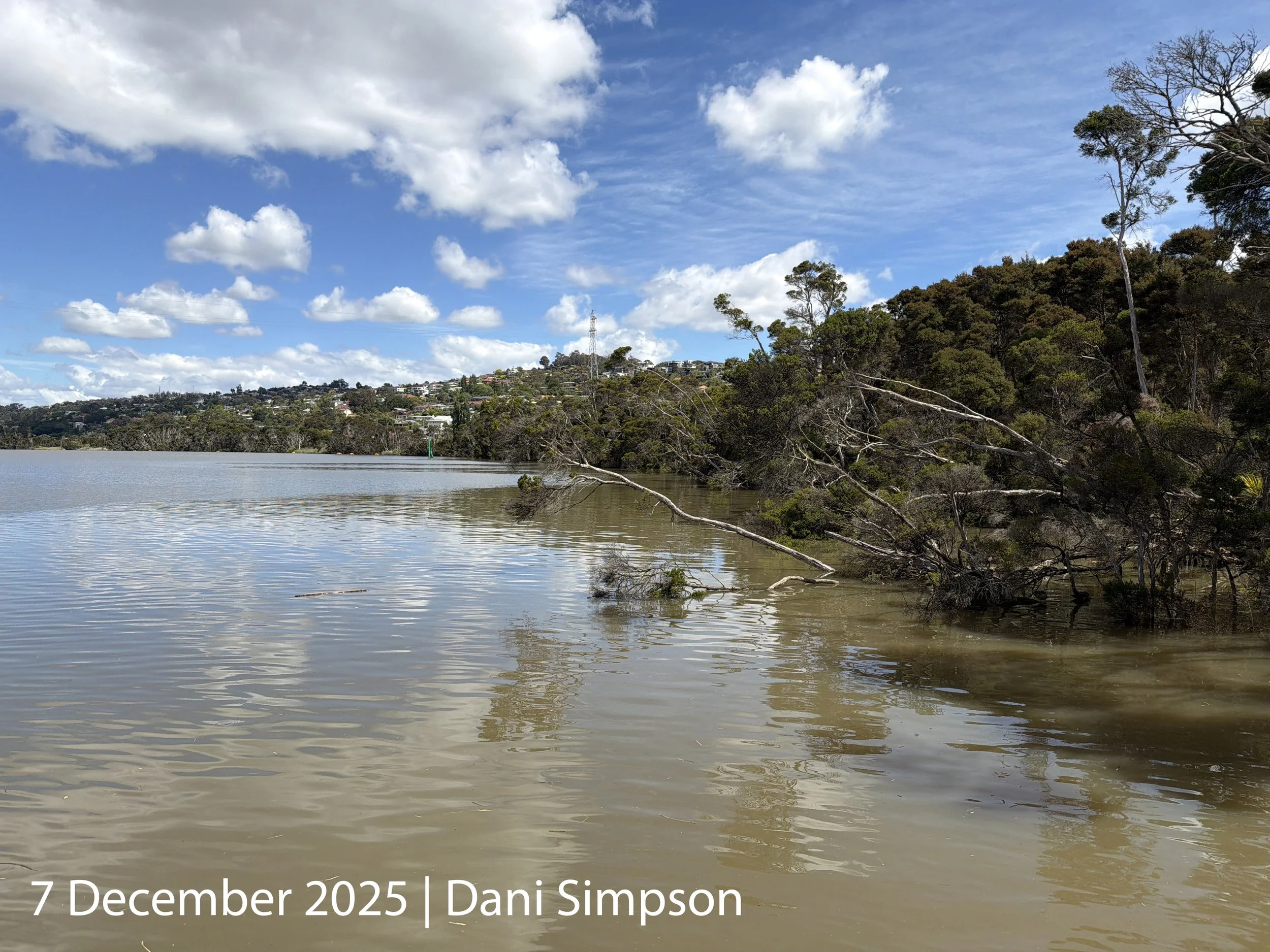
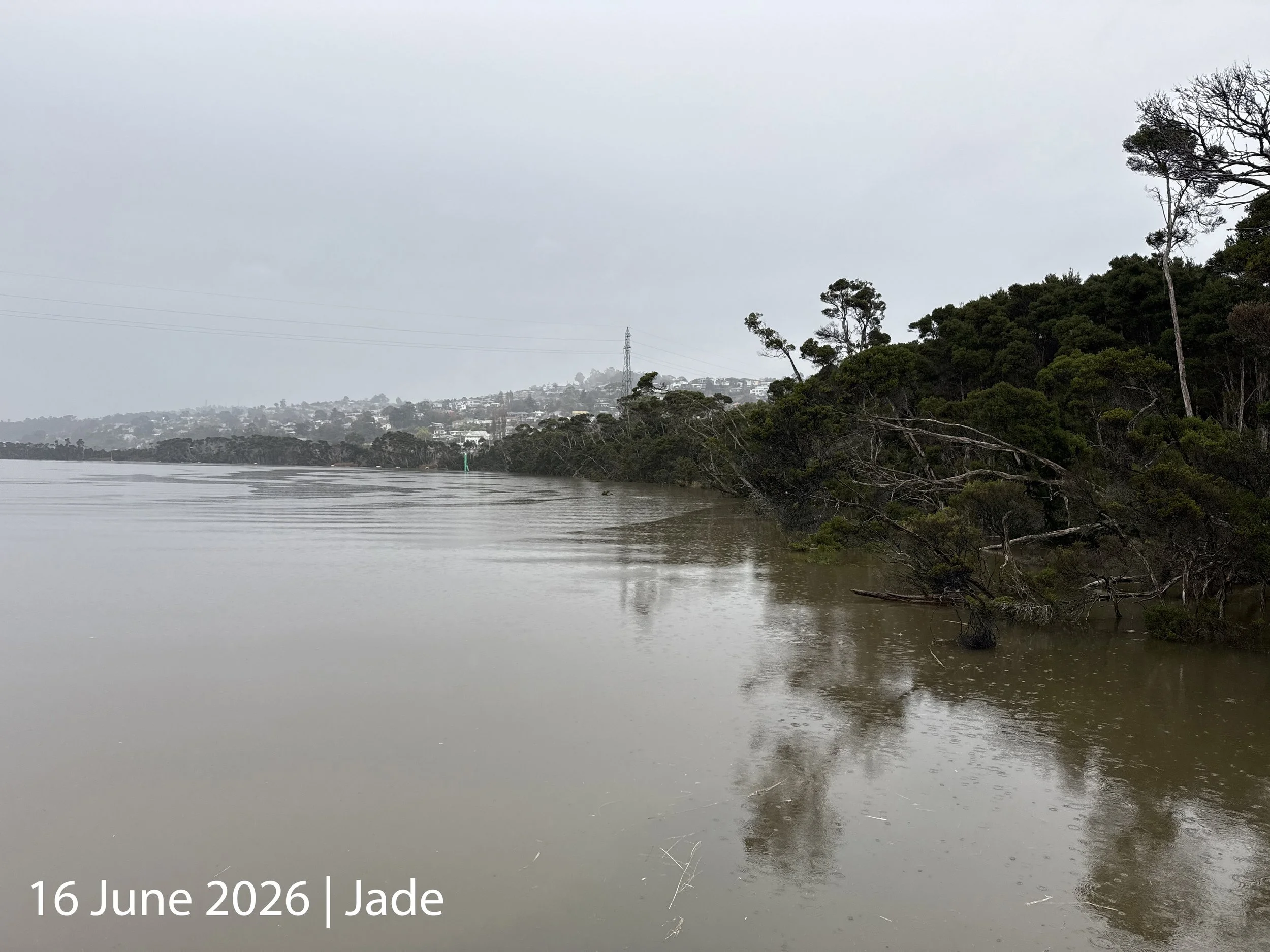
Photo analysis
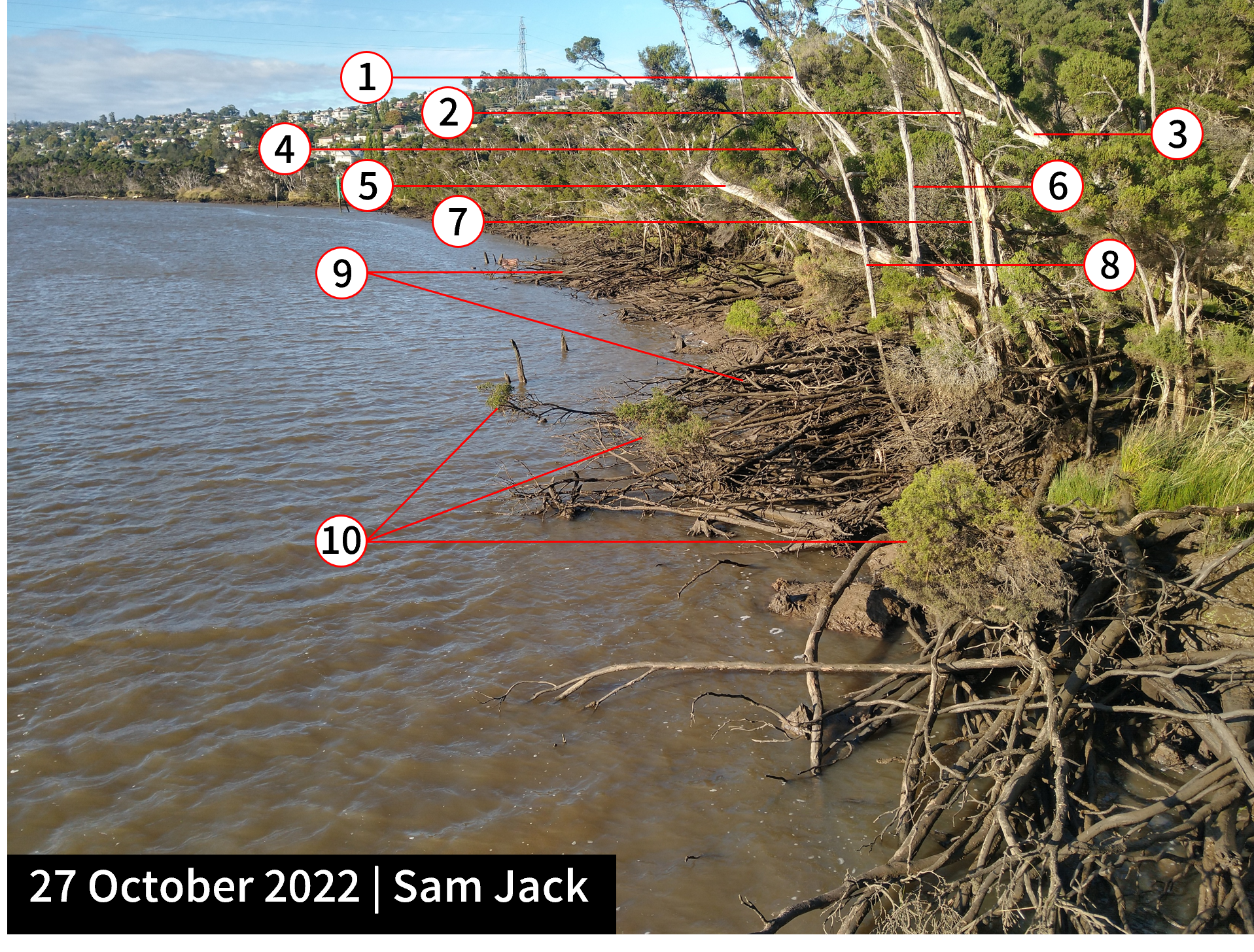
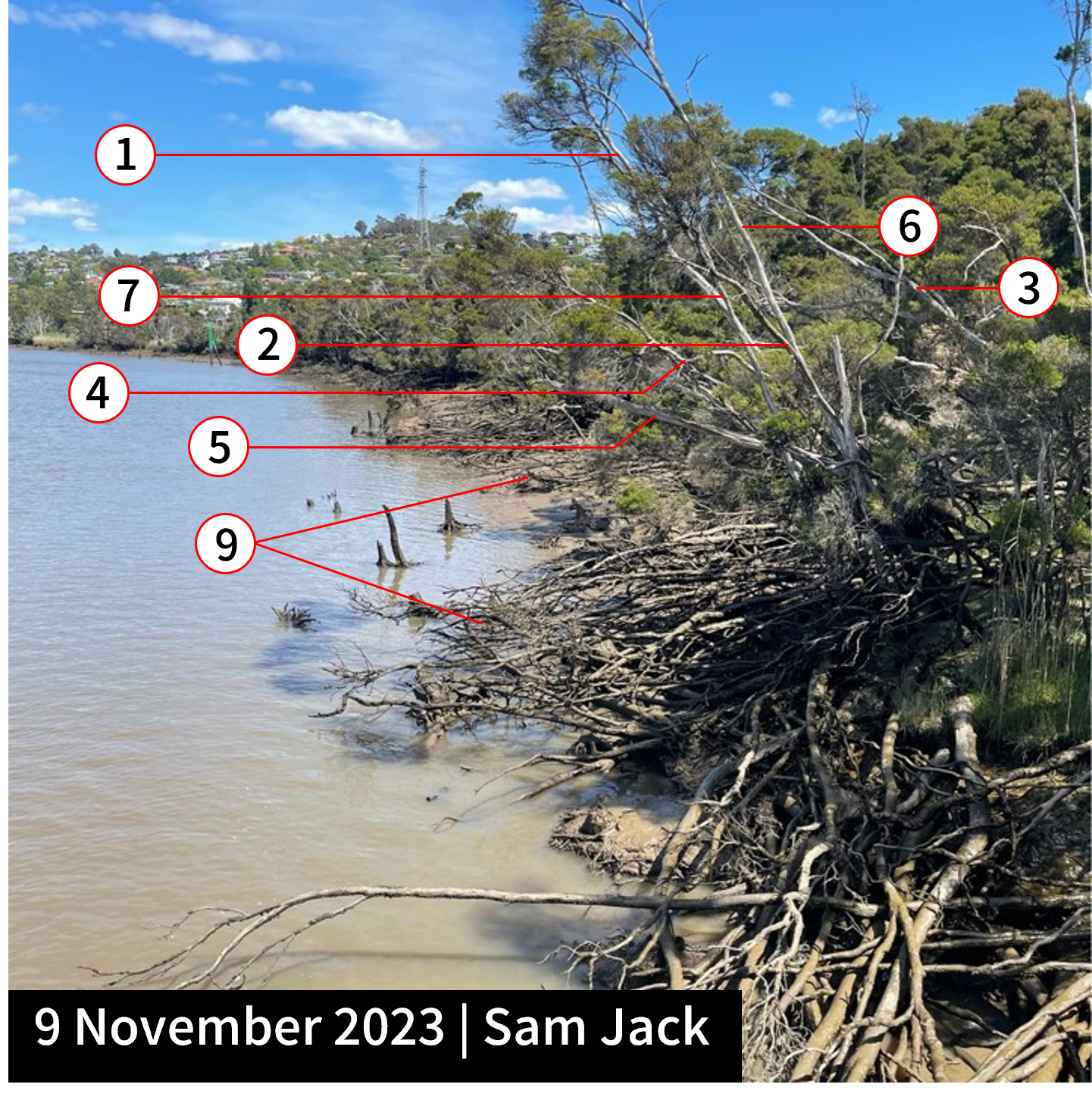
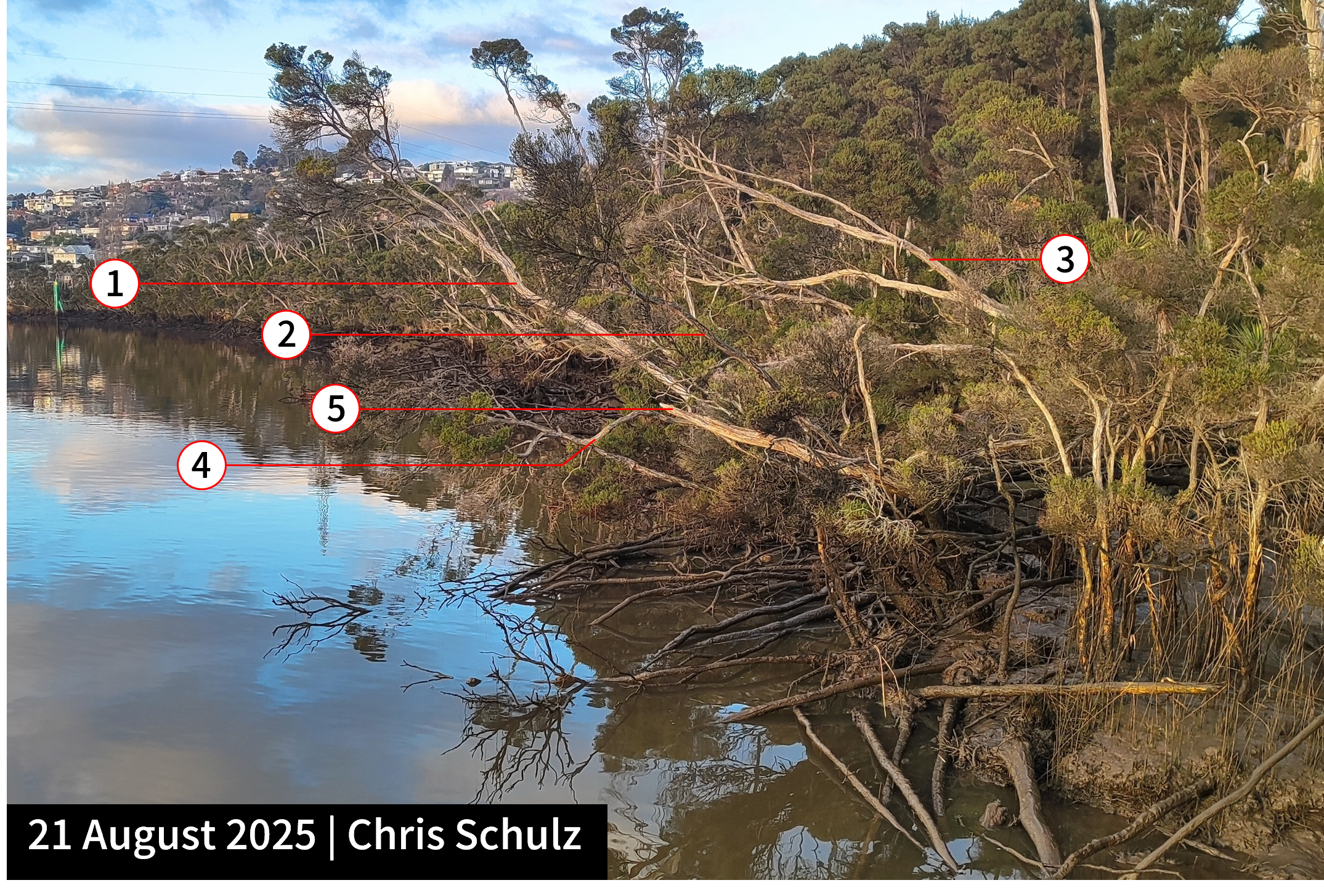
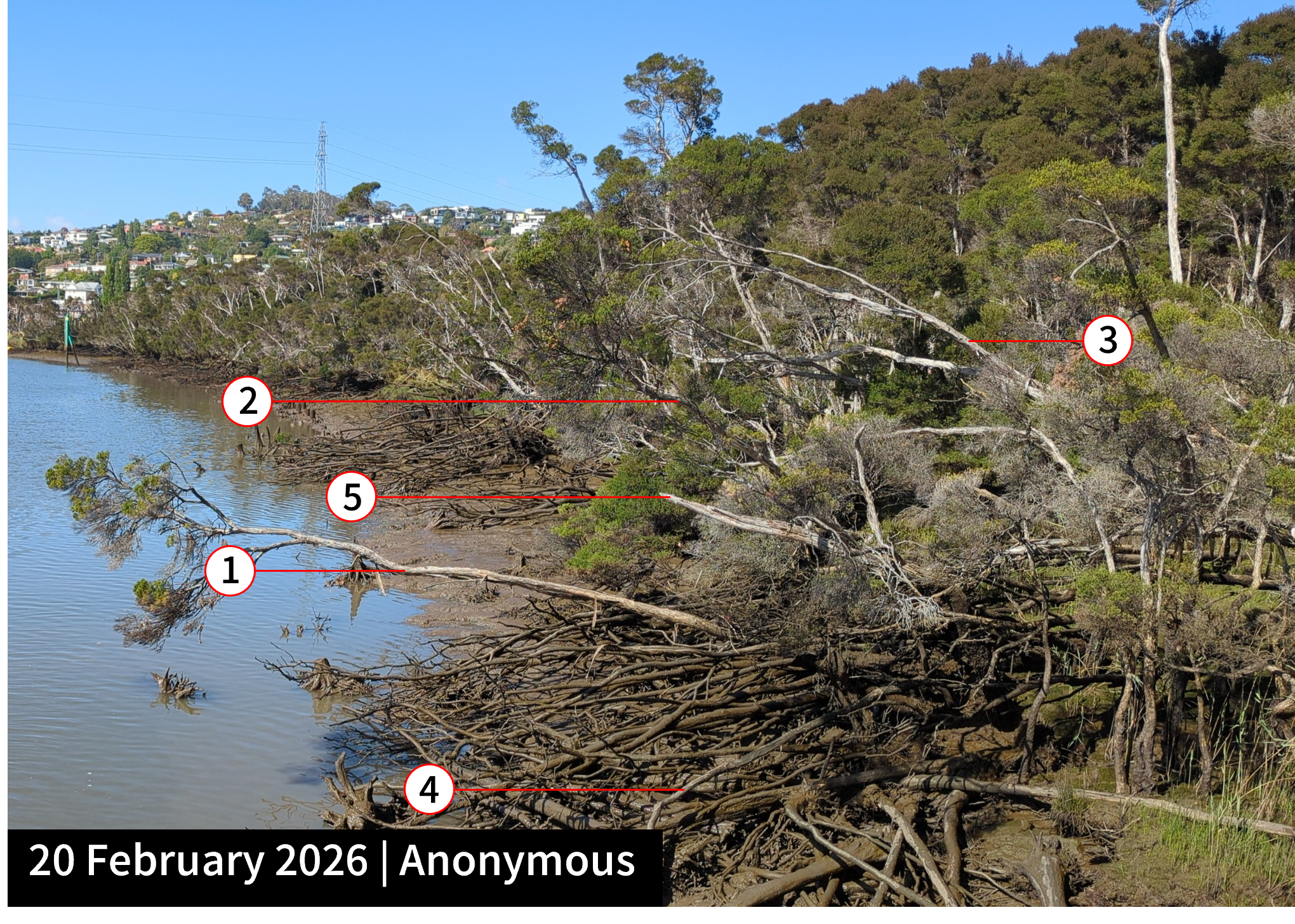
Comparing photos allows us to see how the population of shoreline Melaleuca ericifolia trees are changing over time. We followed the fate of a number of individuals or clusters of trees since 2022, when the photo-record began. Seven out of ten individuals / clusters were living in 2022. By 2026 that number had fallen to 3/10 living and the remaining trees were either leaning severely or very severely. Check out the table below for more details and flick through the photos to see the changes over time.
Swamp paperbark trees probably naturally fall into the water from time to time, as they are rooted in the muddy bank. However, low-tide vessel-wake in Home Reach and incrementally increasing water levels due to sea-level rise are both likely to be increasing bank instability and the rate at which trees topple into the water. One positive outcome of this is that if toppled trees remain in place and aren’t washed away, they can act as a natural wave-dampener, thereby protecting the remaining trees.
Protecting swamp paperbark trees is beneficial not only because their roots help stabilise the muddy upper estuary shorelines from more rapid erosion, but they also create valuable nesting and feeding habitat for many other species, they’re aesthetically beautiful, and they’re culturally important.
October 2022
1. Living – leaning moderately
2. Living – upright
3. Living – leaning severely
4. Living – leaning moderately
5. Dead - leaning severely
6. Living – upright
7. Living – upright
8. Dead – upright
9. Dead – fallen
10. Living - leaning severely
November 2023
1. No change
2. Leaning moderately
3. No change
4. No change
5. No change
6. Dead – fallen?
7. Leaning moderately
8. Dead – fallen?
9. No change
10. Dead – fallen
August 2025
1. Leaning severely
2. Leaning severely
3. No change
4. Leaning very severely
5. No change
6. No change
7. Dead – fallen?
8. No change
9. No change
10. No change
February 2026
1. Leaning very severely
2. No change
3. No change
4. Dead - fallen
5. No change
6. No change
7. No change
8. No change
9. No change
10. No change